
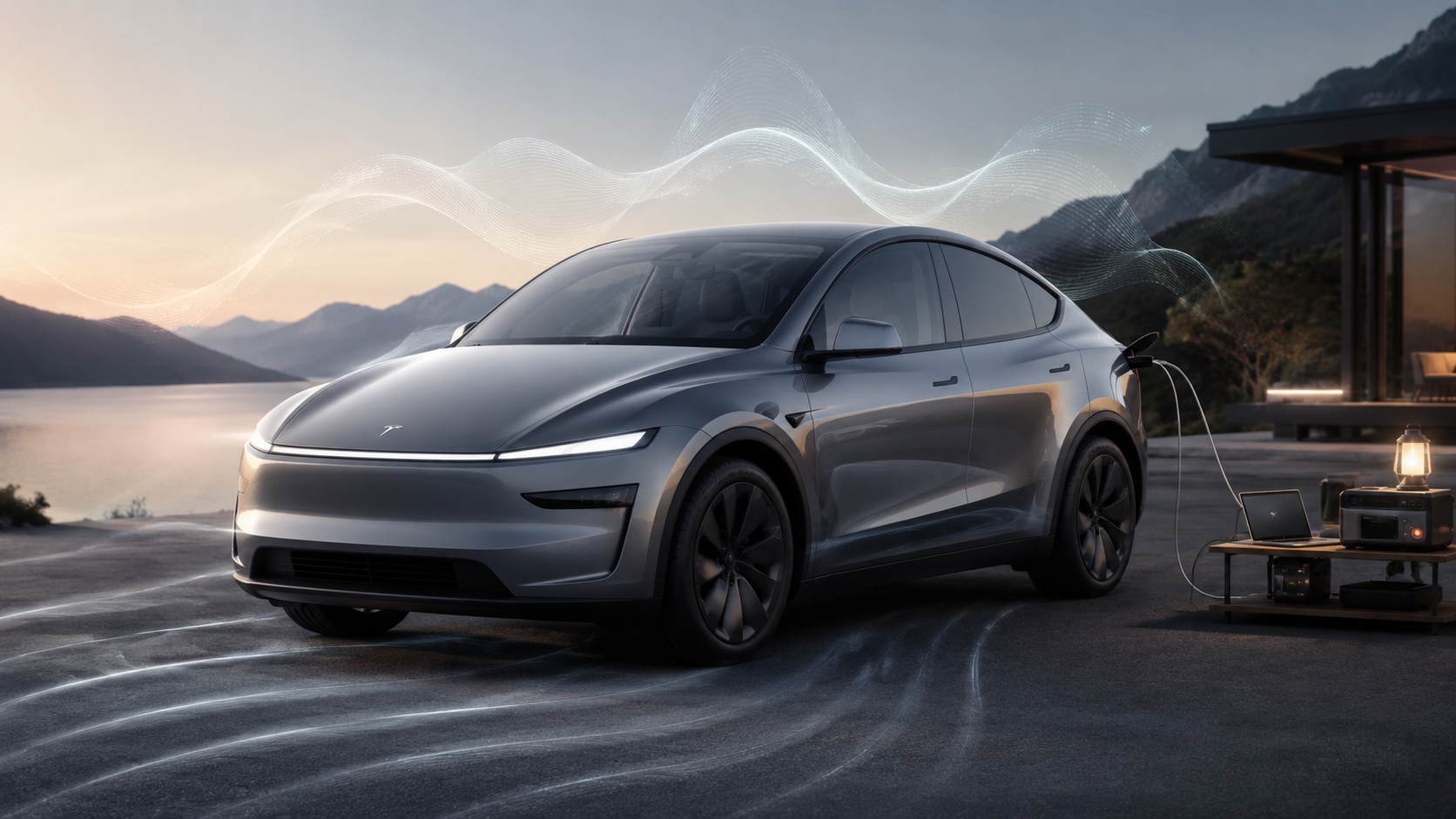
Introduction: The World's Best-Selling EV Evolves
When the Tesla Model Y captured the crown as the best-selling passenger vehicle globally, it achieved a historic milestone for electric mobility. Yet, maintaining market dominance in an increasingly crowded crossover segment demands continuous, disciplined evolution. The long-anticipated mid-cycle refresh—internally and community-dubbed Project "Juniper"—represents far more than a cosmetic facelift. It is a comprehensive engineering overhaul aimed directly at resolving the critique points of first-generation Model Y ownership: cabin harshness, road noise intrusion, suspension rigidity, aerodynamic drag, and off-grid utility.
For European and North American drivers, the requirements placed on an electric crossover are diverse and unforgiving. In the United States, owners prioritize sustained high-speed interstate highway range, rugged utility for overland camping, and heavy-duty auxiliary power generation. In Europe, the demands shift toward high-speed Autobahn composure, refined chassis damping over uneven cobblestones, superior acoustic insulation in dense urban cores, and optimal thermal management during sub-zero Alpine winters.
The refreshed Model Y reconciles these distinct regional demands through a unified architecture that harmonizes structural casting enhancements, cutting-edge acoustic engineering, modernized interior appointments, and an integrated Vehicle-to-Load (V2L) electrical distribution system. This deep-dive evaluation dissects the architectural upgrades, real-world efficiency gains, interior acoustic benchmarks, and practical grid-independent capabilities of the updated Model Y platform.
2. Exterior Aerodynamics & Real-World Range Efficiency
The Aerodynamic Redesign: Form Serving Function
Aerodynamic drag is the primary adversary of electric vehicle efficiency at highway velocities. The original Model Y boasted an impressive drag coefficient (Cd) of approximately 0.23. However, the updated Juniper architecture achieves a refined Cd of 0.218 through subtle yet crucial fluid dynamics optimizations across the front clip, underbody cladding, and rear aerodynamic separation zones.
The front fascia dispenses with the bulbous front nose in favor of a sleeker, lower-slung profile inspired by the Model 3 Highland refresh and the Cybertruck design language. Key aerodynamic alterations include:
-
Continuous Horizon Light Bar & Recessed Headlamps: The raised front fender pods of the legacy model have been flattened. The introduction of an integrated front light bar eliminates the high-pressure turbulence pocket previously created at the junction between the hood leading edge and the bumper cover.
-
Functional Low-Pressure Air Curtains: Redesigned outboard bumper vents actively channel turbulent air around the rotating front tire assemblies, forming an air curtain that drastically minimizes wake drag along the vehicle flanks.
-
Extended Rear Diffuser Geometry: At the rear, the underbody aero tray has been elongated and steepened. The diffuser creates a controlled pressure recovery zone behind the vehicle, minimizing the turbulent low-pressure vortex that typically pulls backward on crossover tailgates at speeds above 65 mph (105 km/h).
Range Improvements: EPA and WLTP Projections
These aerodynamic refinements, paired with revised wheel geometries (such as the optimized 19-inch aero wheel covers) and lower rolling resistance tire compounds developed in partnership with Michelin and Hankook, produce measurable range gains across all powertrain tiers.
Crucially, the real-world benefit is most pronounced during sustained high-speed cross-country cruising. Where the legacy Model Y frequently exhibited a 15–20% range penalty when driven at 75–80 mph on North American interstates or unrestricted German Autobahns, the Juniper platform preserves efficiency via a lower drag area (Cd A), reducing watt-hour consumption per mile (Wh/mi) from an average of 295 Wh/mi down to 268 Wh/mi under identical ambient temperatures.
3. Interior Refinement, Damping, & Acoustic Engineering
360-Degree Acoustic Glass & Decibel Reduction
The primary critique from long-term owners of earlier Model Y vehicles centered on road noise intrusion and chassis harshness over uneven expansion joints. The engineering team attacked cabin acoustics at the structural level rather than relying solely on dampening mats.
-
Full-Envelope Acoustic Lamination: While first-generation vehicles only featured acoustic laminated glass on the windshield and front side windows, the refresh extends dual-pane acoustic glass to all four passenger windows and the rear glass hatch.
-
Suspension Bushing Decoupling: The front double-wishbone and rear multi-link suspension assemblies feature updated fluid-filled compliance bushings and redesigned top mounts that isolate high-frequency road vibrations before they translate into the structural casting.
-
Frequency-Selective Damping (FSD) Shock Absorbers: The new dampers automatically adjust fluid flow resistance based on excitation frequency, providing a plush, compliant ride over sharp bumps without sacrificing lateral body control during high-speed cornering.
A reduction of 5 to 6 dBA at highway cruising speeds represents a perceived noise level drop of nearly 40% to human ears, placing the cabin acoustics on par with legacy premium German executive sedans.
Premium Cabin Amenities & Passenger Control
The interior architecture undergoes a complete digital and material modernization:
-
Perforated Ventilated Seating: Front bucket seats now feature active multi-stage ventilation alongside heating. The perforations are integrated into an upgraded synthetic leather material with enhanced lateral bolster ergonomics for long-distance driving comfort.
-
Rear 8-Inch Interactive Touchscreen: Rear passengers gain an independent 8-inch high-definition display mounted at the back of the center console. This interface allows rear occupants to control independent climate zones, adjust seat heating, stream media via Netflix, YouTube, or Twitch, and move the front passenger seat forward to increase legroom.
-
Ambient Lighting & Soft-Touch Materials: The spartan open-pore wood trim has been replaced by a clean, customizable RGB ambient light strip that wraps seamlessly from the doors around the upper dashboard cowl, accompanied by high-grade acoustic fabric textures.
4. The 2.4kW Vehicle-to-Load (V2L) Power Architecture
For outdoor enthusiasts, mobile tradespeople, and emergency preparedness advocates, the introduction of a native Vehicle-to-Load (V2L) system addresses the biggest functional gap between Tesla and competing platforms like Hyundai/Kia E-GMP and Ford Pro Power Onboard.
Technical Operation & Power Flow
The V2L architecture leverages the vehicle’s upgraded Power Conversion System (PCS). Rather than adding heavy, standalone DC-to-AC inverters inside the trunk cavity, Tesla engineered bidirectional capabilities directly into the primary PCS module that manages onboard AC-to-DC charging.
When the proprietary V2L Outlet Adapter is inserted into the charge port:
-
The vehicle recognizes the specialized hardware communication resistor and transitions the charge port from input to output mode.
-
The high-voltage (HV) battery contactors close, feeding 350V–400V DC power into the PCS.
-
The PCS converts the DC current into high-fidelity, pure sine wave AC electricity, routing it directly through the pins of the charge port into the adapter’s grounded NEMA 5-20 (North America) or Schuko (Europe) outlets.
Real-World Utility & Deployment Scenarios
1. Off-Grid Overland Camping & "Camp Mode Plus"
With 2.4kW of continuous output, the Model Y transforms into a fully capable basecamp generator. Owners can run high-draw appliances simultaneously:
-
Induction cooktops (1,200W–1,800W)
-
Portable 12V/120V compressor refrigerators (45W–65W continuous)
-
Electric kettles, espresso machines, and portable heaters. Because the 75–82 kWh battery pack provides a massive energy reservoir, running a full campsite setup draws less than 3–5% of vehicle state-of-charge per day.
2. Mobile Job Sites & Power Tools
Contractors and digital nomads can directly operate high-inrush power tools—such as miter saws, air compressors, rotary hammers, and fast-charging tool battery banks—without hauling noisy, emissions-heavy gasoline generators.
3. Emergency Home Backup
During extreme weather events and grid outages, the V2L adapter can be paired with an extension harness to power critical household circuits, keeping residential refrigerators, medical equipment (CPAP/oxygen concentrators), networking gear, and emergency lighting operational for days on a single vehicle charge.
5. Trim Restructuring: "Standard" vs. "Premium" Architecture
With the introduction of the refresh, Tesla has clarified the engineering distinctions between standard and premium tiers, balancing cost optimization with platform capability.
Battery Chemistry & Degradation Dynamics
-
Standard (LFP): The Standard RWD model continues to utilize structurally rigid LFP prismatic cells. LFP chemistry offers exceptional cycle longevity (exceeding 3,000+ full charge cycles with minimal capacity fade) and allows owners to charge to 100% state-of-charge daily without accelerating dendritic breakdown. However, LFP packs are heavier and exhibit slower cold-weather ion mobility, requiring longer battery preconditioning cycles at sub-zero temperatures.
-
Premium (NMC): The Long Range AWD and Performance trims rely on high-energy-density NMC cylindrical cells (2170 / 4680 variants). These provide superior gravimetric density, resulting in a lighter overall curb weight, quicker acceleration (0–60 mph in 4.8s for Long Range and 3.5s for Performance), and higher peak Supercharging speeds (up to 250 kW sustained deeper into the charge curve).
Conclusion: The Definitive Benchmark for Mass-Market EVs
The Model Y refresh demonstrates an engineering philosophy focused on refinement, efficiency, and real-world versatility. Rather than pursuing radical, unproven design shifts, the Juniper platform elevates the vehicle across its most critical dimensions:
-
Aerodynamics & Range: Lower drag area (Cd A) and optimized thermal controls extend highway efficiency.
-
Refinement & NVH: A quiet, vibration-isolated cabin sets a new standard for ride quality in its class.
-
Utility & Power: Native V2L capability transforms the crossover into a mobile energy hub for adventure and backup resilience.
By pairing these mechanical and electrical upgrades with its proven manufacturing scale and Supercharger integration, the updated Model Y cements its position as the global benchmark for electric crossovers in North America, Europe, and beyond.
Frequently Asked Questions (FAQ)
Q: Can the new 2.4kW V2L Adapter be used on legacy (pre-refresh) Model Y vehicles?
A: No. The V2L adapter requires bidirectional hardware support within the updated Power Conversion System (PCS) and corresponding firmware handshake logic. Older vehicles feature unidirectional PCS hardware designed strictly for AC-to-DC rectification and cannot output AC current through the charge port.
Q: Does utilizing V2L accelerate high-voltage battery degradation?
A: No. Drawing 2.4 kW represents a load of less than 0.03C on an 80 kWh battery pack. By comparison, driving at 65 mph draws roughly 18–20 kW, and Supercharging pushes up to 250 kW. The electrical stress of V2L on the battery cells is virtually negligible.
Q: How does the system prevent the vehicle battery from draining completely while running external loads?
A: Through the vehicle touchscreen or mobile app, owners can set a "Discharge Floor Limit" ranging from 5% to 50% State of Charge (SoC). Once the battery reaches this threshold, the PCS immediately cuts power to the external outlets, reserving sufficient energy for the vehicle to reach the nearest charging station.
Q: Are there aftermarket suspension kits that can bring older Model Y vehicles to the Juniper comfort standard?
A: While aftermarket comfort coilover kits and frequency-selective dampers can improve the compliance of older vehicles, they cannot fully replicate the Juniper cabin experience. The refresh's acoustic quietness stems from structural changes, including 360-degree dual-pane glass, subframe casting revisions, and specialized acoustic cavity baffles throughout the body-in-white.