
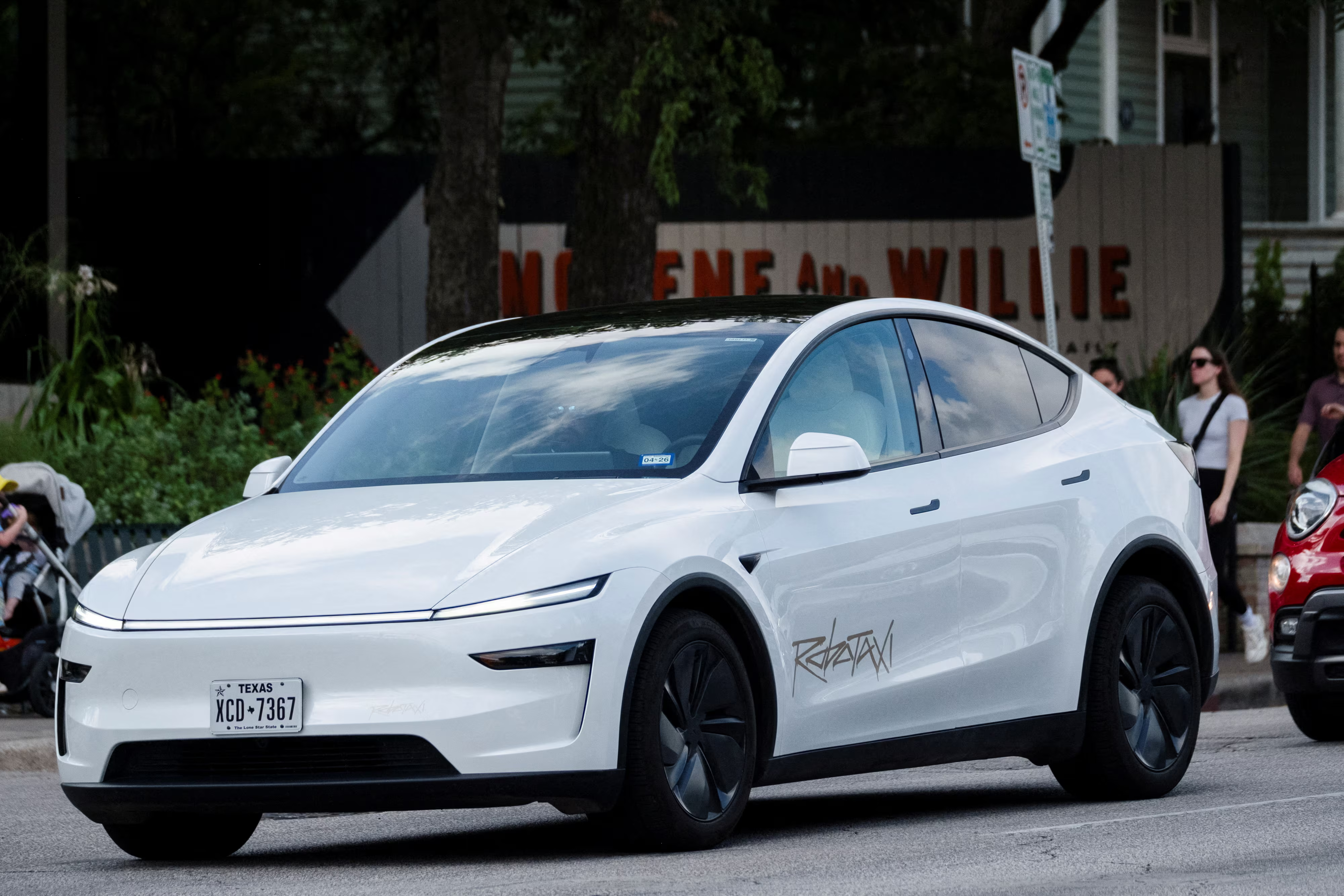
If you’ve been following Tesla for a while, you know that “Robotaxi” has always sounded like one of Elon Musk’s boldest promises — a future where your Tesla can drive itself while you sleep, make money for you while you’re at work, and redefine car ownership entirely. For years, it felt like a dream still somewhere on the horizon.
But this week, things got real. Arizona just gave Tesla the green light to begin official Robotaxi trials, a move that could mark the biggest step forward yet for Tesla’s autonomy ambitions in the United States.
So why Arizona? What exactly is Tesla being allowed to do? And more importantly — what does this mean for you, as a Tesla owner in the U.S. or Europe? That’s what we’re going to unpack today.
What Just Happened in Arizona?
Arizona has been one of the most autonomy-friendly states in the U.S. for years. Companies like Waymo and Cruise have already tested and deployed driverless fleets in cities like Phoenix. Now, Tesla is officially joining the club.
The Arizona Department of Transportation announced that it has approved Tesla to run limited-scale Robotaxi trials in select metro areas. This isn’t a blanket approval for the entire state — think of it more like carefully monitored “test zones” where Tesla can run supervised autonomous services.
Why does this matter? Because unlike California, which has been much stricter on autonomous vehicle rollouts (and where Cruise recently ran into high-profile setbacks), Arizona is saying: “We’re open for innovation, let’s see what you can do.”
For Tesla, this is the perfect testing ground. Arizona has wide streets, relatively predictable weather (no snow or ice most of the year), and a government that wants to attract cutting-edge mobility projects.
In short: Arizona is becoming Tesla’s launchpad for proving Robotaxi viability in the U.S.
Tesla’s Robotaxi Vision Explained
To understand why this is so important, let’s step back and look at Tesla’s Robotaxi vision. Elon Musk has been talking about it since at least 2019. The idea is simple but radical:
-
Every Tesla with Full Self-Driving (FSD) capability could become part of a shared Robotaxi fleet.
-
When you’re not using your car, it could drive itself around and give people rides.
-
Tesla owners would earn income from their cars, while Tesla takes a cut as the platform provider.
It’s basically Airbnb for cars, powered by AI.
Now, whether you’re a believer or a skeptic, one thing is clear: the economics could be massive. Imagine turning a depreciating asset (your car) into something that generates passive income. For Tesla owners, that’s a game-changer.
Arizona’s approval is the first sign that this concept is moving out of theory and into practice.
Regulatory Angle
Here’s the tricky part: in the U.S., autonomous vehicle rules vary by state. That means what Tesla is allowed to do in Arizona might not be possible in, say, New York or Massachusetts.
-
Arizona → Very permissive, open to trials.
-
California → Cautious, especially after safety incidents with Cruise.
-
Texas & Nevada → Somewhere in between, with an eye on economic growth.
For Tesla, this means Robotaxi rollout won’t be “nationwide” overnight. Instead, it’ll be state by state, and Arizona is now the first domino to fall.
In Europe, the situation is even more complex. The EU has stricter safety and liability frameworks. Countries like Germany and the Netherlands are open to advanced driver assistance systems, but the idea of a completely driverless Tesla giving rides? That’s going to take more time — and more proof.
So while Arizona’s approval is huge, it’s just one piece of a much larger puzzle.
Technology Behind Tesla Robotaxi
Now let’s get technical for a moment. What makes a Tesla Robotaxi possible?
-
FSD v12: Tesla’s latest Full Self-Driving software, powered by neural networks and end-to-end AI. Unlike older versions that relied more on hand-coded rules, v12 is trained more like a human driver — it learns patterns from massive amounts of real-world data.
-
Hardware 4 (HW4): Newer Teslas ship with updated cameras, processors, and sensors to support advanced autonomy. There are even rumors of Hardware 5 (HW5) being developed specifically with Robotaxi in mind.
-
Fleet Learning: Every Tesla on the road sends driving data back to Tesla’s neural nets, helping improve the system for everyone. This is Tesla’s secret weapon against competitors like Waymo, which operate much smaller fleets.
Challenges still remain: edge cases like emergency vehicles, unusual road designs, or heavy snow are far from solved. But with Arizona’s trial approval, Tesla now has a real-world sandbox to keep training, refining, and proving.
Impact on Tesla Owners in the U.S.
Here’s where it gets exciting if you own a Tesla. Imagine you’ve got a Model 3 sitting in your driveway for 90% of the day. Now, instead of collecting dust, it could be out earning you money as part of Tesla’s Robotaxi fleet.
-
Extra Income: Owners could offset car payments or even make a profit.
-
FSD Value: If you’ve bought FSD (or are considering subscribing), this makes that investment much more practical.
-
Upgrade Paths: Older Teslas might need hardware upgrades to qualify, but Tesla has a history of offering retrofit programs.
In short, Arizona isn’t just about Tesla proving technology. It’s about opening the door to a new ownership model that could directly benefit you.
Impact on Tesla Owners in Europe
For European owners, the news is both exciting and frustrating. Exciting because Arizona’s approval shows Tesla is moving forward. Frustrating because Europe’s regulations will likely delay similar rollouts.
Still, there are silver linings:
-
European Gigafactories (Berlin in particular) could eventually build Robotaxi-optimized vehicles.
-
EU Policy Trends: The EU is slowly moving toward allowing higher levels of autonomy, especially for highway driving.
-
Tesla Network Expansion: Even if Robotaxi service launches later in Europe, the software improvements happening in the U.S. will eventually benefit European drivers too.
So while you may not be sending your Tesla out as a Robotaxi tomorrow in Paris or Berlin, the groundwork is being laid.
Competitive Landscape
Tesla isn’t alone in chasing Robotaxi dominance. Waymo (Google’s self-driving unit) already operates paid services in Phoenix. Cruise (GM-backed) tried but ran into safety issues and regulatory pushback. Traditional automakers like Mercedes and VW are exploring autonomy too.
But Tesla’s angle is different: instead of building a small fleet from scratch, it plans to tap into millions of existing Teslas already on the road. That scale is unmatched.
If Tesla pulls it off, it could leapfrog rivals and become not just the biggest EV maker, but the biggest autonomous mobility provider in the world.
Market & Financial Implications
Let’s talk numbers. Elon Musk has said that Robotaxis could multiply Tesla’s value many times over. Analysts estimate the Robotaxi market could be worth hundreds of billions annually in the U.S. alone.
For owners, that could mean:
-
Lower overall cost of ownership.
-
New ways to justify buying FSD.
-
A shift in how people view car ownership (from expense to investment).
This could ripple out beyond Tesla too — impacting ride-hailing companies like Uber and Lyft, and even how cities plan public transport.
Concerns and Criticisms
Of course, it’s not all smooth roads ahead.
-
Safety: Can FSD handle all scenarios without human oversight?
-
Jobs: What happens to taxi drivers, Uber/Lyft drivers, and others?
-
Timeline Skepticism: Elon has famously missed past autonomy deadlines. Is this time different?
Critics argue that while Arizona’s approval is exciting, we’re still years away from a fully realized Robotaxi fleet.
Looking Ahead
So what should you, as a Tesla owner, watch next?
-
Expansion Beyond Arizona: Will Texas or Nevada approve trials next?
-
FSD v12 Updates: Each software release will show how quickly Tesla is progressing.
-
Robotaxi Reveal Event: Elon has hinted at a dedicated Robotaxi vehicle, possibly in 2026.
The next 2–5 years will be critical. Arizona is just the beginning.
Conclusion
Arizona’s green light is more than just a local news headline. It’s the first real step toward Tesla’s vision of a global Robotaxi network.
For U.S. owners, it raises the exciting possibility of turning your car into an income-generating asset. For European owners, it signals that the technology is maturing — even if regulatory approval lags.
Is the dream of Robotaxis finally coming true? We’re closer than ever, but the journey ahead will be as fascinating as it is challenging.
FAQ
Q: Will my current Tesla qualify as a Robotaxi?
If your car has FSD capability and the right hardware (HW4 or later), it could eventually qualify. Tesla may also offer upgrade options for older cars.
Q: Do I need FSD for my car to be part of the fleet?
Yes, FSD is the foundation of Robotaxi functionality. Without it, your car can’t drive itself.
Q: When will Robotaxis come to Europe?
Likely later than the U.S., due to stricter EU regulations. But eventually, yes.
Q: How safe is FSD really?
It’s improving with every release, but regulators still want more proof before approving unsupervised use everywhere.
Q: Will Tesla owners actually make money from this?
That’s the vision. The exact revenue split hasn’t been revealed, but Elon has suggested owners could earn significant income.