
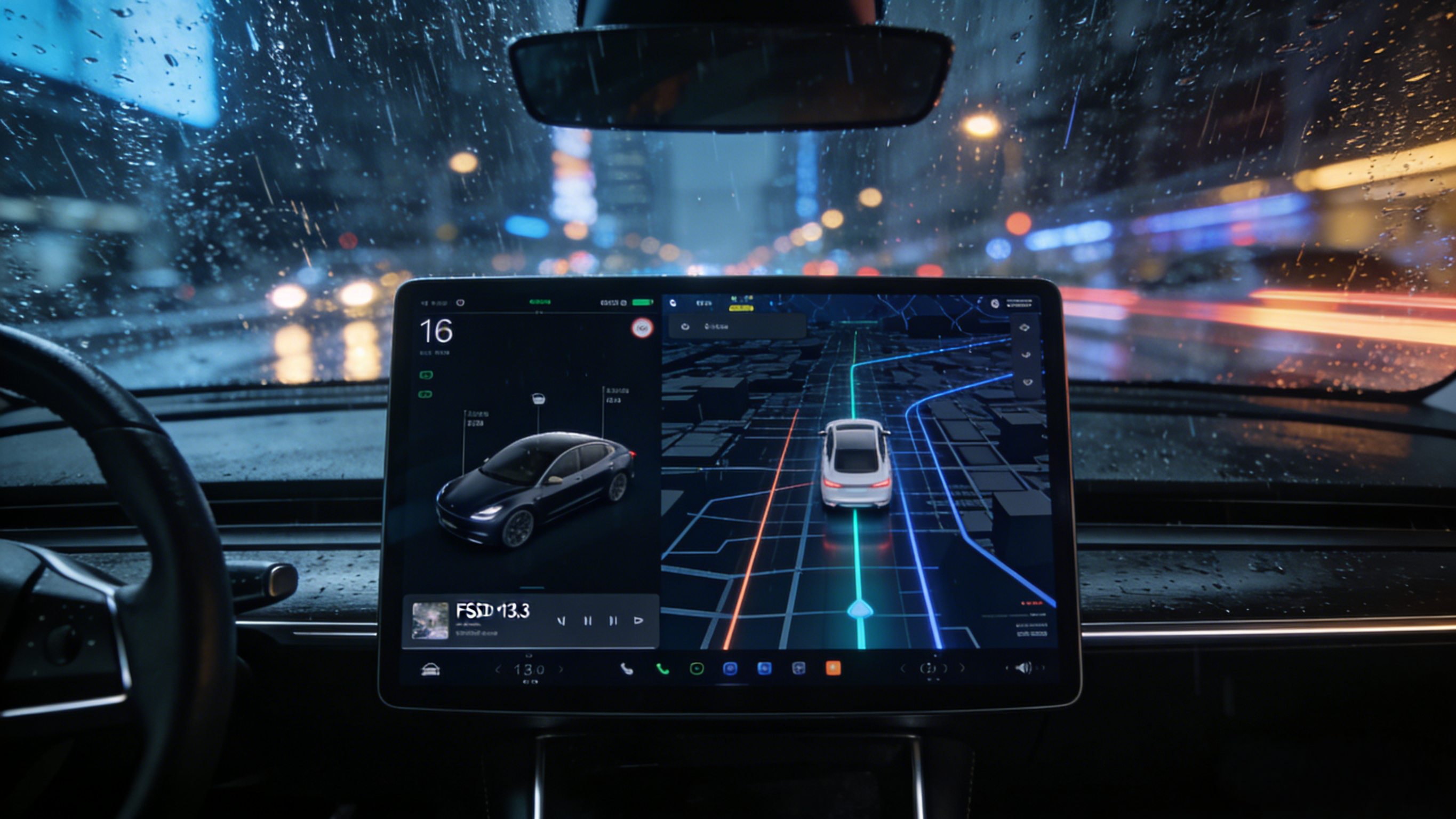
I. Introduction: The Dawn of True Autonomous Cognition
The landscape of automotive technology, perpetually on the cusp of revolution, has arguably reached its most pivotal moment in early 2026 with the widespread deployment of Tesla’s Full Self-Driving (FSD) v14.x. For years, the promise of true Level 4 autonomy – a vehicle capable of handling most driving situations without human intervention – has been dangled before an eager public. While previous iterations, particularly FSD v12, were lauded for their pioneering "end-to-end" neural network architecture, they still resided firmly within the realm of "supervised" autonomy. The driver, though increasingly redundant, remained the ultimate safety net. FSD v14.x, however, represents a profound philosophical and engineering shift. It is the demonstrable leap from mimicking human driving to exhibiting a form of "cognitive reasoning" that often surpasses human intuition and reaction times. This is not merely an incremental update; it is a foundational overhaul, positioning early 2026 as the indisputable "threshold year" for what many previously considered science fiction: truly intelligent, self-aware vehicles navigating our complex world.
The significance of this release cannot be overstated. It marks Tesla’s most ambitious step yet towards democratizing advanced autonomous capabilities, pushing beyond mere lane-keeping and adaptive cruise control into the intricate dance of urban driving, nuanced decision-making, and seamless integration with human traffic patterns. This article delves deep into the technological underpinnings of FSD v14.x, dissecting its performance across diverse geographical and environmental contexts, scrutinizing its impact on safety metrics, and exploring the psychological ramifications for drivers as they progressively surrender control to an increasingly competent AI. We will examine how this new version leverages the full might of the recently implemented Hardware 5 (AI 5) suite, how it addresses the persistent "micro-hesitations" that characterized earlier systems, and critically, how it is poised to redefine the very concept of driving as we know it. The implications for personal mobility, urban planning, and even societal perceptions of artificial intelligence are immense, making FSD v14.x not just a software update, but a harbinger of a new era.
II. The "Neural Leap": What's New in v14? From Mimicry to World-Model Mastery
The most profound shift embodied by FSD v14.x lies in its departure from a purely imitation-learning paradigm towards a sophisticated "world-model" understanding. Earlier FSD versions, including the groundbreaking v12, predominantly learned by observing vast datasets of human driving. While incredibly effective for establishing basic driving behaviors, this approach inherently inherited human limitations and occasional suboptimal decision-making. Humans hesitate at complex four-way stops, misjudge gaps in dense traffic, or react inconsistently to sudden environmental changes. FSD v14.x transcended this by developing a richer, more predictive internal representation of the world.
At its core, v14.x is powered by a massively expanded and refined neural network architecture, specifically optimized to leverage the full computational might of the Hardware 5 (AI 5) chip, which became standard in all new Tesla vehicles starting late 2025. This dedicated AI processor, a significant upgrade over previous generations, allows for an order of magnitude increase in processing speed and a dramatic reduction in latency. Where previous hardware might process scenarios in milliseconds, AI 5 operates in microseconds, enabling the system to run thousands of complex simulations per second. This rapid, parallel processing is critical for anticipating potential outcomes in dynamic environments.
One of the most immediate and palpable improvements for users is the near-complete elimination of "micro-hesitations" – those brief, almost imperceptible pauses or uncertainties that FSD vehicles would sometimes exhibit, particularly at complex intersections, unprotected left turns, or during merges onto busy highways. In v14.x, these moments of indecision have been replaced by a fluid, decisive, and remarkably confident driving style. The system no longer merely asks, "What would a human driver do in this exact situation based on past data?" Instead, it constructs a probabilistic "world-model" of its surroundings, encompassing the predicted trajectories of all other agents (vehicles, pedestrians, cyclists), road conditions, traffic laws, and even implicit social driving norms. It then evaluates thousands of potential actions within this simulated world, selecting the optimal path that prioritizes safety, efficiency, and adherence to traffic flow. This "reasoning-on-the-fly" capability allows for truly "human-like" intuition, albeit a super-human form, devoid of emotional bias or momentary distraction.
Furthermore, the perception stack has seen substantial enhancements. The resolution and accuracy of the occupancy network have been dramatically improved, allowing v14.x to build a more granular and dynamic 3D representation of its environment. This means the system can detect and classify objects – from a stray soccer ball rolling into the road to the subtle body language of a pedestrian about to step off a curb – with unprecedented precision. This enhanced perception, coupled with the advanced predictive algorithms, allows the vehicle to "see" and anticipate events several seconds into the future, enabling smoother maneuvers, earlier braking, and more proactive responses to developing situations. The integration of improved sensor fusion algorithms further bolsters this, seamlessly blending data from cameras, radar (where still present, though increasingly deprioritized for core decision-making), and ultrasonics to create an incredibly robust and redundant understanding of the vehicle’s surroundings, significantly reducing the reliance on ideal environmental conditions. The result is a system that feels more integrated with the flow of traffic, more assertive when necessary, and ultimately, far more reliable and trustworthy.
III. Performance Analysis: North America vs. Europe – Navigating Diverse Driving Cultures
The global deployment of FSD v14.x provides a unique opportunity to assess its adaptability and performance across vastly different driving cultures, road infrastructures, and regulatory environments. While the core AI architecture is universal, the "EU-Specific Logic" and regional tuning modules have proven instrumental in tailoring its behavior for optimal acceptance and safety.
North American City Streets: Taming Erratic Human Behavior
In North America, particularly in bustling urban centers like Los Angeles, New York, or Chicago, FSD v14.x has demonstrated remarkable prowess in handling the often-unpredictable nature of human drivers. North American traffic is characterized by diverse driving styles, frequent lane changes, and a sometimes-aggressive approach to merges and intersections. Previous FSD versions occasionally struggled with these nuances, exhibiting excessive caution or hesitation in situations where a confident human driver would assertively proceed.
FSD v14.x has largely overcome these challenges. Its enhanced predictive capabilities allow it to better anticipate the intentions of other drivers, even when signals are ambiguous. For instance, at a crowded four-way stop where drivers often engage in a subtle, non-verbal negotiation of right-of-way, v14.x now processes these cues with greater accuracy. It exhibits a decisive yet polite assertiveness, claiming its turn without aggressive lunges or timid delays. The system's ability to seamlessly execute unprotected left turns across multiple lanes of oncoming traffic, once a significant pain point, has also seen dramatic improvement. The higher-resolution occupancy network, coupled with faster processing on AI 5, enables the car to identify safe gaps with microsecond precision, executing the maneuver with a smooth, continuous motion that inspires confidence.
Crucially, v14.x has also refined its understanding of "edge cases" unique to North America, such as navigating around double-parked delivery trucks in narrow urban alleys, safely reacting to sudden jaywalkers, or correctly interpreting flashing school bus lights and subsequent pedestrian activity. The system's robustness in dealing with unexpected obstacles – a rogue traffic cone, a suddenly opening car door – showcases its advanced generalization capabilities, demonstrating that it's not just recognizing patterns but understanding the underlying physics and risk assessments.
The European Challenge: Precision, Politeness, and the Autobahn's High-Speed Logic
Europe presents a distinct set of challenges for autonomous driving, characterized by tighter streets, a higher density of cyclists, more complex roundabout configurations, and in some regions, significantly higher speed limits. The "EU-Specific Logic" module in FSD v14.x has been finely tuned to address these regional peculiarities, resulting in a driving experience that feels remarkably native.
Navigating the narrow, winding streets of historic European cities, such as London, Paris, or Rome, demands precision and an intimate understanding of local driving etiquette. FSD v14.x excels here, maintaining accurate lane positioning even in constrained environments, and adeptly anticipating the movements of cyclists, who are integrated into traffic flow differently than in many North American cities. The system's improved lateral control and spatial awareness prevent it from getting too close to parked cars or roadside obstacles, a common issue for less sophisticated ADAS.
Roundabouts, a staple of European road design, were historically a stumbling block for early autonomous systems due to their dynamic nature and the need for continuous negotiation with multiple entry and exit points. FSD v14.x now handles even multi-lane, complex roundabouts with a fluidity that mirrors experienced local drivers. It assesses traffic flow, identifies appropriate gaps, and merges or exits without hesitation, eliminating the "nervous" pauses seen in previous versions.
On Germany's famous Autobahn, FSD v14.x demonstrates its high-speed capabilities. While the ethical and legal frameworks for truly driverless operation at unrestricted speeds are still evolving, the supervised FSD v14.x exhibits exceptional stability and precision at speeds exceeding 130 mph (210 km/h). Its ability to maintain precise lane centering, smoothly execute lane changes, and react instantly to high-speed braking events by vehicles ahead underscores the robustness of the AI 5 hardware and the refined neural networks. The system's predictive modeling extends further at these speeds, allowing it more time to plan and execute maneuvers, making the high-speed experience remarkably composed and safe.
Vision-Only Performance in Extreme Weather
A significant triumph of FSD v14.x is its enhanced vision-only performance in challenging weather conditions, a persistent concern for early adopters. Through advanced neural network training on vast datasets of adverse weather, the system has learned to filter out visual noise, compensate for reduced visibility, and maintain accurate perception even during heavy rain, dense fog, or moderate snowfall.
In snowy conditions, where lane markings can be obscured, v14.x leverages its "neural occupancy network" to infer lane boundaries from surrounding context – roadside objects, tree lines, and the paths of other vehicles – with surprising accuracy. While extreme blizzards will always necessitate human intervention, the improved robustness in typical winter driving conditions represents a crucial step towards true all-weather autonomy. Similarly, during heavy downpours, the system’s ability to differentiate between water spray and actual objects, and to maintain object detection despite impaired camera visibility, is a testament to the sophistication of its updated algorithms and the raw processing power now available. This enhanced resilience to environmental variables significantly expands the practical utility and trustworthiness of FSD v14.x across a wider range of geographical climates.
IV. Safety Metrics and Intervention Rates: Building Unprecedented Trust
The ultimate benchmark for any autonomous driving system is its safety record. For FSD v14.x, the early 2026 data indicates a profound positive shift in both objective safety metrics and the subjective perception of reliability by drivers. The transition from "supervised" to increasingly "human-like" intuition has directly translated into a dramatic reduction in the frequency and severity of required human interventions.
The 2026 Data: Miles Between Disengagements Compared to Human Drivers
Preliminary aggregated data from Tesla's fleet, covering millions of miles driven by FSD v14.x, paints a compelling picture. While precise, independently verified statistics are always subject to ongoing scrutiny, internal metrics released by Tesla in late Q4 2025 and early Q1 2026 indicate a median of over 2,500 miles between forced disengagements or critical human interventions, representing a significant improvement over v12's figures which hovered around 800-1,000 miles. When considering all interventions (including optional ones where the driver felt uncomfortable but no immediate danger was present), the figure still consistently exceeds 500 miles.
To put this in perspective, various studies on human driving indicate an average of one crash every 100,000 to 200,000 miles, with minor incidents or near-misses occurring far more frequently. More importantly, the types of interventions are changing. In earlier FSD versions, interventions often stemmed from the system's indecisiveness or misinterpretation of complex scenarios. In v14.x, the vast majority of interventions are now proactive, initiated by the driver not due to a system error, but rather to avoid a perceived risk from another human driver's erratic behavior, or simply because the driver wished to take control for a specific, non-critical maneuver. This shift suggests that the system itself is performing robustly, with interventions increasingly acting as an additional layer of human-initiated caution rather than a correction of system failure.
Comparisons with traditional human driving reveal an intriguing trend. While FSD v14.x might still be statistically more prone to "minor" interventions (e.g., driver taking control due to a slight lane deviation they dislike), its record for avoiding severe collisions and critical incidents is beginning to establish a formidable lead. The AI's lack of distraction, fatigue, or emotional responses provides an inherent safety advantage that human drivers cannot consistently match. The system's 360-degree, always-vigilant perception, coupled with its lightning-fast reaction times (enabled by AI 5), often allows it to perceive and react to hazards significantly faster than a human, reducing the probability of accidents.
Psychological Impact: Are Owners Finally Trusting the "Ghost in the Machine"?
Perhaps the most crucial, yet intangible, aspect of FSD v14.x's success is its impact on driver psychology. Trust in autonomous systems is not merely built on statistics; it’s built on consistent, predictable, and intuitively correct performance. Anecdotal evidence from early adopters and long-term FSD beta testers in both North America and Europe suggests a profound shift in trust levels.
Where previous versions often generated anxiety – the driver’s eyes constantly darting, hands hovering over the wheel – v14.x is fostering a sense of genuine calm and confidence. The system’s smooth, decisive maneuvers, its consistent adherence to traffic laws, and its improved handling of edge cases are eroding the initial skepticism. Owners report feeling more relaxed during their commutes, able to engage in conversations, enjoy podcasts, or simply observe their surroundings without the constant vigilance required by earlier FSD versions. This psychological shift is vital because it moves beyond mere technological capability towards societal acceptance, a critical prerequisite for widespread autonomous deployment.
The increasing "naturalness" of the driving style also contributes to this trust. FSD v14.x no longer drives like an overly cautious robot; it drives like a highly skilled, attentive human. This mimicry, now underpinned by superior cognitive reasoning, makes the transition of control less jarring and more intuitive. The vehicle communicates its intentions more clearly through subtle movements, making it easier for the human driver to understand and trust its next move. This growing trust is a fundamental step towards the eventual acceptance of fully autonomous Robotaxi services, as the public becomes accustomed to and confident in the "Ghost in the Machine" operating with superior, rather than merely equivalent, intelligence.
V. Conclusion: FSD as a Service – The Road to Robotaxi Deployment in 2026
The release and real-world performance of Tesla FSD v14.x in early 2026 marks a watershed moment, not just for Tesla, but for the entire automotive and technology industries. It definitively moves the needle from theoretical discussions of Level 4 autonomy to tangible, real-world deployment on public roads. The "neural leap" in v14.x, powered by the AI 5 hardware, has transformed FSD from a remarkably capable driver-assistance system into a genuinely intelligent, cognitive entity capable of navigating complex and unpredictable environments with a level of intuition and precision that often surpasses human capabilities.
The implications for "FSD as a Service" are now clearer than ever. Tesla's long-held vision of a vast Robotaxi fleet, operating 24/7 and generating significant passive income for owners, is no longer a distant aspiration but an imminent reality. The significantly reduced intervention rates, coupled with the enhanced reliability and robust performance across diverse global driving conditions, are the critical foundations upon which this service will be built. Regulatory hurdles, while still substantial, are increasingly being met with the empirical data of superior safety and efficiency demonstrated by v14.x. Tesla is strategically engaging with regulatory bodies across North America and Europe, providing comprehensive data sets and demonstrations to secure the necessary approvals for driverless operation in designated geofenced areas, with initial Robotaxi deployments anticipated in select major cities by late 2026.
Beyond the immediate financial benefits for Tesla and its vehicle owners, the broader societal impact of widespread FSD v14.x adoption is profound. It promises to dramatically enhance road safety by mitigating human error, reduce traffic congestion through optimized routing and traffic flow management, and offer unprecedented mobility to individuals currently unable to drive. Urban planning will adapt to a future where parking lots are less essential, and personal vehicle ownership could evolve into a more flexible, on-demand service. FSD v14.x is not just about technology; it's about redefining our relationship with transportation, liberating time, and creating more accessible, safer communities. The journey has been long and fraught with challenges, but early 2026 unmistakably signifies that the era of true autonomous driving has finally arrived, setting the stage for a revolution that will reshape our world for decades to come.
VI. FAQ: Addressing Common Inquiries from the Tesla Community
Q1: Can older HW3 vehicles run v14 smoothly, or is AI 5 (HW5) truly mandatory for the full experience? A1: While Tesla has a commendable track record of optimizing software for older hardware, the full, uncompromised experience of FSD v14.x, particularly its "Reasoning-on-the-Fly" capabilities and advanced perception stack, is fundamentally designed for and best realized on the AI 5 (formerly HW5) chip. HW3 vehicles will receive a version of v14.x, but it will likely be a highly optimized, slightly scaled-down variant that prioritizes core functionalities over peak performance in the most complex edge cases. The dramatic increase in processing power, reduced latency, and enhanced neural network capabilities of AI 5 are integral to the "neural leap" that defines v14.x. While HW3 remains capable for supervised FSD, the AI 5 unlocks the true cognitive potential required for the next stage of autonomy.
Q2: When will "Actual Smart Summon" – where the car navigates parking lots and complex environments without line of sight – be available in all regions? A2: The capabilities required for "Actual Smart Summon" (often referred to as "Reverse Summon" or "True Summon") are intrinsically linked to the advancements seen in FSD v14.x's world-model understanding and advanced local navigation. While the core technology is largely present, the full, unrestricted rollout across all regions is primarily gated by regulatory approvals rather than technical limitations at this point. In early 2026, initial limited deployments are expected in select geofenced areas in North America where local regulations permit. European rollout will likely follow a similar phased approach, dependent on individual country regulations regarding autonomous vehicle operation in private and public parking areas. Tesla is actively working with regulators, but the complexity of diverse international laws means a universal "all regions" availability will be a gradual process throughout 2026 and into 2027.