
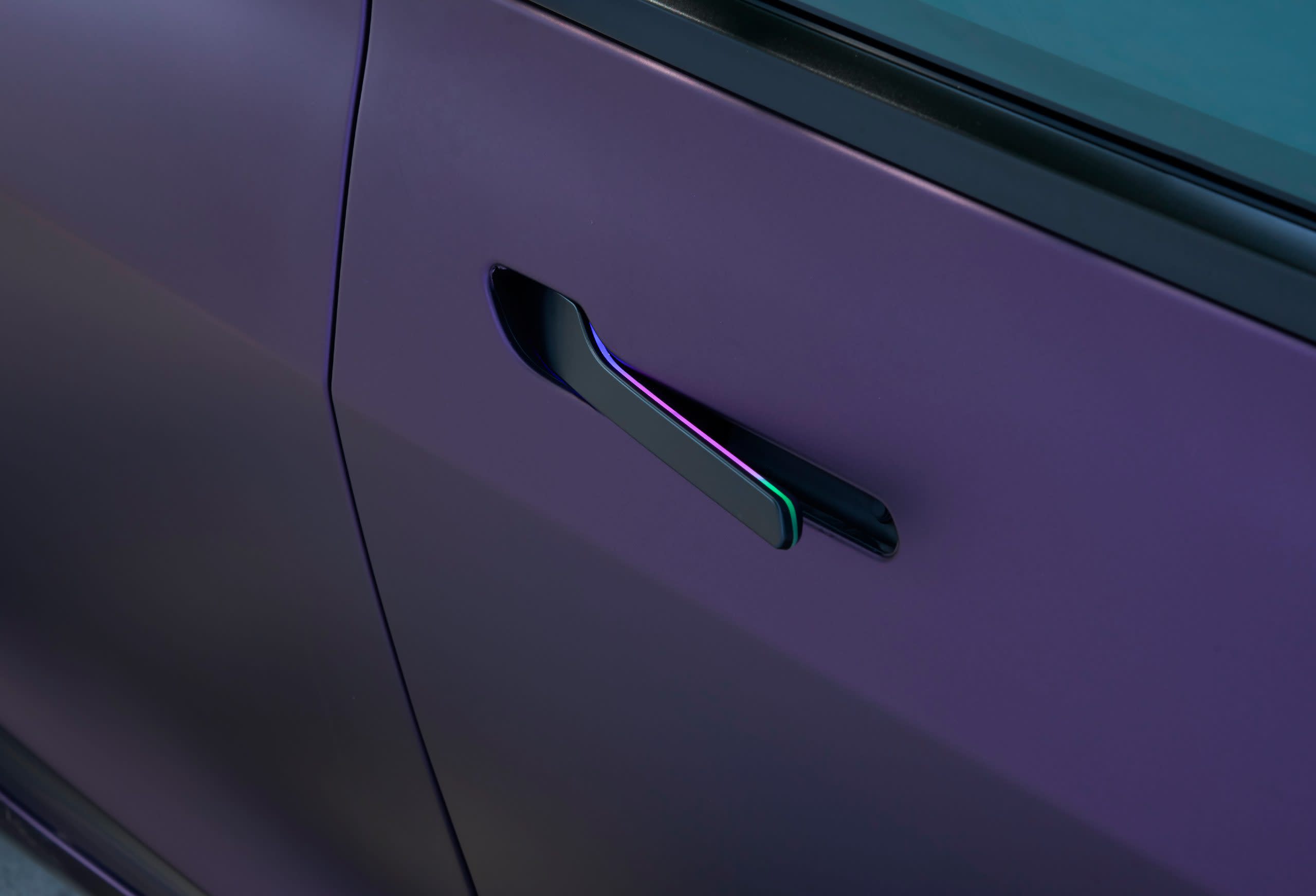
In October 2025, European safety regulators publicly flagged door handle safety design — particularly those used by Tesla — as a “key priority” for scrutiny. Unlike recalls or controversies of the past, this is a proactive regulatory posture: regulators are signaling that design features long regarded as aesthetic or brand differentiators may now come under safety mandates. Meanwhile, in the U.S., the National Highway Traffic Safety Administration (NHTSA) has already opened a formal investigation into Tesla’s 2021 Model Y over dozens of complaints of door handles failing, sometimes leaving occupants trapped.
For Tesla owners and prospective buyers in Europe and beyond, this is a turning point. Once, flush electronic handles and retractable door systems were hallmarks of Tesla’s design philosophy. Now, those very features could become regulatory liabilities. This article provides a comprehensive look at the evolving debate: the technical risks, regulatory frameworks, manufacturer responses, potential impacts on owners, and how this may reshape Tesla’s vehicle design future.
We structure the discussion in the following way:
-
Tesla’s historical door-handle design and why it matters
-
Safety incidents, complaints, and regulatory probes
-
European (and global) regulatory frameworks relevant to door design
-
Tesla’s responses and redesign plans
-
Impacts on owners and users
-
Strategic risks and implications for Tesla
-
Recommendations for European and U.S. owners
-
Conclusion
-
FAQ (frequently asked questions)
II. Tesla’s Door-Handle Design: History, Philosophy, and Risks
2.1 Design Philosophy: Minimalism, Aerodynamics, and Identity
Tesla has long adhered to a design ethos that blends minimalism with function. The retractable or flush door handle is more than aesthetic — it helps reduce drag, improves visual sleekness, and signals a high-tech sensibility. In many markets, Tesla’s doors “disappear” into the body until the car perceives a key fob nearby or the handle detects human presence.
This approach also reflects Tesla’s broader philosophy: software-centric control of mechanical systems, fewer visible mechanical parts, and an experience-first mindset. The door handle becomes not just a physical interface but a part of the vehicle’s identity.
2.2 Technical Vulnerabilities & Edge Cases
However, the reliance on electronics and power to actuate critical features introduces failure modes that traditional mechanical systems avoid. Some of the known vulnerabilities include:
-
Loss of power: If the main or auxiliary battery system loses voltage (for instance after a crash, low-voltage situation, or fault), the door handles may fail to deploy.
-
Control logic / sensor error: Misinterpretation of key fob proximity, sensor failure, or software glitches may prevent handle actuation.
-
Mechanical binding or wear: Retractable mechanisms may suffer from wear, contamination, or tight tolerances that degrade over time or in extreme temperature / moisture conditions.
-
Emergency usability: In the event of fire, crash, or panic, occupants or first responders need intuitive access. Hidden manual releases inside, if poorly placed or hard to reach, may be insufficient in urgent situations.
-
Child entrapment risk: If the exterior handles fail, and interior manual releases are out of reach for small children, the risk of entrapment arises.
Some fatal incidents and investigative reporting suggest these risks may have played a role in real-world emergencies.
2.3 Tesla’s Previous Mitigations: Manual Releases & Redundancy
Tesla does include manual mechanical release levers inside doors — typically hidden in side pockets or behind small flaps — so that occupants can open doors even if exterior handles don’t function. In a crisis, these are intended as failsafe backups.
However, in practice:
-
Many users are unaware of their existence or location.
-
In panic situations, reaching a small lever behind a cover may be nontrivial.
-
Some rear doors (especially rear seat doors) may have less accessible manual releases.
-
Under power loss, even windows may not drop, complicating escape.
Thus, while Tesla’s approach has some redundancy, critics argue that the design places too much burden on occupant knowledge and dexterity in emergencies.
III. Safety Incidents, Complaints & Regulatory Probes
3.1 U.S. Door Handle Investigation: Scope and Allegations
In September 2025, NHTSA formally opened a preliminary evaluation into approximately 174,000 Tesla Model Y vehicles from the 2021 model year. The investigation was prompted by consumer reports — including nine instances in which parents claimed exterior door handles became inoperative (after exiting or before entering), sometimes requiring windows to be broken to rescue children. ([Reuters])
Of these incidents:
-
In four cases, occupants (or parents) had to break through windows to re-enter the car.
-
None of the reports highlighted preceding low-voltage battery warnings before handle failure.
-
Reports suggest that insufficient voltage to the electronic locks may have caused the failures.
This investigation marks the first formal safety review regarding door-handle behavior in Tesla’s fleet beyond autonomous driving features.
3.2 Reported Safety Cases & Media Investigations
Beyond official probes, there have been several widely reported incidents and investigative features:
-
One tragic case in Toronto in which a Model Y caught fire after a crash, and occupants allegedly were unable to open doors, leading a bystander to break a window to extricate a survivor.
-
A Bloomberg investigation reported that Tesla has received over 140 consumer complaints globally (across years) involving door-handle malfunctions, some describing children trapped.
-
Recent reporting states that Tesla is studying redesign options after Chinese regulators floated the possibility of banning fully concealed door handles due to safety concerns.
-
Tesla designer Franz von Holzhausen has publicly indicated the company is exploring a combined mechanical-electronic release design to make door opening more intuitive under distress.
These cases have amplified public and regulatory scrutiny toward door design, especially in jurisdictions with high safety standards.
3.3 European Regulator’s Statement: A Shift in Focus
Most recently, Bloomberg reported that European regulators have added Tesla’s door safety design to their list of high-priority review items. The statement reflects a shift beyond crash avoidance or emissions: regulators now emphasize occupant egress and first responder access (i.e., ability to open doors externally after a collision). This elevates door handle design to a potential compliance gate rather than aesthetic or optional design freedom.
Taken together, the U.S. investigation and European regulator focus suggest door-handle safety is migrating from fringe technical critique to central regulatory concern.
IV. European & Global Regulatory Frameworks Relevant to Door Design
4.1 Key Standards & Regulations in Europe
Automotive design in Europe is subject to numerous regulatory regimes—some at the EU level, others at UNECE (United Nations Economic Commission for Europe) or national authorities. Relevant aspects include:
-
UNECE Regulation 11: Door locks, hinges, and internal structural strength; but less prescriptive about handle format.
-
UNECE Regulation 19 / 20: Concerned with interior door opening mechanisms and occupant egress requirements.
-
UNECE pedestrian and collision access norms: First responders must be able to open doors from external sides in emergencies.
-
EU type-approval directives: A vehicle must meet all applicable safety standards to be sold. Regulators may require evidence that escape and rescue are feasible in crash scenarios.
-
National safety agencies (e.g. Germany’s KBA, UK’s DVSA): These can impose supplementary tests or refuse homologation if designs are considered unsafe in local context.
While none currently mandate a specific door handle geometry, regulators are increasingly emphasizing that door opening reliability and escape capability should not be compromised by design choices.
4.2 Regulatory Leverage: Enforcement & Mandates
Regulators can apply leverage via:
-
Type-approval delays or refusals: If a new model’s design doesn’t satisfy egress/rescue expectations, approval could be withheld.
-
Compliance retrofit orders: Existing models may be subject to required design changes or recalls if deemed unsafe.
-
Certification testing pressures: Crash tests, water ingress tests, extreme environment tests may include door-opening assessments as part of evaluation.
-
Standards updates: Regulators may propose amendments to existing UNECE or EU rules to explicitly restrict designs that obstruct rescue or exit—meaning flush or purely electronic handles may become noncompliant unless redundancy is assured.
In effect, door-handle design may no longer be a design discretion but a regulated safety vector.
4.3 International Trends: China & U.S. Comparisons
-
In China, a draft national standard is reportedly under consideration that would ban fully concealed exterior handles, requiring a minimum handle size and a mechanical release mechanism, reflecting a push for more “visible, operable” handle designs.
-
In the U.S., while there is no existing regulation specifically about electronic door handles, the NHTSA investigation and consumer safety complaints raise the possibility of future mandates or recall compulsion.
-
Automakers operating globally must reconcile these diverging regulatory pressures; a design compliant in one region may become disallowed in another unless built with redundancy and fallback systems.
The global regulatory trend suggests that door handle design is becoming a multi-jurisdictional safety frontier.
V. Tesla’s Response & Redesign Plans
5.1 Public Statements & Internal Design Shifts
Tesla has responded (albeit cautiously) to the growing scrutiny:
-
Designer Franz von Holzhausen confirmed Tesla is actively studying redesigns to merge mechanical and electronic internal release mechanisms, making door opening more intuitive during emergencies.
-
Tesla has reportedly acknowledged the broader regulatory pressure, especially with China contemplating bans on fully hidden handles.
-
Media coverage suggests Tesla is reconfiguring its handle logic and may retroactively revise handle mechanisms in future models or redesigns.
However, Tesla has not confirmed precise timelines or which existing models will be retrofitted.
5.2 Technical Challenges & Trade-offs
Redesigning door handles is deceptively complex:
-
Packaging constraints: Door cavities already house wiring, insulation, actuators, sensors, speakers, window mechanics, and structural reinforcements. Finding space for additional mechanical linkage or redundancy is nontrivial.
-
Cost & weight impact: Adding mechanical parts or backup linkage increases cost, weight, and complexity—counter to Tesla’s efficiency leanings.
-
Software / integration complexity: Harmonizing electronic and mechanical release logic, failover modes, and detection requires rigorous testing.
-
Retrofitting vs new-model only: Tesla must decide whether to retrofit existing cars or limit enhancements to future platforms. Retrofitting may be costly and logistically challenging.
-
Certification cycles: Any redesign must pass safety and homologation testing, adding lead time.
Tesla faces a tension between preserving design minimalism (and cost control) and adopting more robust safety redundancy.
5.3 Timeline & Possible Strategy
The likely pathway Tesla may follow includes:
-
Immediate internal design revisions for upcoming models or facelifts.
-
Incorporation of a combined mechanical-electronic release system beginning with new platform vehicles.
-
Limited retroactive updates for safety-critical models in high-risk jurisdictions (e.g. Europe).
-
Regulatory lobbying to preserve certain design elements while negotiating acceptable safety margins.
-
Communication campaigns to reassure owners of safety and mitigations (manual releases, education).
Tesla’s success will depend on navigating these redesigns without undermining brand identity or creating repair burdens.
VI. Impacts on Owners & Users
6.1 Safety & Liability Implications
Owners must grapple with several concrete risks:
-
Entrapment risk: In extreme situations (crash, power loss), the inability to open doors can be life-threatening.
-
Liability concerns: If a vehicle’s door mechanism is found noncompliant with future regulations, owners might face limitations in resale, repairs, or insurance claims.
-
Recall or retrofit obligations: Owners may be required to submit to mandated retrofits or upgrades, possibly at cost or limited support.
-
Insurance / warranty interactions: Insurers may classify some vehicles as higher risk, imposing higher premiums or denying coverage for door/hardware failures.
6.2 Resale Value & Market Perception
From a buyer and seller perspective:
-
Buyers may discount Tesla models with older flush-handle design, preferring safer alternatives.
-
Models with retrofitted mechanical backup or compliance certifications may command a premium.
-
The stigma of “dangerous doors” may linger, reducing consumer confidence in older Tesla vehicles.
6.3 Practical Advice for Owners
Owners and potential buyers should take proactive steps:
-
Familiarize with manual releases: Locate and practice activating the interior mechanical lever(s) in each door.
-
Educate all passengers: Ensure children and passengers know where emergency door releases are.
-
Avoid low-voltage states: Keep auxiliary batteries healthy; avoid system states where voltage margins are low.
-
Document any handle malfunction: Immediately record and report any door-handle issues to Tesla and local safety agencies.
-
Monitor communications: Watch for recall notices, service bulletins, or design upgrade offers from Tesla or regulators.
-
Consider future compliance: If you plan to hold a car beyond its warranty, evaluate whether early models may fall afoul of new regulatory mandates.
European owners, especially, should pay attention to homologation or type-approval status as regulators may enforce stricter exit/access requirements.
VII. Strategic Risks & Implications for Tesla
7.1 Design Flexibility vs Regulatory Constraints
Tesla has historically prioritized aesthetic consistency and minimalism. But increasing regulatory pressure may force future models to be more mechanically redundant, compromising design purity. Tesla must choose whether to prioritize regulatory compliance or design ambition, and how to balance the two.
7.2 Legal & Compliance Exposure
Should a safety incident or regulatory ruling declare flush-handle designs unsafe, Tesla might face:
-
Mandatory upgrades or recalls in affected markets
-
Fines or penalties for nonconformance
-
Litigation risk from owners or families citing door-failure causal harm
-
Reputational damage harming brand halo and sales
Regulators may demand Tesla submit test data on door-opening performance, egress tests, and fault simulations — putting more engineering supply-chain burden on Tesla.
7.3 Global Product Architecture Tension
Tesla globally markets a largely unified architecture. If Europe mandates design changes incompatible with U.S. or Chinese designs, Tesla could face fragmentation:
-
Multiple variants with different handle systems
-
Increased parts complexity, inventory, and cost
-
Divergent software/actuator configurations
-
Slower rollout cycles or model constraints in certain markets
Tesla may need to adopt a “global worst-case-compliance” standard (i.e. design to satisfy Europe, then ship similar design to all markets) to maintain simplicity—at expense of cost or aesthetics.
7.4 Brand & Consumer Trust
If door-handle failures become high-profile, Tesla’s image as an innovator and safety leader may suffer. Especially for safety-conscious European consumers, the narrative that Tesla “sacrificed safety for style” could inflict long-term brand damage.
Tesla must manage both the technical fixes and the messaging — reassure users without appearing reactive or defensive.
VIII. Recommendations for European & U.S. Owners
8.1 For European Tesla Owners / Prospective Buyers
-
Favor models from later model years that may include revised handle logic or design.
-
During purchase, ask whether your vehicle includes emergency mechanical release design enhancements (if disclosed).
-
Before resale, disclose handle mechanism details and any retrofit history.
-
In markets with strong regulatory enforcement, check whether your vehicle meets homologation or retrofit mandates.
8.2 For U.S. Tesla Owners / Buyers
-
Even if U.S. regulation is not yet strict, monitor NHTSA activity — future mandates could affect vehicle resale or inter-state mobility.
-
Be judicious in using low-power states or aftermarket battery modifications that risk door-handle operations.
-
Document any handle issues, and report to Tesla or safety agencies to support broader safety data.
-
Understand that future U.S. Tesla models might adopt “improved mechanical / electronic handle systems” for global regulatory alignment.
8.3 For All Owners: Best Practices
-
Locate and test all manual interior release levers in safe conditions (parked).
-
Familiarize children with emergency release operations (if reachable).
-
Avoid keeping the car in states of low auxiliary voltage (e.g. extreme battery depletion).
-
Stay informed: subscribe to Tesla service bulletins, government recalls, and safety communications.
-
When buying used, ask about any handle-mechanism service, upgrades, or warranties.
IX. Conclusion
Tesla’s door-handle design is entering a new phase of scrutiny. What was once a signature aesthetic element is increasingly viewed through a safety lens. With U.S. regulators investigating and European safety authorities elevating door safety as a “key priority,” Tesla may soon find that flush, fully electronic handles are no longer a design prerogative but a regulatory hazard.
For Tesla owners, especially in Europe, vigilance is required: understand your car’s mechanism, practice emergency procedures, and monitor disclosures or retrofit offers. For Tesla as a company, the trade-off between design minimalism and safety compliance is at a critical juncture. How Tesla navigates this will signal the future balance between style, technology, and safety in its lineup worldwide.
X. FAQ (Frequently Asked Questions)
-
Why are European regulators suddenly targeting door-handle design?
Because door opening and occupant egress in emergencies is increasingly viewed as a core safety concern, especially when design choices may impede rescue or exit under fault conditions. -
Are Tesla’s interior manual releases not sufficient backup?
They exist, but their effectiveness depends on location, visibility, ease of operation, and occupant knowledge—factors that may fail in high-stress situations. -
Will my Tesla model be forced to retrofit new handles?
That depends on future regulatory mandates and whether Tesla’s existing designs are deemed noncompliant. Owners should monitor recall or retrofit notifications. -
Does this affect U.S. Tesla owners?
The U.S is already investigating door-handle failures in Model Y. Future regulation, recalls, or resale consequences may extend beyond Europe. -
Should I avoid buying older Teslas with flush electronic handles?
It may be wise to favor newer models or those with documented handle upgrades, especially in markets with strict safety enforcement.