
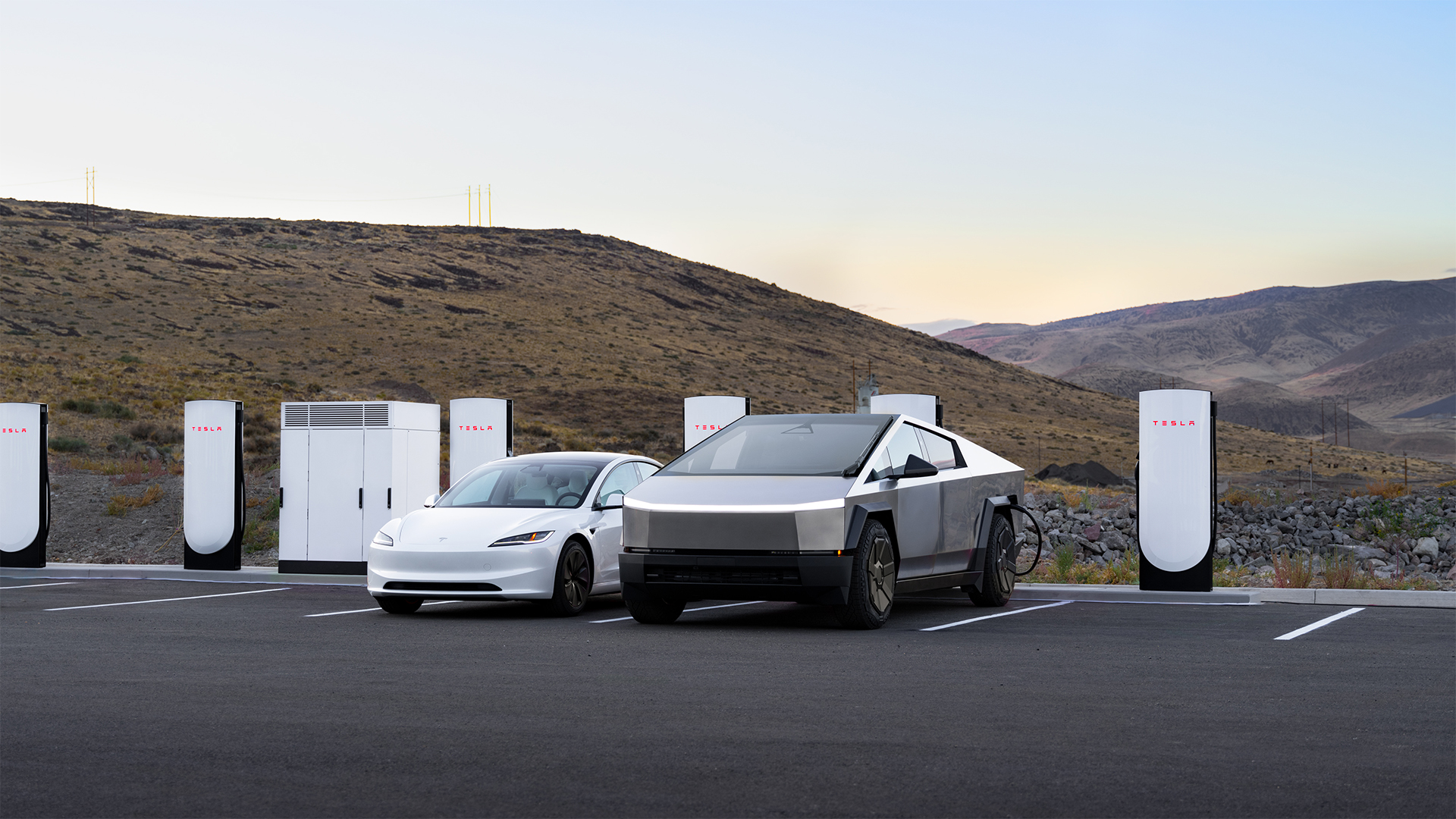
For nearly a decade, the Tesla Supercharger network has been the undisputed gold standard in electric vehicle charging. It was, and remains, the benchmark against which all other networks are measured for reliability, speed, and seamless user experience. But as the automotive world pivots en masse towards electrification, the demands on charging infrastructure are evolving at a breakneck pace. In a strategic move to not only meet these new demands but to fundamentally reshape the landscape, Tesla has unleashed its next-generation hardware: the V4 Supercharger.
The V4 is far more than an incremental update. It is not just a faster or slightly redesigned stall. It is a revolutionary piece of infrastructure, meticulously engineered to solve the core challenges of the multi-brand EV era. With its iconic taller design, longer charging cable, and integrated credit card reader, the V4 Supercharger is a statement of purpose. It represents Tesla's transition from a proprietary, walled-garden network to an open, universal standard-bearer, all while deepening its competitive moat. This article explores the technological advancements, strategic deployment, and profound market impact of the V4 Supercharger, analyzing how it benefits both loyal Tesla owners and the broader EV community across North America and Europe.
Chapter 1: Engineering the Future - Deconstructing the V4 Stall
The genius of the V4 Supercharger lies in a series of thoughtful engineering decisions that address the most pressing pain points of the modern EV charging experience. While it may look like a simple monolith, its design is a masterclass in future-proofing and user-centric problem-solving.
-
The Longer Cable: A Simple Solution to a Complex Problem
Perhaps the most significant and immediately obvious physical change is the new, much longer charging cable. On previous V2 and V3 stalls, the short cable was a deliberate design choice for a fleet of vehicles where the charge port was always in the same location (driver-side rear). This kept cables off the ground and simplified the design. However, as Tesla began opening its network to other brands, this became a major flaw. A Ford Mustang Mach-E, a Hyundai IONIQ 5, or a Porsche Taycan all have charge ports in different locations. The short cable often forced these drivers to park awkwardly, sometimes taking up two spaces to reach the charger, leading to frustration and inefficiency.
The V4's longer cable, routed externally on the stall, elegantly solves this problem. It can easily reach the charge port of virtually any EV, regardless of its location. This seemingly simple change is a game-changer for usability, making the Supercharger network truly brand-agnostic and welcoming to all EV drivers.
-
Higher Voltage, Future-Proof Power
Internally, the V4 architecture represents a significant leap forward. The stalls are built on a 1000V architecture, a substantial increase from the ~500V system of the V3. While most current EVs, including Teslas, cannot yet take full advantage of this higher voltage, it is a crucial act of future-proofing. The Tesla Cybertruck, with its 800V battery pack, is one of the first vehicles designed to leverage this capability, allowing for even faster charging speeds. Other automakers are also moving to 800V systems to reduce charging times.
By deploying 1000V-capable hardware now, Tesla ensures its network will remain at the cutting edge for years to come, capable of serving the next generation of EVs without needing another expensive hardware swap. For current vehicles, the more robust power electronics and improved cooling can also lead to more sustained high-power charging, meaning the car holds its peak charging rate for longer before tapering, resulting in shorter overall charging stops.
-
Integrated Payment System for All
A small but critical addition to the V4 stall is the built-in contactless credit card reader and a small LCD screen. For Tesla owners, the experience remains unchanged: plug in, and the car authenticates automatically. However, for non-Tesla drivers, this is revolutionary. It eliminates the need to fumble with different apps for each charging network. A driver can simply pull up, tap their credit card or phone, plug in, and start charging.
This feature is not just about convenience; it's a strategic business move. In the United States, it makes the V4 stalls compliant with the requirements of the National Electric Vehicle Infrastructure (NEVI) program. To receive a share of the $7.5 billion in federal funding set aside to build out a national charging network, chargers must be open to all brands and feature a standardized payment method like a credit card reader. The V4 is Tesla's key to unlocking these public funds.
-
Physical Design and Superior Cooling
The V4 stall is noticeably taller and sleeker than its predecessors. This isn't just for aesthetics. The taller enclosure houses upgraded power electronics and, most importantly, a more advanced liquid cooling system. One of the limiting factors in ultra-fast charging is heat management, both in the cable and the stall's components. The V4's superior cooling allows it to deliver its maximum power output more consistently and for longer periods without throttling (reducing power to manage heat), especially on hot days or at high-utilization sites. This translates directly to more reliable performance and faster, more predictable charging times for every user.
Chapter 2: Strategic Rollout - Location, Location, Location
Tesla's deployment of V4 Superchargers is not random; it's a highly strategic global chess game, with different but complementary objectives in North America and Europe.
-
US Strategy: NACS and NEVI Dominance
In the United States, the V4 rollout is inextricably linked to the meteoric rise of the North American Charging Standard (NACS), the charging connector Tesla pioneered. Following Tesla's decision to open its standard, nearly every major automaker—from Ford and General Motors to Rivian, Volvo, and Nissan—has committed to adopting the NACS port in their future EVs starting in 2025.
The V4 Superchargers, with their long cables and credit card readers, are the physical manifestation of this new NACS ecosystem. They are being deployed along major highway corridors, creating a truly universal fast-charging network that will soon serve the vast majority of new EVs sold in the country. By aligning the V4's features with the NEVI program requirements, Tesla is positioning itself to use public funds to accelerate the build-out of its own network, a brilliant strategic move that leverages taxpayer money to widen its competitive advantage.
-
European Strategy: CCS2 and Open Market Leadership
In Europe, the charging landscape is different. The Combined Charging System (CCS2) is the established standard. Here, Tesla's V4 strategy is about demonstrating its leadership in creating a truly open and reliable network. New V4 sites in Europe are typically built with every stall accessible to any CCS2-compatible vehicle. Many are equipped with the "Magic Dock," an elegant integrated adapter housed within the charger itself. A Tesla driver plugs in as normal. A non-Tesla driver selects the stall in the Tesla app, which unlocks the Magic Dock, allowing them to pull out the connector with the CCS2 adapter attached.
This approach has turned the Supercharger network into a powerful magnet for all EV drivers in Europe, many of whom have been frustrated by the poor reliability and confusing payment systems of other networks like IONITY, Allego, and Shell Recharge. The V4's ease of use and reliability are a potent advertisement for the Tesla brand, even to people driving a Volkswagen ID.4 or a Renault Megane E-Tech.
-
Prioritizing New Sites vs. Upgrades
Tesla's current strategy appears to prioritize building entirely new, large-scale V4 sites over upgrading the vast number of existing V2 and V3 locations. There's a clear logic to this. New sites can be designed from the ground up to accommodate the V4's footprint and power requirements, and they can be placed in strategic locations to fill gaps in coverage or alleviate congestion at popular spots. Upgrading existing sites is more complex, often requiring new permits, trenching for thicker power cables, and site downtime. While some V3 sites are being retrofitted with Magic Docks, the full V4 experience is primarily being rolled out at brand-new locations, creating flagship charging hubs that define the state of the art.
Chapter 3: The Enhanced User Experience
The V4 revolution brings tangible benefits to every type of EV driver, fundamentally improving the on-the-road charging experience.
-
For Tesla Owners:
While the core "plug and charge" simplicity remains, the V4 era brings subtle but important improvements. The longer cable means less precise parking is required, a welcome relief at busy stations. No more having to back in perfectly to the curb; drivers can pull in at a more natural angle. The improved reliability and reduced power throttling from the V4's advanced cooling mean charging sessions are more predictable. The biggest change, however, is psychological: sharing the space. While some long-time owners may feel a twinge of exclusivity is lost, the reality is that an open, profitable, and rapidly expanding network benefits everyone by ensuring there are always more chargers available wherever they travel.
-
For Non-Tesla Owners:
For drivers of other EV brands, the V4 Supercharger is nothing short of a revelation. It solves the three biggest problems of public charging:
-
Finding a Charger: The Tesla network is vast and easily searchable in the Tesla app.
-
Hoping it Works: Superchargers have an industry-leading uptime of over 99%.
-
Figuring Out How to Pay: The process is standardized. Use the app or tap a credit card. No more juggling multiple RFID cards and buggy apps from different providers.
The experience is smooth, professional, and reliable, setting a new, high bar that will force other networks to improve or become irrelevant.
-
Solving Congestion
A common fear is that opening the network will lead to massive queues and a degraded experience for all. Tesla is proactively managing this through a combination of rapid expansion and smart software. The V4 rollout is dramatically increasing the total number of available stalls. Furthermore, Tesla's dynamic pricing structure encourages charging during off-peak hours. Stiff idle fees—charging owners for every minute they remain plugged in after their session is complete—ensure stalls are turned over quickly. The in-car navigation system also shows real-time stall availability, allowing drivers to see if a station is busy and route to a different one if necessary.
Chapter 4: Market Impact and Competitive Checkmate
The V4 Supercharger is not just a piece of hardware; it's a strategic weapon that is reshaping the competitive dynamics of the entire automotive and energy industry.
-
Setting the Standard, Forcing Improvement
The sheer excellence of the V4 experience is putting immense pressure on competing charging networks like Electrify America (in the US) and IONITY (in Europe). For years, these networks have been plagued by broken chargers, confusing software, and payment failures. As more drivers experience the seamlessness of the V4 Supercharger, the tolerance for this poor performance will evaporate. The V4 is forcing the entire industry to raise its game, which is ultimately a win for all EV drivers.
-
A New, Powerful Revenue Stream
For years, the Supercharger network was seen as a cost center, a necessary expense to sell cars. With the opening of the network and the efficiency of the V4 design, that has fundamentally changed. Charging is now becoming a significant and profitable business unit for Tesla. Selling electricity to millions of drivers from Ford, GM, VW, and others will generate billions in high-margin revenue, further strengthening Tesla's financial position and funding even faster network expansion.
-
The Moat Deepens
Ultimately, the V4 revolution significantly deepens Tesla's competitive moat. A convenient, reliable, and ubiquitous charging network is one of the top considerations for prospective EV buyers. By making its network the best and making it available to everyone, Tesla creates a powerful halo effect. A Ford driver who has a great experience at a V4 Supercharger is more likely to consider a Tesla for their next vehicle. The network, once a reason to buy a Tesla, is now a reason to consider Tesla, even if you don't own one yet. It remains the company's single most powerful and enduring competitive advantage.
Conclusion
The V4 Supercharger is the physical embodiment of Tesla's long-term vision. It's a masterstroke of engineering and strategy that seamlessly blends user-centric design with shrewd business acumen. It solves the practical problems of a multi-brand EV world with its long cable and universal payment system. It future-proofs the network with its high-voltage architecture. And it transforms a cost center into a powerful revenue engine.
More than just a charger, the V4 is a pivotal piece of infrastructure accelerating the global transition to sustainable energy. It is breaking down the walled gardens of the early EV era and creating a truly universal and reliable charging experience for all. With the V4 rollout accelerating across the globe, Tesla is not just defending its lead in the charging space; it is cementing its position as the indispensable energy and transportation company of the 21st century.
FAQ Section
-
How can I find a V4 Supercharger near me? The best way is to use the Tesla app. You can filter the map to show chargers that are open to non-Tesla EVs and see real-time availability. The in-car navigation in a Tesla will also prioritize V4 sites when planning a route. Third-party apps like PlugShare are also good resources.
-
Is charging at a V4 stall faster for my Model 3/Y? Not necessarily faster in terms of peak speed, as most current Teslas are limited to the V3's 250kW peak. However, you may experience a more sustained high charging rate due to the V4's superior liquid cooling, which can result in a slightly shorter overall charging time, especially in hot weather.
-
As a non-Tesla owner, what do I need to do to use a V4 Supercharger? First, download the official Tesla app and create an account, adding a payment method. At the V4 station, select "Charge Your Non-Tesla" in the app. The app will show you a list of stall numbers. Select your stall number, plug in the connector, and charging will begin. At stalls with credit card readers, you can often just tap to pay.
-
Why are some V4 stalls in Europe "Tesla-only" while others are open? This is part of Tesla's phased rollout of the open network. In the early days, some sites or even specific stalls at a site might be designated for Tesla vehicles only to ensure availability for their primary customers while they scale up capacity. However, the overwhelming trend is for all new V4 sites to be open to all compatible EVs.
-
Will the longer cable reach the charge port on any EV? The V4 cable is designed to reach the charge port on the vast majority of production EVs, regardless of whether the port is on the front fender, rear quarter panel, or nose of the car. It effectively eliminates the "parking puzzle" that non-Tesla drivers faced at older Supercharger stalls.