
Introduction: The End of an Exclusive Era
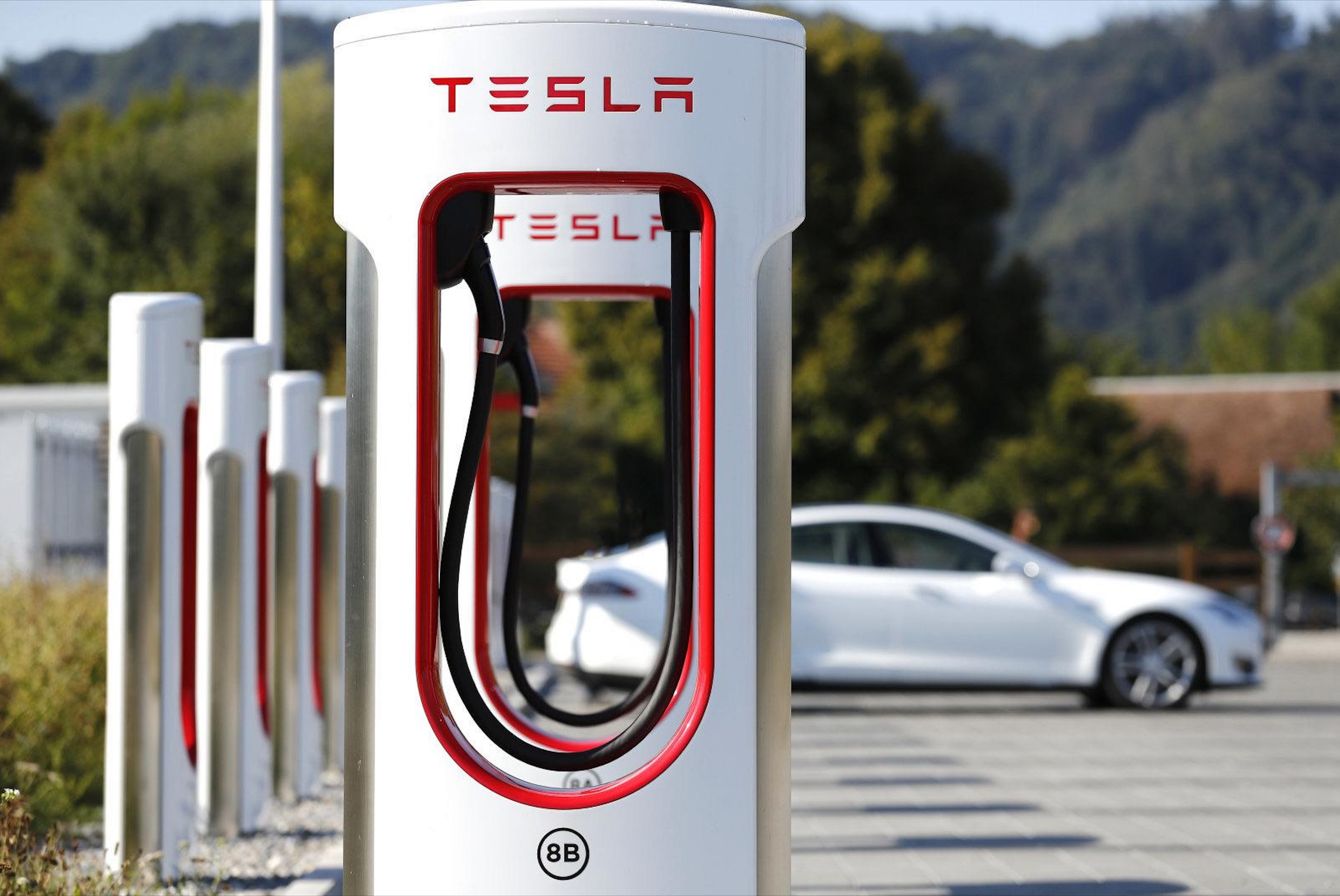
For nearly a decade, it was the ace up Tesla’s sleeve, the unspoken closing argument in every showroom. The experience was a core part of the brand's DNA: you’re on a long-distance road trip, the large screen in your car seamlessly navigates you to a nearby Supercharger station, and as you pull in, you see a row of sleek, futuristic charging posts waiting for you. You back into the spot, grab the lightweight handle, and with a satisfying click, plug it into your car. There’s no app to fumble with, no credit card to swipe, no payment screen to navigate. The car and the charger communicate silently. By the time you’ve walked into the adjacent coffee shop, your phone notifies you that charging has begun, and it will tell you precisely when you’ll have enough range to continue your journey. This was the promise of the Tesla ecosystem: a frictionless, reliable, and exclusive world.
Now, imagine a different scene, one becoming increasingly common from the highways of California to the autobahns of Germany. You pull into that same station, but the familiar calm is replaced with a low-grade chaos. A Ford Mustang Mach-E is parked awkwardly across two lines because its front-fender charge port can't reach the famously short V3 cable. The driver of a Hyundai Ioniq 5 is on their phone, struggling to get the Tesla app to accept their credit card. A Polestar has just finished charging, but the owner is nowhere in sight, leaving their car occupying a valuable spot. The frictionless experience you paid a premium for has suddenly developed a lot of friction. The exclusive club has opened its doors to the public, and the members are starting to question the value of their subscription.
Tesla's monumental decision to unlock its proprietary Supercharger network represents one of the most significant strategic pivots in the company's history. It is a calculated gamble that trades a powerful, exclusive competitive advantage for a shot at something much bigger: total domination of the global energy infrastructure for electric vehicles. But as the company pursues this grand ambition, it risks alienating the very customers who fueled its rise. This article will analyze the powerful strategic motivations behind opening the network, dissect the real-world consequences for loyal Tesla owners—from logistical nightmares to a diluted brand promise—and evaluate whether the heralded rollout of the new V4 Supercharger can solve the very problems this "open door" policy has created.
Chapter 1: Tearing Down the 'Walled Garden' - The Strategy Behind Open Access
For years, analysts and investors referred to Tesla's Supercharger network as its "walled garden" or its primary "moat"—a defensive barrier that kept competitors at bay. While other EV manufacturers outsourced their charging solutions to a messy, unreliable patchwork of third-party providers, Tesla built its own. This created a powerful lock-in effect; for many buyers, the decision to purchase a Tesla was as much about buying into the Supercharger network as it was about the car itself. So why would Tesla voluntarily tear down the walls of its most valuable fortress? The answer lies in a confluence of irresistible incentives, mounting regulatory pressure, and a long-term vision that extends far beyond just selling cars.
2.1 The Original Moat
To understand the significance of the shift, one must first appreciate the power of the original model. The exclusivity of the Supercharger network was a masterclass in vertical integration. Because Tesla controlled the car, the software, and the charger, it could create a seamless user experience that no competitor could match. This reliability became a cornerstone of the brand's identity. While other EV owners were plagued by "range anxiety," Tesla drivers embarked on cross-country road trips with confidence. The network was a physical manifestation of the brand's promise of a future that simply works. This advantage was not just a convenience; it was a powerful sales tool that justified Tesla's premium pricing and fostered a fiercely loyal community.
2.2 The Carrot: Government Subsidies and Public Funding
The first, and perhaps most compelling, reason to dismantle the walled garden was the emergence of massive government incentive programs. In the United States, the National Electric Vehicle Infrastructure (NEVI) Formula Program, part of the 2021 Bipartisan Infrastructure Law, allocated $5 billion to states to build a national network of EV chargers. However, there was a crucial string attached: to qualify for this funding, charging stations must be open to all EV brands and include standardized payment methods like credit card readers.
Tesla was faced with a choice: remain exclusive and watch billions of dollars flow to its competitors, or open its network and claim a substantial piece of the public pie. The company chose the latter. By retrofitting existing stations with "Magic Docks" (an integrated CCS adapter) and ensuring new stations met NEVI standards, Tesla positioned itself to become a primary contractor in building out America's EV backbone. A similar dynamic is playing out in Europe. The European Union and individual member countries have their own subsidy programs aimed at eliminating charging inequality and ensuring a robust, continent-wide network. These programs heavily favor interoperable systems built on the dominant Combined Charging System (CCS2) standard, putting immense financial and political pressure on Tesla to integrate rather than isolate.
2.3 The Stick: The Push for a Universal Standard
While subsidies were the carrot, regulatory pressure was the stick. In Europe, where consumer protection and anti-monopoly laws are stringent, the idea of a proprietary, brand-exclusive charging network was on borrowed time. Regulators saw such systems as anti-competitive and a barrier to mass EV adoption. The EU has been steadfast in its promotion of the CCS2 plug as the universal standard for DC fast charging. For Tesla to continue its aggressive expansion in Europe, fighting against this regulatory tide was a losing battle.
By proactively opening its network and adopting CCS2 compatibility on its new V4 chargers, Tesla transformed from a potential regulatory target into a cooperative partner. This move not only appeased regulators but also cleverly reframed the narrative. Instead of being the Apple of the EV world with a proprietary connector, Tesla was now positioning itself as a leader in building a universal charging future—a future it still intended to dominate.
2.4 The New Empire: From Hardware Sales to Energy Provider
Perhaps the most far-sighted reason for opening the network is the desire to pivot Tesla's business model. The company's official mission is to "accelerate the world's transition to sustainable energy." This mission is far broader than just selling cars. By opening its network, Tesla is making a play to become the dominant energy provider for the entire electric transportation sector.
Think of it this way: selling a car is a one-time transaction. Selling electricity is a recurring revenue stream that will last for decades. With millions of non-Tesla EVs hitting the roads, a vast, addressable market for energy sales has emerged. The Supercharger network, with its prime real estate and reputation for reliability, is perfectly positioned to capture this market. Each charging session from a Ford, Hyundai, VW, or Rivian owner represents a new stream of high-margin revenue. Furthermore, the data collected from this expanded user base—charging habits, peak hours, route preferences—is incredibly valuable for planning future network expansion and optimizing energy grid usage. This move signals a strategic evolution: Tesla is no longer just a car company with a charging network; it is an energy infrastructure company that also happens to sell cars.
Chapter 2: The Owner's Dilemma - A 'Clogged Arteries' Crisis
While the strategic rationale for opening the Supercharger network is sound from a corporate perspective, the on-the-ground reality for Tesla owners has been fraught with frustration. The seamless experience they paid for is being disrupted, and the once-exclusive club is feeling uncomfortably crowded. The network's arteries are clogging, and the loyal customer base is beginning to feel the pain.
3.1 The Reality of Congestion
The most immediate and visceral impact has been a sharp increase in congestion. Across social media platforms and owner forums, stories and photos abound of long queues at previously quiet Supercharger locations. What was once a guaranteed quick stop on a road trip can now involve a significant wait, particularly during peak travel times like holidays or weekends.
This isn't just anecdotal. Data analysts tracking station usage have noted marked increases in occupancy rates at pilot program sites in both North America and Europe. The problem is one of simple math: the supply of charging stalls has remained relatively constant in the short term, while the demand has suddenly surged with the addition of millions of eligible non-Tesla EVs. This has introduced a level of unpredictability that undermines the core promise of the Supercharger network: reliability. For a community of owners who were early adopters and evangelists for the brand, this degradation of service feels like a betrayal.
3.2 The Design Flaw Exposed
The congestion issue is massively exacerbated by a fundamental design problem: the Supercharger network was purpose-built for Tesla vehicles and nothing else. This Tesla-centric design creates a cascade of logistical nightmares when other brands try to use it.
The most glaring issue is cable length. V2 and V3 Supercharger stalls feature notoriously short cables. This was an intentional design choice to reduce cost, complexity, and ground clutter. It works perfectly for Tesla cars, which have all been designed with their charge port in the exact same location: the driver's side rear corner. However, other automakers have placed their charge ports all over the vehicle—front driver's side fender (Ford Mustang Mach-E), front passenger side (Porsche Taycan), or even in the front grille (Nissan Leaf).
When these vehicles pull up to a V3 Supercharger, the short cable often cannot reach their port. The only solution for the driver is to park at an angle or pull straight in, physically blocking one or even two adjacent charging stalls. A single non-Tesla vehicle can effectively take two or three stalls out of commission, exponentially worsening the congestion problem.
Beyond the physical incompatibility, there is the user interface friction. The "plug-and-charge" simplicity for Tesla owners is replaced by a multi-step, often clunky process for guests. A new user must first know that they need to download the Tesla mobile app, then create an account, add a credit card, find the specific charger they are at, and initiate the session from their phone. At stations with the "Magic Dock" adapter, they must first select a stall in the app to unlock the integrated CCS adapter before they can plug in. This process, while functional, introduces opportunities for error—app crashes, payment failures, user confusion—that lead to delays and occupy the stall while the driver troubleshoots.
3.3 The Erosion of Exclusivity
The final, and perhaps most profound, impact is psychological. Owning a Tesla has always felt like being part of a special project, an exclusive ecosystem. The Supercharger network was the ultimate members-only benefit. It was a tangible, daily reminder of the premium paid and the smart choice made.
Opening the network to all comers has irrevocably diluted this sense of exclusivity. For many long-time owners, it feels as though the value proposition has been fundamentally altered after the sale. They endured the early years of high prices and build quality issues, acting as beta testers and brand ambassadors, in part because of the promise of this superior ecosystem. Now, that ecosystem is being shared with the very competitors they chose against, and the experience is suffering as a result. This has led to a palpable sense of frustration within the community, with many feeling that Tesla is prioritizing new revenue streams over the loyalty of its foundational customer base.
Chapter 3: The V4 Supercharger - The Silver Bullet?
As frustration over congestion and compatibility issues mounted, Tesla's engineers were already working on the next generation of charging hardware. The V4 Supercharger, which began its global rollout in 2023, is not merely an incremental update. It is a ground-up redesign engineered specifically to address the challenges of a multi-brand, public-facing charging network. For Tesla, the V4 is more than just a new charger; it's the proposed solution to the very crisis its open-network strategy created.
4.1 Engineering a Solution
The single most important design change in the V4 Supercharger is the significantly longer charging cable. Measuring approximately 10 feet (3 meters), the new cable is a direct response to the primary complaint about V2/V3 compatibility. This extra length allows the V4 to easily reach the charge port of virtually any EV, regardless of its location. This seemingly simple change is a logistical game-changer. It means a Ford Mustang Mach-E or a Porsche Taycan can park properly within a single stall, just like a Tesla, instantly eliminating the problem of one car blocking multiple chargers. This alone has the potential to dramatically increase the effective capacity of a busy station.
4.2 More Than Just a Cable
While the longer cable is the headline feature, the V4 architecture includes several other crucial advancements for a multi-brand world. The unit is designed to support higher voltage and amperage, future-proofing the network for next-generation vehicles capable of charging at speeds well beyond the current 250kW peak of the V3 system. This ensures the network will remain a premium, high-speed option for years to come.
Furthermore, the physical design of the V4 pedestal includes a space provisioned for a credit card reader and a small screen. While not active on the earliest deployed units, this hardware integration is critical for two reasons. First, it is a key requirement for accessing government subsidies like the NEVI program in the US. Second, it will provide a much more streamlined "tap-to-pay" experience for non-Tesla guest users, eliminating the need to download and set up the Tesla app. This will significantly reduce the time spent per vehicle at the stall, helping to alleviate congestion by increasing throughput.
4.3 A Race Against Time
The V4 Supercharger is, on paper, the perfect solution. It solves the compatibility issues, streamlines the user experience for guests, and future-proofs the network's performance. The critical question, however, is one of pace and scale. Tesla's network is vast, comprising over 50,000 Superchargers globally, the vast majority of which are V2 and V3 models. Upgrading this entire network is a monumental and expensive undertaking.
Currently, Tesla is in a race against time. The company is prioritizing V4 installations for all new charging sites and has begun selectively upgrading high-traffic legacy locations. However, the open-access program is expanding much faster than the V4 rollout. This has created a painful transition period where the problems of the open network are widespread, but the solutions are still relatively scarce. For the Tesla owner stuck in a queue behind three awkwardly parked non-Tesla EVs at a V3 station, the promise of a future V4 upgrade provides little comfort. The success of this entire strategic pivot hinges on Tesla's ability to deploy the V4 solution quickly and at a massive scale, before the frustration of its core customer base curdles into lasting brand damage.
Conclusion: A Necessary, Painful, and Unavoidable Evolution
Tesla's decision to open its Supercharger network was not a whim; it was a calculated and strategically necessary evolution. Faced with a choice between protecting its exclusive "walled garden" and seizing a commanding position in the future of global energy distribution—while accepting billions in government funding to do so—the company made the only logical long-term choice. The move promises to unlock massive new revenue streams and solidify Tesla's influence far beyond the automotive sector. Yet, this grand strategic vision has come at a tangible, immediate cost to its most loyal customers, who are now experiencing the friction, congestion, and dilution of the brand's once-flawless charging promise.
The path forward is a tightrope walk over a chasm of customer dissatisfaction. The company's future in this space will likely branch into one of three distinct realities:
-
Scenario A: The Seamless Future. In this optimistic outcome, the V4 Supercharger rollout accelerates dramatically. Older, high-traffic sites are rapidly retrofitted with long cables and tap-to-pay systems. The initial congestion proves to be a temporary, awkward phase of growth. The Supercharger network, powered by its superior reliability and user interface, successfully becomes the de facto standard for all EVs, and Tesla reaps the rewards of its bold gamble.
-
Scenario B: The Two-Tier System. To quell the growing unrest from its base, Tesla could implement a hybrid model. The network remains open, but Tesla owners are granted premium perks. This could include the ability to reserve a charging stall via the app, access to consistently lower "member" pricing, or even the development of a few, strategically located "Tesla-only" flagship charging centers. This would preserve a sense of exclusivity while still capitalizing on the open market.
-
Scenario C: The Congestion Quagmire. This is the pessimistic scenario where the V4 rollout continues to lag behind the expansion of the open-access program. Congestion becomes the new, frustrating norm. The legendary reliability of the Supercharger network becomes a thing of the past, permanently tarnishing the brand's reputation. In this future, Tesla's greatest competitive advantage is eroded, not by a competitor, but by its own strategic ambition.
For the Tesla owner, the takeaway is clear: the era of the Supercharger network as an exclusive, private club is over. It is transforming into a piece of public utility infrastructure, and like any major infrastructure project, the construction phase is messy and disruptive. This evolution was likely unavoidable for Tesla's long-term growth and dominance. The ultimate test now lies in the company's ability to navigate this painful transition without forgetting the community of owners who championed the brand and made its success possible in the first place.
FAQ
Q1: How can I tell which Superchargers are open to other EVs? A: In the Tesla app, you can select the "Charge Your Non-Tesla" option from your profile. The map will then display only the Supercharger locations that are equipped and available for all compatible EVs. In the vehicle's navigation, these sites are often marked with a distinct icon.
Q2: Does Tesla charge non-Tesla vehicles more to use the network? A: Yes. Non-Tesla drivers pay a higher price per kilowatt-hour (kWh) than Tesla owners. However, Tesla offers a monthly charging membership that allows non-Tesla drivers to access the same lower pricing as Tesla owners, which can be cost-effective for those who use the network frequently.
Q3: Will opening the network slow down my individual charging speed? A: No. The power output of the charging stall you are using is not affected by other cars charging nearby, though some older V2 Superchargers (150kW) do share power between adjacent stalls (A/B pairs). Your charging speed is determined by your car's battery temperature, its current state of charge, and the maximum power of the stall itself, not by the brand of the car in the next stall.
Q4: What is the "Magic Dock" and how does it work? A: The Magic Dock is a clever piece of hardware that Tesla has retrofitted to some V3 Superchargers in North America. It is an integrated CCS adapter that is locked into the charging holster. When a non-Tesla user initiates a session via the app, the dock unlocks the adapter, allowing them to plug the entire apparatus (handle + adapter) into their vehicle. For a Tesla owner, the dock remains locked, and they simply use the standard NACS connector.
Q5: What is Tesla doing to manage congestion for existing owners? A: Tesla's primary long-term solution is the rapid deployment of V4 Superchargers with longer cables. In the short term, they are using data to identify and prioritize the expansion of high-traffic locations. They also implement idle fees, which charge any vehicle (Tesla or not) for every minute it remains plugged in after its charging session is complete, encouraging drivers to move their cars promptly.