
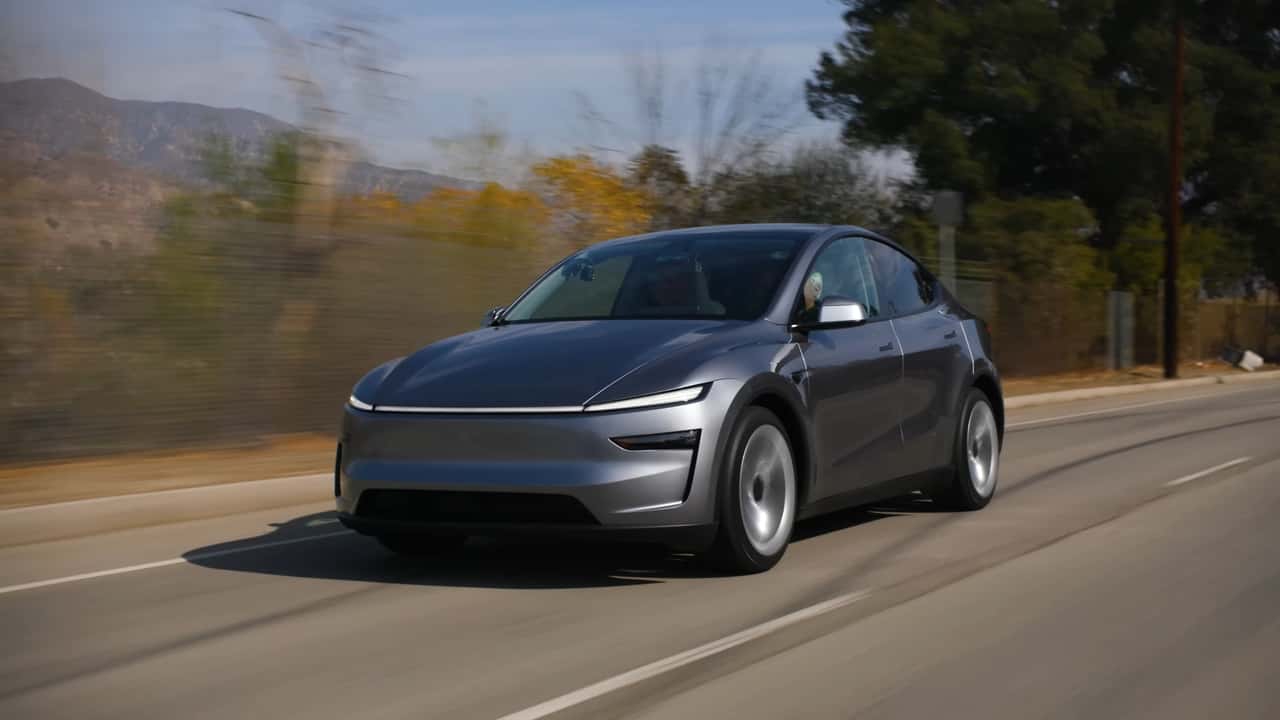
Introduction: Why the $41,990 Model Y Matters More Than It Looks
On the surface, Tesla’s announcement of a new $41,990 Model Y variant in the United States might look like yet another pricing adjustment in a long series of Tesla price moves. But in reality, this launch signals something far more important: a strategic reset of Tesla’s core consumer proposition in 2026.
For U.S. buyers—and by extension European Tesla owners watching the brand’s global direction—this Model Y is not just about affordability. It reflects Tesla’s response to:
-
Slowing EV demand growth in North America
-
Increased competition from legacy automakers and Chinese EV brands
-
Reduced or uncertain federal and state EV incentives
-
Changing buyer psychology in a high-interest-rate environment
The Model Y has long been Tesla’s best-selling vehicle globally, and decisions around it reveal Tesla’s priorities more clearly than any investor presentation or earnings call. This new pricing tier shows Tesla doubling down on volume, simplicity, and cost discipline—even if that means rethinking what “premium” means in 2026.
This article breaks down what the $41,990 Model Y actually is, why Tesla launched it now, how it affects buyers and existing owners, and what it tells us about Tesla’s near-term future in the U.S. market.
1. What Exactly Is the $41,990 Model Y?
Tesla’s new $41,990 Model Y is best understood as a re-positioned base configuration, not a brand-new model generation.
Core Characteristics
While Tesla has not radically redesigned the vehicle, this version emphasizes:
-
A simplified configuration strategy
-
Fewer factory-installed options
-
Software-locked or optional features
-
Optimized manufacturing cost structure
This approach allows Tesla to advertise a psychologically powerful sub-$42,000 price point without compromising core performance metrics that buyers expect from a Model Y.
What Stays the Same
Despite the lower price, key Tesla fundamentals remain intact:
-
Full access to Tesla’s Supercharger network
-
Over-the-air (OTA) software updates
-
Core Autopilot safety features
-
Tesla’s vertically integrated powertrain efficiency
This is important: Tesla is not retreating from its tech identity. Instead, it’s selectively trimming non-essential features that many mainstream buyers either don’t use or don’t prioritize.
2. Why Tesla Chose $41,990 — The Psychology of Pricing
The specific price point matters.
Breaking the $40,000 Mental Barrier
In consumer behavior research, price thresholds dramatically affect conversion rates. For EV buyers:
-
$39,999–$41,999 is perceived as “upper-mainstream.”
-
$45,000+ triggers “luxury purchase hesitation.”
-
$50,000+ significantly narrows the buyer pool
By placing the Model Y just under $42,000, Tesla positions it against:
-
Toyota RAV4 Prime
-
Ford Mustang Mach-E base trims
-
Hyundai Ioniq 5 and Kia EV6
-
Chevrolet Blazer EV
This is no accident. Tesla wants the Model Y to be cross-shopped with top-selling ICE and hybrid SUVs, not only with premium EVs.
Interest Rates Changed the Game
High auto loan rates in 2025–2026 have reshaped buyer priorities:
-
Monthly payment matters more than MSRP
-
Optional features are increasingly skipped
-
Buyers favor predictable ownership costs
Tesla’s pricing move acknowledges this reality and aligns the Model Y with payment-driven decision-making, not aspirational luxury.
3. What Features Are Likely Reduced or Optional?
While Tesla does not always publish granular feature breakdowns immediately, historical patterns and supply-chain logic suggest several likely adjustments.
Interior & Comfort Trade-Offs
Potential changes include:
-
Fewer premium interior materials
-
Reduced ambient lighting elements
-
Simplified seat configurations
-
Limited color options at base price
These are areas where cost savings are significant, but the user experience impact is minimal for most drivers.
Software-Based Differentiation
Tesla increasingly relies on software monetization rather than hardware upselling. Expect:
-
Full Self-Driving (FSD) as a paid add-on
-
Performance boosts sold post-purchase
-
Subscription-based premium connectivity
This strategy allows Tesla to keep the upfront price low while preserving long-term revenue opportunities.
4. How This Model Y Fits Tesla’s 2026 Strategy
The $41,990 Model Y is not an isolated move—it fits into a broader strategic pattern.
Volume Over Margin (For Now)
Tesla appears willing to accept:
-
Lower per-vehicle margins
-
Higher total unit sales
-
Greater factory utilization
This mirrors strategies used successfully during Tesla’s 2019–2021 growth phase.
Defending Market Share
Competition is intensifying:
-
Legacy automakers are improving EV quality
-
Chinese brands are expanding globally
-
Consumers have more EV choices than ever
Tesla’s response is not feature inflation, but price leadership at scale.
5. What This Means for New U.S. Buyers
For prospective buyers in the United States, this Model Y represents a unique moment.
Who This Model Y Is For
This configuration is ideal for:
-
First-time EV buyers
-
Families seeking a reliable electric SUV
-
Commuters prioritizing charging infrastructure
-
Buyers who value software updates over luxury trim
Who Might Want to Upgrade
Buyers who care deeply about:
-
Premium interiors
-
Maximum acceleration
-
Advanced driver-assistance features
May still prefer higher trims or other Tesla models.
6. Impact on Existing Model Y Owners
Price reductions always raise concerns among existing owners—but the reality is nuanced.
Resale Value Considerations
Yes, lower MSRP affects used pricing. However:
-
Demand for used Teslas remains strong
-
OTA updates maintain vehicle relevance
-
Charging ecosystem value remains unmatched
In many cases, depreciation trends are stabilizing rather than accelerating.
Software Parity Matters
Tesla’s software-first approach means older Model Ys often retain:
-
Similar UI and infotainment features
-
Safety updates
-
Navigation and efficiency improvements
This reduces the perceived gap between older and newer vehicles.
7. How This Affects the Broader U.S. EV Market
Tesla’s pricing decisions tend to ripple outward.
Competitive Pressure
Other automakers may be forced to:
-
Reprice entry-level EVs
-
Increase incentives
-
Simplify trim structures
This could accelerate EV adoption overall—but compress margins across the industry.
Normalizing EV Ownership
By anchoring the Model Y near mainstream pricing, Tesla reinforces the idea that:
EVs are no longer experimental or luxury products—they are normal vehicles.
That cultural shift matters as much as any technical innovation.
8. What European Buyers Should Watch Closely
Although this model is U.S.-focused, European Tesla owners should pay attention.
Likely European Implications
-
Similar pricing pressure in EU markets
-
Simplified trims for Model Y
-
Greater focus on affordability vs. performance
Europe’s incentive landscape is changing, and Tesla’s U.S. moves often foreshadow European adjustments.
9. Long-Term Risks of the Strategy
No strategy is without trade-offs.
Brand Perception Risk
Tesla must balance:
-
Mass-market accessibility
-
Premium brand identity
Over-simplification could dilute perceived exclusivity.
Margin Sustainability
Lower margins require:
-
Continued manufacturing efficiency
-
Strong software revenue
-
Stable battery supply costs
If any of these falter, Tesla may need further adjustments.
Conclusion: A Quietly Pivotal Moment for Tesla
The $41,990 Model Y is not flashy. It doesn’t introduce radical design changes or headline-grabbing technology. But it may be one of Tesla’s most important product decisions of the decade.
It reflects a mature Tesla—one that understands market psychology, financial conditions, and competitive realities. For buyers, it offers a compelling entry point into EV ownership. For owners, it signals Tesla’s commitment to relevance, scale, and long-term adoption.
In 2026, Tesla isn’t chasing hype.
It’s defending its foundation.
Frequently Asked Questions (FAQ)
Q1: Is the $41,990 Model Y eligible for federal EV tax credits?
Eligibility depends on current IRS requirements, battery sourcing rules, and income thresholds, which continue to evolve.
Q2: Is this a lower-quality Model Y?
No. Core safety, drivetrain, and software capabilities remain consistent with Tesla standards.
Q3: Will this replace existing trims?
It is likely to become the new entry-level configuration rather than a full replacement.
Q4: Does it support Full Self-Driving?
Yes, but FSD remains an optional paid feature.
Q5: Will Europe get a similar version?
Historically, U.S. pricing strategies often influence European offerings, though timing may vary.