
I. Introduction
For drivers of Tesla vehicles in the U.S. and Europe, one of the most reassuring parts of ownership has been access to a reliable charging infrastructure—particularly Tesla’s own network of Superchargers and destination chargers. In recent months, the broader public-charging ecosystem has reached new milestones: for example, in the U.S. alone there are now over 170,000 public AC Level 2 charging ports, as of mid-October 2025.
Meanwhile, Europe is witnessing rapid growth in public and fast-charging deployments, albeit with large regional variation.
These developments matter whether you’re doing daily commuting, long road trips, or looking ahead to the secondary market and resale value.
In this article we examine the current state of infrastructure in the U.S. and Europe, explore how Tesla plays into the mix, analyze what it means for Tesla owners in each region, highlight risks and considerations, and offer concrete guidance for drivers.
II. Current State of Infrastructure (U.S. & Europe)
A. U.S. Charging Landscape
According to the latest data, as of 14 October 2025 the U.S. had 170,033 public AC Level 2 charging ports (across ~66,070 locations) — a clear milestone for public charger deployment.
The largest share of these ports are concentrated in five states: California (~45,350 ports), New York (~15,861), Florida (~9,244), Massachusetts (~8,540) and Texas (~7,708).
In parallel, the U.S. continues to expand the DC fast-charging network across highways and major corridors although growth remains uneven and concentrated near urban centres.
While Level 2 stations help urban/overnight charging, fast-charging infrastructure is the critical enabler for long-distance travel, and growth in that segment remains a key metric to watch.
From Tesla owner’s perspective, a rising number of public stations (including destination chargers) means less “range anxiety” and greater flexibility — especially when paired with Tesla’s proprietary Supercharger network.
B. Europe’s Charging Landscape
Europe’s public charging network is growing at pace: in 2024 the number of public charging points increased by over 35% compared to 2023, pushing many countries past 1 million public points.
But coverage and quality vary widely between countries because of differences in policy incentives, housing type (garage vs apartment), and grid/regional constraints.
Fast-charging (≥150 kW) is now becoming a strategic priority in Europe: many national plans and the EU’s Alternative Fuels Infrastructure Regulation (AFIR) require high-power chargers every ~60 km on major trunk roads by 2025.
For Tesla drivers in Europe, the growth in infrastructure is a positive indicator—but your actual experience will depend heavily on country, region and charger network compatibility.
C. Tesla’s Role & Network
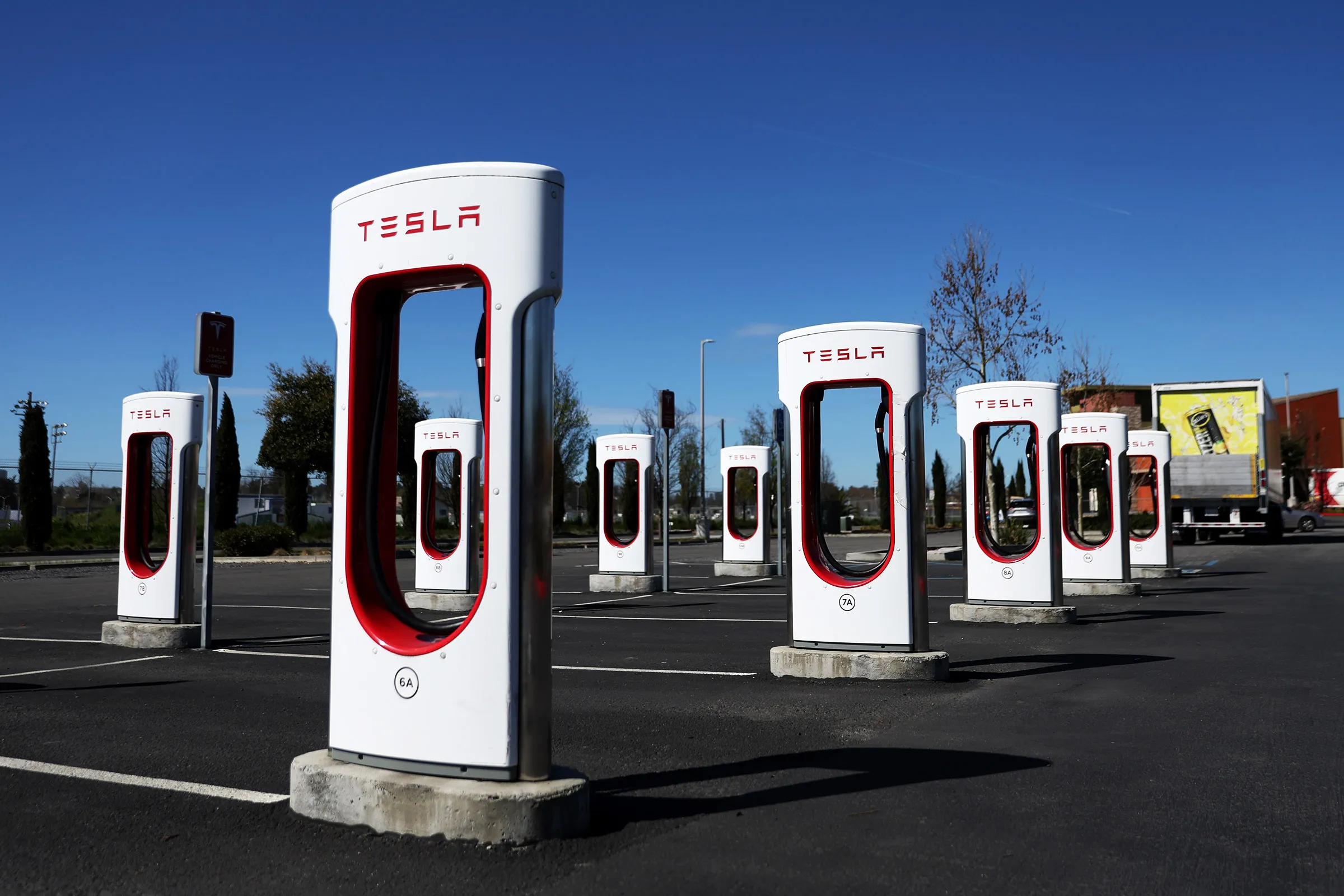
Tesla has long leveraged its Supercharger network as a key differentiator. As of late 2025, publicly-reported data suggests Tesla operates thousands of Supercharger stations globally across dozens of countries.
Beyond proprietary networks, Tesla is also moving to broaden access (in some markets opening up to non-Tesla vehicles) and is rolling out next-generation hardware (e.g., 500 kW+ capability) to future-proof the network.
For Tesla owners, this means you are part of the better-equipped end of the EV ecosystem—but you still need to consider if your local region has adequate coverage, station reliability, and compatibility with your vehicle’s charging capabilities.
III. Tesla’s Strategy & Role in Charging Infrastructure
A. Supercharger as a Competitive Moat
By owning its own global public fast-charging network (the Supercharger network), Tesla has created a strong competitive advantage: ease of charging, integrated software/interface, and reliability.
For owners, this means less worry about network fragmentation, roaming fees or incompatible plugs (especially in North America).
Tesla can also iterate its network rapidly: upgrading cabinets, adding V4 hardware, extending cable reach, and adding NACS (North American Charging Standard) plugs for broader EV compatibility.
B. Next-Gen Hardware & Future-Proofing
Tesla’s infrastructure roadmap includes high-power V4 Superchargers (capable of 500 kW+ in some markets) and wider plug interchangeability. These hardware upgrades are relevant for the future of long-distance travel and for Tesla’s upcoming models (e.g., Cybertruck).
From an ownership standpoint, this means your Tesla may benefit from shorter charge times, higher throughput at busy sites, and better integration with other EVs (which can drive economies of scale and lower costs over time).
C. Home Charging + Destination + Public Network Synergy
While home charging remains dominant (most Tesla owners charge at home), the public and destination networks serve crucial roles—especially for long-distance travel or where home charging isn’t available (e.g., apartments).
Tesla’s ecosystem (vehicle + app + charging network) gives it an edge. For owners, that means the infrastructure investment they enjoy is not just “any charger” but part of a seamless system.
D. Expansion in Europe & U.S. Markets
Tesla is leveraging its strong brand and charging network to support growth in Europe and the U.S. In Europe, where competition is fiercer and charger availability more variable, Tesla’s network can be a differentiator.
In the U.S., Tesla is also participating in wider plug-standard transitions (e.g., opening NACS) which may increase interoperability and benefit owners by reducing “charging deserts.”
The message to owners: a stronger, broader infrastructure supports long-term ownership value—especially for second-hand value, road-trip viability, and charging convenience.
IV. What This Means for U.S. Tesla Owners
A. Charging Convenience & Access
With rising public and fast-charging stations, U.S. Tesla owners can increasingly treat their car like any ICE vehicle for road trips—fewer “will I find a charger” concerns. The integration with Tesla’s Supercharger network enhances this further.
As the AC Level 2 network reaches 170,000+ ports, urban/suburban charging options expand (especially for non-home chargers). This is beneficial if you rent, live in an apartment, or travel in the city and rely on public charging.
However, for long-distance travel, the growth and reliability of DC fast-charging (and Tesla’s V4 rollout) remain critical. If you drive far or frequently, monitor how your local charger network is improving.
B. Cost & Reliability Impacts
More charging options typically lead to more competition and potentially lower pricing—not just at Tesla stations but across networks. Greater station access can also reduce queuing and waiting times.
Tesla owners may benefit from the robustness of the Supercharger network (well-maintained, widely available) but still need to be aware of local station load, peak periods (holidays, travel days) and station availabilities.
For owners of older Tesla models, compatibility with higher-power chargers is also relevant—while your car may not charge at full potential, the network strength still benefits you by providing broader access and redundancy.
C. Home vs Public Charging Decision
For U.S. owners, the infrastructure improvements may reduce reliance on home charging alone (though home remains convenient and cheapest). If you live in a location where home charging is unavailable (rented apartment, shared housing), the expanded public network provides more viable options.
For owners considering a Tesla now, assess: how far from your home is the nearest Supercharger or fast-charging hub? Has your area seen new chargers added recently (especially along your common routes)?
D. Future-Proofing Your Ownership
If you’re a U.S. Tesla owner, staying future-proof means choosing models and trims that support higher-power charging (if that’s relevant for your usage), keeping your software updated, and tracking the Supercharger network expansion (especially V4 rollout or NACS adoption at non-Tesla networks).
Resale value may benefit from being part of a strong infrastructure ecosystem—so noting charger map accessibility and network strength in your region is a plus when you come to sell or trade.
V. What This Means for European Tesla Owners
A. Infrastructure Strength & Regional Variation
In Europe, the charging-network landscape is promising but uneven. Some countries (Netherlands, Germany, France) already have high charger densities; others lag significantly. The benchmark for public charging coverage is changing rapidly: the number of public charging points in the EU surpassed 1 million in 2024, with strong growth year-on-year.
For a European Tesla owner, your personal experience depends greatly on the country and region. In highly urbanised countries with apartment living, access to destination or fast chargers matters more than home outlet.
Tesla’s proprietary network gives a comparative advantage, but non-Tesla networks’ growth means ecosystem competition is increasing. As a result, ownership value in Europe is influenced by how well your region keeps up.
B. Performance on Long-Distance Travel
Europe’s geography, border-crossing, and varying plug standards (CCS in most countries) mean charging infrastructure quality is key to road-trip viability. Tesla’s Supercharger network, combined with destination charging partnerships, helps here—but you must still plan carefully.
Expansion of ultra-fast charging (150 kW+ and increasingly 350 kW+) is underway in Europe, driven in part by regulatory mandates (AFIR) and market growth. For Tesla owners, this means fewer “charging deserts” and better long-haul flexibility.
But older Tesla models may not always exploit the full speed of new chargers, so owners need to balance expectation vs actual capability.
C. Resale Value & Ecosystem Support
In Europe, strong charging infrastructure is an increasingly important part of the Tesla ownership proposition—investors/resale buyers will notice network strength and convenience. Regions with dense, reliable networks may retain stronger used-car values.
Tesla owners should monitor local service network expansion, spare parts availability, charger reliability and payment/roaming interoperability (especially if Tesla opens up non-Tesla vehicle access to its Superchargers).
Given the competitive EV landscape in Europe, infrastructure may become a differentiator—if your region’s network falls behind, Tesla ownership experience could be impacted.
D. Home-Charging Considerations
In many European markets where home or private-parking outlets may be less common (apartments, multi-unit dwellings), access to public or destination chargers becomes critical. Tesla’s integrated network helps but owners should still assess local charger distance/time/waiting.
If you rely on home or workplace charging, evaluate whether new charger deployment is keeping pace in your area—not just installed base but uptime, maintenance, and congestion.
VI. Risks & Considerations
A. Infrastructure Bottlenecks & Reliability Issues
Even with rapid growth, charger networks face issues: station downtime, queueing, payment/roaming failures, geographic “deserts” (especially rural areas) and peak-demand stress.
Tesla owners should monitor whether local Superchargers and third-party stations in their region are reliable and well-maintained—one faulty station can significantly impact usability.
For long-distance travel especially, depending on a charger cluster or corridor that is single-threaded (only one station) is risky; redundancy matters.
B. Future Demand vs Supply Imbalance
While charger numbers are increasing, EV adoption is rising too—this means supply and demand must stay balanced. In Europe, forecasts call for additions of hundreds of thousands of charging points by 2030 to meet demand.
If charger deployment lags EV growth, waiting times and reduced convenience could erode ownership satisfaction—even for Tesla drivers who rely more heavily on public infrastructure when home charging is narrow.
C. Hardware Compatibility & Speed Limitations
Many older EVs (including older Tesla models) may not benefit fully from ultra-fast chargers (350 kW+ or 500 kW) because of battery/hardware limitations. Owners need to be aware of what their vehicle supports.
For Tesla owners, vehicles equipped with the latest charging hardware benefit more from network upgrades; older versions may face diminishing incremental benefit.
D. Regional Policy & Standardisation Risk
Europe’s charging infrastructure is heavily influenced by regulation (AFIR, funding programmes, grid regulation). Any delays, grid constraints or changes in incentive programmes can slow rollout.
In the U.S., changes in federal funding, state programmes or standardisation debates (e.g., plug standards) may affect charger deployment pace. Tesla owners should follow policy developments in their region.
E. Non-Tesla Vehicle Access & Network Economics
As Tesla opens its network in some regions to non-Tesla EVs (or adapts to NACS standards), station utilisation may go up—but also, wait times or congestion could increase. For Tesla owners, this is a trade-off: more business (which helps costs) vs more competition for stalls.
If non-Tesla access causes crowding or slower access, the premium value of being a Tesla driver may decrease unless Tesla invests to expand faster.
VII. Conclusion
The infrastructure momentum in both the U.S. and Europe is a promising sign for Tesla owners—a strong, broader charging network underpins the usability, convenience and long-term value of your Tesla. For U.S. owners, the milestone of 170,000+ Level 2 ports adds comfort for everyday and urban charging, while Tesla’s Supercharger network maintains its dominant position for fast or long-distance travel. For European owners, the rapid growth in charging infrastructure and regulatory push for high-power chargers are good news—but regional disparity and variation mean your experience still depends on where you live.
Key take-aways for Tesla owners:
-
Monitor the charger map and growth in your region (new installations, downtime, congestion).
-
Consider your charging behaviour: home vs destination vs public fast charging.
-
If you travel long distances regularly, check the availability, reliability and speed of fast-charging corridors in your area.
-
For resale value and ownership comfort, a strong charging environment (including Tesla’s network) is increasingly a differentiator.
-
While Tesla’s network gives you a head-start, don’t assume “plug and forget”—check local conditions, charger reliability and vehicle compatibility with newer hardware.
Ultimately, infrastructure is not just “nice to have”—it’s foundational to electric-vehicle ownership experience. For Tesla drivers, the network is a major asset. But like any asset, its value depends on how well it is deployed, maintained and accessible in your region. Stay informed, stay prepared—and let your Tesla keep you moving with confidence.
FAQ
Q1: Will my older Tesla model benefit from ultra-fast or V4 Superchargers?
It depends on your model’s hardware. While your Tesla may always access Superchargers, to benefit fully from next-gen hardware (500 kW+), your vehicle must support high-power charging. If not, you still benefit from a strong network—but charging times may remain similar to previous standards.
Q2: Are Tesla Superchargers still faster/more reliable than third-party chargers?
Generally yes—Tesla still leads in integrated experience, station density (especially for Tesla owners) and reliability. However, third-party networks in both the U.S. and Europe are improving rapidly, especially in ultra-fast charging. Ownership experience will depend on your local network quality and station load.
Q3: How do I check whether a destination charger is a Tesla charger vs a third-party one?
In the Tesla app, Supercharger and Destination Charger locations are clearly marked. For third-party chargers, you’ll use charging-network apps (e.g., ChargePoint, EVGo, Fastned). It’s wise to plan trips by mapping both Tesla and other compatible networks in your region.
Q4: Does the expansion of non-Tesla EV access to Superchargers affect my charging experience?
Potentially. Broader access means more utilisation, which could lead to more congestion at busy sites. On the positive side, increased utilisation may lower station costs and enable faster network expansion, which benefits all owners. Monitoring station crowding and planning alternative routes is a good practice.
Q5: Should I delay my next Tesla purchase until the infrastructure network is more widespread?
If you already rely on home charging and drive mostly locally, you may not need to wait. But if you regularly travel long distances or live in a region with sparse charger coverage, it may be worth checking infrastructure growth in your area and timing your purchase accordingly. For Europe in particular, looking at charger density, reliability and fast-charging corridors in your country is prudent.