
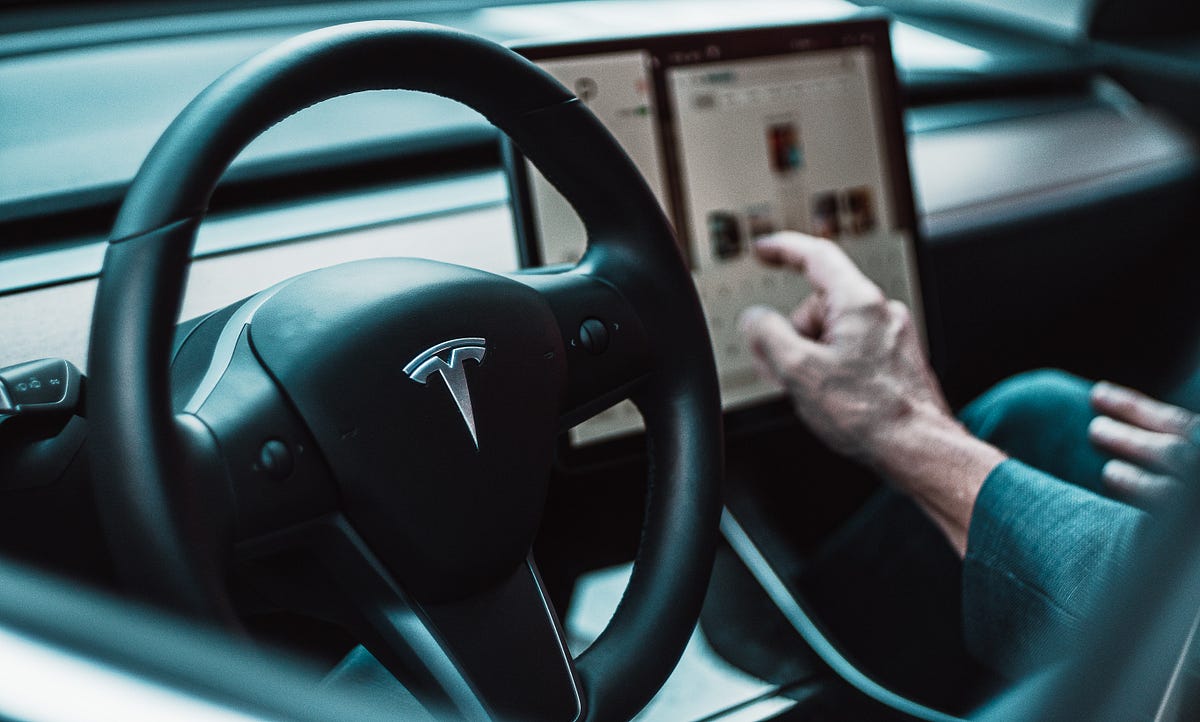
The electric vehicle revolution has entered its second act. The pioneering days, when Tesla stood as a lone disruptor in a sea of internal combustion, are over. The year is 2025, and the battlefield is now crowded with formidable players. Legacy giants like Volkswagen, Ford, Hyundai, and General Motors are no longer just experimenting with EVs; they are launching their second and third-generation dedicated electric platforms, backed by billions in investment and a century of manufacturing expertise. Their cars look great, offer competitive range, and are rapidly improving.
This new reality prompts a critical question for both investors and consumers: Has the competition finally caught up? Is Tesla's reign at the top of the EV sales charts under serious threat? To answer this, we must look beyond simplistic, spec-sheet comparisons of range and 0-60 times. We must analyze the deep, structural advantages—the strategic "moats" that Warren Buffett famously described as the sustainable competitive advantages that protect a business from invaders. While the gap in traditional automotive metrics like panel gaps and ride quality is undeniably narrowing, a deeper analysis reveals that Tesla's true, defensible moat has evolved. It is no longer just about having the best battery; it's a multi-faceted fortress built upon a deeply integrated software ecosystem, a radical approach to manufacturing efficiency, and a powerful, direct-to-consumer brand that competitors find almost impossible to replicate.
Chapter 1: The Software and Ecosystem Moat
To compare Tesla's operating system to Ford's SYNC or Volkswagen's ID. software is a fundamental category error. It’s like comparing a smartphone's OS to a feature phone's menu. One is a dynamic, evolving platform; the other is a largely static interface. This software-first approach is Tesla’s most powerful and least understood competitive advantage.
More Than an Infotainment System
Legacy automakers treat software as a feature within the car. For Tesla, the software is the car. This is most evident in its use of over-the-air (OTA) updates. While other brands can now perform OTA updates, they are often limited to minor bug fixes or small infotainment tweaks. Tesla's OTA updates are transformative. Your three-year-old Model Y can wake up one morning with a completely new feature, like the just-announced Vehicle-to-Home capability, a significantly improved Autopilot neural network, or even fun additions like a new game or light show.
This means the car you buy today is not the car you will own in three years; it will be a better one. This continuous improvement cycle creates immense customer loyalty and completely upends the traditional automotive product cycle, where features are tied to expensive new model years. While competitors are still figuring out how to reliably update a car's navigation maps, Tesla is fundamentally re-writing the vehicle's core functionality on a regular basis.
The Tesla App as the "Key" to Everything
Tesla's second software stroke of genius was making the smartphone app the central hub of the ownership experience. For a Tesla owner, the app is everything:
-
The Key: Phone-as-a-key technology is now seamless and reliable, eliminating the need for a traditional fob.
-
The Remote Control: You can pre-condition the cabin, vent the windows, honk the horn, and monitor charging status from anywhere in the world.
-
The Service Center: You can schedule service, approve repairs, and communicate with technicians directly through the app, avoiding phone calls and waiting rooms.
-
The Power Plant: With the new V2H features, you can now manage your entire home's energy flow from the same interface you use to open your frunk.
Competitors, constrained by their legacy structures, offer a disjointed experience. A single brand might have one app to start the car, another for charging, and a third-party app from their financial services arm. Tesla provides one simple, elegant, and powerful interface for the entire ownership lifecycle. This seamless vertical integration is a powerful, sticky ecosystem that is incredibly difficult for a traditional, siloed automaker to replicate.
The Data Advantage: The Unseen Flywheel
The final layer of the software moat is data. Every Tesla on the road is a data-gathering sensor. With a global fleet of over 5 million vehicles, Tesla collects billions of miles of real-world driving data. This data is the lifeblood of its AI development.
Every time a driver disengages Autopilot, it's a learning opportunity for the neural network. Every time a car successfully navigates a tricky intersection, it reinforces a correct behavior. This creates a powerful "flywheel effect": more cars on the road lead to more data, which leads to a smarter FSD/Autopilot system, which in turn makes the cars more desirable, leading to more sales.
Legacy competitors are at a massive disadvantage here. Their fleets are fragmented across dozens of models, many of which are not connected or have different sensor suites. The dealer network acts as a barrier, often preventing the automaker from having a direct data relationship with the vehicle. This data moat is not just wide; it's getting deeper every single day, and it's a lead that is measured in trillions of data points.
Chapter 2: The Manufacturing and Cost Moat
For years, critics dismissed Tesla as a niche manufacturer that could never compete at scale. Tesla’s response was to fundamentally re-think how cars are made. This innovation in manufacturing has created a durable cost advantage that allows Tesla to be both highly profitable and aggressively competitive on price.
Giga-Presses and Unibody Casting
The most visible symbol of this revolution is the Giga Press—a series of massive high-pressure die-casting machines that can stamp out the entire front or rear underbody of a vehicle in a single piece. The rear casting for a Model Y, for example, replaces what would traditionally be 70 different stamped and welded parts.
The benefits are staggering:
-
Reduced Cost: Fewer parts, fewer robots, and a smaller factory footprint lead to massive cost savings.
-
Increased Quality and Consistency: A single casting is more dimensionally accurate and consistent than a complex assembly of 70 parts, leading to better build quality and fewer panel gaps over time.
-
Reduced Weight: The cast parts are lighter than their stamped-steel equivalents, which contributes to greater vehicle efficiency and range.
While competitors are now trying to replicate this technology, Tesla has a multi-year head start. Its expertise in alloy composition, casting simulation, and machine maintenance is a formidable barrier to entry.
Battery and Powertrain Vertical Integration
Tesla is not just a car company; it's a battery and powertrain company. From the chemistry of the cells (like the 4680 structural pack) to the intricate software of the Battery Management System (BMS) and the design of its hyper-efficient motors, Tesla controls the entire vertical stack.
This provides two key advantages. First, it gives Tesla a significant cost-per-kilowatt-hour (kWh) advantage. While competitors buy batteries from third-party suppliers like LG Chem or CATL (who need to make their own profit), Tesla's in-house expertise and scale allow it to drive down the single most expensive component of an EV. Second, this deep integration allows for superior performance. Tesla’s software can extract more range and power from a given battery size because it has been designed to work in perfect harmony with the motors and power electronics. This is why Teslas consistently lead the industry in terms of range and efficiency.
The "No-Dealer" Advantage
Tesla's direct-to-consumer sales model was born of necessity but has become a powerful competitive weapon. By eliminating the middleman—the franchised dealer—Tesla reaps several benefits. It maintains control over pricing, eliminating the frustrating haggling and markups that plague the traditional car buying experience. It also owns the customer relationship directly, allowing for the seamless service and data feedback loop described earlier. This model results in a lower cost of sales and higher profit margins, giving Tesla the flexibility to adjust prices to drive demand, as it has done multiple times to put pressure on competitors.
Chapter 3: The Charging and Brand Moat
Finally, even if a competitor could build a car with comparable software and manufacturing cost, they would still face two of Tesla’s most formidable moats: its proprietary charging network and its globally recognized brand.
The Supercharger Network: Still the Gold Standard
The recent move by Ford, GM, and others to adopt Tesla's NACS charging standard is often misinterpreted as the end of the charging moat. In reality, it may strengthen it. While other drivers will now be able to use the network, Tesla owners will always have the premium, native experience.
The superiority of the Supercharger network lies in its reliability and seamless integration. You simply pull up, plug in, and the car authenticates and bills your account automatically. There are no fobs, no credit card readers, no multiple apps. It just works. Furthermore, the network's navigation integration is flawless; on a road trip, the car tells you where to stop, for how long, and even pre-conditions the battery for the fastest possible charging speed on arrival. Even as other EVs gain access, the sheer reliability and plug-and-charge simplicity for Tesla owners will remain a powerful reason to stay within the ecosystem. By opening the network, Tesla is turning its charging infrastructure from a cost center into a new, high-margin revenue stream.
Brand Loyalty and Identity
You cannot buy a brand like Tesla's; it must be earned. For millions of people, Tesla is not just a car. It represents the future, technological optimism, and a commitment to sustainability. The brand's power transcends the automotive space. It is a tech company, an AI company, and an energy company, all rolled into one.
This powerful identity has created a global community of evangelists who are fiercely loyal to the brand. This word-of-mouth marketing is something that legacy automakers, with their staid and corporate images, can only dream of. This brand strength translates into higher resale values and a resilient demand base that is less susceptible to economic downturns. People don't just buy a Tesla; they buy into Tesla.
Conclusion
The electric vehicle market of 2025 is fiercely competitive, and the products from legacy automakers are improving at an impressive rate. The gap in areas like interior material quality and ride comfort has narrowed significantly. However, to declare that the competition has "caught up" is to fundamentally misunderstand where Tesla's true, sustainable advantages lie.
Tesla’s competitive moat is not a single wall but a series of concentric fortifications. The outer wall is the Supercharger network and the powerful brand. The next is the revolutionary manufacturing and cost advantage built on Gigacasting and vertical integration. But the innermost citadel, the most heavily defended and hardest to breach, is the software ecosystem. The combination of a dynamic vehicle OS, a seamlessly integrated mobile app, and an insurmountable data advantage creates a user experience and a rate of improvement that competitors are years away from matching.
The coming years will be defined by the battle for the affordable, mass-market EV segment. The challenge for Tesla will be to translate its high-tech moats into a sub-$30,000 vehicle without compromising on the core experience. But as of today, while competitors are building excellent electric cars, Tesla is building a connected transportation and energy platform. And that is a moat that remains as wide and deep as ever.
Frequently Asked Questions (FAQ)
-
Are other car brands' OTA updates as good as Tesla's? Not yet. While many brands now offer OTA updates, they are typically less frequent and less substantial than Tesla's. Most are limited to the infotainment system or map data, whereas Tesla can update critical vehicle functions, including powertrain performance and autonomous driving capabilities.
-
Now that Ford/GM use the Supercharger network, is there any difference in the charging experience? Yes, a significant one. For Tesla owners, the experience is "plug-and-charge"—the charger and car communicate automatically for billing. For non-Tesla EVs, drivers will likely need to use the Tesla app to select a charger, initiate the session, and process payment, adding extra steps. Tesla vehicles also benefit from perfect integration with the car's navigation for trip planning and battery pre-conditioning, which third-party vehicles lack.
-
Is Tesla's build quality now on par with German brands like BMW or Mercedes? With the introduction of the "Highland" Model 3 and "Juniper" Model Y, the gap has closed dramatically. Tighter panel gaps, the use of premium materials like Alcantara, and a significant focus on sound deadening have elevated the new vehicles to a point where they are highly competitive with, and in some aspects exceed, their German rivals in the same price bracket.
-
Will legacy automakers ever switch to a direct-to-consumer sales model? It's very difficult. In many countries, especially the US, powerful dealer franchise laws protect the existing dealership model, making a direct switch legally and logistically challenging. While some are experimenting with online ordering, the entrenched, politically powerful dealer networks represent a massive structural hurdle.
-
What is Tesla's biggest competitive threat in Europe right now? What about in the US? In Europe, the biggest threat comes from the Volkswagen Group (VW, Audi, Skoda), which has a wide range of EVs at various price points and a strong local manufacturing footprint. In the US, the threat is more fragmented, with Hyundai/Kia making significant inroads with their E-GMP platform (Ioniq 5, EV6) and Ford holding strong in the electric truck segment with the F-150 Lightning. However, no single competitor yet challenges Tesla across all segments.