
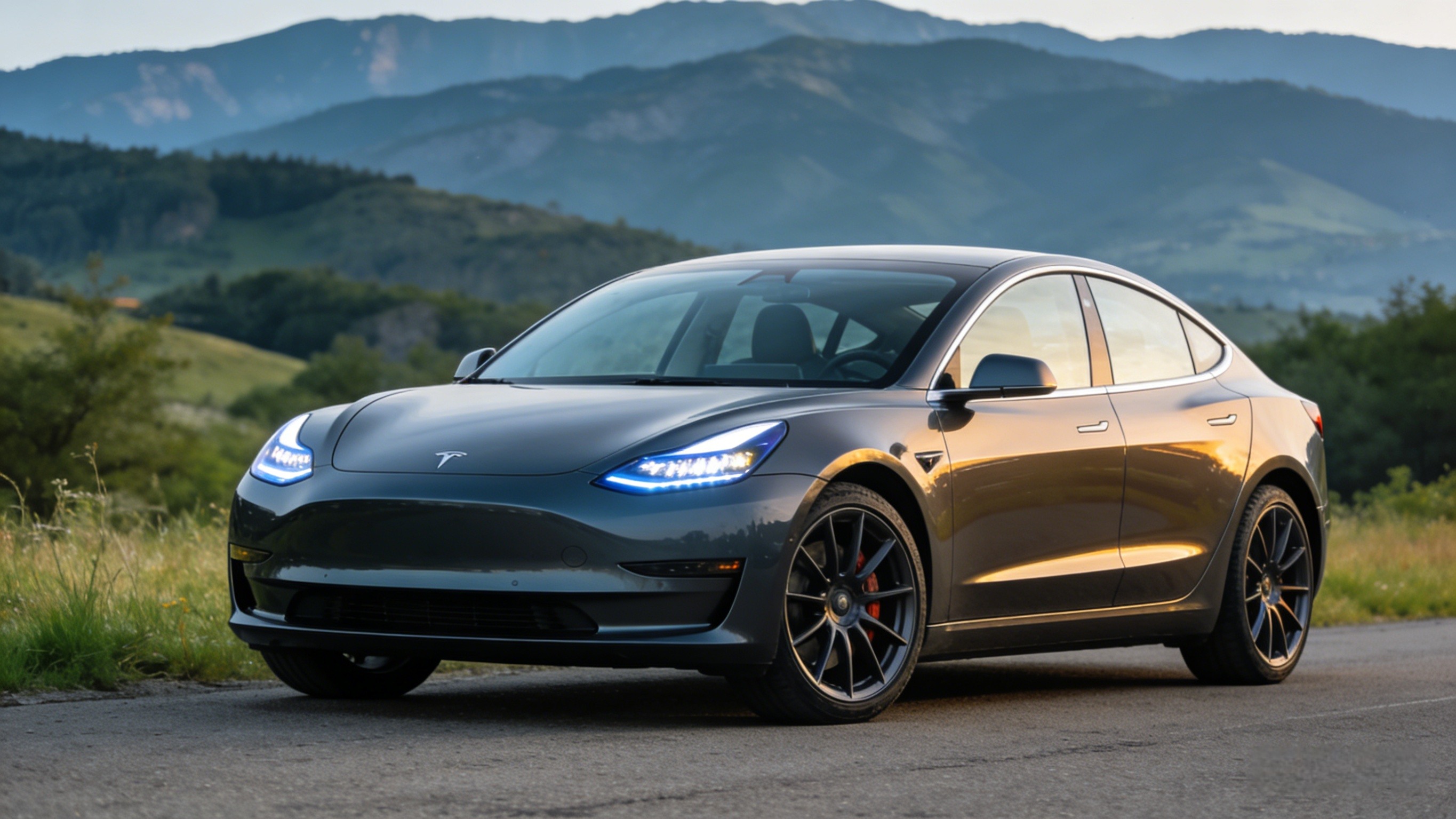
Introduction: From U.S.-Centric Beta to Global Rollout
For years, Tesla’s Full Self-Driving (FSD) was effectively a North America–centric experiment: a “supervised” beta available primarily in the United States and Canada, evolving quickly through frequent software updates and collecting billions of miles of data. European owners, by contrast, watched from the sidelines as their cars remained limited to a more constrained feature set due to stricter regulations.
That imbalance may finally begin to change in 2026. Tesla has secured a path to bring FSD (Supervised) to Europe by working directly with the Dutch vehicle authority RDW, targeting a February 2026 national approval in the Netherlands that could unlock much broader access across the European Union. This move marks a pivotal shift: instead of waiting for slow, EU‑wide regulatory reform, Tesla is using a national exemption strategy to accelerate deployment and reshape the global conversation around autonomous driving.
The Dutch “National Exemption” Strategy
The core of Tesla’s European strategy centers on the RDW—Rijksdienst voor het Wegverkeer—the Dutch vehicle authority responsible for type approvals in the Netherlands. Tesla Europe has publicly stated that RDW has committed to a schedule under which Tesla is expected to demonstrate in February 2026 that FSD (Supervised) meets the required standards for a Netherlands national approval. RDW has confirmed this timeline as a target, stressing that road safety, rather than political or consumer pressure, will ultimately determine whether authorization is granted.
What Tesla is pursuing is not a conventional, EU‑wide regulatory change but a national exemption process. Under relevant EU frameworks (including Article 39–style exemptions), a member state can grant national approval for systems that are not yet fully aligned with the current UNECE or EU regulations, provided certain safety and procedural conditions are met. Once RDW grants such an exemption in the Netherlands, other EU countries can immediately recognize that national approval under mutual recognition mechanisms, allowing them to authorize rollout within their own territories more quickly than waiting for a unified UNECE rule revision.
For Tesla, this strategy offers several advantages. It allows the company to work deeply with one regulator, testing and validating FSD against real‑world European road conditions and regulatory expectations, rather than engaging dozens of authorities simultaneously. It also creates a potential domino effect: if the Netherlands approves FSD and early deployment is safe and well‑received, other EU states may feel more comfortable recognizing that decision and extending access to their own drivers. This is effectively a “backdoor” through an existing legal mechanism, not a loophole: the system must still satisfy safety requirements, but it bypasses the years‑long delay associated with rewriting the underlying UNECE regulations.
Regulatory Clash: Outcome-Based AI vs. Rule-Based Codes
The European regulatory system for vehicle automation has traditionally been rule‑based and prescriptive, especially under the UNECE framework that governs many of the technical standards. These rules were designed for deterministic systems: functions that behave in predictable, explicitly specified ways and can be fully described in written requirements and test plans. FSD, by contrast, is an AI‑driven system that relies heavily on machine learning, fleet data, and emergent behaviors that cannot always be reduced to simple if‑then rules.
Tesla has openly argued that this mismatch lies at the heart of the European delay. European regulators have been cautious, emphasizing that while advanced driver‑assistance systems might reduce some types of collisions, they can introduce new safety risks that are not fully understood, especially if drivers misunderstand the system’s limitations. As a result, real‑world safety data from North America has not been accepted as sufficient on its own; Tesla must instead go through a rule‑by‑rule exemption process and demonstrate that FSD meets the intent of European safety regulations, even if it does not fit neatly within their letter.
This creates a clash between two philosophies. On one side is an outcome‑based AI approach that points to fleet statistics and argues that if the system leads to fewer serious accidents per mile than human drivers, it should be allowed to operate—even if engineers cannot perfectly explain every decision the neural network makes. On the other side is the European regulatory culture that prioritizes explainability, clear liability, and detailed technical requirements before granting widespread access to automation. The Dutch exemption strategy is, in a sense, a compromise: it acknowledges the need for safety and structured oversight but also recognizes that regulations are lagging behind technological realities.
Testing the System: Kilometers, Countries, and Demonstrations
To bridge the gap between these philosophies, Tesla has spent more than a year intensively demonstrating FSD to European regulators and collecting region‑specific data. Tesla Europe has stated that the company has conducted FSD demos for regulators in nearly every EU country and logged over 1 million kilometers of internal FSD testing across 17 European nations. These tests include diverse environments—dense historic city centers, complex roundabouts, variable signage, and high‑speed motorways—that differ significantly from typical U.S. conditions.
The February 2026 date is not simply a calendar milestone; it is the agreed‑upon point by which Tesla is expected to demonstrate compliance with the relevant safety standards and exemption conditions to RDW. RDW has emphasized that a decision will depend on whether Tesla can convincingly show that FSD (Supervised) can operate safely under European traffic rules and enforcement practices, and that appropriate safeguards are in place to keep the human driver responsible and engaged.
Behind the scenes, these demonstrations likely address issues such as how FSD handles European‑style lane markings, priority rules at intersections, pedestrian zones, cycling infrastructure, and different speed limit conventions. They also involve examining human‑machine interface design: how the system communicates its state, when it requires driver intervention, and how it manages edge cases such as temporary construction zones or ambiguous road markings. The outcome of these tests will shape not only the Netherlands’ decision but also the willingness of other EU regulators to acknowledge and build on RDW’s assessment.
How a European FSD Launch Could Reshape the Market
If Tesla secures national approval in the Netherlands and other EU countries recognize that exemption, the impact on the European automotive and technology landscape could be substantial. European premium brands—especially German manufacturers—have long positioned themselves as leaders in driver assistance and safety, yet their systems typically remain more conservative and rule‑bound than Tesla’s FSD (Supervised) ambitions. A successful FSD launch would give Tesla a powerful differentiation point in markets where range, performance, and build quality gaps have been narrowing.
Moreover, approval in the EU carries symbolic weight. UNECE‑aligned regulations influence not just EU member states but also a broader ecosystem of countries that adopt similar technical standards. If Tesla manages to deploy FSD under European regulatory oversight, it can argue that its system meets some of the strictest safety and process requirements in the world. This could strengthen its case for adoption in other markets that look to Europe as a benchmark.
From a competitive standpoint, a functioning, regulator‑blessed FSD in Europe could force other automakers to accelerate their own autonomous driving efforts or form partnerships with software‑centric companies. It might also encourage more investment in high‑definition mapping, sensor standardization, and cross‑industry safety data sharing, as regulators seek to manage increased automation across multiple brands. In the longer term, FSD could become a decisive factor in fleet purchases, ride‑hailing partnerships, and subscription-based mobility services in European cities.
Practical Impact for U.S. Owners
At first glance, European regulatory developments may seem remote to Tesla owners in the United States, where FSD (Supervised) has already been widely deployed as a supervised system. However, the implications are more direct than they appear. To satisfy European regulators, Tesla must provide rigorous documentation, safety analyses, and structured evidence that its system behaves reliably across a wide range of situations and that the human driver remains clearly responsible. This pressure is likely to drive improvements in system robustness, edge‑case handling, and transparency—changes that can be rolled back into the North American fleet through software updates.
For U.S. owners, European scrutiny can translate into a safer and more mature product. Features such as clearer driver monitoring, more explicit warnings, more conservative behaviors in complex settings, and better fail‑safe mechanisms can emerge from the process of meeting EU expectations. Even if certain configurations remain region‑specific, many underlying improvements—like better object classification, smoother lane selection, or smarter interaction with vulnerable road users—are software‑level changes that benefit all markets.
There is also a reputational angle. If European regulators, known for a cautious and rigorous stance, sign off on FSD (Supervised) after extensive testing, it strengthens the argument that the technology is not merely a risky experiment but a credible advance in road safety when used as intended. For U.S. owners, this can influence how insurers, policymakers, and the general public perceive FSD, potentially impacting insurance pricing, local regulatory attitudes, and even resale values.
Practical Impact for European Owners
For Tesla owners in Europe, the most immediate question is simple: when will FSD actually arrive, and what will it look like? If the February 2026 demonstration satisfies RDW and the Netherlands grants national approval, Tesla will begin by enabling FSD (Supervised) for Dutch customers under the terms of the exemption. Other EU countries will then have the option to recognize this approval and allow FSD within their borders, potentially leading to a phased rollout across 2026.
However, the version of FSD that European owners receive is unlikely to be identical to the U.S. experience. Europe’s regulatory framework has historically imposed stricter limits on lane‑change automation, driver‑initiated confirmations, and operational design domains. In practice, this could mean a system that is more constrained in high‑speed environments, more communicative about its limitations, and more demanding of driver attention. Certain behaviors that are permitted in the U.S.—for example, more assertive unprotected turns—may be softened or require explicit driver confirmation in Europe.
Pricing and subscription models will also play a major role. Tesla will need to convince European owners that FSD (Supervised) delivers enough tangible value—reduced workload in traffic, safer long‑distance travel, better urban navigation—to justify a one‑time purchase or monthly fee. Early adopters may weigh the benefits of joining at launch against the possibility that features and regulatory conditions will continue to evolve over the next few years. Meanwhile, competition from advanced driver‑assistance offerings by European automakers will shape perceptions of whether Tesla’s solution is truly ahead or simply more aggressive.
Risks and Open Questions
Despite the clear progress represented by the RDW timeline, there are significant risks and open questions that could slow or reshape Tesla’s FSD ambitions in Europe. First, the February 2026 date is a target, not a guarantee. RDW has explicitly noted that whether the timeline is met will depend on the outcome of testing and compliance demonstrations; if Tesla cannot fully satisfy the required standards, authorization may be delayed, narrowed, or denied.
Second, the exemption route itself carries political and public‑perception risks. If an incident were to occur early in the deployment, critics could claim that Tesla used a “backdoor” into Europe without waiting for full UNECE regulatory changes, potentially triggering backlash and calls for tighter restrictions. The company must balance the desire for rapid deployment with the need to build trust through transparency, conservative behavior in ambiguous situations, and clear driver education about the system’s capabilities and limits.
Third, even with a Dutch exemption, the pace of recognition by other EU member states is uncertain. Some countries may move quickly, while others may insist on additional local testing or impose their own conditions. Furthermore, UNECE meetings in 2026 and beyond could introduce new rules that either facilitate broader deployment or impose additional constraints. For Tesla and its customers, this means that the European FSD landscape could remain patchy and evolving for several years, with different capabilities and legal statuses from one country to another.
What This Means for Autonomy’s Future
The path Tesla is carving out in Europe is about more than one company’s software update. It is testing the ability of existing regulatory structures—built for mechanical engineering and deterministic electronics—to adapt to machine‑learning‑driven systems that constantly evolve. If RDW and other European authorities can successfully oversee FSD (Supervised) without compromising safety or innovation, they will create a template for how regulators worldwide might handle increasingly autonomous vehicles.
For the broader autonomous driving ecosystem, the European FSD rollout will serve as a high‑visibility experiment. If Tesla demonstrates clear safety benefits, manageable risks, and strong user understanding of system limitations, it will strengthen the case for supervised autonomy as an intermediate step toward fully driverless operation. Conversely, if incidents, misunderstandings, or political resistance derail or heavily constrain deployment, it may encourage regulators to favor more conservative, limited automation paths.
Either way, the year 2026 is shaping up to be a turning point. For Tesla owners in the U.S., it promises a more mature and globally validated FSD experience. For owners in Europe, it could finally bring the long‑awaited opportunity to use FSD (Supervised) under the watchful eye of some of the world’s strictest regulators. And for regulators, automakers, and technology companies, it offers a real‑world test of whether AI‑driven driving systems can be integrated into existing legal frameworks without sacrificing either safety or progress.
FAQ
1. When could FSD become legally available in my European country?
If Tesla successfully demonstrates compliance with RDW in February 2026 and receives Netherlands national approval, Dutch customers may see FSD (Supervised) enabled later in 2026, subject to final conditions. Other EU countries can then choose to recognize that approval via mutual recognition mechanisms, potentially allowing phased rollouts across 2026 and beyond. The exact timing will vary by country, depending on local regulatory attitudes and any additional requirements imposed.
2. Will U.S. FSD subscribers get new features first, or will Europe catch up?
Historically, new FSD capabilities have appeared first in North America, where the regulatory environment allowed Tesla to run large‑scale supervised beta programs. Even after European approval, U.S. users will likely see earlier access to experimental features, while European builds may prioritize stability, explainability, and compliance with local rules. Over time, however, the underlying neural networks and core capabilities should converge, with regional tuning layered on top.
3. How will European rules change FSD behavior compared with the U.S.?
European regulations have traditionally required stricter driver confirmation and more limited automation in certain maneuvers, such as automated lane changes and speed adjustments. As a result, European FSD may be more conservative in complex scenarios, may require more driver interaction in specific tasks, and may impose tighter operational design domains than U.S. versions. Nonetheless, the system should still reduce driver workload and improve comfort on long trips if used as intended.
4. What happens if regulators in one EU country reject FSD while others approve it?
If the Netherlands approves FSD and some countries recognize that decision, while others remain skeptical, Europe could see a patchwork situation where FSD (Supervised) is available in certain markets but restricted or unavailable in others. UNECE‑level decisions might eventually harmonize rules across member states, but until then, national regulators retain considerable discretion. Owners who travel frequently across borders may find that their car’s capabilities change depending on local regulations and geofencing rules.
5. Is it safer to wait until post‑approval versions before enabling FSD on my car?
For early European adopters, waiting until after regulators have completed their initial evaluations and any early issues are addressed can provide additional reassurance. Tesla’s FSD (Supervised) is designed to be a driver‑assistance system that requires constant human supervision, not a hands‑off autonomous chauffeur, and its safety depends heavily on user behavior as well as software quality. Owners who enable FSD early should invest time in learning its capabilities and limitations, regularly reviewing release notes and local guidance to ensure responsible use.