
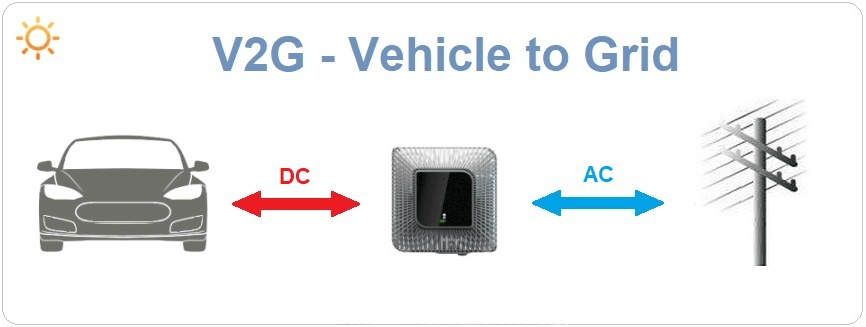
For more than a decade, a Tesla has been defined by what it can do on the road: breathtaking acceleration, groundbreaking autonomy, and zero tailpipe emissions. Now, a new frontier is opening up that defines a Tesla by what it can do while it's parked. This is the world of Vehicle-to-Grid, or V2G, a technology that promises to transform your electric vehicle from a simple mode of transportation into an active, intelligent, and even profitable participant in the energy ecosystem.
The concept is simple yet profound: your EV can not only draw power from the electrical grid but can also send it back on demand. For years, V2G has been a tantalizing "what if" in the tech community. Today, with the launch of official pilot programs in the United States and the expansion of trials in Europe, Tesla is moving V2G from theory to reality. This isn't just about providing backup power during an outage; it's about creating a decentralized energy network, stabilizing our increasingly fragile power grids, and unlocking a new stream of value for every Tesla owner. This article delves deep into Tesla's V2G ecosystem, explaining the technology, the immense benefits for both homeowners and the grid, the status of current programs, and what you, the owner, need to know to join this energy revolution.
Chapter 1: The V2G Ecosystem Explained
To understand V2G, it's essential to look beyond the car itself and see the integrated ecosystem Tesla has been building for years. V2G is the culmination of hardware and software working in perfect harmony.
-
The Key Components
Participating in Tesla's V2G program requires a specific set of hardware.
-
A Compatible Tesla: The ability to discharge power is not present in all Tesla vehicles. The feature relies on specific power electronics within the car. Initially, the program is limited to newer models of the Model 3, Y, S, and X, with wider compatibility expected over time. The Cybertruck, with its "Powershare" feature, is a native V2G-capable vehicle from day one.
-
A Bidirectional Wall Connector: Your standard Tesla Wall Connector is a one-way street; it only sends power to the car. A new, bidirectional version of the Wall Connector is required to allow power to flow back out of the car.
-
The Tesla Gateway: This is the brain of the home energy system. The Tesla Gateway 3 is the traffic cop that manages the flow of energy between the grid, your solar panels (if you have them), your home, and now, your car. It's the device that tells your car when to charge, when to discharge, and when to hold its power for backup.
-
How Bidirectional Charging Works
The grid provides alternating current (AC) power, but your car's battery stores direct current (DC) power. When you charge, the car's onboard charger converts AC to DC. For V2G, the process must be reversed. The car's power electronics must be able to take the DC power from the battery and convert it back into grid-compliant AC power, which can then be used by your home or exported to the grid. This bidirectional flow is controlled with sophisticated software, managed by the Gateway and orchestrated via the Tesla app, ensuring it's done safely and efficiently.
-
Powerwall vs. V2G: A Symbiotic Relationship
A common question is how V2G differs from Tesla's well-known Powerwall home battery. A Powerwall is a stationary battery, typically 13.5 kWh, designed specifically for home energy storage and backup. The battery in a Tesla Model Y Long Range, by contrast, is a massive 75 kWh mobile battery.
They serve different but complementary roles. A Powerwall is "always on" at home, providing instantaneous backup and daily load-shifting. V2G leverages the enormous battery you already own but is only available when the car is plugged in at home. In a V2G system, the car can act as a colossal Powerwall. For example, during a power outage, a fully charged Model Y could power a typical American home for two to four days, compared to perhaps 12-24 hours for a single Powerwall. Many future homeowners might opt for both: the Powerwall for daily buffering and instant response, and the car for deep, long-duration backup and high-power grid services.
-
Software is King: The Tesla App
As with everything in the Tesla ecosystem, the user experience is controlled through the elegant interface of the Tesla app. V2G will not be a complex system for the homeowner to manage. It will appear as a new section in the app, allowing users to:
-
Set a Backup Reserve: You can specify, "Always keep at least 40% of my battery for driving." The system will never discharge below this user-defined level for grid services.
-
Schedule Charge/Discharge Cycles: The system can be automated to charge the car from the grid or solar when electricity is cheapest and cleanest, and then discharge to power the home or sell back to the grid when prices are highest.
-
Track Earnings and Impact: A simple dashboard will show how much money you've earned (or saved) through V2G activities and quantify your home's energy independence and carbon footprint reduction.
Chapter 2: Benefits for the Tesla Owner
While V2G is a boon for the grid, its adoption will be driven by the direct, tangible benefits it provides to the vehicle owner.
-
Complete Home Backup Power
This is the most compelling and easily understood benefit. For the millions who live in areas prone to blackouts from storms, heatwaves, or grid instability, V2G offers unprecedented energy security. The moment the Gateway detects a grid outage, it instantly disconnects from the grid and signals the car to begin powering the home. The transition is seamless. Your lights stay on, your refrigerator keeps running, and your internet connection remains active. The sheer capacity of an EV battery means this isn't just about keeping the lights on; it's about maintaining your full lifestyle for an extended period.
-
Energy Arbitrage: "Buy Low, Sell High"
This is where V2G turns your car into a financial asset. Many utility companies have "Time-of-Use" (TOU) electricity rates. Power might cost $0.15/kWh overnight (off-peak) but jump to $0.45/kWh in the late afternoon (on-peak). V2G software automates a simple and profitable strategy:
-
The car charges overnight when power is cheap.
-
During the day, the home runs on solar power (if available).
-
In the late afternoon, when grid power is expensive, instead of buying it, the system discharges the car's battery to power the home. Any excess power can be sold back to the grid at the peak rate.
This "energy arbitrage" can significantly reduce or even eliminate a household's electricity bill.
-
Reducing Your Carbon Footprint
V2G is a powerful tool for environmental sustainability. Solar and wind power are intermittent. V2G allows you to capture and store excess renewable energy when it's abundant (e.g., midday sun) and deploy it later when the grid would otherwise need to fire up a fossil-fuel "peaker" plant. By participating in a V2G network, you are actively helping to make the grid cleaner and more efficient, ensuring that every green electron is put to good use.
-
Addressing the Battery Health Question
The number one concern for any EV owner is battery degradation. Will using my car as a home battery wear it out faster? Tesla has designed its systems with this in mind. The process of charging and discharging for V2G is done at a very low rate, which is much less stressful on the battery than a high-power Supercharging session or repeated full-throttle acceleration. Tesla's sophisticated battery management system (BMS) carefully controls the temperature and rate of energy flow to minimize degradation. While any battery cycle causes some wear, Tesla's V2G programs will be managed within warranty specifications, and the financial and utility benefits are designed to far outweigh the minimal impact on the battery's long-term lifespan.
Chapter 3: The Big Picture - Stabilizing the Grid
The benefits of V2G extend far beyond a single home. When thousands of Teslas are connected, they form a "Virtual Power Plant" (VPP), a decentralized energy resource that can be orchestrated to solve some of the grid's biggest challenges.
-
The Virtual Power Plant (VPP) Concept
Imagine a city where 20,000 Teslas are plugged in. Combined, their batteries hold over a gigawatt-hour of energy. Through Tesla's software, the utility operator can request a small amount of power from each car simultaneously. No single owner would notice the tiny discharge, but in aggregate, it becomes a massive, dispatchable power source—a virtual power plant that can respond to grid needs in milliseconds.
-
Solving the Renewables Puzzle
The biggest challenge for a grid transitioning to solar and wind is intermittency. What happens when a cloud covers a solar farm or the wind suddenly stops blowing? The grid frequency can become unstable, risking blackouts. Traditionally, gas-fired peaker plants are kept on standby to spin up and fill these gaps. A VPP composed of V2G-enabled Teslas can do this job infinitely better. It can inject or absorb power in milliseconds, far faster than any mechanical generator, providing a clean, silent, and instantaneous way to balance the grid.
-
Avoiding Blackouts and New Power Plants
During extreme heatwaves, air conditioning use soars, putting immense strain on the grid. Rather than building multi-billion dollar power plants that may only be needed for 50 hours a year, VPPs offer a smarter solution. By tapping into the batteries of cars already parked in driveways, utilities can shave these extreme peaks off demand, preventing blackouts and saving consumers billions in infrastructure costs.
-
Pilot Programs in Action
This is not science fiction. Tesla is already running a successful VPP with PG&E in California, where Powerwall owners get paid to allow Tesla to dispatch their battery power during grid emergencies. The new V2G pilot program is the next evolution of this concept. In Europe, partners like Octopus Energy in the UK are also running trials, exploring how V2G can provide grid services and earn money for EV owners. These pilot programs are the crucial first step, proving the technology, refining the software, and establishing the commercial agreements with utilities that will pave the way for a global rollout.
Chapter 4: How to Get Started and What's Next?
For the eager owner, joining the V2G revolution will be a structured process.
-
Eligibility Checklist:
-
Vehicle: You will need a compatible Tesla model and software version. Tesla will publish a definitive list as the program expands.
-
Hardware: You must have the new bidirectional Wall Connector and a Tesla Gateway 3 installed at your home.
-
Location: You must live within the territory of a utility partner that has an active V2G program with Tesla (e.g., initially, specific areas in California or the UK).
-
-
The Sign-Up Process: Once you meet the eligibility criteria, the process will likely be handled through the Tesla app or website. It will involve consenting to the program terms, a remote verification of your hardware setup, and enrollment with your local utility partner.
-
The Financials: The exact earnings will depend on the specific program and your utility's rate structure. Payments might come in the form of a fixed monthly credit for participation, or a variable payment based on how much energy your car actually exports to the grid. Early analyses suggest that potential earnings could range from $20 to $100+ per month, depending on usage and local electricity prices, easily offsetting any minimal battery degradation.
-
The Future Roadmap: The initial pilot programs are just the beginning. The main hurdles to a wider rollout are regulatory and logistical. Utilities and regulators in every market need to establish rules and payment structures for V2G services. Tesla needs to ramp up production of the bidirectional hardware. However, the path is clear. Over the next five years, V2G is expected to transition from a niche pilot program to a standard, widely available feature for Tesla owners, fundamentally changing the value proposition of car ownership.
Conclusion
Vehicle-to-Grid technology represents a paradigm shift of immense proportions. It leverages Tesla's unique vertical integration—spanning the car, the battery, the charging hardware, and the software—to unlock value that no traditional automaker can hope to match. V2G transforms a depreciating asset that sits idle 95% of the time into a productive, intelligent, and profitable part of our clean energy future.
For the owner, it offers the ultimate peace of mind with whole-home backup, the potential for significant financial savings, and a tangible way to contribute to a greener planet. For society, it offers a cheaper, faster, and cleaner path to a stable, resilient, and fully renewable energy grid. The journey has just begun, but the destination is clear: a future where the car in your driveway is not just for driving, but is an essential part of powering our world.
FAQ Section
-
Will using V2G void my Tesla's battery warranty? No. Official Tesla-sanctioned V2G programs will be designed to operate within the parameters of the vehicle's battery warranty. The system's software will manage the charge and discharge cycles to ensure they do not cause undue stress or degradation to the battery.
-
How much money can I realistically expect to earn per month? This will vary greatly depending on your location, your utility's specific V2G program, and how often your car is available. Initial estimates from pilot programs suggest a range from $20 to over $100 per month is possible, either through direct payments or bill savings.
-
What happens if the power goes out while my car is away from home? V2G only works when your car is plugged into the bidirectional charger at home. If the power goes out while you're away, your home will not have backup power from the car. This is a key difference from a Powerwall, which is always at home providing backup.
-
Can I use V2G with a non-Tesla solar inverter? Initially, Tesla's V2G system is designed to work as part of an integrated ecosystem, requiring the Tesla Gateway 3. While third-party compatibility may evolve, the seamless, automated experience will be best and most reliable when using Tesla's own energy hardware.
-
Is V2G technology safe for my home's electrical system? Yes. The entire system is designed with safety as the top priority. The Tesla Gateway acts as an automatic transfer switch, safely disconnecting your home from the grid during an outage before your car begins to power it. This prevents "islanding," where your system could dangerously back-feed power onto the grid while utility workers are trying to make repairs. All hardware is UL certified and installed to meet local electrical codes.