
I. Introduction: A Surprising Turn for Tesla in Europe
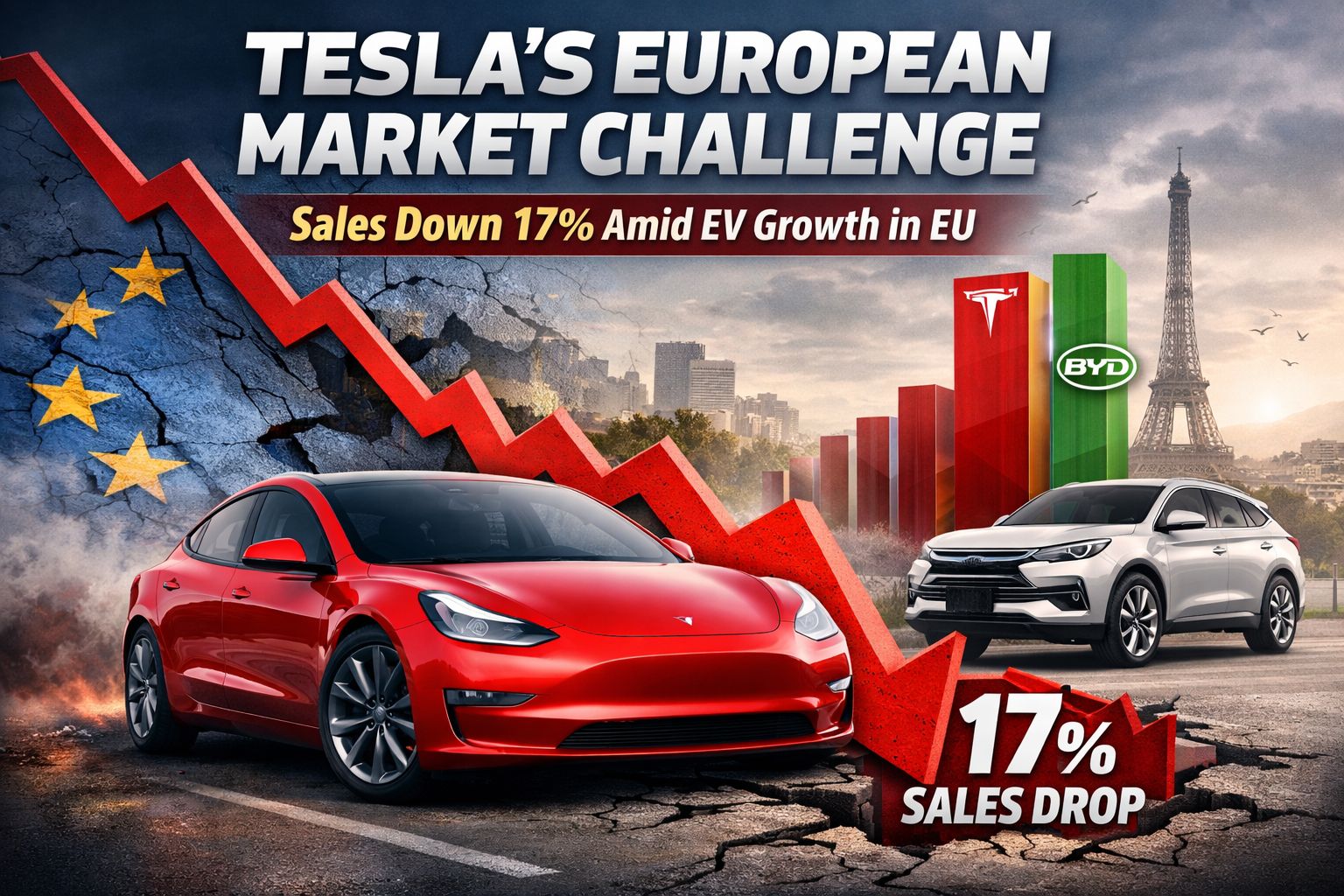
In January 2026, the European electric vehicle (EV) market confirmed a striking shift in industry dynamics. Despite rapid growth in EV adoption across the region, Tesla Inc., one of the world’s most recognizable EV makers, reported a 17% decline in new car registrations year‑on‑year, selling only 8,075 units in the broader European market — including the European Union (EU), European Free Trade Association (EFTA) countries, and the United Kingdom. This marks Tesla’s 13th consecutive month of sales decline in Europe, extending a persistent slump that has alarmed investors, analysts, and EV enthusiasts alike.
In stark contrast, Chinese automaker BYD Co. Ltd. posted a 165% surge in the same market, registering 18,242 new vehicles — more than double Tesla’s volume — signaling a deepening competitive challenge.
This article explores the multifaceted causes behind this unexpected decline, analyzes broader trends in Europe’s EV market, evaluates competitive pressures, and considers strategic implications for Tesla’s long-term positioning in the region.
II. European Car Market Overview: Growth Amid Contraction
A. Overall New Car Registrations in January 2026
According to data released by the European Automobile Manufacturers’ Association (ACEA), total new car registrations across the EU, EFTA, and the UK fell by approximately 3.5% year‑on‑year in January 2026. Consumer demand for traditional internal combustion engine (ICE) vehicles continued its long-term decline, even as new energy mobility options captured more attention from buyers.
Despite this overall contraction, the EV segment demonstrated healthy growth, defying the broader market trend:
-
Battery Electric Vehicles (BEVs) saw a ~13.9% increase in total new registrations.
-
EVs now account for nearly 19.3% of the European new car market, up significantly from a year earlier.
These figures underscore that while overall vehicle purchases dipped, Europe’s transition toward electrification continues apace.
B. Trends by Vehicle Type
-
Compact BEVs dominate city-centric markets (e.g., France, Italy).
-
SUVs and crossovers (like Tesla Model Y) retain strong appeal but face growing competition.
-
Premium EVs (Tesla Model S/X) see fluctuating demand due to rising alternatives from Mercedes, Audi, and BMW.
III. Tesla’s January 2026 Performance: Facts and Figures
A. Declining Registrations
Tesla’s 8,075 new registrations in January 2026 fell short of the 9,733 units sold in January 2025, representing a 17% year‑on‑year decline.
B. Market Share Erosion
In terms of market share, Tesla now occupies roughly 0.8% of total new car registrations in the region, down from 1.0% a year earlier — a significant shrinkage that signals competitive pressures rather than isolated sales volatility.
C. Model-Specific Performance
-
Model 3: Aging platform still selling, but with declining uptake in saturated markets like Germany.
-
Model Y: Growth constrained by price and delivery timelines, despite being Tesla’s flagship crossover for Europe.
-
Model S/X: Niche demand but overshadowed by newer EVs offering comparable range and technology.
IV. The Rise of BYD: A New Challenger on European Soil
A. BYD’s Surging Registrations
BYD’s dramatic performance — 18,242 units sold — amounts to a 165% year‑on‑year surge.B. Product Strategy
-
BEV and PHEV portfolio caters to price-sensitive and range-anxious consumers.
-
Effective localized marketing: European-friendly features and extended warranties.
C. Implications for Tesla
-
Tesla’s BEV-only strategy now faces intensified competitive pressure.
-
Pricing, service network, and feature innovation are key battlegrounds.
V. Key Drivers Behind Tesla’s European Slide
A. Intensifying Competition
-
Legacy automakers like Volkswagen, BMW, Mercedes-Benz have expanded BEV lineups.
-
Chinese rivals like BYD bring cost-effective, high-range alternatives.
B. Regional Market Conditions and Consumer Preferences
-
Country-specific incentives heavily influence buyer behavior.
-
Hybrids and PHEVs sometimes more attractive due to tax advantages.
C. Product Lifecycle and Perception
-
Tesla’s models are aging relative to new launches from competitors.
-
Localized support, service, and charging accessibility affect brand perception.
D. Brand and Leadership Perception
-
Tesla’s public leadership persona, while globally strong, has polarizing effects in certain Western markets.
VI. Country-Level Insights: Variation Across Europe
A. Strong Markets vs Weak Spots
-
Norway: historically strong but facing changing subsidy rules.
-
Germany/France: EV registrations up, but Tesla losing relative market share.
B. Macro Trends Influence Local Demand
-
Economic trends, regulatory incentives, and tax policies shift purchase timing and preferences.
VII. Strategic Implications for Tesla
-
Product Refresh: Introduce competitive range, features, and pricing.
-
Service & Local Presence: Expand customer engagement and service infrastructure.
-
Pricing Strategy: Adjust to competing incentives.
-
Regional Partnerships: Collaborations to enhance supply chain and localization.
VIII. Future Outlook: Can Tesla Reignite Growth in Europe?
Potential scenarios:
-
Product Renewal & Aggressive Strategy: May regain market share.
-
Continued Competitive Pressure: Tesla may remain niche.
-
Hybrid & Diversified EV Trend: Tesla’s pure EV focus may need adaptation.
IX. FAQ: European Tesla Market Insights
Q1: Why did Tesla sales drop 17% in Europe despite growing EV adoption?
A: Several factors: intensifying competition from BYD and legacy automakers, aging product models, price sensitivity, and country-specific incentive changes.
Q2: Is Tesla losing market share permanently in Europe?
A: Not necessarily. Tesla still has strong brand recognition. Strategic pricing, updated models, and service network expansion could restore market position.
Q3: How does Tesla compare to BYD in terms of offerings?
A: BYD offers both BEVs and PHEVs with competitive pricing and localized features. Tesla offers BEVs only, often at higher price points, and is more focused on global-scale features.
Q4: Which European countries are most affected by Tesla’s sales decline?
A: Germany, France, and the UK show significant erosion in market share. Norway remains relatively strong but growth has slowed due to changing incentives.
Q5: Will Tesla introduce new models in Europe soon?
A: Tesla has hinted at refreshed Model 3/Y updates, which could address competition in features, range, and affordability.
Q6: How do government incentives affect Tesla sales?
A: Incentives for EVs vary by country. PHEV-focused incentives can make BYD models more attractive, impacting Tesla’s pure BEV sales.
Q7: Does Tesla’s service network impact European adoption?
A: Yes. Limited service centers and slower deliveries can negatively affect consumer confidence, especially against well-supported competitors.
Q8: Can Tesla maintain premium positioning while regaining volume?
A: Potentially, if Tesla balances pricing, feature enhancements, and localized marketing without diluting brand perception.
X. Conclusion
The January 2026 European registration data paints a complex picture for Tesla: while the EV market expands rapidly, consumer demand is diverging — favoring a broader set of competitors and offerings. Tesla’s 17% sales decline, 13-month streak of falling registrations, and shrinking market share highlight a critical inflection point in its European journey.
Europe’s EV landscape is maturing, and leaders will be defined not just by first-mover advantage, but by long-term adaptability, portfolio diversity, and regional resonance. For Tesla, this period is both a challenge and an opportunity — a decisive moment for reinvention in one of the world’s most electrified automotive markets