
Introduction
As 2026 unfolds, Tesla stock once again finds itself at the center of global market attention. For more than a decade, Tesla has been one of the most closely watched equities in the world, attracting retail investors, institutional funds, and technology-focused capital alike. Unlike traditional automakers, Tesla’s valuation is shaped not only by vehicle deliveries and margins, but also by expectations surrounding artificial intelligence, autonomous driving, robotics, and energy systems.
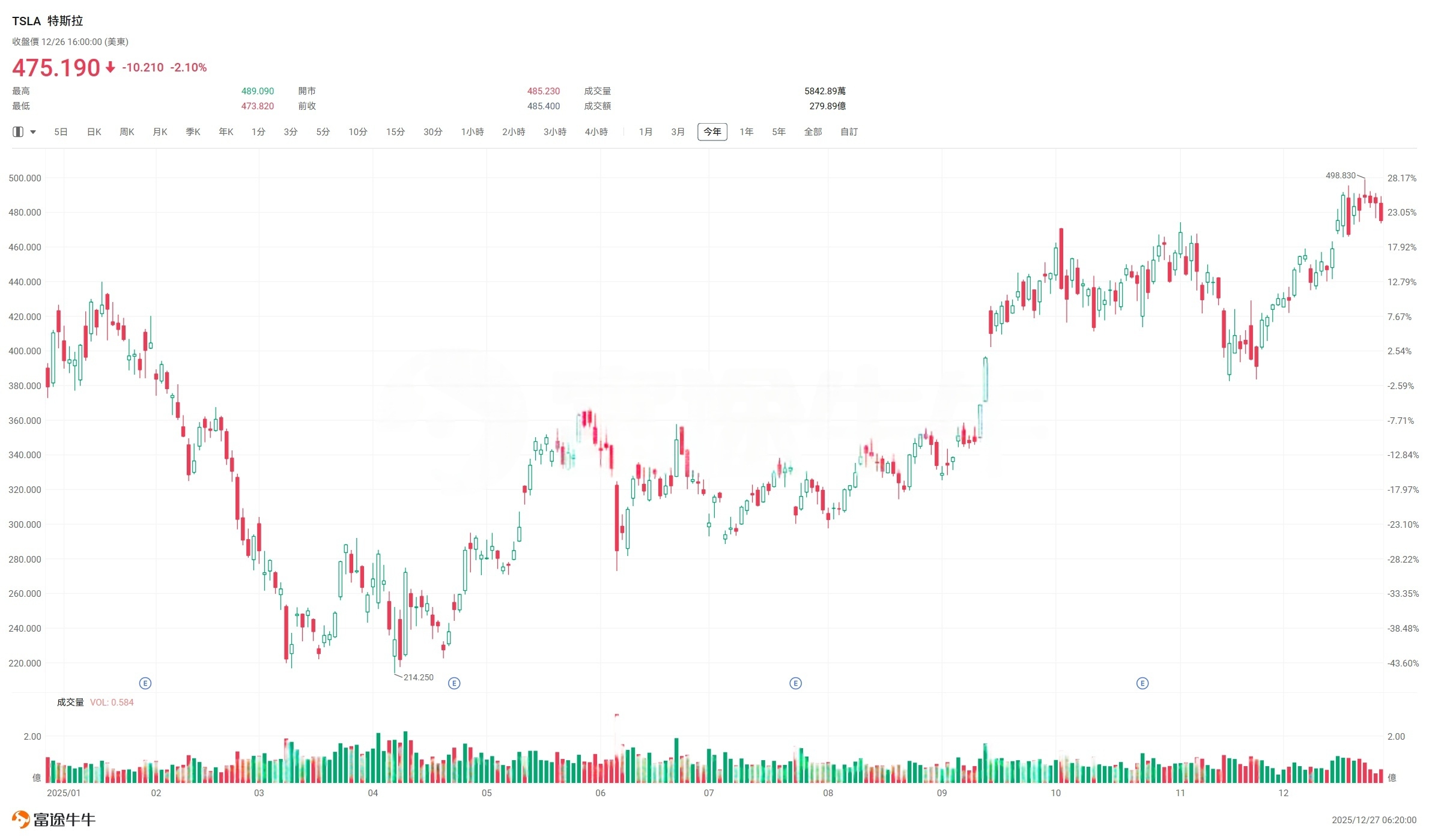
In early 2026, Tesla shares experienced renewed volatility amid broader technology-sector sell-offs, rising geopolitical trade pressures, and shifting investor sentiment in both the United States and Europe. For Tesla owners and long-term investors, understanding what is driving these market movements is essential. This article provides a deep, structured analysis of Tesla’s stock performance in 2026, separating short-term noise from long-term fundamentals.
The 2026 Macro Environment: Why Markets Are Nervous
Global Economic Conditions
Global financial markets in 2026 are operating in a complex macroeconomic environment. Persistent inflationary pressures, uneven interest rate policies between the U.S. Federal Reserve and the European Central Bank, and slowing global growth have all contributed to heightened market sensitivity. Growth-oriented stocks, particularly those tied to technology and future innovation, have faced greater scrutiny as capital rotates toward perceived defensive assets.
Tesla, often classified simultaneously as an automaker, technology company, and AI platform, sits directly in the crosshairs of this rotation. Even minor macro signals can trigger disproportionate price movements.
Trade Tensions and Policy Uncertainty
Trade policy has re-emerged as a key market risk factor. Ongoing tariff discussions involving electric vehicles, battery materials, and advanced semiconductors have introduced uncertainty into cross-border supply chains. For Tesla, whose operations span the U.S., Europe, and Asia, policy signals from Washington and Brussels can have immediate valuation implications.
While Tesla’s localized manufacturing strategy—through Gigafactories in the U.S. and Germany—offers partial insulation, investor sentiment remains sensitive to any indication of escalating trade friction.
Tesla’s Business Fundamentals in 2026
Vehicle Deliveries and Demand Trends
Vehicle deliveries remain the foundation of Tesla’s revenue base. In 2026, the company continues to rely heavily on the Model 3 and Model Y, which together account for the majority of global sales. In the U.S. and Europe, demand remains resilient but increasingly price-sensitive, as competition from legacy automakers and new EV entrants intensifies.
Tesla’s pricing strategy—characterized by periodic adjustments rather than static MSRP—has supported volume but compressed automotive gross margins. Investors have become more tolerant of margin pressure, provided that it supports long-term ecosystem expansion.
Margin Compression vs. Strategic Pricing
Tesla’s gross margins in 2026 reflect a deliberate strategic trade-off. Rather than maximizing short-term profitability, Tesla continues to prioritize market share, manufacturing efficiency, and software attach rates. This approach aligns with Tesla’s broader vision of monetizing autonomy, energy, and services over time.
For equity markets, the challenge lies in accurately discounting future cash flows that are still largely optional rather than guaranteed.
Autonomy as a Valuation Multiplier
Why FSD Matters to the Stock
Full Self-Driving (FSD) remains Tesla’s most powerful valuation lever. While FSD revenue today represents a relatively small portion of total revenue, its long-term potential dramatically alters Tesla’s addressable market. Investors do not simply price FSD as a feature; they price it as a platform.
If Tesla succeeds in scaling autonomous driving, the company transitions from a product-based revenue model to a service-based one, with higher margins and recurring income.
Market Skepticism and Realistic Expectations
Despite optimism, markets remain divided on the timeline and regulatory feasibility of full autonomy. Skeptics argue that regulatory approval, edge-case handling, and public trust will delay meaningful revenue for years. Supporters counter that Tesla’s data advantage and AI training infrastructure provide an unmatched pathway to eventual success.
This divergence of views contributes directly to Tesla’s stock volatility.
Investor Psychology: Growth vs. Discipline
The Evolution of Tesla’s Shareholder Base
Tesla’s investor base in 2026 is more institutional than in previous years. Pension funds, sovereign wealth funds, and large asset managers now hold significant positions. This shift has reduced extreme speculative swings but introduced new sensitivity to earnings discipline and capital allocation.
Retail investors remain influential, particularly during major product announcements or earnings events, but no longer dominate daily price action.
Narrative Cycles and Market Reactions
Tesla stock is highly narrative-driven. Headlines related to autonomy, robotics, or artificial intelligence often outweigh quarterly delivery numbers in shaping sentiment. In periods of uncertainty, negative narratives can cascade quickly, even when underlying fundamentals remain stable.
Understanding this narrative dynamic is critical for long-term holders seeking to avoid emotional decision-making.
Technical Analysis: Reading the Market’s Signals
Key Support and Resistance Levels
From a technical perspective, Tesla shares in 2026 exhibit defined trading ranges punctuated by sharp breakouts following news catalysts. Institutional traders closely monitor volume-weighted averages and long-term moving averages as indicators of trend confirmation.
When Tesla trades below major technical levels, selling pressure often accelerates, regardless of fundamental news.
Volatility as a Feature, Not a Flaw
Tesla’s historical volatility reflects its role as a proxy for future technology adoption. While this volatility can deter conservative investors, it also creates opportunities for those with long-term horizons and disciplined risk management strategies.
Comparative Valuation: Tesla vs. Peers
Automaker Comparisons
Traditional valuation metrics often undervalue Tesla by treating it as a conventional automaker. Price-to-earnings and price-to-sales ratios fail to capture optionality in autonomy, energy storage, and AI-driven services.
Technology Company Lens
When viewed through a technology-company framework, Tesla’s valuation appears more defensible. Software margins, data assets, and platform scalability align more closely with tech peers than with automotive competitors.
This dual identity complicates analyst consensus and fuels ongoing debate.
European Market Influence
Regulatory Environment
European policy plays a growing role in Tesla’s valuation. Environmental regulations, EV incentives, and data privacy laws directly affect Tesla’s operating model. Stability in European regulation generally supports investor confidence, while abrupt changes introduce uncertainty.
Currency and Cost Considerations
Exchange rate fluctuations between the euro and the U.S. dollar also influence reported earnings. Tesla’s geographic diversification mitigates some risk but does not eliminate exposure.
Long-Term Strategic Catalysts
Robotics and AI Beyond Vehicles
Optimus and Tesla’s AI initiatives represent long-duration call options embedded in the stock. While not yet reflected in revenue, these projects expand Tesla’s narrative beyond transportation.
Energy Generation and Storage
Tesla Energy continues to grow steadily, providing diversification away from automotive cycles. Grid-scale storage and energy management software offer stable, infrastructure-like revenue streams over time.
Conclusion: Interpreting Tesla Stock in 2026
Tesla's stock volatility in 2026 reflects a company operating at the intersection of manufacturing, software, and artificial intelligence. Short-term market fluctuations are driven by macro forces, trade policy, and sentiment cycles, while long-term value depends on execution in autonomy, robotics, and energy.
For Tesla owners and investors in the U.S. and Europe, the key is perspective. Those who understand Tesla’s strategy as a multi-decade transformation rather than a quarterly earnings story are better positioned to navigate volatility without losing sight of long-term opportunity.
FAQ
Why is Tesla stock so volatile in 2026?
Because it reflects both current earnings and future technology expectations, making it sensitive to macro and narrative shifts.
Do trade tensions materially affect Tesla’s fundamentals?
They influence sentiment more than operations, though prolonged policy changes could impact costs.
Is Tesla still a growth stock?
Yes, but growth is increasingly driven by software, AI, and energy rather than vehicle volume alone.
Should long-term investors worry about short-term drops?
Only if their investment thesis is short-term, volatility is volatility inherent to Tesla’s profile.
What could stabilize Tesla’s valuation?
Clear regulatory progress on autonomy and consistent execution across business lines.