
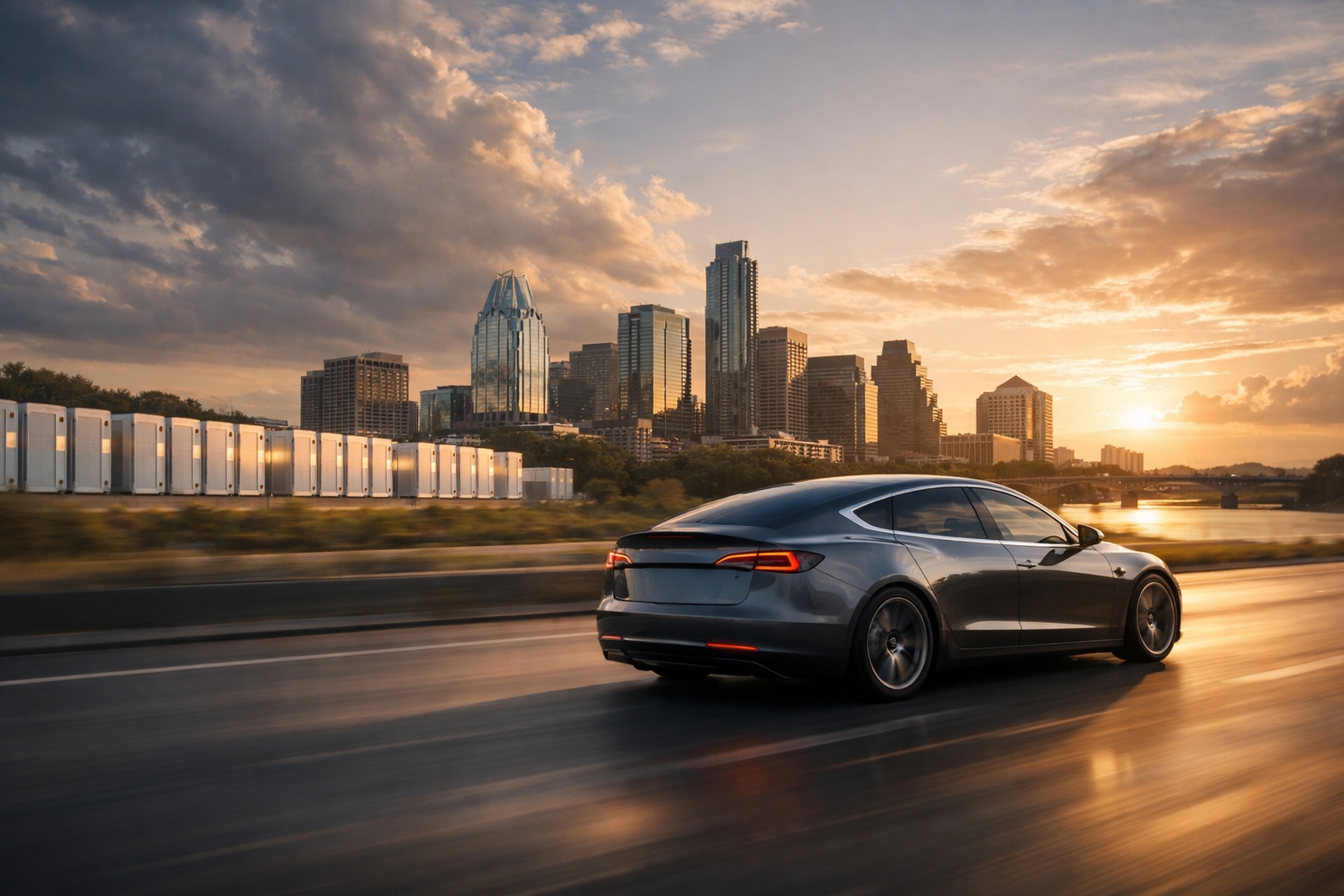
Tesla’s stock performance in early 2026 has become tightly linked to one core narrative: autonomous driving progress. Unlike previous rallies driven by vehicle delivery growth or price cuts, recent market momentum is largely fueled by developments around Full Self-Driving (FSD), Robotaxi deployment, and regulatory signals—especially in the United States and Europe.
This article analyzes why Tesla’s autonomy narrative matters so much to markets, how investors are pricing it in, what risks remain, and what Tesla owners and long-term shareholders should realistically expect next.
1. Introduction: Why Tesla’s Stock Reacts Differently in 2026
Tesla is no longer treated by markets as a traditional automaker.
In 2026, investors increasingly value Tesla as a software-centric mobility and AI company, where vehicle sales are only one component of a broader ecosystem. This shift explains why:
-
Tesla stock can rise even when vehicle margins are under pressure
-
Autonomy announcements move the share price more than delivery numbers
-
Regulatory progress triggers rallies across U.S. and European markets
For Tesla owners and enthusiasts, this creates a disconnect: the stock price may surge even when personal vehicle updates feel incremental. Understanding that gap is essential.
2. Recent Market Reaction: What Triggered the Latest Tesla Rally
2.1 Autonomy-Driven Catalysts
The most recent Tesla stock surge followed a combination of three autonomy-related signals:
-
Robotaxi operations expanding without safety drivers in limited U.S. zones
-
Public statements signaling imminent FSD regulatory approvals in Europe
-
Growing confidence that Tesla’s autonomy stack is converging toward scalability
Markets interpreted these signals as revenue unlock events, not just technical milestones.
2.2 Why This Rally Was Different from Past Ones
Historically, Tesla rallies were driven by:
-
Delivery beats
-
Margin expansion
-
Factory announcements
In contrast, the 2026 rally reflects:
-
Future cash flow expectations
-
Platform-level valuation
-
AI-driven optionality
This is a critical shift in how Tesla is priced.
3. Tesla’s Stock Profile in 2026: A Hybrid Valuation Model
Tesla now sits in a rare category that blends:
-
Automotive manufacturing
-
Software subscriptions
-
Artificial intelligence development
-
Network-based mobility services
3.1 Traditional Automaker Metrics No Longer Fully Apply
Metrics like:
-
Price-to-earnings (P/E)
-
Gross margin per vehicle
-
Quarterly delivery growth
Still matters—but they no longer dominate valuation.
Instead, investors are asking:
-
How scalable is Tesla’s autonomy software?
-
Can FSD become a recurring revenue engine?
-
Will robotaxis generate high-margin cash flows?
4. FSD as a Financial Asset, Not Just a Feature
4.1 From Driver Assistance to Revenue Platform
Full Self-Driving has evolved from:
“An optional driver-assist package”
Into:
A long-term monetizable software platform
Key revenue models include:
-
Monthly FSD subscriptions
-
One-time software unlocks
-
Fleet-level autonomy licensing
-
Robotaxi service revenue sharing
Even partial success in any of these areas materially changes Tesla’s earnings profile.
4.2 Why Markets Are Willing to Pay Ahead of Results
Investors are forward-pricing:
-
High-margin software income
-
Network effects from scale
-
First-mover advantage in vision-based autonomy
This explains why Tesla’s valuation can expand before profits fully materialize.
5. Robotaxi Economics: Why Wall Street Cares So Much
5.1 The Robotaxi Business Model Explained Simply
A single Tesla vehicle operating autonomously could:
-
Generate daily revenue
-
Operate longer hours than human drivers
-
Serve multiple customers per day
From an investor perspective, this transforms a depreciating asset into:
A revenue-generating node in a distributed network
5.2 Why Even Limited Deployment Matters
Markets do not require:
-
Nationwide rollout
-
Immediate mass adoption
Instead, they look for:
-
Proof of technical feasibility
-
Regulatory acceptance
-
Early utilization data
Once those appear, valuation models change dramatically.
6. Analyst Sentiment in 2026: Bullish, but Divided
6.1 The Bull Case
Bullish analysts argue:
-
Tesla is years ahead in real-world autonomy data
-
Vision-only systems scale better globally
-
Software margins will eventually outweigh auto margins
They see autonomy as Tesla’s next S-curve.
6.2 The Bear Case
Skeptics point to:
-
Regulatory uncertainty outside the U.S.
-
Legal and liability risks
-
Slower-than-expected consumer adoption
They argue markets may be pricing autonomy too early.
7. Risks That Could Reverse Tesla’s Stock Momentum
Despite optimism, several risks remain:
7.1 Regulatory Delays in Europe
European regulators move cautiously. Any delay in:
-
Type approval
-
Operational permissions
-
Liability frameworks
Could stall Tesla’s autonomy narrative in the region.
7.2 Safety Incidents and Public Trust
Autonomy is unforgiving:
-
One high-profile incident can reset sentiment
-
Media coverage amplifies perception risks
Markets react swiftly to confidence shocks.
7.3 Core Auto Business Pressure
Autonomy excitement does not erase:
-
Price competition
-
EV demand fluctuations
-
Manufacturing cost challenges
If the core business weakens too much, stock optimism may fade.
8. Tesla vs the Broader EV and AI Market
8.1 Compared to Traditional EV Makers
Tesla’s valuation diverges because:
-
Competitors sell cars
-
Tesla sells cars plus intelligence
This hybrid identity is unique at scale.
8.2 Compared to AI-Focused Companies
Unlike pure AI firms:
-
Tesla controls hardware, software, and deployment
-
Data collection is embedded in daily use
This vertical integration is attractive to long-term investors.
9. What Tesla Owners Should Understand About the Stock
For Tesla owners in the U.S. and Europe:
-
Stock rallies do not always reflect immediate product upgrades
-
Market optimism is about future autonomy, not current features
-
Short-term volatility is normal
Owning a Tesla vehicle and owning Tesla stock are two different experiences—linked, but not identical.
10. Key Metrics Investors Are Watching Next
In 2026, the most important indicators include:
-
FSD regulatory approvals by region
-
Robotaxi operational scale
-
Software subscription attachment rates
-
Safety performance data
Vehicle delivery numbers still matter—but they are no longer the headline driver.
11. Long-Term Outlook: Is Autonomy Enough to Justify the Valuation?
Autonomy does not need to be perfect to succeed financially.
Even:
-
Partial autonomy
-
Geo-fenced robotaxi zones
-
Premium driver-assist subscriptions
Can support Tesla’s valuation if scaled responsibly.
The key question is execution, not ambition.
12. Conclusion: Tesla Stock in 2026 Is a Bet on Intelligence
Tesla’s stock performance in 2026 reflects a market that increasingly sees the company as:
An intelligence platform on wheels
Autonomous driving is no longer a side feature—it is the narrative engine driving investor confidence. Whether Tesla fully delivers on that promise remains uncertain, but for now, markets are willing to believe.
For Tesla owners, investors, and observers alike, one thing is clear:
Tesla’s future valuation will be decided more by software than sheet metal.
FAQ: Tesla Stock & Autonomy in 2026
Q1: Is Tesla stock now more influenced by software than car sales?
Yes. While car sales remain important, autonomy progress increasingly dominates valuation discussions.
Q2: Does FSD approval in Europe significantly impact the stock?
Yes. Europe represents a major regulatory validation and revenue expansion opportunity.
Q3: Are robotaxis already priced into Tesla’s stock?
Partially. Markets price in early success but still discount full global deployment.
Q4: Should Tesla owners expect rapid feature changes because of stock rallies?
Not necessarily. Market expectations often move faster than consumer-facing updates.
Q5: What could cause a major Tesla stock correction?
Regulatory setbacks, safety incidents, or prolonged weakness in the core auto business.