
I. Introduction: A Bittersweet Milestone in Automotive History
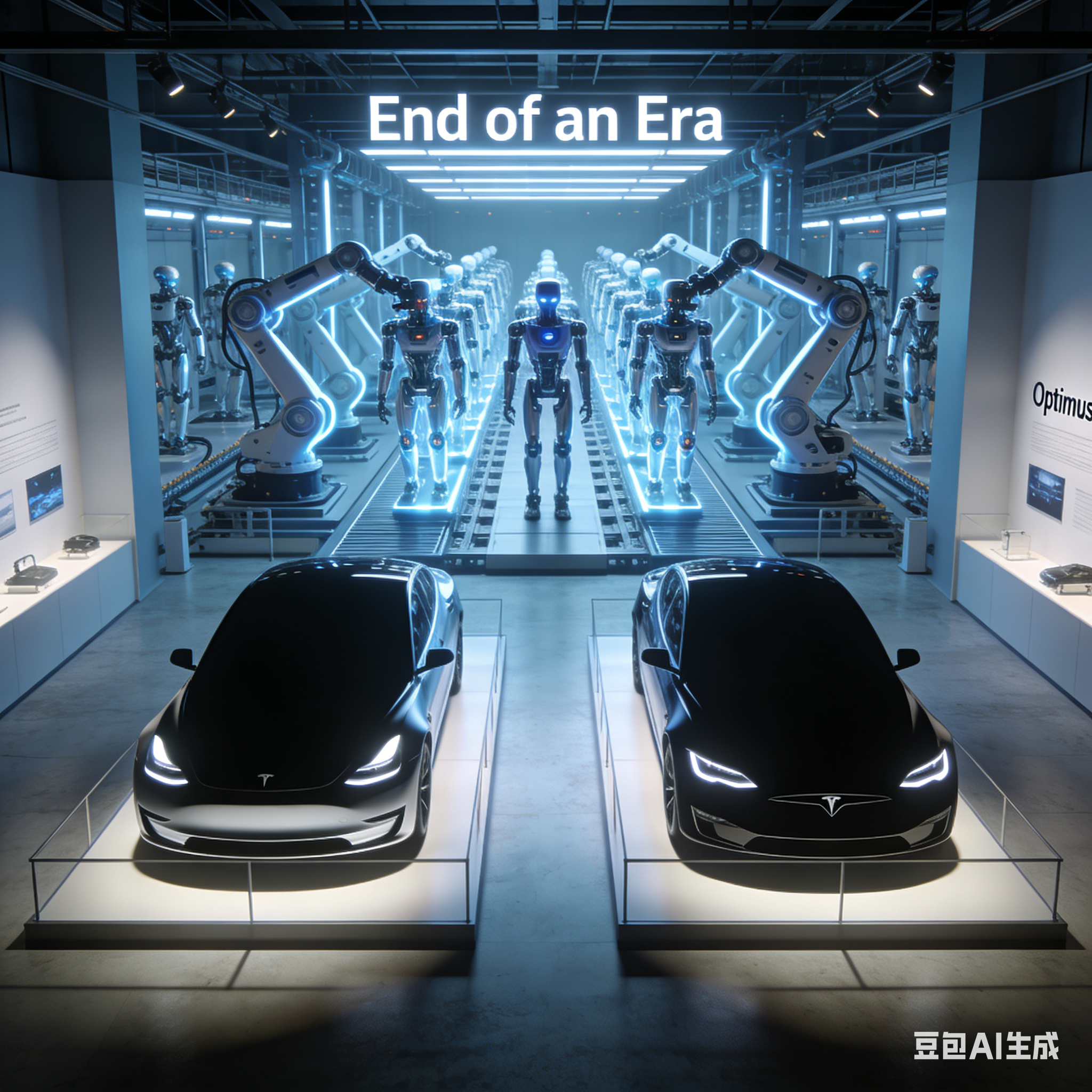
On January 28, 2026, during the Q4 2025 earnings call, Elon Musk delivered a statement that reverberated through the automotive world: the Tesla Model S and Model X have been granted an "honorable discharge." After over a decade of redefining what an electric vehicle (EV) can be, Tesla’s original flagship sedan and its falcon-winged sibling are officially entering their final months of production. By the end of Q2 2026, the lines that birthed the "Plaid" era will go silent, making way for a future that looks less like a car and more like a human.
For the Tesla community in the US and Europe, this is a seismic shift. The Model S was the car that saved Tesla from obscurity in 2012, proving that EVs could be sexy, fast, and high-tech. The Model X, despite its production complexities, broke the mold for family utility. However, Tesla’s 2026 roadmap reveals a company no longer satisfied with being a mere automaker. Tesla is pivoting to become a "Physical AI" powerhouse, and the space once occupied by luxury leather and glass is needed for gears, actuators, and neural networks.
II. Fremont’s Transformation: From Sedans to Sentience
The Fremont factory in California has always been the heart of Tesla’s manufacturing evolution. Once a joint venture between GM and Toyota (NUMMI), it became the cradle of the Model S. Now, it is undergoing its most radical transformation yet.
The Scale of the Optimus Hub
Elon Musk confirmed that the floor space currently dedicated to Model S and Model X assembly will be entirely repurposed for the Optimus Humanoid Robot.
-
Targeting 1 Million Units: Tesla is not just building a robot; they are building a "robot factory." The goal is a production capacity of 1 million Optimus units per year within this specific section of the Fremont campus.
-
A Different Kind of Line: Unlike car assembly, which requires massive paint shops and heavy stamping presses, Optimus production focuses on micro-tolerances, advanced actuator integration, and rapid battery-to-limb calibration.
Why Fremont?
While Giga Texas is the home of the Cybertruck and the upcoming Cybercab, Fremont remains the center of Tesla’s most experienced engineering talent. The proximity to Tesla’s Palo Alto engineering headquarters makes it the ideal site for the "Optimus Hub." The transition will involve retooling the existing S/X lines into modular, AI-driven assembly cells where Gen 3 Optimus robots will eventually help build other Optimus robots—a realization of the "machine that builds the machine."
III. Support for Legacy Owners: Navigating the Sunset
For the hundreds of thousands of Model S and X owners across North America and Europe, the news of discontinuation brings immediate questions regarding the longevity of their investment.
Parts, Service, and "Indefinite" Support
Tesla has been quick to reassure owners. Unlike traditional manufacturers that often sunset parts support after 10 years, Tesla’s vertical integration allows them to maintain digital and physical support structures longer.
-
Global Service Network: The existing service centers in the US and Europe will continue to stock air suspension components, falcon-wing door seals, and Plaid drive units.
-
Software Longevity: Tesla’s software-defined architecture means the Model S and X will continue to receive over-the-air (OTA) updates. However, there is a technical ceiling. While "AI5" hardware is being integrated into newer fleets, older S/X models may eventually hit a hardware bottleneck for the most advanced FSD features of the late 2020s.
The Collector’s Factor vs. Resale Value
In the short term, the used market for the Model S Plaid and Model X Plaid has seen a "scarcity spike." As the last of the high-performance, driver-centric luxury Teslas, these vehicles are being viewed as the "final editions" of a historic lineage. For owners in the EU, where luxury EV competition from Porsche and Audi is fierce, the discontinuation makes the Model S a unique piece of American tech history.
IV. The Strategic "Abundance" Mission: Why Luxury Sedans No Longer Fit
To understand why Tesla would kill its most prestigious (and highest-margin) cars, one must look at the revised mission statement. In 2026, Tesla’s goal has evolved from "accelerating the world's transition to sustainable energy" to "creating a future of abundance."
The "Niche" Problem
In 2025, the Model S and X combined accounted for only about 3% of Tesla's total delivery volume. For a company aiming to produce 20 million units annually by the 2030s, the S and X were increasingly seen as "distractions." They required unique parts, unique assembly processes, and significant engineering upkeep for a very small segment of the market.
Labor vs. Capital
An Optimus robot at a projected price point of $20,000 to $30,000 represents a vastly larger TAM (Total Addressable Market) than a $90,000 luxury sedan. By shifting Fremont’s resources, Tesla is betting that the economic output of a million robots will dwarf the revenue generated by 60,000 luxury cars. In Musk’s view, the "labor" market is infinite, whereas the "luxury sedan" market is saturated.
V. Conclusion: The Legacy of the Flagships
The retirement of the Model S and X marks the end of Tesla’s adolescence. These were the cars that proved the naysayers wrong; they were the cars that forced Mercedes-Benz and BMW to take electricity seriously. While it is "bittersweet" to see the S3XY lineup lose its bookends, the pivot to Optimus represents the ultimate expression of Tesla’s DNA: a relentless, almost cold-blooded drive toward the next frontier.
The Model S did not just go out of style; it went out of the way so that the future could arrive. For those who still want to own a piece of this history, the message from the Q4 call was clear: Order now, or forever hold your peace.
VI. FAQ: Everything You Need to Know About the S/X Retirement
Q: When is the absolute last date to order a new Model S or Model X? A: Tesla expects to wind down the configurator by the end of Q1 2026, with the final production units rolling off the line in June 2026.
Q: Will there be a "Final Edition" or "Signature" series? A: While Tesla hasn't officially announced a "Final Edition," inventory units produced in the final quarter are expected to feature unique digital badges within the software interface to commemorate the end of the program.
Q: Does this mean the Tesla Roadster is also canceled? A: No. The Roadster remains a separate, low-volume "halo" project. In fact, the retirement of the S/X may free up engineering bandwidth to finally bring the Roadster to its limited production phase in Giga Texas.
Q: Will my Model S/X still receive the latest FSD v13 and v14 updates? A: Yes. Tesla has committed to supporting the existing fleet's software as long as the onboard AI hardware (HW3/HW4) can physically process the neural networks.
Q: What is the best alternative if I wanted a luxury Tesla? A: For performance, the Model 3 Performance (Highland) or the upcoming Cybercab (for autonomy) are the suggested pivots. For utility and "wow factor," the Cybertruck is now the flagship of the Tesla brand.