
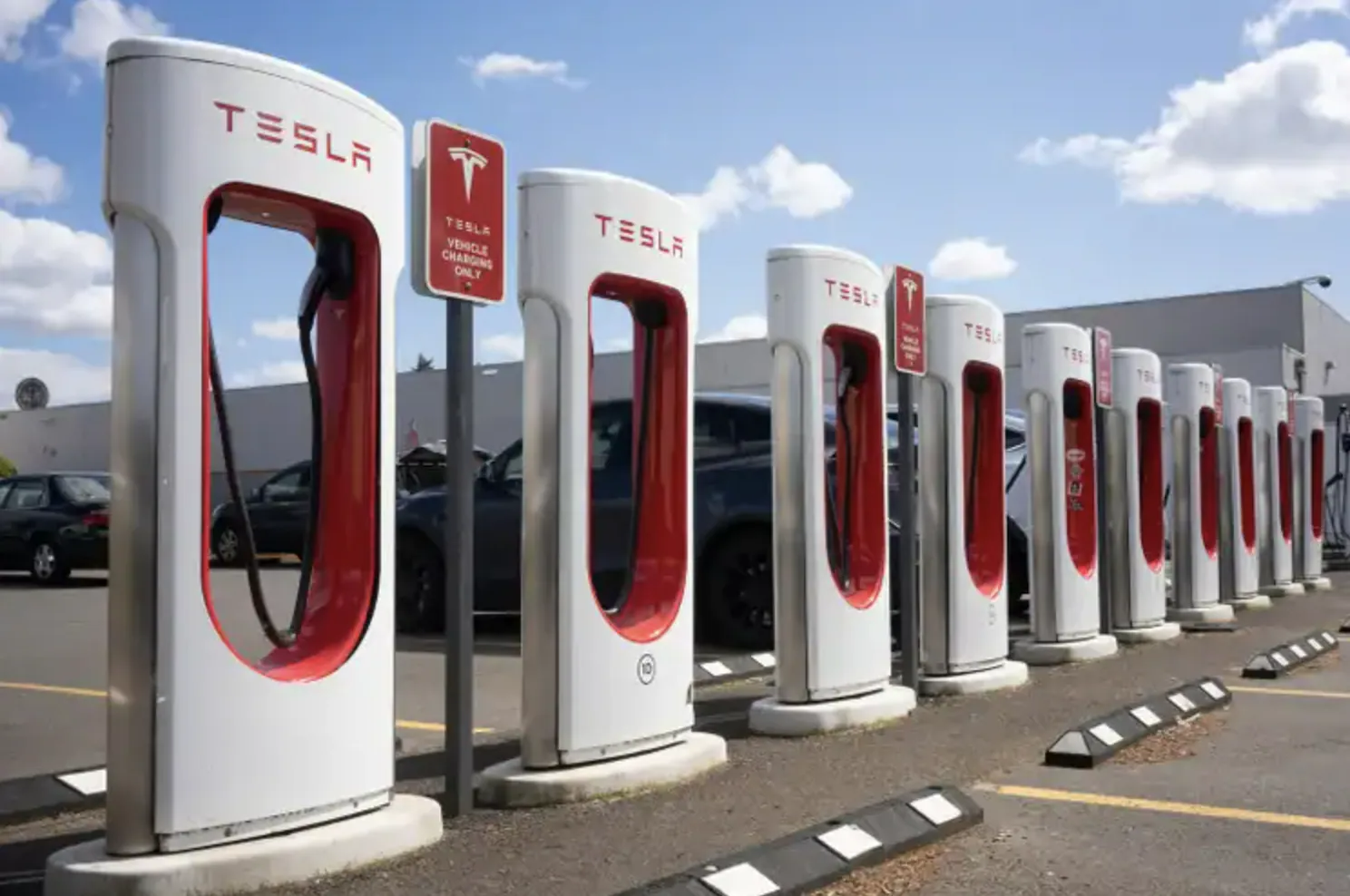
1. Introduction: The Standardization of Charging
For any electric vehicle owner, the simple act of plugging in is the gateway to freedom. Yet, that simple act has become the focal point of a complex and fascinating global battle for standardization. For nearly a decade, the EV charging landscape was a fragmented world, often compared to the early days of mobile phones where every brand had its own unique, incompatible charger. In this world, Tesla built a walled garden—a seamless, reliable, and exclusive network that became one of the primary reasons to own their vehicles. The plug, the car, and the payment system all worked together in perfect harmony.
Today, the walls of that garden are coming down, but in two very different ways on opposite sides of the Atlantic. In North America, Tesla’s proprietary plug, now officially dubbed the North American Charging Standard (NACS), has achieved a stunning victory, with nearly every major automaker pledging to adopt it. In Europe, the opposite has happened: Tesla has bowed to the prevailing Combined Charging System (CCS2), a mandated standard, and has been progressively opening its Supercharger network to all EV brands.
This divergence has created a fascinating new reality for Tesla owners. Are you part of a newly dominant standard or a participant in an open, competitive marketplace? What are the practical, day-to-day consequences for charging speeds, station availability, and the overall ownership experience? This article will provide an exhaustive analysis of the state of Supercharging in 2025, exploring the technical supremacy and strategic victory of NACS in the US, the competitive and regulated landscape of CCS2 in Europe, and what this continental divide truly means for the Tesla community.
2. NACS in North America: A Victory Lap for Tesla
The story of NACS in North America is a masterclass in strategic foresight. By investing billions of dollars in building a robust and reliable charging network when no one else would, Tesla created an indispensable piece of infrastructure that has now become the de facto standard for an entire continent.
Section 2.1: The Network Effect - Building an Unbeatable Moat From the beginning, Tesla understood a critical truth: a great electric car is useless without great charging. While other early EV manufacturers relied on a patchwork of unreliable third-party networks, Tesla built its own. The Supercharger network was fast, dependable, and strategically placed along major travel corridors. This created a powerful "moat" around the company. For many buyers, the decision to buy a Tesla was not just about the car, but about buying into the peace of mind that came with its exclusive charging network. The plug itself—elegant, lightweight, and capable of handling both AC and DC charging in one compact design—was simply a better piece of hardware than the bulky CCS1 plug used by other North American EVs.
Section 2.2: Opening the Floodgates - The Great NACS Adoption The turning point came in late 2022 when Tesla opened the design of its connector to the world, rebranding it as NACS. The dominoes began to fall in 2023. First Ford, then General Motors and Rivian, announced they would be equipping their future EVs with a NACS port, starting in 2025. In the months that followed, virtually every other major automaker selling cars in the US—from Nissan and Honda to Hyundai, BMW, and Mercedes-Benz—followed suit.
This widespread adoption represents a total victory for Tesla's standard. It ensures that the vast majority of non-Tesla EVs sold in North America will soon be able to charge natively at Superchargers without an adapter. For the industry, it ends a confusing standards war. For Tesla, it transforms a proprietary advantage into a new revenue stream and a position as the core infrastructure provider for the entire industry.
Section 2.3: The "Magic Dock" Solution - A Bridge Between Worlds To manage the transition period, with millions of CCS1-equipped EVs still on the road, Tesla has been deploying a brilliant piece of engineering: the Magic Dock. This is a small, integrated CCS1 adapter housed within the Supercharger unit itself.
Here's how it works for a non-Tesla driver:
-
They select a station in the Tesla app and are assigned a specific stall.
-
The app sends a command to unlock the Magic Dock on that stall.
-
The driver pushes the charging handle forward, and the entire assembly, with the CCS1 adapter attached, comes out.
-
They plug it into their vehicle and initiate charging via the app.
For a Tesla owner, the experience is unchanged. You simply grab the handle, and the adapter remains docked in the charger. While this solution has been praised for its clever design, it also introduces a new variable for Tesla owners: the potential for increased station congestion. The once-exclusive network is now open to all, and reports from heavily-trafficked corridors show that wait times have increased in some areas, a tangible downside to this industry-wide victory.
3. CCS2 in Europe: A Different Landscape
While Tesla was busy conquering North America with its own standard, the story in Europe played out very differently. Here, Tesla was not the standard-setter but a powerful player in a market that had already chosen its path.
Section 3.1: An Established Standard - The Mandate for CCS2 The European Union, in its push for interoperability and a seamless cross-border charging experience, mandated the Combined Charging System (CCS2) as the standard for all new EVs. The CCS2 plug is physically different from its North American CCS1 cousin, featuring a three-phase AC charging capability common in European power grids, but it serves the same purpose. Tesla complied, building its European Model 3 and Model Y vehicles with a CCS2 port from the outset and offering adapters for older Model S and Model X vehicles. This meant that from a hardware perspective, the European Supercharger network was already aligned with the continent's standard.
Section 3.2: Tesla's "Open Supercharger" Pilot Recognizing the regulatory environment and the opportunity for a new revenue stream, Tesla launched its "Open Supercharger" program in Europe, well before it opened its network in the US. The program allows drivers of any CCS2-compatible EV to charge at participating Supercharger locations.
The user experience for a non-Tesla driver is entirely app-based. They must download the Tesla app, create an account, add a payment method, and use the app to select a stall and initiate and stop the charging session. This process, while functional, lacks the seamless "just plug in and walk away" magic of the native Tesla experience. Furthermore, non-Tesla drivers typically pay a significantly higher price per kWh unless they opt to pay a monthly subscription fee to Tesla for lower rates.
Section 3.3: Competing Networks - A Fiercely Contested Market Unlike in North America, where the Supercharger network's reliability and scale are largely unrivaled, Europe has several powerful, well-funded competing charging networks. Tesla owners in Europe have more choice, but also face a more complex market.
-
IONITY: A joint venture by BMW, Ford, Hyundai, Mercedes-Benz, and Volkswagen Group. IONITY stations are known for their high-power 350kW chargers (exceeding the peak speed of current Superchargers) but have historically been one of the most expensive options.
-
Fastned: This Dutch company is praised for its station design, featuring distinctive solar canopies and a focus on reliability. They are expanding rapidly across Western Europe.
-
Allego, Enel X, and others: A host of other large networks provide broad coverage, though reliability and user experience can be more variable than with Tesla or IONITY.
For a European Tesla owner, the Supercharger network remains a key asset due to its deep integration with the car's navigation and its reputation for reliability. However, the competition is fierce and provides viable alternatives, something that is only just beginning to emerge in the United States.
4. The Owner's Perspective: Benefits and Drawbacks
The strategic decisions made in boardrooms in California and Brussels have tangible consequences for owners pulling up to a charger on a cold winter's day. The experience and the trade-offs are now distinctly different depending on the continent.
Section 4.1: The US Experience - Losing Exclusivity, Gaining Universality The primary drawback for US-based Tesla owners is the loss of exclusivity. You may now have to wait for a Ford Mustang Mach-E or a Hyundai IONIQ 5 to finish charging before you can plug in. This can be frustrating, especially for long-time owners accustomed to the network being a private perk.
However, the benefits are substantial. The universal adoption of NACS means that government infrastructure funding, such as the massive National Electric Vehicle Infrastructure (NEVI) program, is now flowing to NACS-compatible projects. This will lead to a faster and more extensive buildout of charging stations from both Tesla and third parties, ultimately benefiting all EV drivers. The end of the standards war creates a more stable, predictable future, which is good for the long-term health of the entire EV ecosystem and the resale value of NACS-equipped vehicles.
Section 4.2: The European Experience - Competition and Complexity For European Tesla owners, the network was never truly exclusive in the same way. Since their cars use the CCS2 standard, they have always been able to use other networks like IONITY. The opening of the Superchargers to other brands is less of a shock to the system. The main benefit is that the increased revenue from non-Tesla drivers helps fund an even faster expansion of the Supercharger network. The drawback is similar to the US: potential overcrowding at popular sites and the introduction of drivers who may be unfamiliar with Supercharger etiquette.
Section 4.3: The Future of V3 and V4 Supercharging Tesla's strategy for serving a multi-brand world is embodied in the design of its new V4 Supercharger. While delivering the same peak 250kW power as the V3 units for now, the V4 pedestal is a significant evolution designed for universal access.
-
Longer Cable: The V4 features a much longer charging cable. This is a critical design change to accommodate the wide variety of charging port locations on non-Tesla EVs (e.g., front fender, rear quarter panel).
-
Contactless Payment: V4 stalls include a built-in screen and credit card reader. This allows for simple "tap-to-pay" functionality, removing the requirement for non-Tesla drivers to use the app and streamlining the process for everyone.
-
Future-Proof Power: The V4 architecture is designed to support higher voltages and future charging speeds well beyond 250kW, ensuring its relevance for the next generation of EVs.
5. The Technical Details That Matter
Beyond the plugs and politics, key technical differences influence the user experience and showcase where Tesla maintains a significant lead.
Section 5.1: Plug and Charge - The Seamless Handshake The "gold standard" charging experience is when a driver simply plugs in the car and charging begins automatically, with billing handled in the background. Tesla perfected this from day one. This is possible because Tesla controls the car, the charger, and the user account, creating a seamless, vertically integrated system.
The broader EV industry is trying to replicate this with a standard called ISO 15118, which is marketed as "Plug & Charge." When it works, a CCS car can communicate securely with the charger to authenticate and authorize a session automatically. However, its implementation has been inconsistent. It requires support from the car manufacturer, the charging network operator, and sometimes a third-party billing provider. This multi-party complexity is why Plug & Charge on CCS networks can be unreliable, often forcing drivers to fall back on RFID cards or smartphone apps.
Section 5.2: Power Sharing and Charging Curves Most Tesla Supercharger locations use a power-sharing architecture. A single power cabinet often feeds a pair of stalls (e.g., 3A and 3B). If one car is charging, it can get the full power available. If a second car plugs into the paired stall, the cabinet's total output is shared between them, which can slow down the charging session for both vehicles. Tesla's navigation system is smart enough to account for this, preconditioning the battery for the fastest possible charge based on the station's known architecture. When non-Tesla vehicles with different battery voltages and charging curves plug in, it introduces new variables into this power management equation, though the system is designed to handle this dynamically.
Section 5.3: The Future of Bi-Directional Charging A key feature on the horizon for EVs is bi-directional charging, allowing a car to not only draw power from the grid but also send it back. This enables Vehicle-to-Grid (V2G) and Vehicle-to-Home (V2H) applications, turning the car into a mobile power station. The CCS standard has well-defined protocols for bi-directional power flow. Many CCS-based vehicles, like the Hyundai IONIQ 5 and Ford F-150 Lightning, already support this to some degree.
Tesla has been conspicuously slower to implement this feature in its vehicles, prioritizing stationary storage with its Powerwall product line instead. While the new Tesla Cybertruck and the V4 Supercharger hardware are believed to be V2G-capable, it remains a key area where the broader CCS ecosystem currently has a technical advantage.
6. Conclusion: One Planet, Two Standards
The global charging landscape has bifurcated into two distinct, continent-spanning empires. In North America, Tesla's elegant NACS plug and its hyper-reliable Supercharger network have won the standards war through sheer operational excellence. Tesla set the standard, and the industry followed. For owners, this means living within a vast, rapidly growing, and now universal ecosystem, with the minor inconvenience of having to share it.
In Europe, Tesla played a different but equally shrewd game. By embracing the mandated CCS2 standard and strategically opening its network, the company transformed itself from a proprietary outlier into a major infrastructure provider for all brands. For European owners, this means more choice, more competition, and a Supercharger network that is just one of several excellent options.
Ultimately, the goal is the same on both continents: to make EV charging as easy and ubiquitous as finding a gas station. While the path to that goal may follow two different standards, Tesla's strategic moves have ensured that its network—and its owners—will remain at the very center of the electric revolution for years to come.
7. FAQ Section
-
As a Tesla owner, do I need to buy an adapter? In North America and Europe, if you are driving a modern Tesla (Model 3/Y, and recent Model S/X), you do not need an adapter to use a Tesla Supercharger. In Europe, your car's CCS2 port also allows you to use other third-party CCS2 chargers without an adapter. In North America, you would need a CCS1 adapter to use non-Tesla DC fast chargers.
-
Does it cost more for other brands to use a Supercharger? Yes. Non-Tesla vehicles are typically charged a higher price per kilowatt-hour (kWh) for "pay-as-you-go" charging. Tesla offers an optional monthly subscription that grants non-Tesla drivers access to the same, lower pricing that Tesla owners enjoy.
-
How can I find out which Superchargers are open to non-Teslas? The Tesla mobile app contains the most up-to-date map. There is a filter within the "Charge Your Non-Tesla" section that will display only the Supercharger sites that have been opened to all compatible EVs.
-
Will opening the network slow down my charging speeds? The charging speed of your car is not directly affected. A V3 Supercharger will still deliver up to 250kW of power. However, the overall time you spend at a station could increase if all stalls are occupied and you have to wait for a spot. Furthermore, if you plug into a stall that is paired with another car that is actively charging, the power-sharing architecture may result in a slower initial charging rate than if you had the stall to yourself.