
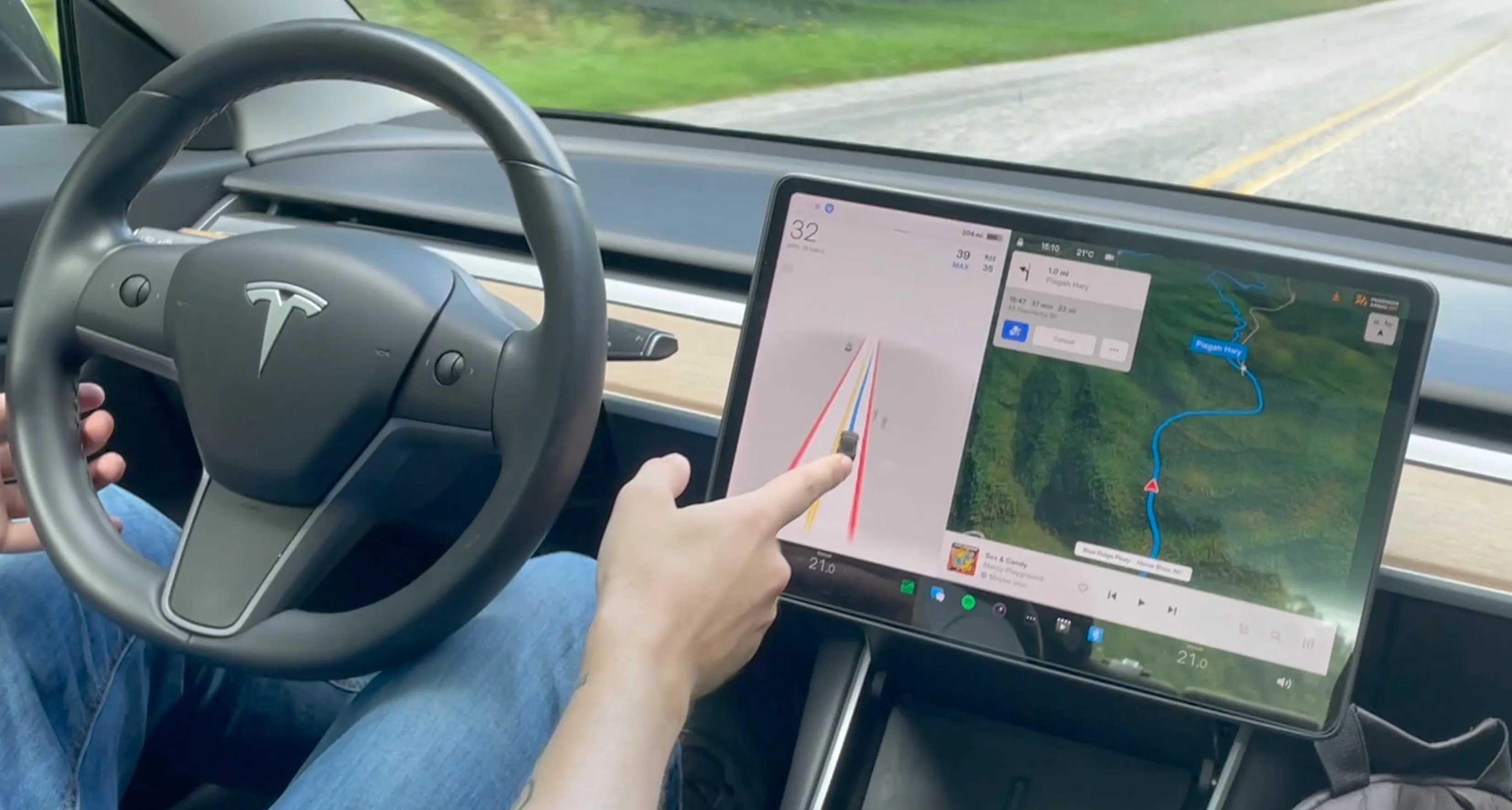
In the world of Tesla, timelines are often fluid. But today, a rare public friction occurred between Tesla’s European leadership and a national regulator, throwing the highly anticipated release of Full Self-Driving (FSD) in Europe into fresh uncertainty.
For years, European Tesla owners have paid thousands of Euros for an "FSD Capability" package that offers little more than basic lane-keeping due to strict UNECE (United Nations Economic Commission for Europe) regulations. Today, November 26, 2025, that frustration boiled over into a public dispute involving the Netherlands Vehicle Authority (RDW).
This article digs deep into the conflicting statements, the complex regulatory framework (DCAS), and what this actually means for the deployment of autonomous driving on European roads.
I. The "Commitment" That Wasn't
The controversy began early this morning when Tesla’s official Europe & Middle East social media channels posted a hopeful update. In an effort to assuage fears about the sliding stock price and declining European sales, Tesla stated that the RDW (Rijksdienst voor het Wegverkeer) had "committed" to granting a Netherlands National approval for FSD by February 2026.
To the average owner, this sounded like a victory lap. It implied a signed deal.
However, the celebration was short-lived. Hours later, the RDW issued a stinging correction to Bloomberg and local Dutch media. Their statement was unequivocal:
"RDW and Tesla know what efforts need to be made to make a decision on this in February. Whether the schedule will be met remains to be seen... For the RDW, traffic safety is paramount."
The regulator clarified that February 2026 is merely a target date for Tesla to demonstrate compliance, not a guaranteed date of approval. The RDW effectively accused Tesla of jumping the gun to generate positive PR, warning the public (and by extension, investors) that the safety validation process is far from complete.
II. Why the Netherlands? The Strategy of the "Reference Member State"
To understand why a Dutch regulator has the power to block or approve FSD for the whole of Europe, we must look at the EU's type-approval system.
In the EU, automakers choose a "Reference Member State" for vehicle homologation. Once that country's authority (in this case, the RDW) approves a system, that approval is generally valid across all EU member states. Tesla has historically used the Netherlands as its gateway to Europe because the RDW is viewed as more pragmatic and tech-forward than Germany's Kraftfahrt-Bundesamt (KBA), which is often more protective of legacy German automakers.
Tesla’s strategy relies on getting the RDW to sign off on an exemption for FSD (Supervised), creating a precedent that other countries would be hard-pressed to ignore. By publicly announcing the February 2026 date, Tesla was likely attempting to apply public pressure on the RDW—a tactic that appears to have backfired today.
III. The Regulatory Wall: DCAS Phase 2 vs. UNECE R79
The core of the problem isn't just bureaucratic will; it's the text of the law. Currently, driver assist systems in Europe are governed by UNECE Regulation 79 (R79). R79 is archaic. It essentially limits steering assist to specific lateral acceleration limits, effectively castrating FSD. It prevents the car from taking sharp turns or roundabouts aggressively enough to be useful in real-world traffic.
The industry has been working on a new regulation: DCAS (Driver Control Assistance Systems).
-
Phase 1 of DCAS has been drafted, but it largely covers "hands-on" lane changes initiated by the driver.
-
FSD (Supervised) requires "System Initiated Maneuvers" (SIM). This is where the car decides to change lanes to follow a route without the driver hitting the turn signal first.
Tesla argues that their data shows FSD is safer than a human driver. However, European regulators do not operate on a "probabilistic" safety model like the US. They operate on a "deterministic" model. They want to know exactly how the system will behave in every edge case before it hits the road. Tesla's "End-to-End" neural network approach (V12/V13), which behaves more like a biological brain than a coded rulebook, terrifies traditional regulators because it is a "black box."
IV. The Stakes: Why Tesla is Desperate for Approval
Why push the narrative so hard today? The answer lies in the sales figures released this morning.
1. Creating Demand for Inventory Tesla’s European sales dropped 48% in October. The Model Y is no longer the guaranteed best-seller in markets like Germany. By dangling the carrot of FSD, Tesla hopes to incentivize upgrades and move inventory before the end of Q4 2025.
2. The Revenue Recognition Lever Tesla sits on over $3 billion in "deferred revenue." This is money customers paid for FSD that Tesla cannot officially count as "profit" on their balance sheet until the feature is delivered. Unlocking FSD in Europe would allow Tesla to recognize hundreds of millions of dollars in pure profit instantly—a massive boost for a quarterly earnings report.
3. Data starvation Tesla needs diverse training data. While they have millions of miles of US data, European roads are different (narrower, more roundabouts, different signage). Without a wide release, their "World Model" AI remains US-centric.
V. What This Means for You (The Owner)
If you are a Tesla owner in Europe, today's news requires a recalibration of expectations.
-
The Optimistic View: Tesla aces the February 2026 compliance demo. The RDW grants a national exemption. By Summer 2026, a "shadow mode" or very limited release hits the Netherlands, followed by a wider EU rollout in late 2026.
-
The Realistic View: The RDW stands firm on safety data. They require changes to the Neural Net to comply with DCAS constraints (limiting the "AI" nature of the drive). This pushes approval into 2027.
-
The Hardware Question: Owners with HW3 (AI3) computers should be particularly worried. Today's wide release of V13.2 in the US shows a growing performance gap between HW3 and HW4. If European regulators demand extremely high-fidelity sensor data for approval, HW3 might never be approved for FSD in Europe, potentially leading to class-action lawsuits.
VI. Conclusion
The conflict between "Silicon Valley Speed" and "Brussels Bureaucracy" hit a peak today. While Tesla claims a commitment, the RDW claims caution. For the European Tesla owner, the dream of autonomous driving remains stuck in neutral—not because the car can't do it, but because the regulators aren't convinced it knows why it's doing it.
We will continue to monitor the RDW's filings in the coming weeks. If Tesla is serious about February 2026, we should see massive "Shadow Mode" data spikes in the Netherlands starting in December.
VII. Frequently Asked Questions (FAQ)
Q1: Can I get a refund on FSD in Europe if it doesn't arrive by 2026? Currently, Tesla considers the FSD purchase non-refundable as you technically bought the "Capability," not the guaranteed immediate function. However, consumer protection laws in the EU are strong. If the feature is deemed "never deliverable" due to hardware limitations (HW3), litigation is likely.
Q2: Does this delay affect the "Autopilot" or "Enhanced Autopilot" I use now? No. Basic Autopilot and EAP operate under existing R79 regulations. They will continue to function as they do today.
Q3: Why is the US FSD legal but Europe's isn't? The US operates on a "self-certification" model (the manufacturer promises it's safe and is liable if it fails). Europe operates on "type approval" (the government must test and approve it before it can be sold).
Q4: Will the UK get FSD before the EU? Possibly. Post-Brexit, the UK has its own regulatory framework (GB Type Approval). The UK government has been more vocal about welcoming autonomous tech (the Automated Vehicles Act). Tesla could theoretically launch in the UK before the EU, provided they create a right-hand-drive optimized model.
Q5: What is the "Reference Member State"? It is the specific EU country an automaker chooses to certify their vehicle. Once that country says "Yes," the rest of the EU usually follows. Tesla chose the Netherlands (RDW).
Part 4: References & Citations
-
Dutch Regulator Statement: RDW Press Office / Bloomberg Report (Nov 26, 2025). Regarding the clarification of the Feb 2026 FSD timeline.
-
Tesla Official Update: Tesla Europe & Middle East X (formerly Twitter) Account (Nov 26, 2025). Post regarding the RDW commitment.
-
European Sales Data: European Automobile Manufacturers' Association (ACEA) October 2025 Report (Released Nov 25/26, 2025).
-
Stellantis Warnings: Official Statement by Stellantis CEO regarding EU Emissions Standards (Nov 26, 2025).
-
Austin Robotaxi News: Elon Musk X Post / Tesla Investor Relations Update (Nov 26, 2025).
-
FSD V13.2 Rollout: TeslaFi Firmware Tracker & NotATeslaApp Firmware Database (Nov 26, 2025).
-
Model Y Updates: Supply chain reports from Giga Shanghai (Local Chinese automotive outlets/Weibo leaks) (Nov 26, 2025).