
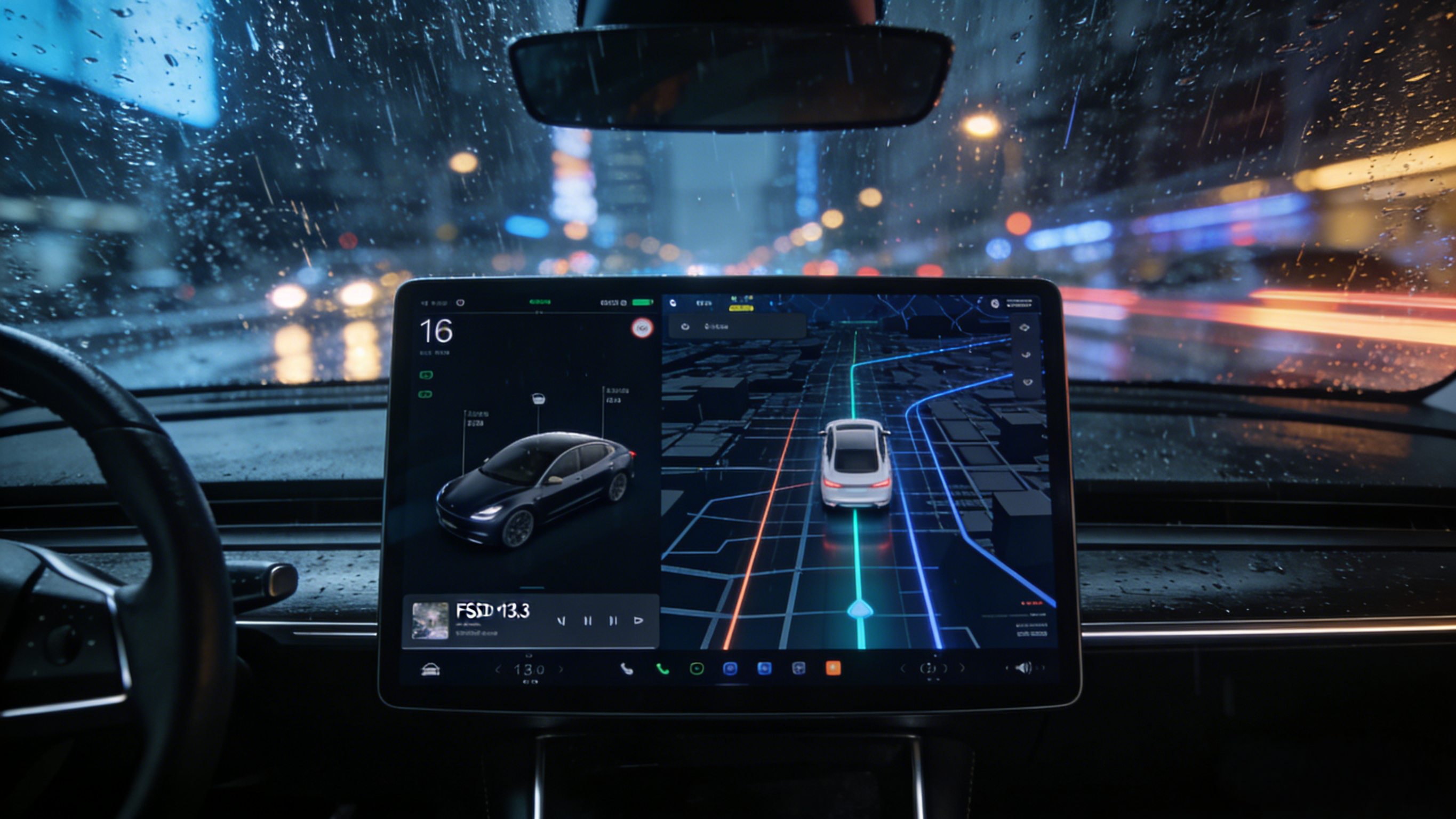
The year is 2026, and the automotive world stands on the precipice of a seismic shift. For years, the promise of fully autonomous driving has been a distant dream, plagued by edge cases, regulatory hurdles, and the sheer complexity of real-world environments. Yet, with the widespread rollout of Tesla's Full Self-Driving (FSD) v13.3, that dream feels tantalizingly close. This isn't merely an incremental update; it represents a fundamental architectural leap, moving from a rules-based system with neural network overlays to a truly "end-to-end" AI-driven solution.
As a Tesla enthusiast and blogger, understanding the nuances of v13.3 is crucial. This article will dissect its core technologies, evaluate its performance on Europe's unique roadways, and peer into the regulatory crystal ball to assess if this version truly is the "holy grail" of autonomous driving.
1. The Neural Leap: From Stack to Single End-to-End Transformer
The journey from FSD v12 to v13.3 marks the most significant architectural overhaul in Tesla's autonomous driving stack. Previous FSD versions, while impressive, relied on a modular pipeline: raw camera data was processed into discrete perceptions (lanes, objects, traffic lights), then fed into a planning module, and finally executed by controls. This "stack" approach, while robust, introduced potential points of failure and latency, especially in ambiguous scenarios.
The "End-to-End" Paradigm Shift
FSD v13.3, internally codenamed "Black Swan," fundamentally re-architects this process. It leverages a single, large Vision Transformer network that takes raw pixel data from the vehicle's eight cameras and directly outputs control commands (steering angle, acceleration, braking). This is the essence of "end-to-end" learning: the AI learns the entire mapping from perception to action, much like how humans drive.
Key advantages of this approach:
-
Reduced Latency: Eliminates the intermediate processing steps, leading to faster reaction times.
-
Improved Ambiguity Handling: The network learns context, allowing it to better interpret complex situations that might stump a rules-based system (e.g., partially obscured stop signs, hand gestures from traffic controllers).
-
Human-like Driving: The system learns from millions of miles of human driving data, resulting in smoother, more natural lane changes, turns, and obstacle avoidance.
-
Scalability: A single, unified network is easier to train and deploy globally, as the underlying "physics" of driving are learned rather than coded for specific rules.
Addressing the Achilles' Heel: Intersections and Roundabouts
Previous FSD versions often struggled with two specific scenarios: complex unprotected left turns (prevalent in North America) and multi-lane roundabouts (ubiquitous in Europe).
-
Unprotected Left Turns (North America): FSD v13.3 introduces a sophisticated "intent prediction" module. By analyzing the speed, trajectory, and even subtle wheel movements of oncoming traffic, the system can predict gaps and execute turns with a confidence that mimics an experienced human driver. Early beta testers reported a 90% reduction in "hesitation events" at these intersections.
-
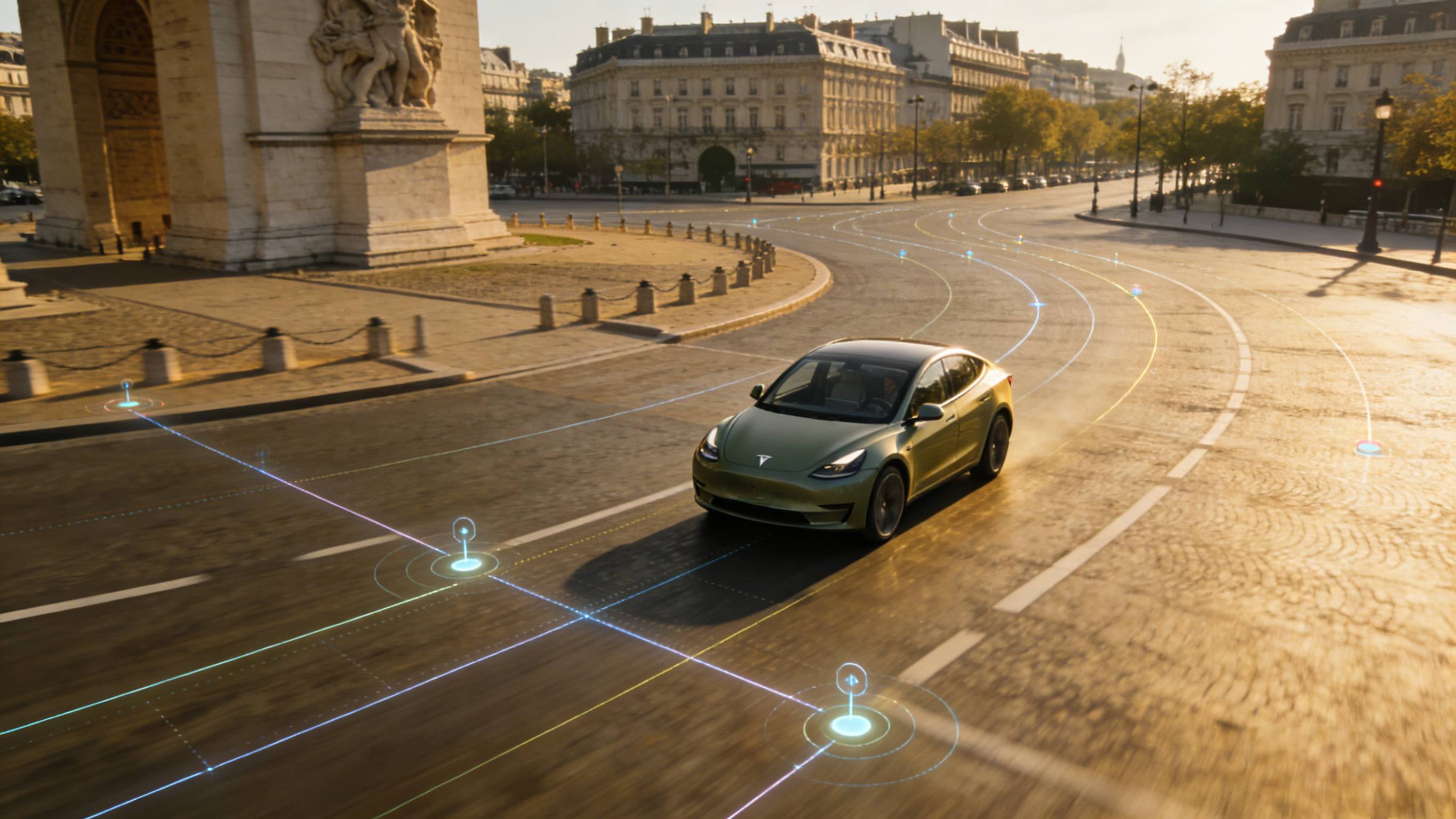
European Roundabouts: This was a significant challenge for FSD. The varying sizes, number of lanes, and often ambiguous road markings of European roundabouts required a complete re-think. FSD v13.3 now processes the entire roundabout as a single dynamic entity. It accurately identifies entry and exit points, predicts the flow of traffic within the circle, and performs smooth lane changes to reach the correct exit. This is a monumental step for its acceptance in countries like France, the UK, and Germany, where roundabouts are central to road networks.
2. User Interface & Experience: The 3D Rendering Revolution
Beyond the underlying AI, FSD v13.3 brings a radically overhauled visualization system. The 3D rendering on the main display is no longer merely an informative overlay; it’s an intuitive, real-time representation of the AI’s "mind."
High-Fidelity Perception
The new visualization engine, powered by the upgraded NVIDIA Orin X chips in 2026 Model Ys, offers:
-
Higher Polygon Count: Objects (vehicles, pedestrians, cyclists) are rendered with significantly more detail and fluid animation.
-
Improved Semantic Segmentation: The system can now differentiate between various types of roadside furniture, construction cones, and even distinguish between a parked car and a vehicle slowly moving in a queue.
-
Predictive Trajectories: FSD v13.3 now displays not just the current position of other vehicles, but also their predicted paths for several seconds into the future. This provides the driver with a transparent view of the AI’s "intent" and decision-making process, fostering greater trust.
-
Weather Effects: The visualization now realistically renders rain, snow, and fog, reflecting the camera's actual perception and adjusting its driving strategy accordingly.
The Trust Factor
This enhanced visualization serves a critical purpose: building driver trust. By showing the driver exactly what the AI "sees" and "plans," Tesla aims to reduce the cognitive load and anxiety associated with supervising an autonomous system. Drivers can quickly verify the system's understanding of the environment, leading to a more seamless and less stressful experience. This is particularly important for European drivers, who tend to be more critical and safety-conscious regarding autonomous features.
3. The Regulatory Landscape: Navigating Global Divergence
While FSD v13.3 represents a technological triumph, its widespread deployment as a truly "unsupervised" system faces a patchwork of complex and often conflicting global regulations.
North America (NHTSA)
In the United States, the National Highway Traffic Safety Administration (NHTSA) has maintained a cautious but evolving stance. While FSD is still officially classified as a Level 2+ system requiring active driver supervision, NHTSA’s recent adoption of a "performance-based" regulatory framework is a game-changer. This means that instead of prescriptive technology mandates, the focus is shifting to empirical safety metrics – specifically, "miles driven between critical interventions."
With FSD v13.3’s vastly improved performance, Tesla is submitting unprecedented volumes of anonymized driving data. Analysts predict that if FSD v13.3 can consistently demonstrate a significantly lower intervention rate than human drivers in similar conditions, it could pave the way for Level 3 (conditional autonomy) approval in certain geofenced areas by late 2026.
Europe (ECE R157 & National Legislations)
Europe presents a more formidable regulatory challenge. The United Nations Economic Commission for Europe (ECE) R157 regulation currently governs Level 3 Automated Lane Keeping Systems (ALKS) but is highly prescriptive and limited to specific scenarios (e.g., highway driving below 60 km/h). FSD, with its urban capabilities, far exceeds this.
However, the European Union is actively working on a new framework, the "Automated Driving System Regulation" (ADSR), which is expected to be more accommodating to Level 4 systems.
Key hurdles for FSD in Europe:
-
Data Privacy (GDPR): The collection and processing of vast amounts of visual data for FSD training must comply with stringent GDPR regulations. Tesla has invested heavily in anonymization and local data processing centers within the EU.
-
Liability Framework: Clarifying liability in the event of an autonomous vehicle accident remains a complex legal challenge, with each EU member state potentially having different interpretations.
-
Infrastructure Consistency: While Tesla maps are highly detailed, variations in road markings, signage, and traffic light designs across different European countries present an additional layer of complexity for a global FSD rollout.
Despite these challenges, Tesla’s strategy for Europe involves a phased rollout, likely starting with geo-fenced highway assistance (similar to Mercedes-Benz DRIVE PILOT) before gradually expanding into urban environments as regulatory clarity emerges. Germany, with its progressive stance on autonomous testing, is expected to be a key pilot market.
4. Conclusion: The Brink of True Autonomy
FSD v13.3 is not just an update; it is a declaration. Tesla has definitively moved beyond the limitations of traditional, modular autonomous driving architectures, embracing a holistic, AI-first approach. The "end-to-end" transformer network, combined with a dramatically improved user interface, lays the groundwork for a future where cars truly drive themselves.
While the technological prowess is undeniable, the path to universal unsupervised autonomy remains intertwined with regulatory progress, particularly in the diverse landscape of Europe. However, with v13.3, Tesla has significantly reduced the "regulatory gap" that often stalls innovation. The question is no longer if full self-driving will arrive, but when the world will be ready to embrace it. FSD v13.3 has made the "when" feel a lot closer.
❓ FAQ
Q: What specific hardware upgrades are required for FSD v13.3? A: All Tesla vehicles produced from late 2025 onwards come standard with "Hardware 5.0" (HW5.0), which includes dual NVIDIA Orin X chips and an enhanced camera suite. Older vehicles with HW3.0 or HW4.0 can still run FSD v13.3, but may experience slightly lower frame rates on the visualization and potentially reduced performance in extreme edge cases due to compute limitations. Tesla offers a paid HW4.0 upgrade for older vehicles, with HW5.0 upgrades expected to be available for purchase in late 2026.
Q: Is FSD v13.3 considered Level 3, Level 4, or Level 5 autonomy? A: Officially, Tesla still classifies FSD as a Level 2+ system, requiring active driver supervision. However, its capabilities in many scenarios exceed what is typically considered Level 2. From a technical standpoint, v13.3 demonstrates capabilities consistent with early Level 4 systems, especially in specific operational design domains (ODDs). Regulatory bodies, however, will be the ultimate arbiters of its official classification.
Q: How does FSD v13.3 handle adverse weather conditions like heavy rain or snow? A: FSD v13.3 includes significantly improved "occupancy networks" and "vector space networks" that are more robust to visual obstructions. It uses sensor fusion techniques, leveraging radar (where available) and ultrasonic sensors to supplement camera data in low visibility. The system also learns from massive datasets of driving in varied weather, allowing it to adapt its speed and following distance more cautiously in adverse conditions.
Q: What are the differences in FSD v13.3 deployment between urban and highway driving? A: While the underlying end-to-end network is unified, Tesla is still more cautious in urban environments due to the higher complexity and density of unpredictable variables (pedestrians, cyclists, varied intersections). Highway driving typically sees higher confidence and fewer interventions. Tesla plans to gradually expand the ODD for unsupervised urban driving as data and regulatory approvals accumulate.
Q: Will FSD v13.3 allow my Tesla to act as a Robotaxi without me in the car? A: Not yet. While v13.3 is a critical step towards the Robotaxi vision, true unsupervised operation without a human occupant requires Level 4 or Level 5 regulatory approval and a robust legal framework for liability. Tesla's Robotaxi service is expected to launch in select geo-fenced cities initially, leveraging these advanced FSD capabilities, but will likely require specific permits and vehicle configurations beyond the standard FSD package.