
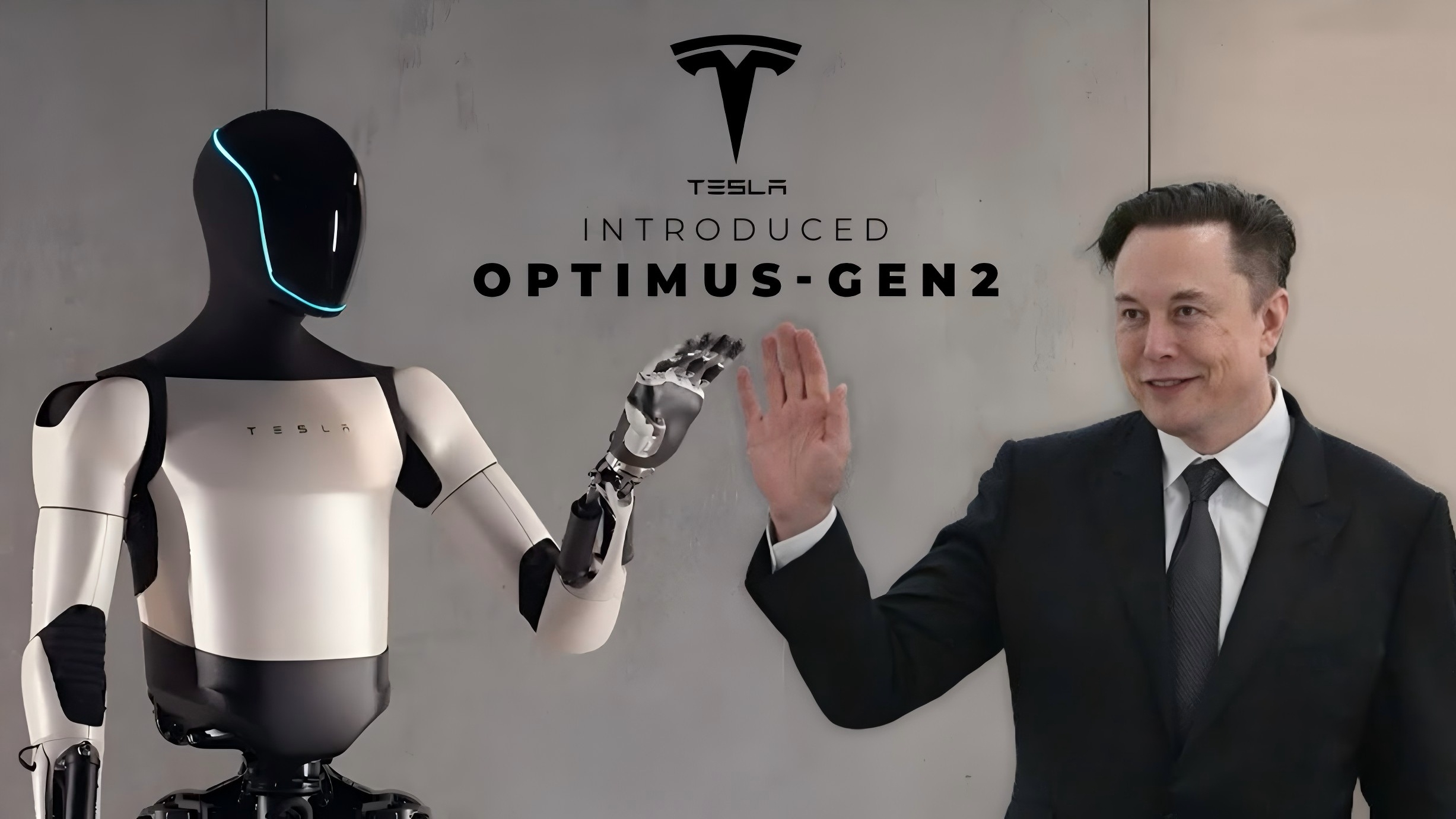
For the past several years, the public persona of Elon Musk has often been a whirlwind of social media pronouncements, corporate acquisitions, and headline-grabbing controversies. To the casual observer, it would be easy to associate him more with the character count of a tweet than with the complex engineering that underpins his companies. However, a recent and deliberate shift in his public communications signals a profound refocus, a return to first principles. This isn't about a new communication strategy; it's about re-articulating the fundamental, foundational identity of Tesla. Through recent interviews, shareholder meetings, and internal memos, Musk is powerfully steering the narrative away from quarterly car sales and back towards the company’s true north: its destiny as a pioneering force in real-world Artificial Intelligence and robotics, a vision essential for justifying its valuation and securing its next decade of growth.
More Than Cars: Articulating the "Tesla as AI" Thesis
To understand this strategic pivot, one must first deconstruct the common misconception that plagues Tesla in the financial world. The persistent criticism from skeptics is straightforward: Tesla is a car company, and therefore, it should be valued like one. This line of thinking compares Tesla's production numbers and profit margins directly to those of Ford, General Motors, or Toyota, concluding that its stratospheric market capitalization is detached from reality.
Musk's renewed narrative is a direct and forceful counterargument to this thesis. His core message is simple but profound: you are looking at the wrong product. The car, he argues, is merely the vessel. The true product—the core technology that Tesla is developing—is the AI that drives it. In his view, a Tesla is not an electric car; it's a sophisticated "robot on wheels."
This framing changes everything. The company's most valuable asset isn't its factories or its Supercharger network; it's the data. With millions of vehicles on the road, each equipped with a suite of cameras and sensors, Tesla is collecting billions of miles of real-world driving data every year. This is a firehose of information that no competitor can match. This data is the lifeblood that feeds and trains its neural networks, creating a virtuous cycle: more data leads to a smarter AI, which makes the product more compelling, which leads to more sales, which generates even more data. This is the flywheel that drives Tesla's AI engine, and it is this engine, Musk argues, that is the true source of the company's value. He is not just selling cars; he is deploying a fleet of data-collecting robots that are collectively solving one of the hardest AI challenges in existence: navigating the messy, unpredictable real world.
Optimus Prime: From Science Fiction to the Factory Floor
The "Tesla as AI" thesis extends far beyond the car. The most ambitious and, until recently, most abstract part of this vision has been the Optimus humanoid robot. When first unveiled, it was met with a mixture of awe and skepticism, with many dismissing it as a piece of science fiction, a distraction from the core business of building cars.
Musk's recent communications have worked to ground Optimus in a tangible, economic reality. The vision for the robot's deployment is now crystal clear and follows a logical, two-step progression.
-
Phase One: The Factory Worker. The first and primary mission for Optimus is to work within Tesla's own Gigafactories. The robots will be tasked with performing simple, repetitive, and ergonomically challenging tasks on the assembly line—moving parts, sorting components, or operating machinery. The economic impact of this is staggering. A fleet of tireless robots working 24/7 would dramatically increase production efficiency, reduce labor costs, and solve workforce bottlenecks. Musk has stated that he believes Optimus could eventually address labor shortages on a global scale, but its first and most important job is to make the manufacturing of Teslas themselves more efficient and scalable.
-
Phase Two: The General-Purpose Robot. Only after Optimus has been proven and hardened in the demanding environment of the factory floor will Tesla look to its broader application. The long-term vision is for Optimus to become a general-purpose humanoid robot, capable of performing a huge range of tasks in commercial, industrial, and eventually, home environments. This is the "iPhone moment" for robotics that Musk envisions—a mass-produced, highly capable robot that could be used for everything from warehouse logistics to elder care and household chores.
By laying out this practical, phased approach, Musk transforms Optimus from a fantastical concept into a credible business plan. It is the ultimate expression of the company's AI prowess, applying the same principles of vision-based neural networks and real-world interaction developed for FSD to a new physical form.
Justifying the Trillion-Dollar Valuation: The Strategy Behind the Story
This is where the entire narrative converges. The "Tesla as AI and Robotics" story is the strategic framework that justifies a valuation that seems nonsensical when viewed through the lens of a traditional automaker.
When you compare Tesla's Price-to-Earnings (P/E) ratio to that of General Motors, the numbers don't add up. But when you reframe the comparison and place Tesla alongside other AI-focused tech giants like NVIDIA or Google, the valuation begins to make more sense. Investors in Tesla are not simply betting on the company's ability to sell 10 million cars a year. They are betting on the near-limitless potential of its AI platform.
They are betting on Tesla solving Full Self-Driving, which would unlock a multi-trillion-dollar robotaxi market and generate high-margin software revenue from its existing fleet. They are betting on Optimus becoming a new product line with a Total Addressable Market potentially larger than the automotive business itself. They are betting on the data, the neural networks, and the "silicon-to-software" integration that allows for rapid, exponential improvement.
Musk’s renewed focus is a message to investors, reminding them what they bought into. He is making it clear that the short-term fluctuations in vehicle delivery numbers are just noise. The real signal is the relentless progress in AI and robotics, which he believes will unlock orders of magnitude more value in the long run.
Conclusion: Leadership, Legacy, and the Next Decade of Innovation
In a business world often dominated by short-term, quarterly thinking, Elon Musk is playing a different game. His strategic pivot back to the core mission is a masterclass in founder-led, long-term vision. He is reminding the world, his employees, and his investors that Tesla was never just about replacing the gasoline engine. It was always about ushering in a new age of intelligent machines.
This renewed focus is about more than just justifying a stock price. It's about inspiring the thousands of engineers working on these incredibly difficult problems. It's about shaping the company's legacy, ensuring it will be defined not by the cars it built, but by the intelligence it created. As Tesla navigates its next decade, this clear and powerful vision—of a future powered by autonomous, intelligent robots, both on the road and in our lives—will be the driving force behind its continued innovation and its quest to reshape the world.