
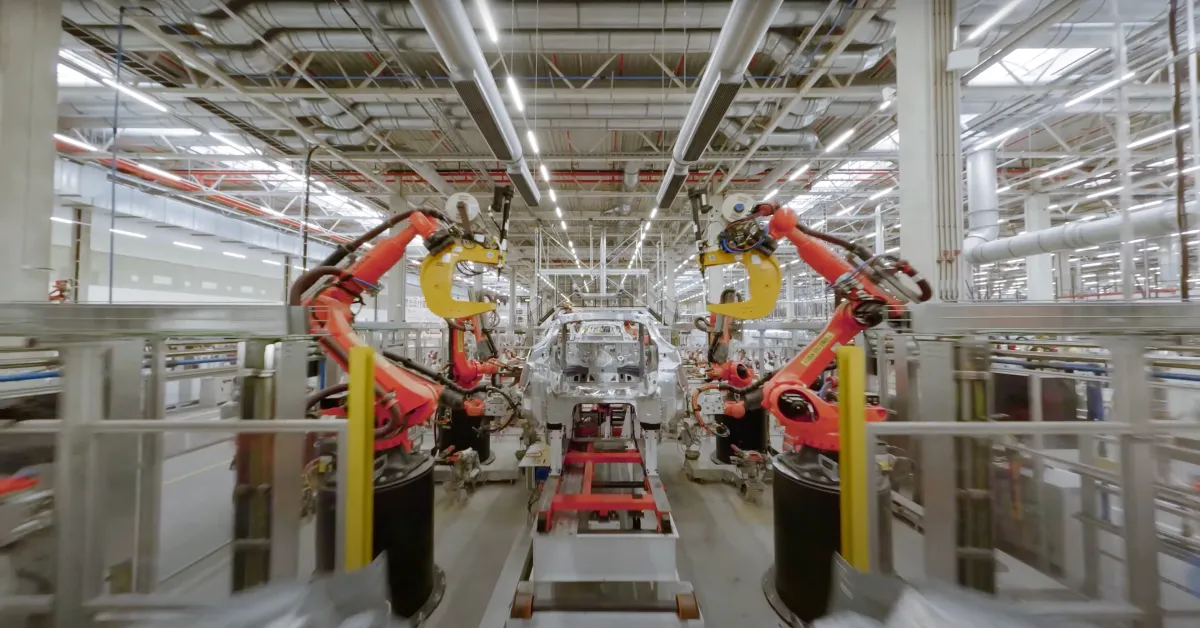
Tesla has announced a production increase at its Gigafactory Berlin-Grünheide (Giga Berlin) for the remainder of 2025 even while registrations and retail demand in several European markets have shown notable weakness. At face value this looks like a contradiction: ramping output while some key European markets record steep year-over-year drops in Tesla registrations. But the reality is more nuanced. Giga Berlin serves more than just Germany — its production is intended for multiple European markets and export corridors. Tesla’s decision to accelerate production reflects a combination of longer-term capacity planning, logistical rebalancing, and strategic positioning against competitors — especially fast-growing Chinese EV brands — while short-term European demand dynamics are driven by local incentives, model refresh timing, competitive pricing, and macroeconomic factors.
For owners and prospective buyers in Europe and the U.S., this dual trend has practical consequences: regional inventory levels and pricing windows may expand or tighten unpredictably; delivery timelines can shift as Tesla reallocates stock; and service/parts availability can be affected if production and regional demand become unbalanced. This article explains what Tesla’s ramp means operationally, why sales in parts of Europe have softened, how inventory and pricing may be affected, and what pragmatic steps owners and buyers should take.
1. Why Giga Berlin matters — the plant’s role in Tesla’s European strategy
Giga Berlin (near Grünheide, Brandenburg) is Tesla’s principal manufacturing hub for Europe. Initially built to localize production, reduce shipping costs and shorten delivery lead times, the plant is now a linchpin for Tesla’s continental strategy.
Key roles of Giga Berlin:
-
Local production of Model Y: The Model Y is Tesla’s global volume vehicle; Europe’s demand for compact-to-midsize SUVs has made local production essential to cost control and responsiveness.
-
Exports and redistribution: Berlin is not only a source for the German market; vehicles produced there are routed to other EU countries and to export markets as needed.
-
Scaling capacity quickly: Producing cars locally gives Tesla flexibility to adjust regional allocations and respond to shifting demand, regulatory distinctions and homologation requirements.
When a factory the size of Giga Berlin changes its output plan, it affects inventories across multiple markets. That’s why a ramp at Grünheide should not be read simplistically as a sign that local German sales are skyrocketing — production increases are often made with a regional view in mind.
2. The current announcement: what Tesla said (and what it likely means)
Recent statements from the plant’s management indicate a planned production increase through the rest of 2025. On the surface, the logic is straightforward: higher output supports replacement cycles, fleet and rental contracts, and export orders. But the operational picture behind that decision includes several practical drivers:
-
Smoothing production flows after model refresh: Tesla introduced a refreshed Model Y in 2025. Ramping a refreshed line typically requires an initial conservative phase followed by progressive increases as quality stabilizes; once confidence is high, management shifts to full-rate production.
-
Meeting regional and export commitments: Even if retail pull in some countries is weak, Tesla may be fulfilling existing contractual commitments (fleet, leasing companies, corporate orders) or building inventory to be exported to markets with temporarily higher demand.
-
Price and margin optimization: Building more cars locally reduces per-unit logistics costs and can support margin protection even if transitory discounts are needed in certain markets.
In short: accelerating production at Giga Berlin is about capacity control, logistics, and broader European supply — not a one-to-one prediction of immediate local retail strength.
3. The data: where European Tesla sales are weak — country-by-country snapshots
Across Europe, Tesla’s retail registrations show a mixed picture. Several markets have reported steep declines in Tesla registrations recently, even as the overall EV market in the EU grows.
Notable country-level signals:
-
France: Tesla registrations have shown significant declines year-over-year in several recent months. That softness stands out because France is one of Europe’s biggest new-car markets.
-
Sweden: Some months this year have seen extremely steep drops in Tesla registrations (up to very large single-digit percentage declines when measured year-over-year).
-
Netherlands and Denmark: Significant declines in Tesla registrations have been recorded, with reasons that include fleet sales timing, local incentives, and competition.
-
Italy and other southern markets: Smaller contractions or flat registrations have been reported, indicating that weakness is not uniform across the continent.
This country-by-country variation means there's no single "European" demand story. Macro-level EV adoption (battery-electric share across the EU was rising), fleet demand, and national incentive programs all play roles that differ by market.
4. Why the contrast exists: causes of weak Tesla retail registrations in parts of Europe
Understanding why Tesla registrations have softened in several markets requires unpacking multiple interrelated factors:
4.1 Competitive pressure from Chinese EV brands
Chinese EV makers have been aggressively entering European markets with competitively priced, feature-rich vehicles. Their value proposition is resonating with a segment of European buyers — particularly if buyers are price-sensitive or seek more current infotainment/features for less money. The arrival of these competitors has chipped away at Tesla’s share in some countries.
4.2 Model refresh timing and product perception
Tesla’s product lineup still depends heavily on the Model 3 and Model Y. While Tesla rolled out a refreshed Model Y, perception of an "older" design in unrefreshed regions can suppress immediate retail demand as buyers delay purchases for refreshes or compare to rival new models.
4.3 Local incentive and tax changes
European EV incentive schemes (purchase subsidies, tax breaks, registration fees) vary widely and can change rapidly. Markets that reduce subsidies or adjust tax benefits often see a short-term slowdown as buyers re-evaluate purchase timing.
4.4 Fleet and corporate ordering timing
Large fleet and rental buyers can cause substantial swings in monthly registration figures. If fleet ordering was strong in one period and lighter in the subsequent one, reported registrations can look worse in a simple month-to-month comparison even when long-term demand is stable.
4.5 Political and reputational factors
At times, non-product issues — public sentiment around leadership, company PR, or policy positions — can influence buyer behavior in particular markets. These softer demand influences compound with the hard competitive and economic factors above.
4.6 Macroeconomic and seasonal effects
Purchasing behavior fluctuates with general economic conditions (consumer confidence, interest rates) and seasonality (deal cycles, model-year changes). In some months, buyers front-load purchases to capture incentives or respond to tax credits; in others they delay.
5. Production and logistics: how Tesla manages inventory, exports and allocation
A factory does not only serve its immediate country. Tesla’s logistics for Giga Berlin include:
5.1 Regional allocation strategy
Tesla often allocates cars not strictly by where they’re built. Vehicles built in Berlin can be shipped to neighboring countries or even outside Europe depending on demand and profitability. This flexibility allows Tesla to move supply to higher-margin or higher-demand markets quickly.
5.2 Shipping and transit logistics
Moving vehicles within Europe benefits from short overland transit times compared to transoceanic shipping. Nonetheless, cross-border logistics (customs in non-EU European markets, port slots for further export) still require planning and can influence where Tesla holds inventory.
5.3 Inventory buffers and production smoothing
Tesla keeps inventory buffers — strategic safety stock — to match unpredictability in demand and to maintain steady production flow. Ramping production helps build these buffers. But if buffers grow too large in certain markets, Tesla may apply region-specific promotions to rebalance stock.
5.4 Fleet vs retail prioritization
Tesla must balance fleet and retail orders. Fleet orders are lucrative and predictable, but an overreliance on fleet demand can skew registration patterns and obscure retail health. If Giga Berlin production is servicing a new fleet contract, that could explain elevated output despite weak retail registrations in a specific market.
6. Pricing, discounts and the used-car effect
When production outpaces immediate retail demand, two pricing dynamics commonly appear:
6.1 Promotional windows and discounts
Dealers (or Tesla’s direct sales teams) may offer time-limited discounts, lease incentives or favorable financing to move stock. In Europe, some fleet buyers and leasing companies have reported receiving unofficial discounts on in-stock cars. These discounts can stimulate volume in the short term but compress margins and complicate residual value forecasts.
6.2 Used-car market impacts
If new-car discounts increase, trade-in flows can swell, leading to more used Teslas entering the market and depressing residual values. Lower residuals raise lease costs for new customers and can affect long-term owner value propositions. This is a self-reinforcing dynamic: discounts lead to more used supply, which further pressures prices.
6.3 Regional price divergence
Because Tesla can move cars between markets, price disparities can appear across neighboring countries. Buyers and fleet managers often monitor such differences for arbitrage, which can accelerate rebalancing as cross-border purchases rise.
7. Service, parts and aftermarket implications
Production changes at a major plant like Giga Berlin also affect service and parts ecosystems:
7.1 Spare parts supply
Higher production typically improves spare parts flow if the factory supplies parts or components to regional service centers. That can shorten repair lead times — a concrete benefit to owners as spare components are more readily available.
7.2 Service center capacity
If Tesla expects an uptick in regional deliveries, it may expand service center staffing and opening hours. Conversely, if retail is weak and production is high but exports leave the region, local service pressure might not change much.
7.3 Software and telematics updates
Tesla’s OTA software updates are independent of factory output, but higher local production often coincides with software rollouts targeted at new hardware variants — which can require dealer service training to handle hardware-specific issues.
8. What Tesla owners in Europe should expect in the near term
Owners should be prepared for a few practical effects over the coming months:
8.1 Shorter or longer delivery windows depending on allocation
If Tesla allocates more cars to strong-demand markets, owners in weaker markets may see delivery timelines stay stable or slightly lengthen. However, if Tesla’s ramp is used to build localized inventory, delivery times could shorten. Monitor your Tesla account and the local inventory listings.
8.2 Potential for local promotions and trade-in offers
Tesla and fleet channels may run promotions to rebalance stock. If you’re shopping, this could be a buying opportunity; if you own and plan to trade in soon, understand that promotions can lower resale values.
8.3 Improved parts availability but uncertain service staffing
Expect better parts availability if production ramps up locally, but service appointment lead times also depend on Tesla’s hiring and operational choices. If Tesla invests in service capacity to match production, owners will benefit; otherwise, delays could persist.
8.4 Regional software and feature parity
New hardware revisions or Model Y refresh features may gradually trickle down. Owners should check compatibility and feature lists carefully when comparing cars by build date.
9. What buyers in the U.S. should know (if you’re watching European production)
U.S. buyers sometimes wonder how European production affects pricing or availability locally. Key points:
-
Domestic production matters more: U.S. buyers are primarily influenced by Tesla’s U.S. plants (Fremont, Austin). European production changes only affect U.S. markets if Tesla reallocates global supply during constrained periods.
-
Model variants and feature divergence: Features or trims introduced in Europe sometimes appear later in the U.S., and vice versa. Keep an eye on official configurator updates rather than inference from one region to another.
-
Investor sentiment vs purchase decisions: Announcements of ramping production can boost market sentiment but have only indirect short-term effects on U.S.-market prices or incentives.
10. Strategic implications for Tesla — a balanced view
Tesla’s choice to ramp production at Giga Berlin while facing regional registration softness is a strategic bet. Consider the trade-offs:
10.1 Advantages of ramping now
-
Economies of scale: Increasing output reduces per-unit fixed cost and logistics exposure.
-
Geographic flexibility: A larger production base in Europe lets Tesla react faster to sudden demand surges or fleet deals.
-
Supply-chain leverage: More output may justify investments in local suppliers and reduce reliance on distant supply lines.
10.2 Risks and potential downsides
-
Inventory overhang: If Tesla overproduces relative to regional demand, it may have to discount units, pressuring margins.
-
Public perception: Discounts or heavy promotions can feed narratives about weak demand, affecting brand positioning.
-
Operational strain: Ramping too fast can stress quality control and service networks if staffing and processes aren’t aligned.
10.3 How Tesla can mitigate risks
-
Targeted exports: Move inventory to markets with stronger demand.
-
Fleet contracts: Secure predictable off-take via fleet agreements.
-
Flexible production scheduling: Use staged increases aligned to confirmed demand signals.
11. Tactical advice for owners, buyers and fleet managers
Here are practical, actionable recommendations tailored to different audiences.
11.1 For current owners
-
Monitor trade-in windows: If you plan to sell or trade, check market pricing frequently; short-term promos can depress residuals.
-
Keep maintenance records: If your vehicle is a candidate for a recall or software update targeted at a production revision, having build and service data helps.
-
Be opportunistic but cautious: If local inventory is discounted and you need a car, a deal can be good — but consider how that affects long-term resale.
11.2 For prospective retail buyers
-
Comparison shop across neighboring countries: If cross-border purchase is feasible and economical (tax, insurance, registration), you may find better local offers. But account for import formalities and homologation issues.
-
Time purchases around refresh cycles: If a new model refresh is imminent, consider waiting unless the discount is compelling.
11.3 For fleet managers and leasing companies
-
Negotiate volume deals: Tesla tends to honor fleet deals to move large blocks of inventory.
-
Plan for parts & service: Coordinate with Tesla on service schedules given local production changes.
-
Hedge residual risk: If residuals are likely to fall due to heavy discounting, compensate in finance plans or contract terms.
12. Scenario planning — three plausible outcomes and how to respond
Thinking in scenarios helps prepare for uncertainty. Here are three realistic paths and recommended responses.
12.1 Scenario A — Demand rebound across Europe
What happens: Competition stabilizes; incentives and macro improve; European consumers return to showroom floors.
Tesla action: Exports tail off, local inventories are absorbed, margins improve.
Owner/buyer response: If you delayed purchase for price reasons, leveling demand could reduce the chance of deeper discounts — buy if you need the car; otherwise, small patience may not reward you with the same discounts later.
12.2 Scenario B — Persistent weak retail demand, heavier fleet sales
What happens: Tesla leans on fleet and export customers; retail discounts linger.
Tesla action: Higher fleet volumes, promotions to move retail stock, inventory arbitrage across markets.
Owner/buyer response: This is a buyer’s market for new cars; negotiate aggressively. If you own a car now, expect slower resale — delay trade-ins if possible.
12.3 Scenario C — Production misalignment and sharp inventory glut
What happens: Overproduction forces deeper discounts and impacts residuals. Quality or service constraints may appear if staffing lags.
Tesla action: Rollbacks, temporary production adjustments, and potentially increased marketing spend.
Owner/buyer response: If you’re a new-buyer, capitalize on deals but be mindful of long-term depreciation. Owners should monitor service bulletins and keep records for potential warranty or recall actions.
13. How to monitor real-time indicators (practical tools & signals)
If you want to keep abreast of the situation in near real time, watch these signals:
-
Local registration data & month-to-month change: National registration databases and industry news show where registrations accelerate or decline.
-
Tesla inventory pages & configurator: Sudden increases in available stock or configurator delivery windows are useful signals for regional supply.
-
Fleet acquisition announcements: Leasing companies’ and corporate purchase announcements are strong forward-looking indicators.
-
Dealer/fleet pricing chatter: Leasing and fleet managers often report unofficial discounts and pricing concessions first.
-
Service appointment lead times: Improving parts access typically shortens lead times; worsening access lengthens them.
14. Communications and customer experience: what to expect from Tesla
Tesla’s direct-sales model allows it to implement pricing and allocation changes rapidly. Expect the following customer-experience realities:
-
Quick configurator changes: Tesla may add or remove trims, update delivery estimates, or adjust pricing with little formal notice.
-
Direct emails and targeted offers: Tesla can and does send targeted offers to specific mail lists (e.g., loyalty or reservation owners).
-
Variable service communication: If production ramps outpace local service hiring, communications about appointment delays may be uneven.
Owners and buyers should maintain their Tesla account contact info up to date and subscribe to official communication channels.
15. Long-term perspective: is Tesla’s European foothold secure?
From a strategic perspective, Europe remains a critical market for Tesla. While short-term headwinds are meaningful, Tesla’s advantages include a mature software ecosystem, charging network investments, and strong brand recognition. That said, competitive pressure from nimble, cost-focused Chinese entrants and legacy OEMs reopening EV strategies means Tesla cannot be complacent.
Two long-term vectors to watch:
-
Charging & infrastructure: Tesla’s charging network in Europe — if expanded and opened further — can be a major differentiator.
-
Model pipeline & local adaptation: New models tailored to European tastes or price points could arrest share erosion.
Conclusion — pragmatic takeaways
Giga Berlin’s production ramp and the concurrent soft retail registrations in some European markets are not contradictory once you see the regional and logistical lens Tesla uses to allocate production. The ramp prepares Tesla to better manage exports, serve fleets, and pursue scale economics — but it also carries risks if local retail demand remains weak for an extended period. For owners and buyers, the message is practical: monitor inventory and trade-in dynamics, be alert for short-term promotions, and balance the appeal of a “deal” against potential long-term residual impacts.
If you own a Tesla in Europe, watch for service improvements and keep records of software versions and build dates. If you’re buying, compare offers across nearby markets and weigh discount opportunities against long-term resale prospects. Finally, fleet managers should use this period to negotiate and secure favorable volume terms but keep an eye on residual forecasts.
FAQ
-
Will Tesla cut prices in Europe because of weak registrations?
Possibly in the short term and in certain markets where inventory is high. Tesla uses regional pricing adjustments and promotions to rebalance stock. -
Does an increased production at Giga Berlin mean better service parts availability?
Generally yes — local production tends to improve spare parts flows, but service staffing also matters. -
If I'm planning to trade in my Tesla, should I do it now?
If discounts are deep where you are, waiting might hurt your trade-in value. Evaluate current market prices and consult independent appraisal services. -
Can I buy a car cheaper in a neighboring country and register it at home?
Cross-border purchases are possible but require careful accounting for taxes, homologation, registration fees and warranty coverage. -
Is the European EV market shrinking?
No. Overall EV adoption in the EU continues to grow, but market share dynamics and manufacturer share can shift quickly. -
Will Tesla prioritize fleet over retail orders?
Tesla balances both. Fleet deals are attractive for predictable volume, but retail demand is still important for brand presence. -
Should I expect more OTA feature rollouts tied to new production?
OTA rollouts are independent of production increases, though hardware changes in refreshed models sometimes accompany special software features. -
Do Chinese EV imports threaten Tesla in Europe long-term?
They are a competitive threat on price and features. Tesla’s strengths (software ecosystem, brand, charging network) are key defenses. -
If Tesla discounts heavily, does that mean my car’s warranty is affected?
No — manufacturer discounts do not change standard warranty terms, but heavy discounting can affect used-market values. -
Will Tesla reduce production if demand stays weak?
Tesla can and does adjust production schedules; staged ramps, temporary slowdowns, or shift changes are all options. -
How quickly will Giga Berlin respond if demand recovers?
Once a line is warmed up, output can increase moderately fast, but hiring and quality control are rate-limiting factors. -
What should fleet managers do to protect residual values?
Negotiate residual guarantees in leases where possible, diversify fleet make-up, and use long-term forecasting for liquidation windows.