
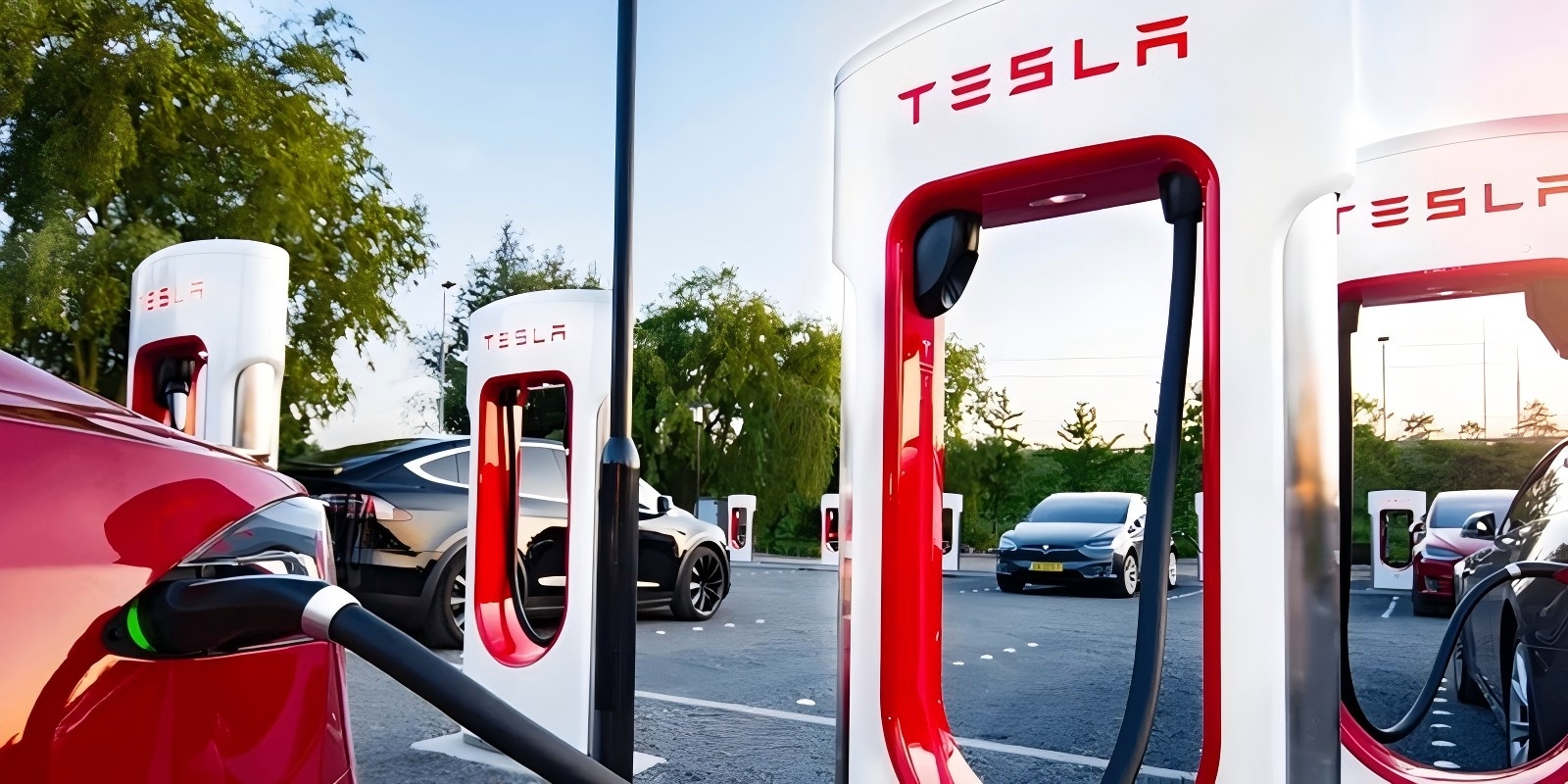
For more than a decade, "range anxiety" has been the persistent ghost in the electric vehicle machine. It was the number one talking point for EV skeptics and the number one concern for potential buyers. Yet, for a significant portion of EV drivers—Tesla owners—this anxiety has been largely a myth. The reason? A strategic masterstroke of foresight and investment: the Supercharger network. This proprietary, reliable, and seamlessly integrated network has been the antidote to range concerns, transforming the prospect of a long-distance EV road trip from a daunting logistical challenge into a routine affair.
Now, that strategic advantage has entered a new, dominant phase. In an unprecedented industry shift, the vast majority of major automakers in North America have announced their adoption of Tesla’s connector, officially crowned the North American Charging Standard (NACS). This move effectively ends the "format war" in the US before it truly began, cementing Tesla's infrastructure as the foundation for America's electric future.
But what does this seismic shift truly mean for the charging landscape and, more importantly, for the Tesla owner? And what are the ripples felt across the Atlantic, where European Tesla owners navigate a very different, more fragmented charging ecosystem dictated by the Combined Charging System (CCS2) standard?
This article will dissect the profound strategic importance of the NACS standard and analyze its immediate and long-term impact on Tesla owners in the United States. We will then turn our focus to Europe, exploring the current dual-standard reality, the nuances of the charging experience, and the future trajectory of Tesla’s network on the continent. For anyone who owns a Tesla or is considering one, understanding the charging equation is as critical as understanding the car itself.
Chapter 1: The Rise of NACS: How Tesla Won the US Charging War
Tesla's victory in the US charging war was not the result of a single battle but a long, strategic campaign built on superior technology, user experience, and a bold, early investment.
A Brief History: An Exclusive Bet
From the outset, Tesla understood a fundamental truth: a brilliant electric car is useless without a brilliant way to refuel it. While other early EV manufacturers relied on a patchwork of nascent, unreliable third-party charging providers, Tesla took a massive financial and logistical gamble. It chose to build its own exclusive, global network of high-speed chargers. The proprietary connector, smaller and more elegant than the bulky alternatives, was a physical manifestation of Tesla's walled-garden approach. For years, this was seen by some critics as arrogant and anti-competitive. In reality, it was a decision to control the end-to-end user experience and ensure a standard of quality that others were failing to meet. This network became a primary reason to buy a Tesla, as much a part of the product as the car's acceleration or Autopilot features.
The Tipping Point: A Cascade of Adoption
The dam broke in late 2022 when Tesla announced it would open its standard to the world, rebranding it NACS. The tipping point arrived in 2023 and 2024, when, one by one, the giants of the automotive world capitulated. Ford was the first major player to fall, a shocking announcement that sent tremors through the industry. General Motors followed soon after, and then the dominos fell in rapid succession: Rivian, Volvo, Polestar, and others all pledged to equip their future EVs with NACS ports and provide adapters for existing customers.
Their motivations were clear and painfully pragmatic. They were not just adopting a piece of hardware; they were gaining access to Tesla’s vast, reliable network. Their own investments, and those of third-party networks like Electrify America and EVgo, had failed to produce a charging experience that could compete. Drivers of non-Tesla EVs were plagued by broken chargers, confusing payment systems, and a frustrating user experience. By switching to NACS, these automakers were tacitly admitting that Tesla had solved the charging problem, and it was better to join them than to continue a futile attempt to beat them.
The NACS Advantage: A Trifecta of Superiority
The NACS experience is superior on three key levels:
-
Physical Design: The NACS connector is a marvel of industrial design. It's incredibly lightweight, sleek, and lacks a cumbersome locking mechanism on the connector itself (the lock is in the vehicle's charge port). Compared to the bulky, heavy, and often unwieldy CCS1 connector used by other EVs in the US, the NACS plug is a one-handed, effortless operation. It’s a small detail that makes a huge difference in day-to-day usability, especially in inclement weather.
-
The Seamless Handshake: This is the magic of the Supercharger experience. There are no apps to fumble with, no RFID cards to tap, and no credit card readers to fail in the freezing cold. You simply plug the connector into the car. The charger and the vehicle perform a secure, digital "handshake." Your Tesla identifies itself, authorizes the session, and billing happens automatically to the account linked to your car. The entire process is flawless, frictionless, and utterly reliable. It makes every other public charging system feel archaic by comparison.
-
Network Reliability and Uptime: This is the bedrock of Tesla's charging supremacy. While studies and anecdotal reports frequently show that 20-30% of chargers on some third-party networks are out of service at any given time, the Supercharger network boasts an industry-leading uptime of over 99%. This is because Tesla designs, owns, and operates its entire network. They have a dedicated team monitoring the stations in real-time and can dispatch service technicians proactively. This reliability is the ultimate killer feature; it means a Tesla driver can plan a cross-country trip with the certainty that the chargers on their route will be working when they arrive.
What This Means for US Tesla Owners
The NACS adoption has both short-term and long-term implications. In the immediate short term, as other brands gain access to the Supercharger network via adapters and later with native ports, Tesla owners may experience more crowded stations, particularly in high-traffic corridors. Tesla is mitigating this by aggressively expanding its network and deploying its "Magic Dock"—a built-in CCS adapter—selectively, allowing them to control traffic.
In the long term, the benefits are immense. It guarantees the longevity and centrality of the Supercharger network. Tesla will become the "gas station" for a huge portion of the American EV fleet, creating a significant new revenue stream. For a Tesla owner, it means that the value of their vehicle is reinforced. They are part of the dominant ecosystem. The unified network will grow faster and be more robust, ultimately leading to more charging options for everyone, but with the "gold standard" experience remaining a core part of the Tesla brand identity.
Chapter 2: The European Equation: A Tale of Two Standards (CCS2 vs. Supercharger)
The charging landscape in Europe is a different beast altogether. It's a more complex, regulated, and fragmented market, which presents a different set of opportunities and challenges for Tesla and its owners.
The Reigning Standard: CCS2
In a bid to prevent the kind of format war seen in other industries, the European Union took a proactive step and mandated the Combined Charging System Type 2 (CCS2) as the standard for all new public DC fast-charging stations. The CCS2 connector is a larger, more robust version of the American CCS1, incorporating a three-phase AC charging capability common in Europe. This mandate meant that if Tesla wanted to sell cars in Europe, it had to adapt. All European-market Teslas are sold with a native CCS2 charge port.
Tesla's Two-Pronged Approach in Europe
Faced with this regulation, Tesla adopted a clever, two-pronged strategy.
-
Building a Superior CCS2 Network: Instead of fighting the standard, Tesla embraced it. It built out its European Supercharger network using the CCS2 connector. This meant that any European Tesla could seamlessly use a Supercharger, preserving the "plug and charge" handshake and reliability that defines the brand experience. They simply built a better CCS2 network than anyone else.
-
The "Open for Business" Pilot: Recognizing the strength of its network, Tesla launched a pilot program to open up select Supercharger locations to non-Tesla EVs. A driver of an Audi e-tron or a VW ID.4 can now pull up to one of these "open" Superchargers, use the Tesla app to initiate a session, and charge their car. This serves two purposes: it generates new revenue, and it publicly demonstrates the vast superiority of the Supercharger network's reliability and user experience compared to competitors like Ionity or Allego, even when serving their own customers.
The European User Experience: Flexibility vs. Friction
This dual approach gives European Tesla owners a unique advantage: ultimate flexibility. A Tesla owner in Europe can use the entire Supercharger network and any third-party CCS2 charger. This is a significant benefit, especially in areas where Supercharger density might be lower. They have more charging options than any other EV driver on the continent.
However, this flexibility comes at the cost of exposing the owner to the friction of the outside world. When a Tesla owner uses a third-party charger, they lose the seamless "plug and charge" experience. They are forced to juggle multiple apps, RFID cards, and payment systems, and they are subject to the same reliability issues—the "charger roulette"—that plague other EV brands. This experience often serves to reinforce just how good the Supercharger network is and why it remains the preferred option whenever available.
Case Study: A Trans-European Road Trip
Let's imagine a hypothetical 4,000 km road trip from the sunny coast of Lisbon, Portugal, to the chic metropolis of Stockholm, Sweden.
A Tesla driver planning this trip would simply enter "Stockholm" into their car's navigation. The trip planner would automatically map out the entire route, including the required Supercharger stops. It would estimate charging times and even pre-condition the battery on the approach to each charger to ensure the fastest possible charging speeds. The journey through Spain, France, Germany, Denmark, and into Sweden would be a seamless chain of reliable, high-speed charging stops.
Now, consider a driver of another EV brand attempting the same trip. They would need to stitch together a route using chargers from multiple networks: Ionity, Fastned, local utility providers, and others. They would need several different apps and payment methods. They would have to rely on data in apps like PlugShare to check if chargers were reported as working, a process fraught with uncertainty. A single broken charger along the route could cause significant delays and rerouting. While the trip is certainly possible, the cognitive load and potential for frustration are exponentially higher. This practical reality is why the Supercharger network remains Tesla's European trump card, even in a standardized CCS2 world.
Chapter 3: The Future of European Charging: Will NACS Cross the Atlantic?
With NACS achieving dominance in North America, the tantalizing question arises: could it, or should it, cross the Atlantic?
The Regulatory Hurdle: The CCS2 Mandate
The single biggest obstacle to NACS adoption in Europe is regulatory. The EU's Alternative Fuels Infrastructure Regulation (AFIR) has solidified CCS2's position as the mandated standard for the TEN-T transport network. Overturning this would require a massive political and industrial effort to convince the European Commission and member states that NACS is so superior that it justifies abandoning a standard in which billions of euros have already been invested. The inertia is immense. Automakers like Volkswagen and BMW, who are heavily invested in the CCS2-based Ionity network, would likely lobby fiercely against such a change. Therefore, a full-scale, mandated replacement of CCS2 with NACS in Europe is highly improbable in the foreseeable future.
The "Magic Dock" and Alternative Solutions
While a full standard change is unlikely, Tesla has demonstrated a potential path forward with its "Magic Dock" in the US. This clever device is an adapter locked into the Supercharger stall itself, which can be released via the app for use by CCS1 vehicles. It's technically feasible that Tesla could deploy Superchargers in Europe with a "reverse Magic Dock"—a locked-in CCS2 adapter on a native NACS cable—but this adds complexity and cost for little gain in a market where their cars already use CCS2.
A more compelling argument could be made for a dual-standard approach, where charging providers could optionally install NACS plugs alongside CCS2 plugs, much like gas stations offer different grades of fuel. If other automakers followed the US trend and began offering NACS ports on their European models as a premium feature, a user-driven demand could emerge. The superior user experience of NACS is a powerful incentive.
The More Likely Scenario: Winning on Quality
The most pragmatic and likely future is the one Tesla is already pursuing: continue to beat the competition at their own game. Tesla will carry on aggressively expanding its European Supercharger network, focusing on improving density in underserved regions like Southern and Eastern Europe. They will continue to innovate with faster, more efficient V4 Superchargers, which feature longer cables to better accommodate the awkward charge port locations on many non-Tesla EVs.
The strategy is simple: make the Tesla Supercharger network the most reliable, most pleasant, and most widespread CCS2 network in Europe. By continuing the "open network" pilot, they will increasingly become the default charging provider for all EV drivers, regardless of the car they own. They don't need to win the standards war if they can win the service war.
Conclusion
In North America, the charging war is over, and Tesla has unequivocally won. The adoption of NACS by the wider industry is a monumental validation of Tesla long-term strategy, cementing the Supercharger network as the backbone of American EV infrastructure. For US Tesla owners, this means their core advantage is not only protected but enhanced, promising a future of ubiquitous, reliable charging.
In Europe, the story is more nuanced but the conclusion is remarkably similar. Despite operating within a regulated CCS2 environment, Tesla has leveraged its commitment to quality, reliability, and user experience to create a network that is simply in a different class from its competitors. The European Tesla owner enjoys the best of both worlds: exclusive access to a premium network and the flexibility to use any other charger if needed.
Ultimately, a wholesale NACS takeover in Europe remains a long shot. But it may not even be necessary. By expanding its "open" Supercharger network and consistently delivering a superior experience, Tesla is achieving a de facto victory. It is solidifying its position as the brand most associated with effortless, reliable electric mobility. Whether in the US or Europe, for new buyers or seasoned owners, one fact remains crystal clear: the Supercharger network is Tesla's crown jewel, its most durable competitive advantage, and the silent, powerful engine driving the company's continued success.
FAQ Section
-
As a US Tesla owner, will I have to wait longer at Superchargers now that other brands can use them? You may experience higher traffic at some popular locations, especially during peak travel times. However, Tesla is rapidly expanding its network to add capacity. Additionally, since non-Tesla vehicles often charge slower and require an app to start, the turnover at stalls may be slower. Tesla's navigation system provides real-time data on stall availability to help you find an open spot.
-
I'm taking my US-spec Tesla to Europe. Can I use the Superchargers there? No, not directly. US Teslas have a NACS port, while the European Supercharger network uses the CCS2 connector. To charge in Europe, you would need a third-party CCS2-to-NACS adapter, which can be expensive and may have limitations on charging speed. It's generally not practical for short trips, and it's recommended to rent a European-spec EV if traveling.
-
Why is the NACS connector considered better than the CCS2 connector? The primary advantages of NACS are its physical design and integration. It's much smaller, lighter, and easier to handle than the bulky CCS2 connector. It also carries both AC and high-power DC charging through the same pins, making it more compact. Critically, it's natively integrated with the Tesla "plug and charge" protocol, eliminating the need for apps or cards, which is a feature of the network, not just the plug itself.
-
Will my Tesla's charging speed be slower at a "Magic Dock" enabled Supercharger? No. When you use a Magic Dock-equipped Supercharger with your Tesla, you use the native NACS plug as you normally would. The adapter remains locked in the station. Your charging speed will be exactly the same as at any other Supercharger of the same generation (V2, V3, or V4), limited only by your car's battery state of charge and temperature.
-
What is the best app for finding reliable third-party CCS2 chargers in Europe? While the Tesla navigation system is best for finding Superchargers, for third-party CCS2 chargers, apps like PlugShare and A Better Routeplanner (ABRP) are essential tools for European EV drivers. They provide crowd-sourced information on charger locations, network providers, and, most importantly, recent user reports on whether the chargers are actually working.
-
Are there any plans for Tesla to build even faster V4 Superchargers in Europe? Yes. Tesla has already begun deploying its next-generation V4 Superchargers across Europe. These stations feature a taller design, longer charging cables (to better accommodate all EV models), and are capable of supporting higher charging speeds than the current V3 stations. While most current cars cannot take full advantage of the V4's potential peak speed, it future-proofs the network for upcoming vehicles, like the Cybertruck, and improves the experience for everyone.