
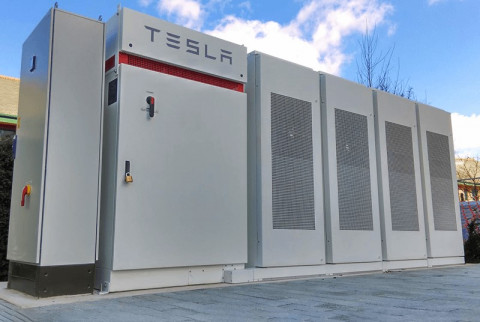
Tesla's automotive business generates the vast majority of headline attention and media coverage, with the company's electric vehicles capturing consumer imagination and investor focus. However, a less visible but increasingly significant part of Tesla's business is quietly becoming a critical competitive advantage and potential long-term value driver: energy storage and battery technologies.
Q3 2025 marked a watershed moment for Tesla's energy business, with the company achieving record energy storage deployments and validating a business model that could eventually rival or exceed Tesla's automotive business in strategic importance and profitability. The energy business, characterized by recurring revenue from installations, software services, and potential future battery upgrades, fundamentally differs from Tesla's traditional vehicle sales model in financial characteristics and business dynamics.
Understanding Tesla's energy business requires examining the technology platform, market opportunity, competitive positioning, regulatory environment, and strategic implications for Tesla's future.
Q3 2025 Energy Business Performance
Tesla achieved record energy storage deployments in Q3 2025, with total deployments reaching 12.5 GWh (gigawatt-hours)—an astonishing 81% increase compared to Q3 2024's 6.9 GWh deployment. This growth rate dramatically exceeds growth rates in Tesla's automotive business, highlighting energy storage as Tesla's fastest-growing business segment.
In context, Tesla deployed more energy storage capacity in Q3 2025 than in the entirety of 2019. This trajectory reflects accelerating demand for battery storage systems driven by grid modernization initiatives, renewable energy integration requirements, and increasing consumer and commercial demand for backup power solutions.
Revenue from energy storage and generation totaled $3,415 million in Q3 2025, representing 12% of Tesla's total revenue and reflecting the meaningful contribution energy business makes to Tesla's financial results. More importantly for investors, energy business margins typically exceed automotive margins, with gross margins on energy products reaching 25-30% compared to automotive gross margins of 12-18% during price-competitive periods.
The year-over-year growth in energy deployments—81% increase year-over-year—represents one of Tesla's highest growth rates across any business segment. This growth trajectory reflects both strong demand for energy storage products and Tesla's increasing manufacturing capacity for batteries and related systems.
Energy Storage Product Portfolio
Tesla's energy storage business encompasses multiple distinct product categories serving different customer segments and use cases:
Powerwall (Residential Storage): Tesla's Powerwall represents its primary residential energy storage product. The battery system stores electricity generated from rooftop solar systems or grid electricity during off-peak periods, providing backup power during outages and enabling time-of-use optimization where customers consume stored power during peak rate periods.
Powerwall deployment has accelerated as consumers increasingly recognize value in backup power resilience and demand continues to grow. The product has expanded its compatibility with third-party solar systems and inverters, broadening addressable market beyond Tesla's own solar installation customers.
Commercial and Industrial (C&I) Storage: Tesla offers larger battery systems for commercial and industrial customers, including businesses, industrial facilities, and agricultural operations. These systems provide backup power, demand charge reduction, and other economic benefits through grid services.
Utility-Scale Battery Systems: Tesla operates Megafactory facilities producing very large battery systems for utility operators. These systems store renewable energy, provide grid balancing services, and enable grid stabilization. Utility-scale systems represent the highest-revenue deployment category due to their size and complexity.
Tera-Cell Technology and Battery Innovation
Tesla recently announced development of Tera-Cell battery technology, representing advancement in battery energy density and performance characteristics. According to Tesla's claims, Tera-Cell technology delivers:
-
40% improvement in energy density compared to existing battery technology
-
Potential 600+ mile range for electric vehicles using Tera-Cell batteries
-
80% state-of-charge achievement in under 15 minutes for rapid charging
-
Longer cycle life and improved temperature tolerance
Tera-Cell development reflects Tesla's commitment to battery innovation as a core competitive advantage. The technology advances are reportedly achievable through improved cathode density and thermal management rather than requiring fundamentally different chemistry or manufacturing approaches, potentially enabling relatively straightforward manufacturing scale-up.
If Tera-Cell technology achieves manufacturing maturity, deployment in Tesla vehicles and energy storage systems could represent a meaningful performance and efficiency improvement, potentially commanding premium pricing or enabling lower cost-per-kWh through improved manufacturing efficiency.
Manufacturing Capacity and Scaling
Tesla's energy storage business growth depends on manufacturing capacity to produce batteries and related systems. Tesla has invested in multiple Megafactory locations designed specifically for high-volume battery production optimized for energy storage applications.
Most recently, Tesla announced a $200 million investment in Houston, Texas, establishing a Megafactory focused on energy storage system production. This investment represents Tesla's commitment to scaling energy storage manufacturing and reflects geographic diversification of production to improve supply resilience and reduce logistics costs.
Previous Megafactory locations and expansions in other geographic regions provide Tesla with distributed production capacity serving regional markets. This geographic distribution of capacity improves supply chain resilience and reduces transportation costs compared to centralized production facilities.
Manufacturing capacity growth must continue to match deployment growth rates. If demand for energy storage accelerates faster than Tesla can scale manufacturing capacity, supply constraints would limit revenue and growth. Conversely, if manufacturing capacity exceeds demand growth, profitability would suffer due to low capacity utilization.
Market Opportunity and Total Addressable Market
The global energy storage market represents an enormous opportunity that is only beginning to be fulfilled. Market research estimates suggest the global stationary energy storage market could reach $300+ billion annually by 2030-2035 as renewable energy adoption accelerates and grid modernization initiatives progress globally.
Within this opportunity, Tesla competes across residential (Powerwall), commercial (C&I), and utility-scale segments. Each segment has distinct characteristics:
Residential Storage: Growing demand from homeowners seeking backup power, solar integration, and time-of-use optimization. Market potential of $50-100 billion annually in residential segment alone by 2035.
Commercial/Industrial Storage: Businesses increasingly recognize value of on-site batteries for demand charge management, backup power, and grid services participation. This segment offers similar or larger opportunity than residential.
Utility-Scale Storage: Utilities and grid operators are deploying massive battery systems to integrate renewable energy, provide grid balancing, and deferred transmission infrastructure investment. This segment offers potential for largest revenue opportunities due to system size.
Tesla's competitive advantages in energy storage include:
-
Vertical integration from battery manufacturing through system software
-
Existing customer relationships and brand recognition
-
Cost advantages from manufacturing scale and vertical integration
-
Software capability for system management and optimization
-
Integration with Tesla's vehicle charging network and vehicle-to-grid potential
Competitive Landscape and Incumbent Threats
Tesla is not alone in the energy storage market. Multiple competitors compete across different segments:
Battery Manufacturers: Companies including LG, Samsung, CATL (Contemporary Amperex Technology), and others manufacture batteries and energy storage systems. These competitors have manufacturing scale and technical expertise, though they lack Tesla's vertical integration and software capabilities.
Energy Storage Specialists: Companies including Eos Energy, Form Energy, and others develop alternative battery chemistry and storage technologies (flow batteries, long-duration storage). These companies pursue distinct technological approaches potentially suited for different use cases.
Traditional Energy Companies: Utilities and energy companies including NextEra Energy, Duke Energy, and others are deploying energy storage systems, sometimes competing with Tesla and sometimes purchasing Tesla systems.
Automakers: Other electric vehicle manufacturers including Volkswagen, GM, and others are developing energy storage businesses as extensions of their vehicle battery capabilities.
Tesla's competitive advantages center on cost, software capability, and integrated ecosystem. However, incumbent competitors have advantages in relationships with utilities, grid operators, and regulatory agencies where long-established relationships influence purchasing decisions.
Regulatory Environment and Government Support
Energy storage deployment is increasingly supported by government incentives and regulatory frameworks designed to accelerate renewable energy integration and grid modernization.
US Incentive Programs: The Inflation Reduction Act (IRA) in the United States provides substantial tax credits and incentives for energy storage deployment, residential solar-plus-storage systems, and utility-scale battery installations. These incentive programs materially improve project economics and increase demand.
European Energy Policies: Europe's Net-Zero Industry Act and related policies are driving energy storage deployment to integrate renewable energy and improve grid resilience.
Grid Modernization Initiatives: Utilities globally are investing in grid modernization and resilience, increasingly including distributed battery storage. Regulatory frameworks enabling batteries to provide grid services are evolving, creating revenue opportunities for distributed storage operators.
These supportive policy environments provide tailwinds for energy storage deployment growth. However, policy changes could equally constrain deployment if incentive programs expire or are reduced.
Financial Impact and Profitability
Energy storage business's financial impact on Tesla extends beyond direct energy storage revenue. Benefits include:
Margin Stability: Energy storage gross margins (25-30%) exceed automotive gross margins, providing profit stability during automotive price-competitive periods.
Revenue Diversification: Energy business provides revenue diversification reducing dependence on automotive sales, which cycle based on vehicle demand and competitive pricing pressure.
Cross-Selling Opportunity: Energy storage customers become Tesla customers, potentially driving awareness and adoption of Tesla vehicles. Similarly, Tesla vehicle owners become potential energy storage customers.
Software and Subscription Revenue: Potential for recurring revenue from software services, optimization algorithms, and related offerings that complement energy storage hardware.
Strategic Integration and Ecosystem Implications
Tesla's energy business connects to other Tesla businesses and strategic initiatives:
Vehicle-to-Grid Integration: Electric vehicles with bidirectional charging capability can serve as mobile storage assets, discharging to provide home or grid power during high-demand periods. This integration between vehicles and stationary storage represents a potential powerful ecosystem advantage.
Charging Infrastructure: Tesla's Supercharger network can integrate with energy storage systems, potentially providing storage-enabled charging without grid constraints during peak demand.
Solar Integration: Tesla's solar installation business connects naturally with energy storage, with solar customers becoming potential storage customers.
Self-Driving Robotaxi Integration: Long-term vision potentially involves robotaxi fleet functioning as distributed storage assets, automatically positioning vehicles to provide grid services or backup power when autonomous vehicles are not in active use.
Challenges and Risk Factors
Despite substantial opportunity, Tesla's energy business faces challenges and risks:
Supply Chain Constraints: Raw materials including lithium, cobalt, and nickel face supply constraints potentially limiting battery production scaling. Supply competition with automakers could constrain energy business growth.
Technology Risk: Alternative battery technologies (solid-state, iron-air, flow batteries) could displace lithium-ion technology, potentially making Tesla's battery investments obsolete.
Regulatory Risk: Changes in grid regulations, energy storage policy support, or renewable integration requirements could impact demand.
Competition Intensification: Incumbent competitors with scale, relationships, and resources could consolidate market share despite Tesla's advantages.
Market Saturation Risk: As energy storage deployments scale, per-unit pricing could compress, reducing profitability unless Tesla can maintain cost leadership.
Long-Term Growth Projections
Industry analysts project substantial growth for Tesla's energy business. Many analysts project energy storage deployments could reach 50+ GWh annually by 2030, representing roughly 4-5x growth from current levels. Such growth would require continuous manufacturing capacity expansion and successful market penetration across multiple segments and geographies.
If energy business achieves such deployment levels and maintains cost leadership and margins, energy business could eventually contribute $15-30 billion in annual revenue to Tesla's financial results, representing a significant component of total revenue comparable to or exceeding automotive revenue depending on industry transformation.
Conclusion
Tesla's energy storage business represents one of the most significant growth opportunities for the company and one of the most consequential developments in global energy transition. The business combines rapidly growing demand, favorable regulatory environment, superior technology and cost position, and margin characteristics more favorable than automotive business.
For Tesla investors, energy business success becomes increasingly important to long-term value creation. Success in energy storage, combined with successful vehicle business execution and potential robotaxi deployment, could establish Tesla as a dominant energy and transportation company, not simply an automotive manufacturer.
The energy business represents Tesla's evolution from an automotive company into an integrated energy services company, potentially generating value through battery technology, renewable energy integration, grid services, and autonomous transportation—a far more valuable business model than traditional automotive manufacturing.
FAQ: Tesla Energy Storage Business and Market Opportunity
Q: Why is energy storage more profitable than automotive business?
A: Energy storage business typically commands higher gross margins (25-30%) compared to automotive (12-18%) due to lower manufacturing complexity, recurring revenue potential from software services, and less price-competitive market dynamics than automotive.
Q: Could energy storage become larger than automotive business?
A: Potentially yes, long-term. If Tesla successfully deploys energy storage at multi-hundred-GWh scale while automotive sales remain relatively flat, energy business could eventually exceed automotive revenue. However, this depends on successful scaling and sustained competitive advantages.
Q: What is Tera-Cell and how would it impact Tesla?
A: Tera-Cell represents Tesla's next-generation battery technology with improved energy density and charging characteristics. If successfully deployed, Tera-Cell could enable superior vehicle range and performance while potentially reducing manufacturing costs, improving competitive positioning.
Q: How does government policy impact energy storage demand?
A: Government incentives including US IRA tax credits and European energy policies significantly improve energy storage project economics. Policy changes could substantially impact demand. Supportive regulatory framework is critical to continued growth.
Q: What are Tesla's main competitors in energy storage?
A: Competitors include battery manufacturers (LG, Samsung), traditional energy companies, utility operators deploying storage themselves, and other vehicle manufacturers developing energy storage businesses. Tesla's advantages center on cost, vertical integration, and software capability.