
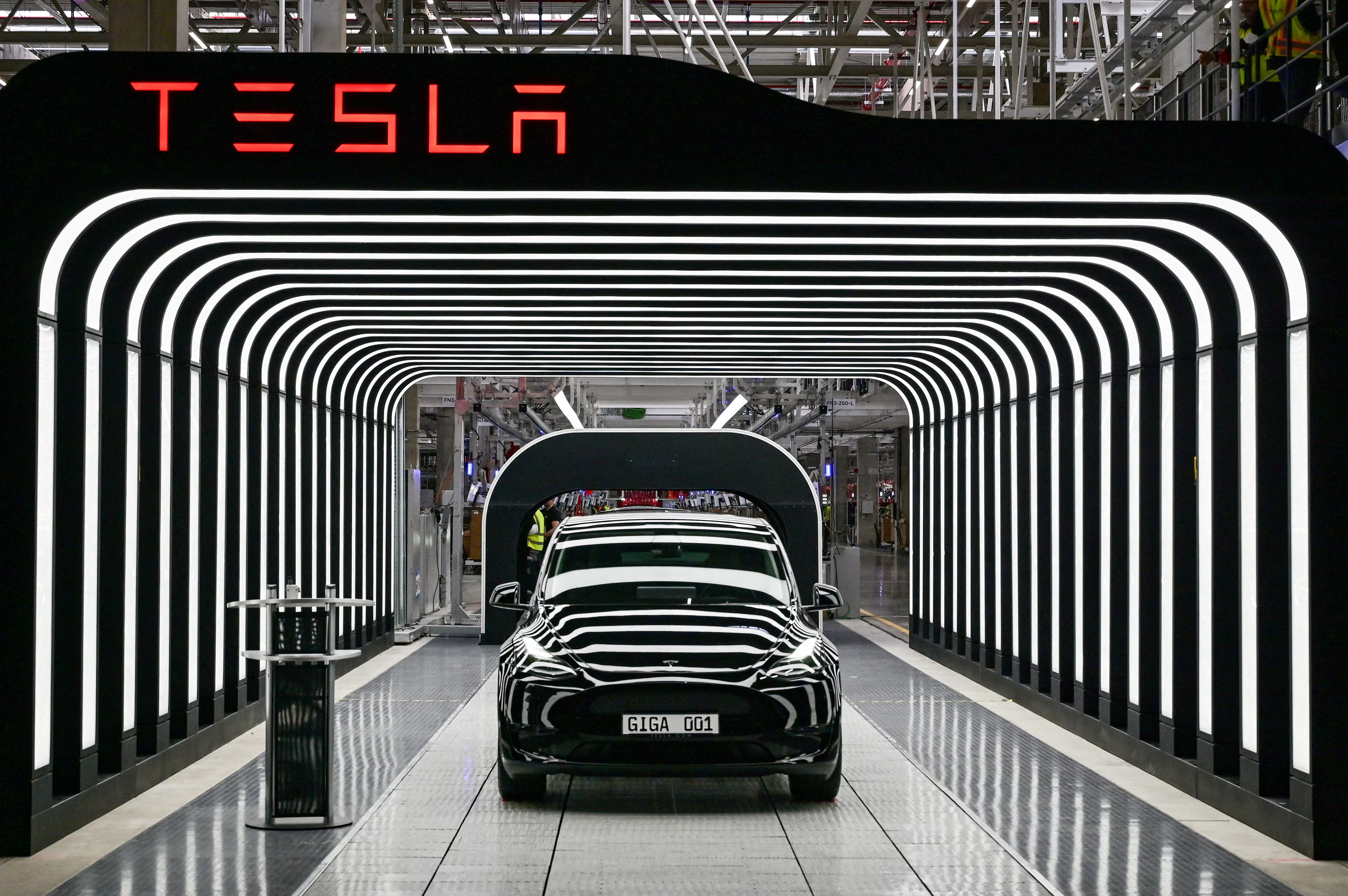
In the ever-evolving landscape of electric vehicles (EVs), Tesla has long been the undisputed leader, captivating owners with innovative technology, superior performance, and a robust ecosystem. However, as of September 11, 2025, fresh data reveals a significant shift: Tesla's market share in the United States has plummeted to its lowest level since 2017, dipping below 40% in the battery electric vehicle (BEV) segment. This decline, reported amid intensifying competition from legacy automakers like Ford, General Motors, and emerging players such as Rivian, underscores a pivotal moment for Tesla enthusiasts in the US and Europe. For owners in North America, this means potential impacts on vehicle resale values, access to incentives, and the overall perception of Tesla as a premium brand. In Europe, where Tesla faces similar pressures from Volkswagen's aggressive EV push, the story echoes with regional nuances like stricter emissions regulations driving faster adoption. This article delves deep into the causes, consequences, and opportunities arising from this trend, providing Tesla owners with actionable insights to navigate these changes. By examining data from industry analysts and real-world owner experiences, we'll explore how this market shift could reshape your driving life, from daily commutes to long-term investment in sustainable mobility.
Chapter 1: Analyzing the Decline
The roots of Tesla's market share erosion can be traced to a confluence of economic, competitive, and policy factors. According to recent S&P Global Mobility data, Tesla's US BEV share fell to 38% in August 2025, down from over 50% just a year ago. This marks the lowest point since the early days of the Model 3 rollout in 2017, when Tesla was still scaling production. Key drivers include the expiration of federal tax credits for some models at year-end, which has prompted buyers to flock to more affordable alternatives like the Chevrolet Equinox EV, priced under $35,000 with incentives. In Europe, the situation is even starker: Tesla's share dropped 49% year-over-year in key markets like Germany and the UK, as per the European Automobile Manufacturers' Association (ACEA) reports. Volkswagen, leveraging its ID series, has surged ahead with models like the ID. Polo, announced at the IAA Mobility 2025 show, offering competitive pricing around €25,000. Economic headwinds, such as persistent inflation and higher interest rates, have made high-ticket items like the Model Y (starting at $45,000) less appealing to middle-class buyers. Moreover, supply chain disruptions—though easing—have led to delivery delays, frustrating potential owners. Comparatively, rivals have ramped up production; Ford's Mustang Mach-E saw a 25% sales increase in Q2 2025, thanks to enhanced battery tech and dealer networks. For Tesla owners, this decline isn't just statistical— it signals a maturing market where choice abounds, potentially diluting the exclusivity of owning a Tesla. Yet, Tesla's vertical integration, from battery production to software, positions it uniquely to rebound. Owners in urban US areas like California report that while competition grows, Tesla's Supercharger reliability remains unmatched, with over 60,000 stalls nationwide. In Europe, the push for greener cities under the EU's Green Deal amplifies this, as Tesla's energy-efficient designs align with carbon reduction goals. To quantify, Tesla delivered 450,000 vehicles globally in Q2 2025, but US growth stagnated at 5%, versus 15% for the overall EV market. This chapter's analysis draws from peer blogs like Electrek and InsideEVs, which highlight how Tesla's focus on premium segments leaves room for budget competitors. Moving forward, understanding these metrics empowers owners to advocate for policy changes, such as extended incentives, ensuring Tesla's ecosystem thrives.
Chapter 2: Competitive Landscape
The competitive arena for EVs has transformed dramatically, turning what was once Tesla's playground into a battleground. In the US, General Motors' Ultium platform has enabled models like the Cadillac Lyriq to capture luxury segments, with sales up 30% in 2025. Ford's F-150 Lightning, blending traditional truck appeal with EV efficiency, appeals to blue-collar owners—a demographic Tesla's Cybertruck has struggled to penetrate due to production ramps. Pricing wars exacerbate this: Tesla slashed Model 3 prices by 10% in early 2025, but rivals like Hyundai's Ioniq 5 offer similar range at $5,000 less. In Europe, Chinese imports via brands like BYD, which grew 420% in Germany, undercut prices with advanced tech, forcing Tesla to localize production at its Berlin Gigafactory. Peer analyses from CleanTechnica note that while Tesla's Full Self-Driving (FSD) beta leads in autonomy, competitors' ADAS systems, like GM's Super Cruise, are closing the gap with highway-focused reliability. For owners, this means enhanced choices but potential depreciation; Kelley Blue Book data shows Model Y resale values dropping 8% year-over-year. However, Tesla's app ecosystem—integrating home energy, insurance, and navigation—provides a moat. European owners benefit from Tesla's alignment with EU standards, such as V2G (vehicle-to-grid) capabilities in the updated Model S, enabling energy trading during peaks. Industry trends point to modular designs, as seen in Tesla's 2024 Model 3 with riveted sub-assemblies, simplifying repairs and reducing costs. Comparisons with Volkswagen's MEB platform reveal Tesla's edge in over-the-air updates, which rivals are emulating but not matching. Owners can capitalize by joining referral programs or trading up to newer models with incentives. This landscape isn't doom—it's evolution. Tesla's 1.1 million US registrations in 2025 still dwarf rivals, and with Q3 projections at 500,000 deliveries, a rebound is plausible. Blogs like Tesla Magazine emphasize community strength, where owners share mods and tips, fostering loyalty amid competition.
Chapter 3: Opportunities for Tesla Owners
Amid the market dip, savvy Tesla owners can turn challenges into advantages. First, leverage Tesla's unmatched infrastructure: The Supercharger network, now open to non-Tesla EVs in the US and Europe, generates revenue while ensuring priority access for owners. In the US, apps like PlugShare integrate seamlessly, optimizing routes for efficiency. European owners, facing denser urban charging, can use Tesla's Destination Chargers at hotels, expanding travel options. Financially, the decline prompts incentives; Tesla offers 0% financing on Model 3 through September 2025, easing upgrades. Resale strategies include detailing FSD subscriptions, boosting value by 15% per Edmunds. Future outlook ties to autonomy: With Robotaxi pilots in California, owners could earn via fleet sharing, potentially $30,000 annually per vehicle as per ARK Invest projections. In Europe, aligning with policies like the UK's ZEV mandate, Tesla owners gain from grants for home chargers. Practical tips: Monitor battery health via the app to maintain warranty, join forums like Tesla Motors Club for peer advice, and explore solar integrations for cost savings—reducing charging bills by 50% in sunny regions like Spain or Texas. Industry trends, such as Chinese tech influencing designs, mean Tesla's adoption of modular batteries could extend vehicle life. Owners should advocate through petitions for extended tax credits, influencing policy. This positions Tesla not as a victim but a leader in transition, with owners at the forefront.
Conclusion
Tesla's US market share decline to 38% in 2025 highlights a maturing EV sector, driven by competition and policy shifts, yet it underscores the brand's resilience. In Europe, similar trends with VW's rise emphasize the need for innovation. For owners, this is an opportunity to engage deeper with Tesla's ecosystem, from software perks to community support. As Q3 data looms, optimism prevails with potential recoveries via price adjustments and tech rollouts. Stay proactive—your Tesla isn't just a car; it's a gateway to sustainable mobility. Share your experiences in the comments to build our community.
FAQ
- How does the market share decline affect my Tesla's value? Resale values may dip short-term due to increased supply and competition, but Tesla's strong brand and updates like FSD can mitigate this. Check tools like Carvana for real-time estimates; historically, Model 3 holds 70% value after three years.
- Should I sell my Tesla now? Not necessarily—wait for Q4 incentives or autonomy announcements, which could boost stock and vehicle demand. Consult financial advisors for personalized advice.
- What about European incentives? EU countries offer bonuses up to €9,000 for EVs; Tesla qualifies fully, unlike some imports. Verify via local government sites.
- How can I compete with cheaper rivals? Focus on total ownership cost: Tesla's efficiency saves $1,500/year on energy vs. gas equivalents.
- Is Tesla losing ground permanently? Unlikely; with 20% global EV share, innovations like Cybercab position it for growth.
- Impact on warranties? None—decline is market-driven, not product quality.
- Tips for new buyers? Time purchases for end-of-quarter deals; research local incentives.
- Role of Chinese competition? It pushes innovation; Tesla counters with localized production.
- Future predictions? Analysts forecast 15% US rebound by 2026 with new models.
- How to stay updated? Follow official Tesla channels and blogs like ours.