
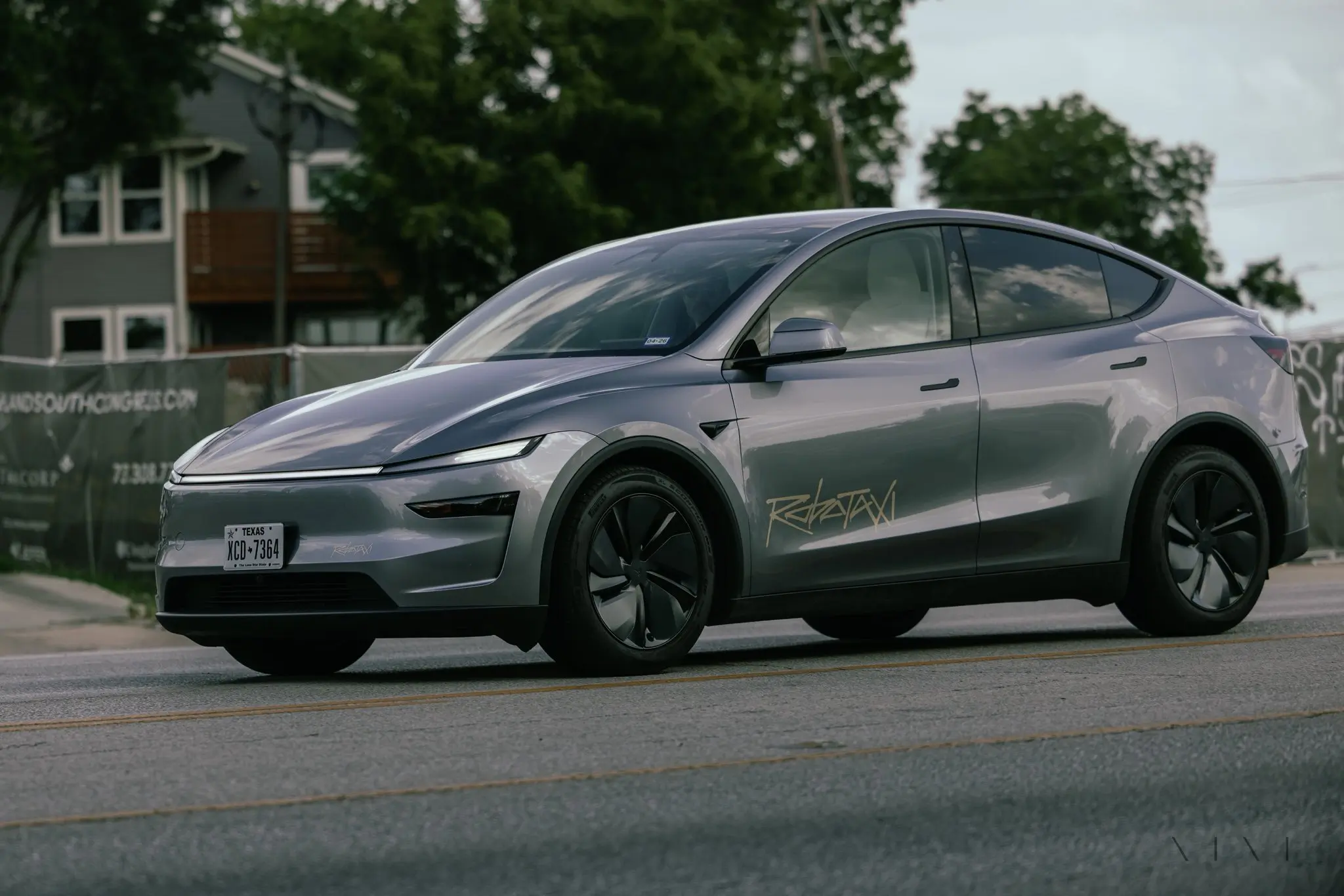
From its earliest days, Tesla envisioned a future where its cars would drive themselves. This vision hinges on Tesla’s Full Self-Driving (FSD) software and, ultimately, a robotaxi service. In August 2025, Tesla CEO Elon Musk stirred excitement by promising a “massive” FSD software update coming in September that would dramatically improve the system. Simultaneously, Tesla’s robotaxi pilot in Austin is slowly expanding to new testers. In this article, we examine Tesla’s latest developments in autonomous driving technology — the upcoming FSD upgrade and the growing robotaxi program — and what these mean for owners and the wider market.
Tesla’s Upcoming FSD Update
On August 8, 2025, Musk announced via Twitter that Tesla’s next FSD software update (expected in September) will deliver a “major step-change improvement for rare conditions”. He highlighted two key points:
-
Reduced Driver Attention Required: The new update will “substantially reduce the need for driver attention,” Musk said. In practical terms, this means the car will handle many driving tasks more completely, letting the driver relax more.
-
Still Caution in Complex Situations: Musk cautioned that some “complex intersections, heavy weather, or unusual events” will continue to require active driver oversight. In other words, while routine highway driving and simpler urban scenarios will be more automated, the human driver must still be ready to take control in challenging conditions.
What Will Be Improved?
While Musk’s statement is high-level, it suggests Tesla is making FSD smarter in edge cases. “Rare conditions” could include situations like construction zones, storms, or other unexpected road events. Tesla’s engineers likely trained the neural networks on more diverse data so the car can handle these cases without intervention. We may also see refinements in things like automatic lane changing on highways, intersection handling without turn signals, and expanded smart summon features.
Tesla has quietly been iterating on its FSD builds for years, but this is perhaps the boldest claim yet of a big leap. For reference, Tesla’s recent releases added features like navigate-on-autopilot lane changes, automatic emergency braking on curves, and improved city street handling. The September 2025 update is billed as the biggest so far, moving closer to Tesla’s stated goal of letting owners become “passengers, not drivers”.
Timeline and Public Release
Musk has not given an exact date, only “next month” for this update. If it arrives on schedule, Tesla owners with the FSD option should see it rolled out to their vehicles by September or October 2025. Each update is phased, so availability may start with a small subset of cars for testing before wider release. It’s expected this will apply to vehicles already subscribed to or purchased FSD in North America (and perhaps other markets where FSD is offered).
Importantly, Tesla has two parallel versions of its software: the one released to the public on customer cars, and the “robotaxi” version that runs on test vehicles. Musk notes that the Austin robotaxis use a build roughly 6 months ahead of what is publicly available. That means that when owners see the public update in September, Tesla is likely already testing even more advanced software in Texas.
Tesla’s Robotaxi Pilot in Austin
At the end of June 2025, Tesla quietly launched the world’s first test of a public robotaxi service in Austin, Texas. The program invites Tesla owners to sign up to have Tesla deliver a Model Y to them and then take them on driverless rides within a limited city area. Initially only a handful of high-profile Tesla community members participated, but on August 7, Reported that Tesla is expanding this pilot.
Invitations have been trickling out to a wider group of participants, and Tesla is gradually enlarging the geofence (the driving area in Austin) to include new neighborhoods. The company is proceeding “very cautiously,” deliberately avoiding major events or unpredictable situations for now. Musk himself said on an earnings call that the number of vehicles and service area “will increase at a hyper-exponential rate,” but only after ensuring safety.
Tesla’s long-term goal is audacious: Musk says Tesla plans to offer robotaxi rides to “half of the U.S. population by the end of the year,” subject to regulatory approval. In practice, that means securing permits in major states. Tesla is aiming to get permission for autonomous robotaxis in Texas (its home base), and is also looking at Nevada, Arizona, and Florida as early markets (where regulations are friendlier). Eventually, Tesla wants a nationwide Tesla Network of self-driving cars, controllable via app, replacing ride-hailing services like Uber.
Safety, Regulation, and Legal Challenges
Tesla’s push into autonomy is not without controversies. Just days before the robotaxi debut, Tesla’s stock had fallen after some robotaxi cars in Austin were observed behaving erratically: speeding unexpectedly, heavy braking, and dropping passengers improperly in busy streets. Within days, a class-action lawsuit was filed (Aug 5, 2025) accusing Tesla and Musk of securities fraud for overstating the safety and readiness of their self-driving tech. Shareholders allege Tesla repeatedly promised a safe, scalable robotaxi fleet, and the robotaxi stumble undermined those claims.
Meanwhile, Tesla’s conventional Autopilot system has also faced legal pressure. On August 1, 2025, a Florida jury found Tesla 33% liable for a fatal 2019 crash involving Autopilot and ordered Tesla to pay $243 million in damages to victims. Tesla plans to appeal. These developments highlight that Tesla’s self-driving technology is under serious scrutiny. Regulators like the U.S. NHTSA (National Highway Traffic Safety Administration) and even Congress are watching closely. Interestingly, in August 2025, NHTSA proposed loosening some restrictions for testing AVs on roads, which could benefit Tesla and others (though stringent safety milestones would still apply).
In Europe, regulators are more cautious. Tesla’s FSD features are legal in Europe only as advanced driver-assistance, not true self-driving. Any fully autonomous service (no human driver) would require approval of new regulations, which may take years. Therefore, robotaxis are likely a U.S.-centric program for the near future.
Impact on Tesla Owners
What do these developments mean for everyday Tesla owners?
-
FSD Subscribers: If you have the FSD package (or subscription), you can expect the new software to make your car smarter. Improvements could include better handling of city driving (e.g., navigating roundabouts, turning off major roads autonomously), enhanced lane changes, and more reliable parking. However, you should still expect to monitor the car, keeping hands on the wheel as required by Tesla’s terms.
-
Driver Attention: Musk’s comments suggest that after the update, the required driver vigilance will be reduced. In practice, this might mean FSD will more often hold speed, follow routes, and brake without asking for you to retouch the wheel. It may make long drives less tiresome. But during unusual conditions (a sudden road closure, heavy snow, bizarre traffic patterns), you must still be ready to intervene.
-
Cost: Tesla already lowered the FSD purchase price and subscription fee earlier in 2024. By 2025, in the U.S. FSD costs $8,000 as a one-time purchase (down from $12,000), and $99/month subscription (down from $199). Owners who hesitated due to cost might reconsider, given the promised improvements. The cheaper subscription is especially attractive to try it out temporarily.
-
Robotaxi Riders: If you live in Austin (or soon in other pilot cities), you may get a chance to ride in a Tesla driverless vehicle. For now, this is by invitation only to select Tesla community members. The official Tesla app has not yet opened robotaxi to the public at large. But Musk’s goal of expanding suggests that later in 2025, Tesla may start charging for rides via an app (possibly at prices competitive with taxis).
-
Insurance and Liability: If your Tesla is involved in an AV-related crash, states are still determining how to assign fault (driver vs manufacturer). Tesla’s approach is that the driver has ultimate responsibility as long as a human is present. This area is legally unsettled and may affect insurance premiums in the future.
The Road Ahead
Tesla’s pursuit of autonomy continues at a breakneck pace. The September 2025 FSD update, if it delivers on Musk’s promises, would be a significant milestone toward Tesla’s vision of a fleet of autonomous vehicles. The AI5/6 chips discussed earlier will power these features, enabling more processing for camera vision and decision-making.
However, full autonomy still faces challenges. Regulators need to be convinced that Tesla’s software is safe in all conditions. Tesla’s transparency with crash data, compliance with standards, and continuous improvement will be key. Other players also race to develop robotaxis (Waymo leads with thousands of daily rides in Phoenix; Cruise is testing in Miami; new Chinese AV startups are launching pilots too). Tesla’s advantage is having actual customers in vehicles collecting data, but real-world performance is the ultimate test.
For now, Tesla owners should stay tuned for the imminent FSD update and enjoy the incremental improvements. They should also remember Tesla’s advice: keep hands on the wheel and eyes on the road at all times – even as the car does more and more of the driving.
FAQ
-
When will Tesla’s Full Self-Driving be ready for completely driverless use?
Tesla has no official date for truly driverless cars without human oversight. The technology is advancing, but regulatory approval is still required. In the meantime, owners can use FSD as an advanced driver-assist system (with supervision). -
How much does FSD cost and can I subscribe?
In the U.S., FSD costs $8,000 as a one-time purchase. Alternatively, Tesla offers it as a $99/month subscription. Availability and pricing vary by country. -
Can I use Autopilot without buying FSD?
Yes. Tesla includes basic Autopilot (lane centering and adaptive cruise control) for free with all cars. FSD adds more features like automatic lane changes and Navigate on Autopilot. -
What is Tesla’s robotaxi and can I ride in one?
Tesla’s robotaxi is a future service of autonomous ride-hailing. As of mid-2025, it’s only in test mode in Austin, Texas. Only invited Tesla owners can use it, and rides are free. A public service (with payment) may launch once regulators approve, possibly before 2026 in some U.S. states. -
Is FSD safe?
Tesla claims FSD can make driving safer than humans in many cases. However, users must stay vigilant. There have been high-profile accidents involving Teslas on Autopilot. Always treat it as an “assistant,” not a replacement, and be ready to take control. -
Will Tesla stop supporting cars without FSD?
No. Tesla continues to provide updates and support to all vehicles. Even cars without purchased FSD get improvements to basic Autopilot features.