
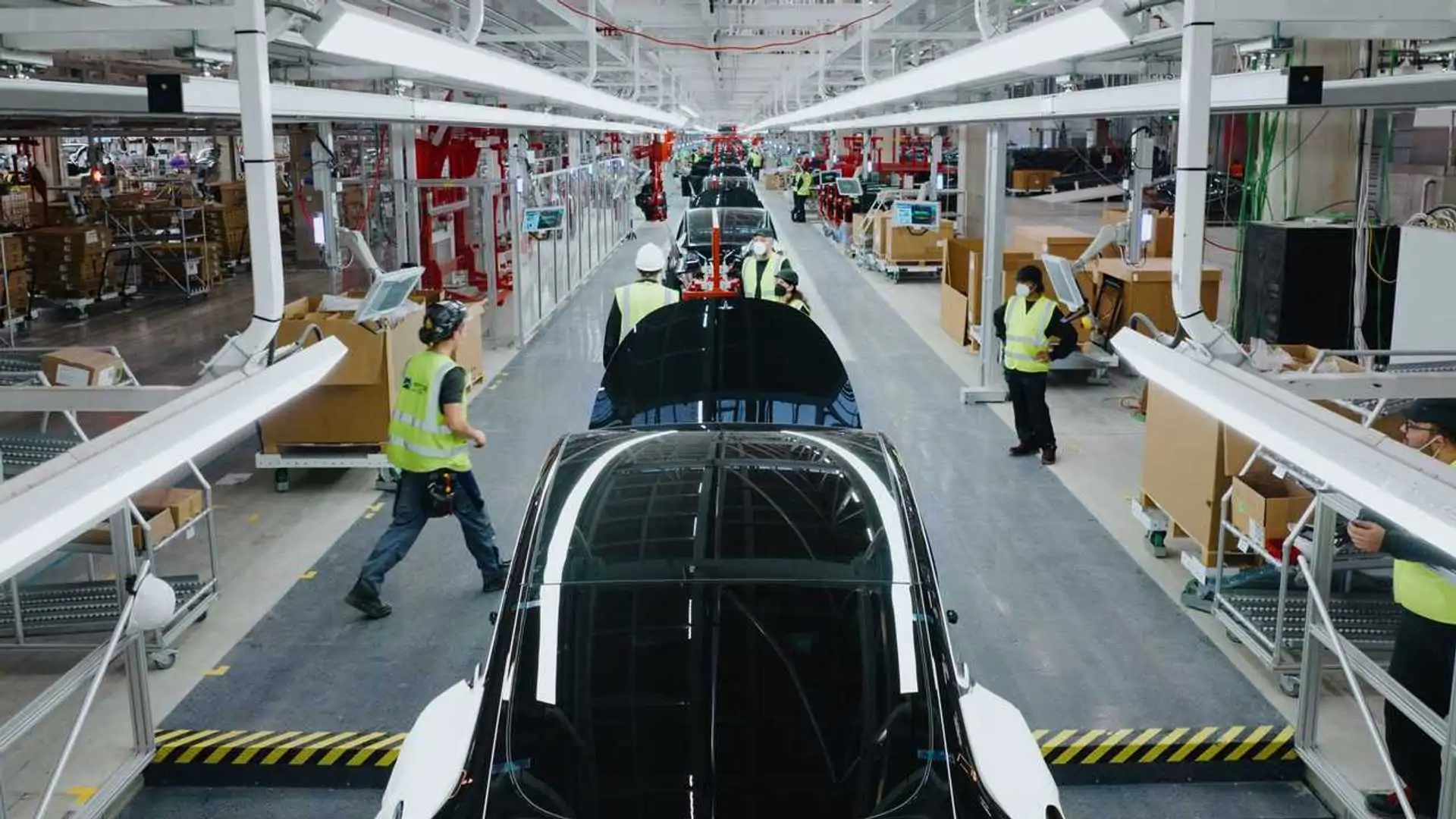
In mid-September 2025, indicators suggest Tesla is seeing a tentative recovery in European registrations and is increasing output at Giga Berlin to meet rising demand. The rebound is uneven — some countries still show weakness — and structural issues (competition, brand perception, supply and production constraints, and policy differences across markets) remain. This article unpacks the data and implications for Tesla owners and buyers in the U.S. and Europe, explains what Giga Berlin’s ramp means for availability and pricing, and outlines risk scenarios heading into Q4 2025.
Introduction — why this matters to Tesla owners in the US and Europe
For Tesla owners and prospective buyers in the U.S. and Europe, two connected developments matter: (1) whether consumer demand in Europe is stabilizing or rebounding (which affects resale values, delivery lead times, and incentives), and (2) how Giga Berlin’s production plan will influence supply, logistics, and Tesla’s regional strategy. After several months of weak registrations in key European markets during 2025, multiple industry trackers and statements from Giga Berlin management in September show a clearer picture: registrations in early-to-mid September climbed relative to the depressed summer months, and Giga Berlin is planning to lift production in Q3–Q4 2025 to match stronger sales signals. These are early but important signals for the remainder of the year.
This article unpacks the data trends, drills into Giga Berlin’s production drivers and constraints, examines national policy influences across major European markets, weighs competitive pressures (notably from Chinese EV entrants), and offers practical takeaways for owners and buyers.
Chapter 1 — European registration trends in 2025: the data story
Recent context and the September signal
Across the first half of 2025 Europe’s new-car market and battery-electric vehicle (BEV) registrations experienced mixed performance: industry data showed modest overall decline in many markets even as BEV share rose. Within that landscape, Tesla’s registrations fell sharply in several European countries earlier in the year — a combination of an aging model lineup, reputational and political headwinds in some markets, and aggressive competition from value-priced rivals. But data aggregated by industry watchers for the week of September 8–14 indicated a notable uptick: registrations in a set of European markets rose substantially in that sampling window, pointing to a short-term recovery signal.
Country-level differences — winners and laggards
The European picture is uneven. Earlier 2025 reporting showed double-digit declines versus 2024 in some markets. That weakness reflected both local market dynamics and Tesla-specific factors. September’s uptick was concentrated: markets historically strong for Tesla — Germany, parts of Western Europe, and certain Central European markets — showed improvement, while some Nordic and French markets still trailed. Two implications follow: (1) pan-European averages can mask sharp national variation, and (2) a regional “recovery” often begins where local supply is easiest to deliver (e.g., Germany for cars produced at Berlin) and then diffuses outward.
Is the rise genuine or a catch-up effect?
There are two plausible interpretations. One: the September rise is a genuine recovery — buyers are responding to refreshed models, improved availability, or seasonally stronger demand. Two: the rise is a “catch-up” effect and inventory normalization after earlier supply constraints. The pace of registrations in the sampled period is notable, but sustainable recovery requires consistent month-to-month improvement and evidence that the rise is not solely inventory drawdown or short promotional pushes. Tesla’s public operational response (increasing planned production at Giga Berlin) suggests management believes the uptick is more than a one-off.
Chapter 2 — Giga Berlin’s role: capacity, recent milestones, and the ramp plan
Giga Berlin: quick background
Giga Berlin (Grünheide) opened as Tesla’s flagship European production site, intended to serve Europe and nearby export markets. The plant was built with modern automation, gigacasting, and localized supply strategies meant to support high throughput and regional responsiveness. Over 2024–2025, Giga Berlin moved from initial ramp to higher-volume output and began producing refreshed Model Y variants at scale.
Recent production signals (September 2025)
In mid-September Giga Berlin management publicly stated plans to increase production for the remainder of 2025 in response to stronger sales figures. That announcement was accompanied by reporting of production milestones — including refreshed Model Y outputs and higher weekly throughput targets. Those comments are meaningful: they indicate Tesla’s regional operations are seeing order/delivery momentum sufficient to warrant higher factory utilization.
What “increase production” usually entails (practical mechanics)
Ramping a modern EV plant involves multiple steps: increasing shift hours, improving line efficiency (reducing cycle times), adding automated cell lines or stations, optimizing parts logistics, and sometimes commissioning previously idled capacity. For a modernized site like Giga Berlin, management can also push weekly volumes by tweaking logistics (faster parts flow), commissioning additional testing rigs, or adding shifts. The public language indicated a near-term capacity-utilization increase rather than immediate physical expansion, though longer-term expansions to raise throughput substantially remain possible.
Export footprint and logistics implications
Giga Berlin’s production serves 30+ markets — not only EU countries but also export destinations in other regions. Increasing output at Berlin will ripple through Tesla’s logistics network: more rail and truck allocations, higher throughput at vehicle processing areas, and larger allocation of export slots. For European buyers this could shorten delivery windows for model variants produced at Berlin and reduce reliance on long shipments from China or North America. How Tesla allocates cars by market will determine whether increased production materially reduces delivery times or primarily rebuilds buffer inventories.
Chapter 3 — Why Tesla sales fell earlier in the year (briefly) and what’s changed
Factors behind the mid-2025 weakness
-
An aging product portfolio — Many Tesla models reached later lifecycle stages, which depresses buyer urgency absent refreshes.
-
Political and reputational headwinds — Public activities by high-profile leaders can influence demand in politically sensitive markets.
-
Aggressive competition from value-priced entrants — Chinese OEMs expanded into Europe with lower-priced BEVs and expanded model lineups, pulling price-sensitive buyers.
-
Policy and subsidy variability — Changes or uncertainty in national incentives altered buyer calculations in several countries.
What has changed to allow a September uplift?
-
Product refreshes: Tesla started producing refreshed Model Y variants at Berlin and elsewhere in 2025, reducing buyer hesitation.
-
Inventory and logistics normalization: Earlier supply constraints eased in some parts of the chain, enabling faster fulfillment.
-
Allocation and pricing adjustments: Tesla’s adjustments to pricing, available configurations, and allocations can quickly influence weekly registration numbers.
-
Management response: Giga Berlin’s decision to up production signals a managerial read that demand is improving, which can create a virtuous loop improving buyer confidence.
Chapter 4 — The competitive landscape: BYD & other challengers
BYD and the arrival of low-cost competition
BYD’s European push in 2025 was a standout competitive development. In certain months BYD recorded higher European deliveries than Tesla in part due to aggressive pricing, a broader model range, and expanded distribution. Their strategy of local pricing and tiered model offerings attracted price-sensitive buyers and compressed the middle price segments where Tesla historically competed.
Tesla’s defense levers
-
Range, charging network, and brand: Tesla retains advantages in range performance, an extensive charging network, and a strong brand for software and performance.
-
Refreshed product push: New and refreshed models directly target buyers considering alternatives.
-
Localized production: European production reduces shipping time and some costs versus imports, allowing Tesla to respond faster to local demand.
Pricing pressure and margin tradeoffs
To defend share, Tesla may need to consider pricing or configuration changes to compete with lower-priced entrants. That introduces margin pressure unless offset by manufacturing efficiencies, scale gains, or value reallocation.
Chapter 5 — National policy, incentives, and their role in the rebound
Macro background
European BEV demand remains sensitive to national incentives, taxation rules (especially company car regimes), and urban pollution policies. Countries with stable or expanding BEV incentives showed stronger uptake; those with reduced or uncertain incentives lagged.
Examples and implications
-
Germany: As a major market and home to Giga Berlin, strong demand and supportive policy make Germany strategically important; increased Berlin output is well-positioned to serve domestic appetite.
-
Nordic countries & France: Some of the largest declines earlier in 2025 were reported here; these are politically sensitive markets where brand perception and incentives are crucial.
Policy-driven demand elasticity
BEV demand shows sensitivity to:
-
One-time purchase incentives or tax credits,
-
Company car taxation rules, and
-
Urban low-emission zone regulations.
Tesla’s exposure to each lever varies by country; targeted country strategies will be necessary to convert higher production into registrations across heterogenous policy environments.
Chapter 6 — Risks and constraints to the rebound
1. Brand perception and political risk
Brand perception can influence demand in some European markets more strongly than in others. Reputation events or renewed public controversies could depress demand again in sensitive regions.
2. Operational and safety constraints
Ramping output heightens operational stress. Any production incidents, quality issues, or supply interruptions could restrict throughput and harm perception.
3. Competitive tactics
Rivals scaling local launches or manufacturing in Europe could sustain pricing pressure, forcing Tesla to adapt pricing or limit margins.
4. Macroeconomic & policy shifts
Changes in consumer finance costs, incentives, or broader economic pressures could swing demand quickly in either direction.
Chapter 7 — What the ramp means for owners and prospective buyers
For current Tesla owners (U.S. & Europe)
-
Resale values: If production increases materially without matching demand, used-vehicle supply may rise and put downward pressure on resale values in some markets.
-
Service & parts: Greater local production can improve parts availability regionally and reduce some repair wait times.
-
Software & updates: OTA update cadence and policy remain unchanged; owners should still expect software improvements and occasional recalls or repair bulletins if issues appear.
For prospective buyers in Europe
-
Faster deliveries: Berlin-produced Model Y variants could see shorter lead times for nearby markets.
-
Potential promotions or improved option availability: Tesla may fine-tune pricing and options to balance inventory and demand.
-
Check regional incentives: Buyers should compute final costs inclusive of local subsidies and tax treatments.
For U.S. owners observing Europe
-
Global allocation effects: Healthier European demand can shift how Tesla allocates production and components globally; in some cases this indirectly stabilizes lead times elsewhere.
Chapter 8 — Strategic implications for Tesla management
Operational steps Tesla might take
-
Fine-tune allocation from Berlin to markets with strongest net price and incentive balance.
-
Push manufacturing efficiency to protect margins while responding to competition.
-
Localized marketing and engagement to reduce reputational friction in politically sensitive countries.
-
Monitor competitor moves and keep product-refresh cadence aligned to market expectations.
Longer term: product cadence and portfolio
Sustained recovery will need a refreshed product pipeline and localized adaptations. Local R&D and engineering around Berlin would help tailor vehicles to European expectations and maintain competitiveness.
Conclusion — measured optimism, still guarded
Mid-September 2025 data and Giga Berlin’s statements point to an encouraging but not guaranteed rebound for Tesla in Europe. Registration spikes in sampled weeks and management’s production increase are positive signals. However, national heterogeneity, aggressive competition, political and reputational sensitivity, and supply-side risks mean the recovery must be validated by sustained month-to-month improvement. For owners and buyers: expect modest improvements in delivery times and inventory choices in the near term, but keep an eye on national incentives, competitor pricing, and Tesla’s allocation decisions.
FAQ (concise, practical answers for owners and buyers)
Q: Is the September uptick enough to say Tesla is “back” in Europe?
A: Not yet. The weekly registration jump is a positive sign and has influenced Tesla’s production planning, but sustained monthly gains across major markets are needed to confirm a durable recovery.
Q: Will Giga Berlin’s production increase lower delivery times in Europe?
A: Likely yes for Model Y variants produced at Berlin, especially for countries close to Germany. Allocation rules and global demand will influence exact timing.
Q: Should I expect price cuts or promotions?
A: Short-term targeted pricing adjustments or configuration offers are possible; broad permanent price cuts depend on competitive pressures and Tesla’s margin strategy.
Q: Are there safety or plant incident risks as output ramps?
A: Any ramp increases operational stress; isolated incidents have been reported at different facilities in 2025. Tesla must manage QA and safety as throughput rises.
Q: How should U.S. owners interpret this European news?
A: Regional demand shifts affect Tesla’s global allocation and component sourcing; healthier European demand can indirectly stabilize global logistics but direct customer impact depends on allocation decisions.