
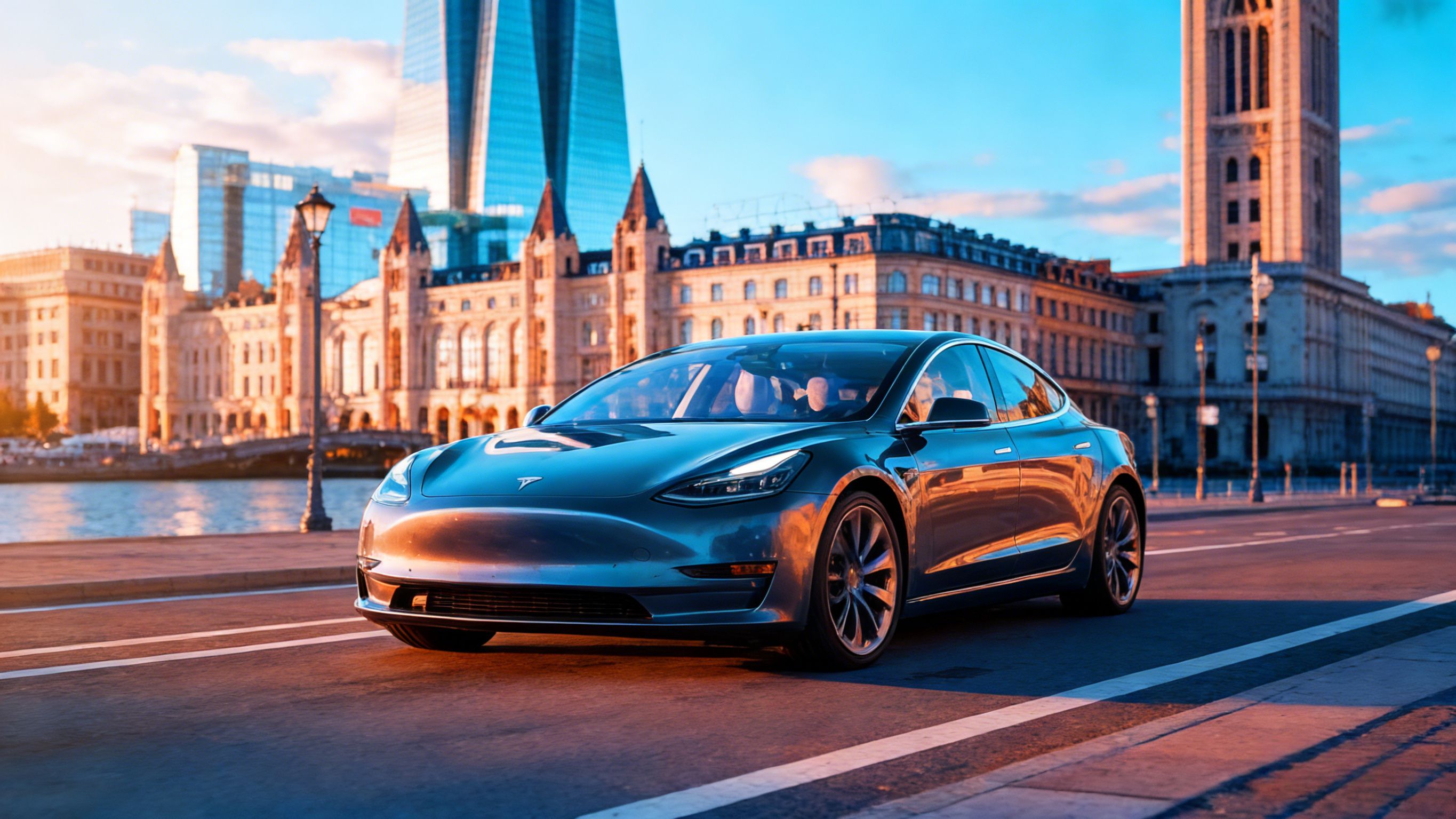
Tesla buyers and owners in 2026 are making decisions in a very different market from just a few years ago: demand in Europe has cooled specifically for Tesla, competition has intensified, and upcoming FSD changes and pricing moves are reshaping what “smart” looks like when buying, holding, or selling a Tesla. This article walks through how to think clearly about those shifts so you can make decisions grounded in data rather than noise.
Introduction: A Buyer’s Market, But With New Risks
In 2025, Tesla’s European registrations fell sharply even as the broader EV market accelerated, which is the worst possible combination for a market leader. Across Europe, battery‑electric registrations jumped more than 50% year‑over‑year in December 2025, yet Tesla’s monthly registrations fell about 20%, cutting its BEV market share from roughly 21.5% to 11.4%. Over the full year, Tesla’s European volume dropped around 27–28%, from roughly 326,000 units in 2024 to just over 235,000 in 2025.
At the same time, Chinese brands like BYD and SAIC surged, and Volkswagen overtook Tesla as Europe’s leading BEV seller, signaling a structural shift rather than a temporary dip. For buyers and sellers, this has three immediate consequences:
-
There is more choice than ever in the EV space.
-
Tesla is having to fight more aggressively on price and product.
-
The resale and risk profile of Tesla ownership in Europe looks different from the early‑adopter years.
The good news: this creates opportunities for well‑informed buyers. The bad news: mistakes can be costlier if you ignore policy risk, product timing, and local conditions.
Europe’s Cooling Tesla Demand: What It Means for Prices
Falling Share in a Rising Market
The most important thing to understand is that European demand for Tesla specifically is cooling, not demand for EVs in general. Data compiled from the European Automobile Manufacturers’ Association shows that Tesla’s share of Europe’s BEV market has roughly halved over the past year, even though overall BEV sales hit record highs. That means buyers are not walking away from EVs; they are choosing other brands more often.
Factors behind this include:
-
A limited Tesla lineup dominated by the Model 3 and Model Y, which many European buyers now see as aging compared with newer rivals.
-
Vehicles that are larger than ideal for many narrow European streets and parking situations.
-
A politically polarizing brand image in parts of Europe tied to the CEO’s public stances.
Those structural issues sit on top of cyclical effects like policy changes and macro uncertainty, which makes the demand slowdown particularly concerning from an investment perspective—but from a consumer perspective, it also creates leverage.
New Car Incentives, Discounts, and Standard Models
Tesla’s primary tool to defend volume has been price. In late 2025, the company launched cheaper “Standard” versions of the Model 3 and Model Y in Europe at more aggressive price points. For example:
-
In many European countries, the Model 3 Standard has seen price cuts on the order of 15–20%, bringing list prices into the mid‑30,000 euro range, with the UK version around £41,000 and continental prices roughly €37,000–€38,000.
-
Earlier discounts had already brought some RWD variants to roughly €35,000 in markets like Spain, illustrating how fast Tesla has had to move to stay competitive.
Feedback from early adopters has been mixed. Some buyers see the new Standard trims as a strong value; others feel that Tesla removed too many features for the price, creating a perception of “less car for the same money.” For an informed buyer, this means:
-
You can negotiate with your feet: if a Standard configuration feels cut too close, stepping up one trim or cross‑shopping brands can yield better value.
-
You should consider the total package value (battery size, range, interior, software) rather than just being impressed by a headline discount.
On top of Tesla’s own pricing, national incentives remain critical:
-
Some markets have reduced or restructured EV subsidies, which can blunt the impact of Tesla’s cuts.
-
Others still provide generous tax breaks or purchase support that can make a Tesla surprisingly competitive once all costs are included.
Before buying, always run a country‑specific calculation that includes taxes, registration fees, and available incentives.
Used Tesla Market: Pressure With Pockets of Strength
When new‑car prices fall, and competition rises, used values naturally come under pressure. In markets where Tesla’s registrations have fallen most sharply—such as the UK and several Northern European countries—this effect is likely to be stronger because future buyers can see that Tesla is no longer the default EV choice.
However, the used Tesla story is not uniformly negative:
-
A large share of older Teslas still benefit from solid batteries and OTA updates, which help them feel less “aged” than similarly old combustion cars.
-
In many regions, the Supercharger network still offers a unique selling point for used buyers, especially if rival networks are fragmented or unreliable.
-
Upcoming FSD availability and software improvements can add “option value” for used owners, especially if pricing or transferability terms remain favorable.
For sellers, these dynamics mean you should not expect the 2020–2022 resale boom to return, but you can still position your car strongly against non‑Tesla EVs by emphasizing software, charging, and condition.
US Market Dynamics: Lessons for European Buyers
The US is a different battlefield. Tesla remains the single most recognizable EV brand and still accounts for a large share of EV sales, even though its overall market share has slipped as other brands roll out more models. Nonetheless, the way Tesla has navigated US pricing and competition offers useful lessons for Europeans.
US Demand Patterns and Price Adjustments
Over the past few years, Tesla has repeatedly cut prices on the Model 3, Model Y, and even the higher‑end Model S and X to stimulate demand and maintain volume. This tactic worked in terms of keeping factories busy, but it also taught buyers a dangerous lesson: “If I wait, there might be another price cut.”
For European buyers, the US experience suggests:
-
When a company signals willingness to use price as a primary lever, future cuts become more plausible—especially if market share keeps falling.
-
Buying immediately after a major price cut can be smarter than buying just before one; unfortunately, that’s only obvious in hindsight.
This doesn’t mean you should indefinitely postpone a purchase. It means you should:
-
Watch recent price history in your market: if Tesla just slashed prices, the risk of another near‑term cut is lower.
-
Be realistic about your holding period: if you plan to keep the car 7–10 years, a future €1,000–€2,000 price move matters less than if you plan to flip in 2–3 years.
Learning from US Owner Communities
US owner communities are a rich source of qualitative data on what it’s like to live with a Tesla over many years. Themes that consistently recur include:
-
Strong satisfaction with charging infrastructure and long‑distance travel.
-
Mixed experiences on service quality and panel fit/finish, often improving over time but still variable by region.
-
A wide range of views on FSD value, from “game changer” to “overpriced beta.”
European buyers can use these experiences as a preview of what might happen as FSD and other features expand in Europe in 2026 and beyond. The core lesson: do not buy FSD or any advanced option solely based on future promises—assess what it does for you today and in your usual driving environments.
Importing Lessons, Not Cars
Given the price differences and availability, some Europeans occasionally consider importing Teslas from the US. In practice, this is rarely smart:
-
Charging standards, lighting requirements, and homologation rules differ, making imports more complex and harder to service.
-
Warranty and connectivity support can be limited or complicated for out‑of‑region vehicles.
You are better off importing knowledge from US owners, not vehicles.
How to Evaluate a Tesla Purchase in 2026
Technical Checklist for New Buyers
When you evaluate a Tesla in 2026, you should move beyond simple badges and battery size. At minimum, consider:
-
Battery and range
-
Chemistry (LFP vs NCA), since it affects charging behavior, cold‑weather performance, and degradation.
-
Real‑world range in your climate and driving patterns, not just WLTP or EPA numbers.
-
-
Drive and chassis
-
RWD vs AWD trade‑offs in traction, efficiency, and cost.
-
Suspension comfort on the roads you actually drive (many European cities with cobblestones or speed bumps benefit from softer setups).
-
-
Software and hardware generation
-
Infotainment hardware version, camera suite, and compute platform, as these determine what future features your car can support.
-
Whether the car ships with the latest FSD hardware, if you think autonomy might matter to you later.
-
Several of these items are not fully standardized in Tesla’s marketing, so asking specifically at the time of order and cross‑checking with owner communities in your region is important.
Financial Checklist: TCO, Not Just Price
Total cost of ownership (TCO) is where many buyers either win big or lose quietly. For a Tesla in 2026 Europe or the US, you should include:
-
Purchase price after incentives
-
National and local subsidies, VAT differences, registration taxes, and benefit‑in‑kind rules for company cars.
-
-
Energy cost
-
Home electricity rates and whether you have access to off‑peak tariffs.
-
Public charging costs, including Supercharger vs third‑party rates.
-
-
Insurance and maintenance
-
Higher insurance premiums for higher‑performance EVs in some markets.
-
Low routine maintenance (no oil changes) but potential costs for tires and out‑of‑warranty repairs.
-
-
Depreciation
-
Expected resale value after your planned holding period, which will differ significantly between, say, Norway and Spain given current demand patterns.
-
If you compare Tesla’s TCO with similarly priced ICE and EV alternatives, you may find that a slightly more expensive Tesla at purchase is cheaper to run over 5–7 years, or vice versa, depending on your country and use profile.
Lifestyle and Infrastructure Fit
Finally, ask whether a Tesla fits your life, not just your wallet:
-
Charging access
-
Do you have a reliable home charging option (driveway, garage, or dedicated spot)?
-
How many public fast chargers are available within your weekly driving radius?
-
-
Driving profile
-
Mostly short urban trips or frequent long motorway runs?
-
Climate: very cold or very hot regions change range and charging behavior.
-
-
Space and maneuverability
-
Tight city parking or narrow rural lanes may favor smaller EVs over a Model Y‑sized vehicle.
-
If your real life doesn’t match Tesla’s design choices, a rival EV might be smarter even if Tesla looks better on pure specs.
Selling or Upgrading: Timing and Tactics
When to Consider Selling
Three triggers should make you at least consider selling or upgrading:
-
End of warranty
-
As you approach the end of the vehicle and battery warranty, the cost of unexpected repairs becomes more relevant to your decision.
-
-
Major product refresh or new model
-
When Tesla releases a significant refresh or a new smaller model in Europe, your existing vehicle’s value may drop more quickly.
-
-
Policy or tax changes
-
If your country is about to change EV taxes, road charges, or company‑car rules, the economics of keeping vs selling can flip quickly.
-
You do not have to sell at those points, but ignoring them can mean leaving money on the table.
Maximizing Resale Value
If you choose to sell, you can materially influence the price you get:
-
Maintenance records
-
Keep detailed service history and repair documentation; buyers and dealers pay more for transparent histories.
-
-
Condition and presentation
-
Fix minor cosmetic issues, clean the interior thoroughly, and consider small cosmetic detailing.
-
-
Software and options
-
Verify whether FSD or other paid upgrades (if you have them) are transferable and highlight them clearly in the listing.
-
In markets with more competition (e.g., Germany, the Netherlands, Norway), you may get better offers through direct‑to‑consumer channels than trade‑ins; in smaller markets with thinner demand, dealer networks or Tesla’s own trade‑in programs might provide more certainty even at a slightly lower price.
Upgrading Within the Tesla Ecosystem
If you already own a Tesla and are considering another:
-
Evaluate whether your current car’s missing features (range, interior, driver assistance) are solved by a newer Tesla, or whether a competitor solves them better.
-
Pay attention to how Tesla positions any new small model in Europe: if it targets urban and lower‑price segments, it might complement, not replace, your current car.
-
Consider a staggered strategy: keep your older Tesla as a second car and add a newer EV from Tesla or another brand as your primary.
In a cooling Tesla market, brand loyalty is less rewarded than rational flexibility.
Risk Management in an Uncertain Market
Policy and Regulatory Risk
Policy is a double‑edged sword for Tesla buyers:
-
On the positive side, the EU and national governments continue to push for higher EV adoption, which supports long‑term demand.
-
On the negative side, subsidy changes and evolving rules for driver assistance and data can materially affect value and usability.
On the autonomy front, Tesla is actively working to roll out FSD in Europe via a partnership with the Dutch regulator RDW, targeting national approval in February 2026 that could then be recognized across other EU member states through mutual recognition mechanisms. At the same time, new UN‑level regulations for driver assistance (such as R‑171 and upcoming rules focused on autonomous systems) may unlock or restrict certain FSD behaviors depending on how they are interpreted.
As a buyer or owner, you should:
-
Treat FSD and other advanced features as bonuses, not the sole justification for purchase.
-
Follow local regulatory news: an approval in the Netherlands may quickly propagate to Germany or France, but not necessarily at the same pace or with the same conditions.
Technology Obsolescence Risk
EVs are improving quickly. The risk is not that your 2024–2025 Tesla suddenly becomes bad; it is that new models might leapfrog yours enough to impact resale.
Mitigating steps:
-
Avoid buying right before a widely expected major refresh or new model introduction in your region, especially if rumors are strong and credible.
-
Focus on durable features like battery health, charging ecosystem, and safety, rather than cosmetic and minor tech details that age quickly.
-
Remember that OTA updates can keep your car feeling modern in many aspects, but they cannot change fundamental hardware like battery chemistry or structural design.
Brand and Market Risk
Tesla’s “European freefall” narrative—steep registration drops in key markets, rising Chinese competition, and a tarnished brand image—has some truth but also nuance. The data shows serious, sustained share losses in many Northern European markets, but it also shows growth in Spain, Italy, Sweden, Denmark, and others where Tesla is still building its presence.
For owners, the key questions are:
-
Will Tesla maintain a viable service and charging footprint in my country over the next 5–10 years?
-
Is my national market one where Tesla is still investing (growing registrations, new stores, new Superchargers) or one where it is retrenching?
If the answer to the first is yes and to the second is at least neutral, the brand risk to your ownership experience is manageable even if market share continues to slip.
Concrete Buyer and Seller Scenarios
City Commuter in London or Amsterdam
If you live in a dense European city with congestion charges, tight parking, and abundant public transit:
-
A large Tesla like the Model Y may be overkill; parking and maneuverability could frustrate you.
-
A Model 3 or future smaller Tesla could work, but you must compare them with city‑optimized EVs from European and Chinese brands that may fit the urban environment better.
-
Home charging access is critical; if you rely mostly on public chargers, competition for spots and pricing volatility are key considerations.
Smart move: treat a Tesla as a premium, discretionary purchase justified by software and Supercharger access for trips, not as the default urban mobility solution.
Long‑Distance Driver in Germany or France
If you regularly drive long motorway distances:
-
Tesla’s Supercharger network and efficient drivetrain remain a major advantage for seamless, predictable long‑distance travel.
-
Consider a dual‑motor configuration if you often drive at higher Autobahn speeds or in mountainous terrain.
-
FSD or enhanced autopilot may be more valuable to you in this scenario if it reduces fatigue on long trips, especially once European approvals expand.
Smart move: prioritize range, charging speed, and highway comfort over city maneuverability; a Tesla is likely to remain a top‑tier choice here, but compare it against long‑range competitors with similar charging capabilities.
US‑Based Owner Considering a Second EV
If you already own a Tesla in the US and are thinking about adding another EV:
-
Decide whether your second car should complement your Tesla (e.g., smaller city car or off‑road capable vehicle) or duplicate its strengths.
-
Consider using the second EV as a hedge: try a different brand to diversify your exposure to any single company’s service and software decisions.
-
In the US, Tesla’s charging advantage remains strong but is slowly eroding as rivals gain access to the NACS standard and expand their networks.
Smart move: leverage your familiarity with Tesla to make a more critical comparison, not to lock yourself into the brand.
Conclusion
In 2026, buying or selling a Tesla in Europe or the US is less about joining a disruptive movement and more about making a rational decision in a crowded, fast‑evolving market. Tesla’s European demand has cooled even as EV adoption accelerates, its market share has fallen, and competitors now offer credible alternatives at multiple price points. At the same time, Tesla continues to innovate on software and FSD, is pushing for regulatory breakthroughs in Europe, and maintains one of the strongest charging and software ecosystems in the industry.
For you as a buyer or owner, the smartest approach is to:
-
Evaluate the total cost of ownership, not just the sticker price.
-
Match the car to your infrastructure and lifestyle, not to generic hype.
-
Recognize policy and technology risks, but do not let them paralyze you.
If you do that, you can still make a Tesla a very smart move in 2026—or confidently choose something else, knowing you decided with eyes wide open.