
1. Introduction: The Global Buzz Meets Regulatory Reality
When Tesla first unveiled the Cybertruck, it represented more than a vehicle — it was a bold statement about the future of mobility, durability, and design. Its angular, stainless-steel exoskeleton and futuristic design became an instant global sensation. However, as the truck began to roll off production lines in the U.S., a stark reality emerged: the Cybertruck’s road to Europe is facing significant obstacles.
While the vehicle’s rugged capabilities and unique design fit well within the American pickup culture, European roads and regulatory frameworks present a very different challenge. As of late 2025, Tesla enthusiasts across Europe remain uncertain whether they’ll ever see the Cybertruck officially on sale — or even street legal — in the European Union.
This article explores why the Cybertruck faces so many hurdles in Europe, how Tesla might adapt its design and production strategy, and what both American and European consumers should understand about the future of Tesla’s boldest vehicle.
2. The Cybertruck’s Origins: Tesla’s Boldest Experiment
Tesla introduced the Cybertruck in November 2019, instantly breaking the mold for pickup design. It was built from ultra-hard 30X cold-rolled stainless steel, resistant to dents and corrosion. Its unpainted exterior and geometric design challenged traditional automotive aesthetics, while its specs — up to 500 miles of range and 2.9-second 0-60 mph acceleration in tri-motor form — redefined what an electric truck could do.
By 2024, the first deliveries began in North America, but production remained limited. Tesla focused on fine-tuning manufacturing at Giga Texas, where its stainless steel body required new welding and shaping processes.
Yet even as American demand surged, questions about international expansion — particularly to Europe — began dominating online discussions and investor calls.
3. European Regulatory Challenges: Safety, Design, and Standards
The core challenge lies in European Union vehicle homologation standards. Unlike the United States, where trucks have a wide margin for weight and design variations, Europe enforces far stricter safety, pedestrian protection, and size regulations.
3.1. Size and Weight Restrictions
The Cybertruck’s massive dimensions (nearly 2.1 meters wide and over 5.6 meters long) exceed the comfortable fit for many European roads and parking spaces. This makes it not only impractical but also potentially noncompliant with EU size limits for passenger vehicles in some countries.
3.2. Pedestrian Safety Concerns
Perhaps the largest barrier lies in pedestrian impact protection. The rigid, stainless steel exoskeleton — while perfect for durability — lacks the crumple zones and deformable front ends required under EU pedestrian safety standards. European regulators demand vehicles be designed to absorb kinetic energy during collisions to minimize injury risk, a feature incompatible with Cybertruck’s unyielding exterior.
3.3. Mirror, Lighting, and Visibility Issues
The Cybertruck’s side camera system, intended to replace mirrors, and its LED strip headlights may not comply with European visibility and lighting laws. Traditional mirrors are still mandatory in most EU countries, and Tesla’s sleek front light bar might require reconfiguration to meet ECE lighting regulations.
3.4. Stainless Steel Body Certification
Beyond design, the material itself poses a challenge. Stainless steel’s reflection and hardness complicate crash testing and repair cost assessments, two essential approval steps in European certification. These factors have caused long delays in any potential EU homologation.
4. Impacts on Tesla’s European Strategy
Tesla’s inability to sell the Cybertruck in Europe — at least in its current form — creates a strategic gap. While the company dominates EV sales in the EU through the Model 3 and Model Y, the lack of a flagship performance vehicle limits Tesla’s “halo effect” among enthusiasts.
However, the company appears to be pivoting smartly. Reports suggest that Tesla is exploring a smaller “Cybertruck Lite” version designed specifically for the European market. This hypothetical model could meet EU standards, feature lighter materials such as aluminum or reinforced composites, and fit within EU road limits.
At the same time, Tesla’s Giga Berlin continues to serve as the cornerstone for European EV production, focusing heavily on Model Y and battery innovation rather than importing larger vehicles from the U.S. This indicates a long-term prioritization of efficiency and compliance over spectacle.
5. American Market Implications
While Europe struggles with regulation, the Cybertruck continues to influence the U.S. electric truck landscape. Its impact extends far beyond sales numbers — it’s redefining what an EV pickup can be. Rivals such as Ford’s F-150 Lightning, Rivian R1T, and Chevrolet Silverado EV have all taken cues from Tesla’s approach, focusing on range, off-road capability, and digital integration.
For U.S. owners, the Cybertruck is more than a vehicle — it’s a symbol of American innovation and industrial toughness. But Tesla must also be cautious: any European exclusion could reinforce the perception that the Cybertruck is a niche or regionally limited product, rather than a global model.
6. The Aftermarket and Accessory Ecosystem
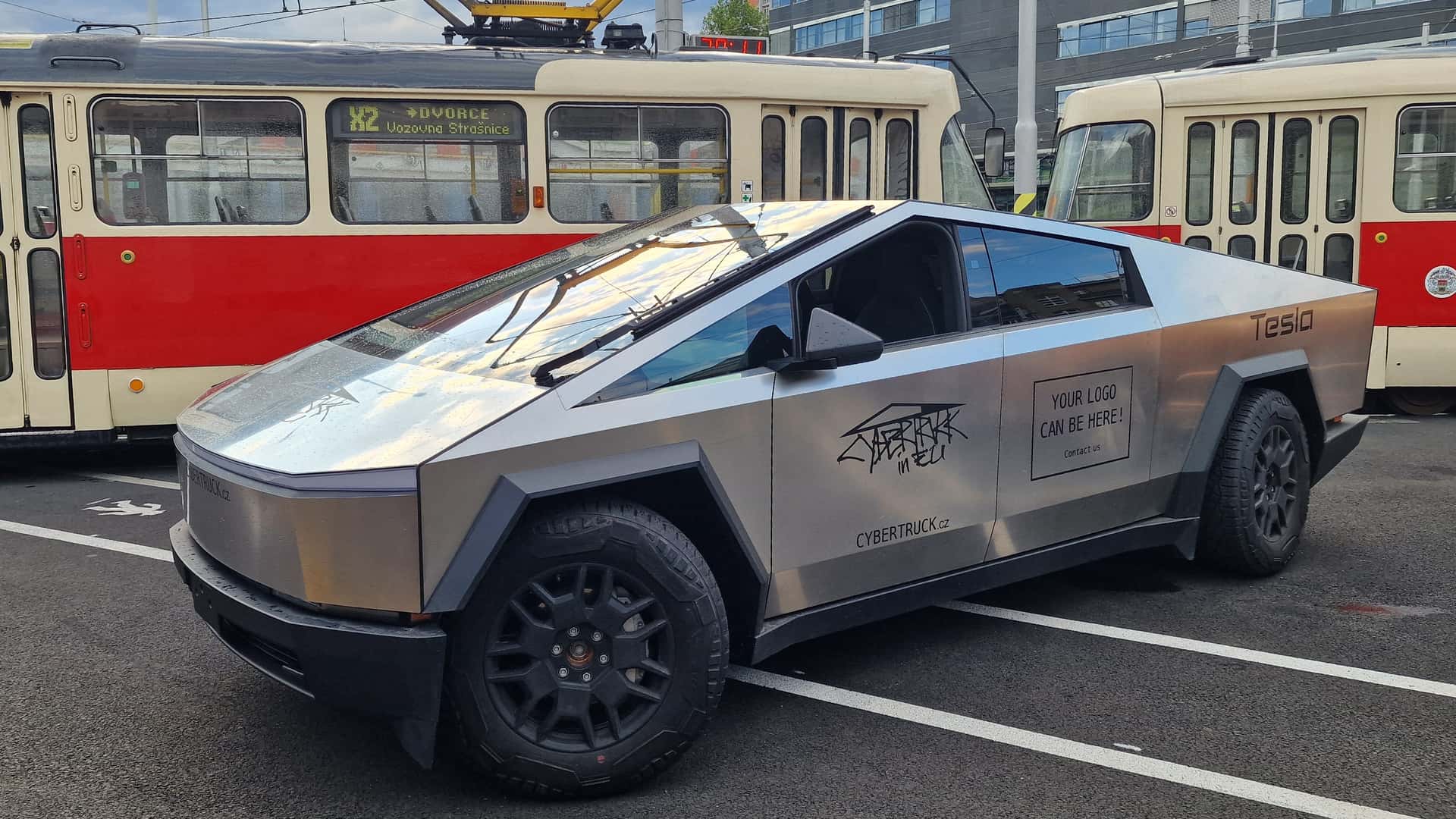
Even without official European approval, Cybertruck enthusiasts across the continent have sparked an underground import and accessory culture. Independent importers in Germany, the Netherlands, and Norway are already showcasing imported Cybertrucks for private display or off-road use, though they remain technically illegal for public roads.
Meanwhile, Tesla accessory brands (including those focusing on bed covers, power outlets, and off-road kits) are preparing for both markets. The Cybertruck’s modular design encourages customization — something European Tesla owners, particularly Model Y drivers, already embrace.
7. Tesla’s Path Forward: Innovation or Adaptation?
Tesla faces a strategic crossroads:
-
Should it adapt the Cybertruck to meet European standards, potentially softening its design and materials?
-
Or should it preserve its rugged American identity and keep it U.S.-exclusive?
Given Elon Musk’s recent comments on cost efficiency, a smaller, compliance-ready version may be the pragmatic choice. Tesla could leverage its Berlin Gigafactory to locally produce a “Cybertruck Mini” using recycled materials and 4680 structural battery packs — reducing emissions, logistics costs, and regulatory barriers simultaneously.
8. Conclusion: The Road Ahead for Tesla and Global EVs
The Cybertruck remains a masterpiece of ambition, but its European journey underscores a deeper tension in Tesla’s global strategy — innovation versus regulation. While the U.S. market rewards bold experimentation, Europe demands refinement and compliance.
For Tesla, mastering both worlds will define its next decade. Whether through adaptation or reinvention, the Cybertruck’s challenges highlight the broader evolution of the EV industry: one that must balance creativity, safety, and sustainability across borders.
9. FAQ
Q1: Will the Cybertruck ever be sold in Europe?
Not in its current form. However, Tesla could release a redesigned, smaller version tailored for the European market within the next few years.
Q2: Can Europeans import Cybertrucks privately?
Yes, but only for limited, off-road, or private use — they cannot currently be registered for street use in most EU countries.
Q3: What makes the Cybertruck illegal in the EU?
Pedestrian safety and crash compliance — primarily due to its rigid stainless steel body.
Q4: Could Tesla produce a European version at Giga Berlin?
Possibly. It would depend on retooling, cost-benefit analysis, and future EU regulatory shifts.
Q5: How does this affect Tesla’s global brand?
While it limits short-term expansion, it reinforces Tesla’s image as a risk-taker — pushing boundaries that others hesitate to test.