
Introduction: Tesla isn’t only an electric car company—it’s a robotics company in the making. At Tesla’s 2025 events, CEO Elon Musk called Tesla’s humanoid robot Optimus “potentially 80% of Tesla’s future value”. This reflects Tesla’s pivot to AI and robotics as the next growth frontier. Optimus started as a concept in 2021 and prototype in 2022, but 2025 is when production goals ramp up. However, recent reports show Tesla is behind its ambitious targets. This article covers Tesla’s Optimus progress: design updates, production plans, delays, and how the public narrative is shaping Tesla’s future.
Chapter 1: Vision and Design Evolution
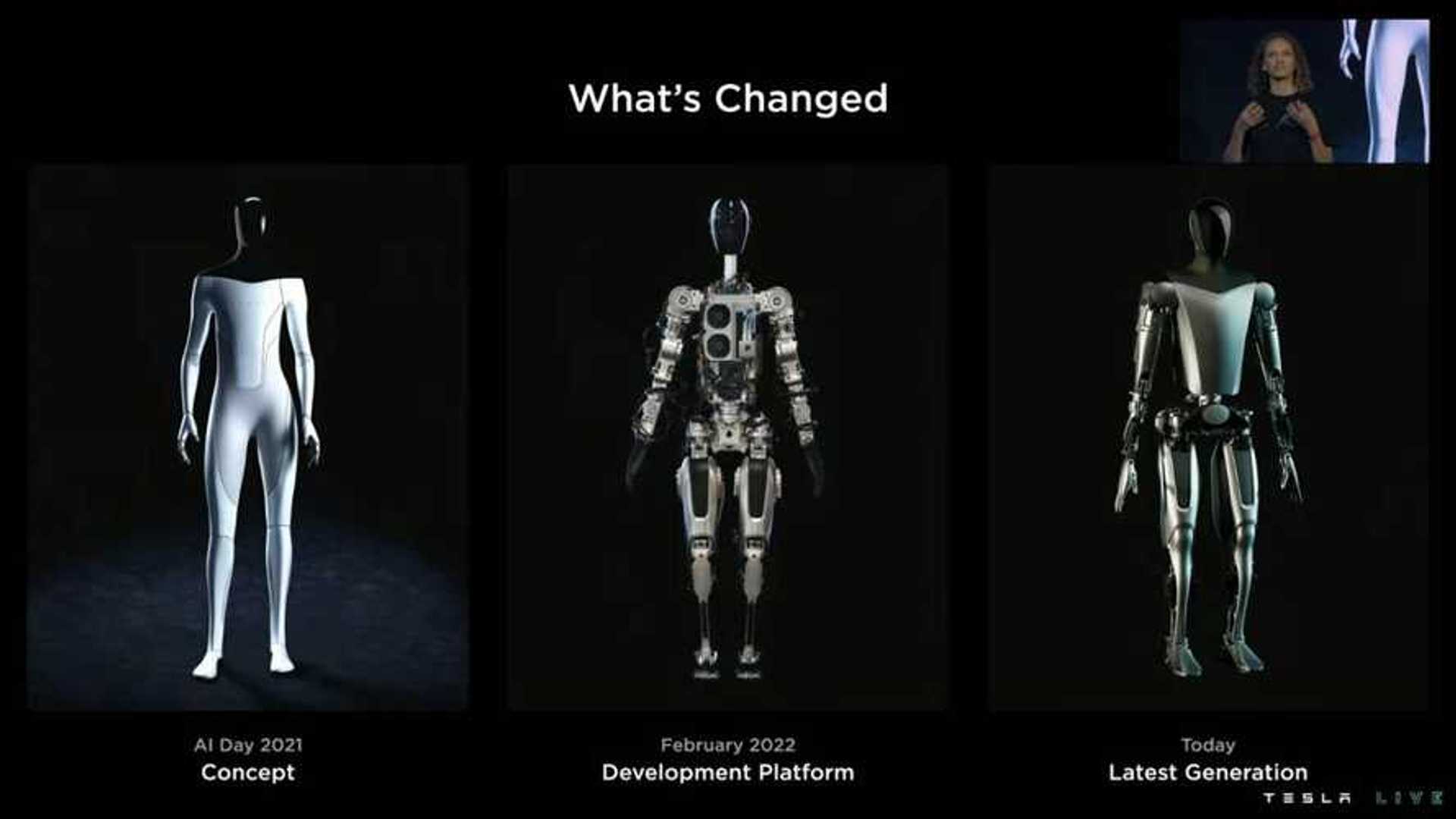
Tesla unveiled its first humanoid robot concept (nicknamed “Optimus”) at an AI Day in 2021. Since then, prototypes have evolved:
-
Optimus V1 and V2: Early versions were demonstrations. The V2 had smoother movements and improved hands compared to the original. Tesla showcased it doing simple tasks (waving, picking up bottles).
-
Optimus V3 Design: In mid-2025 Musk announced that the production-phase Optimus will use a third-generation design, quite different from the working V2 prototypes used internally. Key improvements include full human-like range of motion in the hands (22 axes of freedom) and an “exquisite” esthetic design Musk believes needs no fundamental changes. He called V3 “exquisite” and said it has all the degrees of freedom needed. Tesla has kept the details secret, but it suggests the consumer version Optimus will look more polished and human-like than prior test units.
-
Consumer Unit Hints: Musk implied that units shipped to customers (which he calls the first “legion” of robots) will look and feel different from the internal models Tesla uses in factories now. This means Optimus V3 might have a sleeker exterior, perhaps more humanoid shape and smoother curves, aligning with Tesla’s design ethos. However, no public images of V3 exist yet. The idea is that Tesla has learned from the V2 versions used in factories, and will roll those lessons into the final product before mass production.
Chapter 2: Production Timelines and Delays
Tesla’s 2019 vision was to build 500,000 Optimus robots per year by 2023. Obviously, that didn’t happen. In 2025, Tesla’s targets are more modest but still aggressive:
-
Tesla’s Goals: At the last AI Day, Tesla said it would start producing Optimus V3 at scale by late 2025, eventually ramping to thousands per year, and reaching 1 million per year by 2030. Musk has repeatedly emphasized that Optimus could eclipse car revenue in the long term.
-
Current Production Status: According to a July 2025 report, Tesla has only built “hundreds” of Optimus units by mid-2025. That means it is well behind the pace needed for 5,000 units by the end of 2025. Internal sources said Tesla was struggling with supply chain issues and engineering challenges, as building a humanoid robot at scale is very complex.
-
Manufacturing Setup: Optimus is being assembled at Gigafactory Texas. Tesla says it is investing heavily in robotic production lines for Optimus. They have installed specially designed actuators and robot arms. But building robots requires many specialized parts (motors, controllers) that have never been mass-produced before. Tesla is creating much of that in-house, which takes time.
-
Adjusting Targets: Given the delays, Tesla quietly adjusted expectations. Musk hinted in July 2025 that the “latest Optimus design” production starts “by early next year” (meaning 2026). So the ramp might slip months. However, the plan still envisions modest quantities in 2025 (perhaps a few hundred shipped to beta testers or early customers) and ramping substantially in 2026.
Chapter 3: Market Impact and Company Focus
Amidst the slippage, Tesla’s stock and investor narrative around Optimus have been volatile:
-
Stock Reaction: When Musk declared Optimus would become 80% of Tesla’s value in September 2025, shares jumped over 20% in a few days. Investors saw this as a new growth engine. However, skeptics note Musk’s history of optimistic timelines (for FSD, Cybertruck, etc.) and argue that car sales have been the bulk of profits. Short sellers in 2025 have pointed out Tesla’s declining car margins, suggesting Tesla needs a new story – hence robotics hype.
-
Supply Chain Effects: Optimus development is also driving demand for certain components. For instance, the FinancialContent analysis highlighted that Tesla’s push for robotics lifts companies that produce robot motors, sensors, and AI chips (Nvidia’s GPUs, etc.). Tesla’s in-house AI team (also working on Autopilot and Grok) is heavily engaged in Optimus software. This emphasis on AI robotics is something shareholders watch, since it blurs the line between Tesla, Nvidia, and other tech firms.
-
Production vs. Strategy: Meanwhile, the core automotive business has been flat. Analysts have questioned whether Tesla is diverting too much attention to robotics at the expense of cars and energy, especially as car competition intensifies. Tesla’s chief execs have answered that Optimus R&D is a distraction, claiming the teams are separate. But sightings of CEO Musk visiting the robotics workshop have fueled speculation.
Chapter 4: Road Ahead for Optimus and Tesla’s Robotics Vision
Near-Term Outlook: Over the next year, Tesla plans to refine Optimus V3 and begin modest production runs. Priority is probably internal use: Tesla may deploy Optimus robots to do factory chores (lifting parts, inventory tasks) as early proof-of-concept. Automated warehouses, for example, could see Optimus units moving boxes. The goal is to demonstrate value beyond demonstration videos.
Mass Production: Achieving mass production at an acceptable cost is the toughest challenge. Musk envisions Optimus costing “less than $20,000” in volume, dramatically cheaper than competitors’ humanoids (like Boston Dynamics’ Spot or others). If true, that would be revolutionary, but it depends on Tesla’s supply chain scale-up for components like actuators and batteries.
Cautious Optimism: Some analysts are optimistic that even partial success could be huge. Tesla’s strengths in AI and vertical integration (its own chip, own parts) give it a shot at volume. Others are more skeptical, noting that as of late 2025 there are no public commercial applications yet proven. FSD and electric trucks took years to transition from labs to roads; robots might be similar or longer.
Future Value Proposition: If Tesla eventually puts Optimus into service, potential markets include manufacturing automation, elder care, farming, and even consumer home robotics. Musk often describes a future where each household has a robot assistant. But in the nearer term, robotics may help Tesla’s factories become more efficient (replacing some human labor). By the mid-2030s, if 1 million Optimus units/year were achieved, industries from logistics to construction could be transformed.
Conclusion:
Tesla’s robotics venture is high-risk, high-reward. Progress in 2025 shows both promise and realism: the company has drastically improved its robot designs and is preparing factories, but it is also running behind its own optimistic schedule. For Tesla owners and tech enthusiasts, the key takeaway is that Optimus is real – prototypes exist – but commercial rollout is slow. Tesla’s next earnings calls and annual AI Day will be closely watched for actual robot demonstrations and production numbers. In a decade, Optimus might be a household name; for now, it remains Tesla’s biggest bet on future innovation.
FAQ:
-
Q: What exactly is Tesla Optimus?
A: Optimus is a humanoid robot Tesla is developing. It is designed to walk on two legs and use human-like arms and hands. The idea is for it to perform repetitive or dangerous tasks, potentially in factories or other settings. Tesla calls it “Optimus” or “Tesla Bot.” -
Q: When can I buy an Optimus robot?
A: Tesla has not announced a commercial release date yet. Given the delays, the earliest we might see Optimus units for purchase or lease is likely around 2026 or later, and even then in very limited quantities. Don’t expect mass availability until 2027 or beyond. -
Q: Will Optimus replace Tesla employees?
A: Elon Musk has said Optimus is intended for repetitive tasks and jobs people don’t want to do. In Tesla’s own factories, robots handle tasks like moving heavy parts. Optimus could take over some of those roles. Musk also suggested Tesla could reduce its workforce by using robots internally. However, human oversight will still be needed for years, and Tesla also plans to hire for new robotics roles. -
Q: How much will Optimus cost?
A: Tesla’s goal (ambitious) is to make Optimus cost under $20,000 per unit when built at scale. That would be far cheaper than most existing humanoid robots. Early production models might cost much more, though, as Tesla recovers R&D and production setup costs. -
Q: Is Optimus related to Tesla’s self-driving cars?
A: Yes and no. Both use advanced AI, computer vision, and Tesla’s FSD computer hardware. Tesla’s self-driving technology powers the robot’s “brain” for movement and perception. In fact, Tesla says the same underlying AI research helps both projects. Musk sees robots and self-driving cars as part of one grand vision of AI transforming work and transportation.