
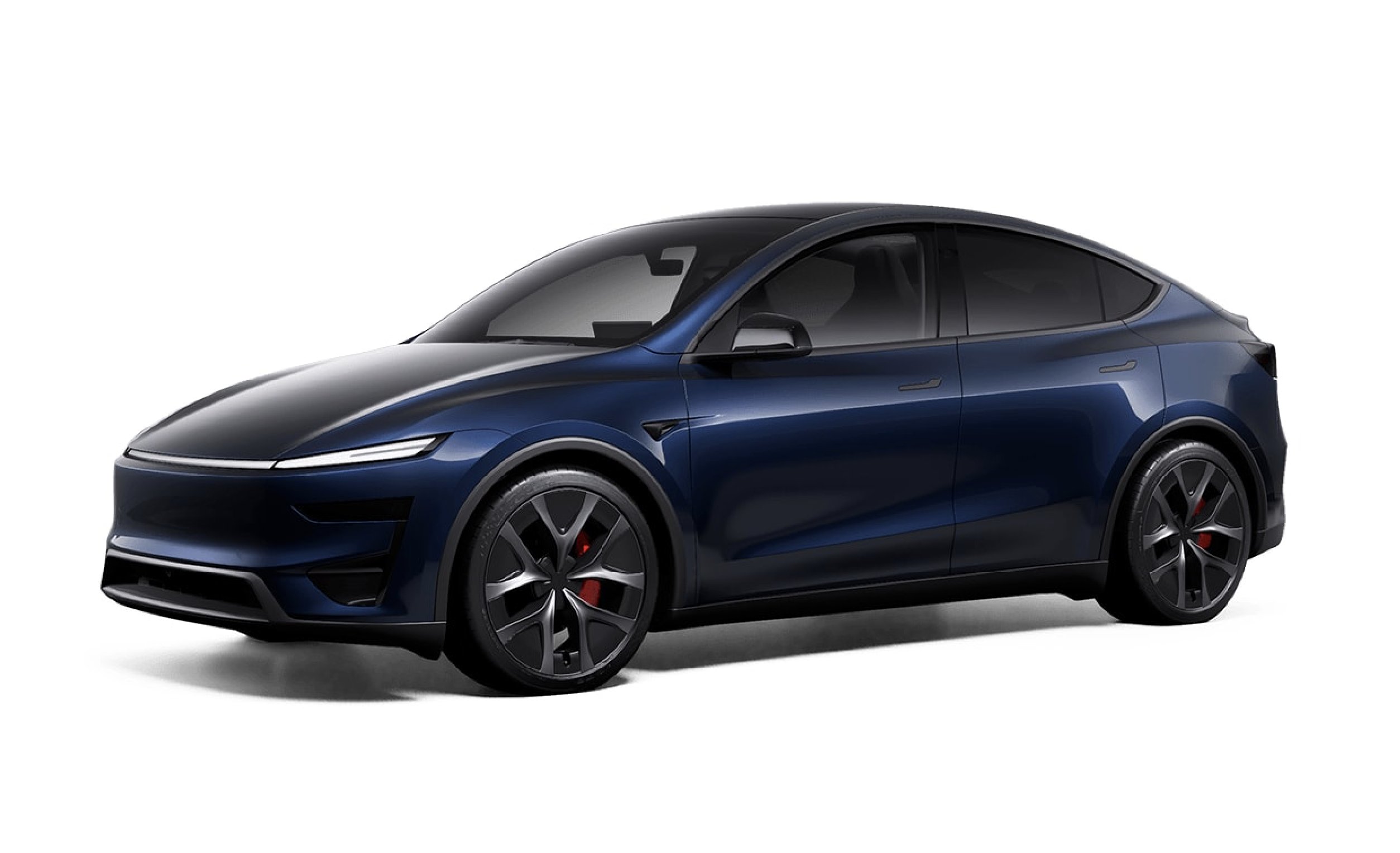
The European electric vehicle (EV) market, once a stronghold for Tesla’s dominance, has in 2025 shown signs of deepening turbulence. Sluggish demand, intensifying competition from Chinese and European automakers, and an aging product lineup have weighed heavily on Tesla’s European sales. In response, Tesla has taken an aggressive step: introducing a pared-down “Standard” variant of its best-selling Model Y in select European markets. This lower-cost model strips back non-essential features and reduces complexity to bring the price down and reignite consumer interest.
This development is significant on several fronts. For European customers, it may reshape expectations about what features are essential versus optional. For U.S. and global observers, it represents a tactical pivot in Tesla’s pricing strategy under pressure. For the brand narrative, it raises questions about whether Tesla can maintain its premium image while chasing affordability.
In this article, we dissect the European EV environment, analyze the features and trade-offs of the Standard Model Y, explore the market reception and strategic challenges, and provide guidance for potential buyers. We conclude with a forward-looking assessment of what this move could mean for Tesla’s future in Europe and beyond.
Chapter 1: Europe EV Landscape & Tesla Decline
1.1 Tesla’s European Sales Decline: Data & Trends
In the first half of 2025, Tesla has endured a prolonged sales slump across Europe. In many major markets—Germany, France, the UK, and Italy—EV registrations of Tesla cars have shrunk month after month. In May 2025, Tesla’s market share in Europe dropped to 1.2 %, down from 1.8 % a year earlier.
Simultaneously, broader EV adoption across Europe continues to grow, with Chinese entrants and European incumbents launching new models in rapid succession. Many buyers have shifted their attention to more affordable or better-equipped alternatives. (Reuters, June 2025)
In July 2025, Tesla’s European sales plunged about 40 % year-over-year, while the global EV market continued expanding. (The Guardian)
These patterns suggest that Tesla’s decline in Europe is less about a weak EV market overall, and more about Tesla specifically losing relevance in a more competitive and cost-sensitive environment.
1.2 Competitive Pressure: European and Chinese Rivals
Tesla no longer competes only with legacy automakers converting to EVs; Chinese brands such as BYD, NIO, and Xpeng are expanding aggressively into Europe. In April 2025, BYD overtook Tesla in EU battery-EV retail registrations—a watershed moment. (Reuters)
European automakers, too, are ramping up EV investments. Volkswagen, Mercedes-Benz, BMW, and Stellantis are introducing more affordable, modular EVs tailored to European consumers with established service networks, local incentives, and design tuned to regional preferences.
These rivals often undercut Tesla on price or match its features with more local support and brand familiarity. Tesla’s relatively static model lineup and its premium positioning have made it vulnerable to margin-strategy attacks.
1.3 Price Sensitivity and Consumer Behavior in Europe
European EV buyers tend to be more price-conscious compared to the U.S. Some key behavioral traits:
-
Regional incentives, tax rebates, and subsidies heavily influence purchase decisions.
-
Many buyers prioritize total cost of ownership (TCO): charging cost, maintenance, resale value.
-
Feature expectations differ: interior finishes, infotainment, climate control, comfort features may carry more weight.
-
Used EVs and leasing options are more prominent in Europe, creating strong downward pressure on pricing.
Because Tesla has historically positioned itself as premium and relatively feature-rich, customers at the lower end of the price spectrum may see overinvesting in optional features. A simpler, more price-accessible Model Y variant could appeal to that segment.
Chapter 2: What Tesla’s “Standard” Model Y Offers — Specs & Trade-Offs
2.1 Pricing and Markets
Tesla has launched the Standard version in several European countries, including Norway, Germany, Sweden, and Spain. (Reuters) In Norway, pricing is approximately $41,714; in Germany and Sweden, prices are higher to reflect local taxes, fees, and import duties.
In Spain, the Standard Model Y is introduced with a price tag of €39,990, targeting buyers seeking a more affordable entry into the Tesla ecosystem.
Notably, Tesla is not offering the Standard variant in right-hand drive markets such as the UK and Ireland for now, likely due to engineering and homologation complexity.
These pricing moves are designed to compete more directly with lower-cost EVs in Europe and combat declining demand.
2.2 Feature Reductions and Simplifications
To reduce cost, Tesla has made deliberate cuts to the Standard variant’s features. Some of the known trade-offs:
-
Reduced interior lighting / ambient lighting: fewer decorative LEDs and accent features.
-
Simplified audio system: fewer speakers, possibly downgrading from premium audio packages.
-
No standard Autosteer (lane-center assist): buyers may have to pay separately or forgo.
-
Lower spec upholstery: textile seats rather than premium synthetic or leather-like materials.
-
Simplified infotainment or fewer multimedia enhancements: fewer high-end materials and cosmetic trims.
-
Other cosmetic or non-critical deletions (e.g. less elaborate trim, fewer options for wheels, options removed to simplify SKUs).
These reductions aim to retain core driving functionality (battery, motor, structural integrity, safety systems) while trimming non-essential luxury or convenience extras.
2.3 Performance, Range & Charging
Tesla has not publicly confirmed all technical specs of the Standard variant, but informed speculation and early listings offer clues:
-
The Standard variant is likely to use the same battery chemistry and cell architecture as other Model Y variants, constrained by weight and software limits.
-
Range is estimated to fall somewhat relative to higher-spec versions due to omitted features and possibly smaller battery packs or conservative tuning. In some markets, the Standard Model Y is expected to offer up to 534 km (WLTP) range under ideal conditions.
-
Acceleration figures may be more conservative due to lower power output or software-limited torque.
-
Charging compatibility (Supercharger, CCS) is expected to remain intact. Tesla’s charging infrastructure is a competitive advantage that should carry over.
-
Thermal management, battery cooling, and safety systems are likely preserved to maintain Tesla’s core standards.
Given that the underlying chassis and structural design remain shared, the performance and reliability of core systems are unlikely to differ dramatically—if Tesla maintains stringent quality control.
2.4 Differentiation from Premium / U.S. Variants
Compared to premium or performance Model Y variants, the Standard model will have:
-
Lower performance and range ceilings
-
Fewer comfort / convenience features
-
Potential restrictions on software features (Autosteer, driver assist)
-
Less luxury trim and cosmetic touches
Compared to U.S. versions, there may be regional differences: Europeans expect WLTP range labeling, more stringent safety regulations, and different tax structures. Tesla may also delay or omit some features in Europe to reduce homologation complexity.
Chapter 3: Market Reception & Challenges
3.1 Early Media and Buyer Feedback
Reception has been mixed. On one hand, many analysts commend Tesla for acknowledging the demand drop in Europe and adjusting strategy. On the other hand, some critiques focus on the cuts: Is Tesla cutting too much? Are buyers already expecting features such as ambient lighting, premium audio, and driver-assist to be standard at this price point?
The pricing floor—e.g. €39,990 in Spain—is viewed by some as still too high for a “budget” Tesla, especially given emerging EVs from competitors that undercut it further. Some potential customers may balk at paying for upgrades to bring it up to parity with older Tesla premium versions.
Tesla’s decision not to offer the Standard variant in right-hand drive markets (UK, Ireland) has drawn criticism from British buyers eager for lower-cost options.
3.2 Risk of Cannibalization & Brand Dilution
One concern is that existing Tesla owners (especially those who bought higher-trim variants) may perceive this as a move that diminishes their purchase’s exclusivity. If too many buyers gravitate toward the cheaper model, the brand’s premium image could weaken.
Furthermore, if buyers expect many cuts by default, Tesla may need to justify optional feature pricing, possibly leading to friction over “feature paywalls.”
3.3 Production, Supply Chain, and Delivery Constraints
Introducing a new variant is not trivial. Tesla must retool production lines, manage parts complexity, and ensure quality parity. Supply chain constraints (semiconductors, raw materials) may limit the pace of rollout.
Delivery estimates in many European countries show that the low-cost variant is not yet visibly appearing in sales data—Tesla websites in Germany, UK, France, and Italy list future delivery windows. (Reuters)
Additionally, Tesla has offered financial incentives—such as reduced financing rates or interest-free loans—in several European markets to boost uptake.
Thus, the initial deliveries may lag demand, leading to a mismatch between consumer interest and product availability.
3.4 Comparison with Competitive EVs
The Standard Model Y must compete directly with EVs from BYD, MG, Hyundai, Kia, Volkswagen, and others. Many of those models already offer strong spec-to-price ratios, local service networks, and tailored European offerings.
If Tesla’s simplified variant is still more expensive or under-specced relative to rivals, adoption may be modest. Buyers may prefer a slightly lower-cost vehicle with full feature sets rather than a base Tesla stripped of conveniences.
Chapter 4: Strategic Risks & Opportunities
4.1 Risk: Dilution of Premium Positioning
Tesla’s brand is built on high-tech innovation, software-driven features, and a reputation for performance and aspirational ownership. Introducing a low-cost variant risks blurring the premium message.
If too many buyers opt for base models, Tesla may face pressure in future to retain margins or manage expectations for price promotions across the board.
4.2 Risk: Compressed Margins & Profit Trade-offs
Lowering the barrier to entry inevitably compresses margins. Tesla must balance volume gains with profitability. In Europe, with high import taxes, tariffs, and regulatory compliance costs, small margin changes can swing outcomes.
If the Standard variant cannibalizes higher-margin units, the net profitability may not improve.
4.3 Opportunity: Market Re-engagement & Volume Resurgence
If successful, the Standard variant could reignite demand among buyers who waited for Tesla to become “affordable.” It can capture consumers who might otherwise go with Chinese or European EVs. The move could also raise Tesla’s volume and utilization, helping amortize fixed costs.
For Tesla, planting a foot at the lower end of the market provides strategic flexibility to build broader brand loyalty, upsell features, and seed future upgrade paths (software, battery, performance).
4.4 Global Implications & Future Strategy
If the Standard Model Y succeeds in Europe, Tesla could replicate the approach in other regions (e.g. Asia, Latin America). The move also bridges the gap toward Tesla’s long-discussed low-cost EV ambitions (e.g. $25K models).
It signals that Tesla may be willing to reorient its strategy—less emphasis on maximizing premium margin per unit, more emphasis on broadening market reach.
Chapter 5: Buyer Guide & Recommendations for European / U.S. Buyers
5.1 Should You Buy the Standard Model Y in Europe?
If you’re in a market where the Standard variant is available, consider:
-
Whether the omitted features (lighting, audio, Autosteer) are essential for your daily use
-
Your total cost of ownership (TCO), factoring in the lower purchase price, service, charging, and resale
-
The likelihood of optional upgrades or add-ons later
-
Comparison with rival EVs in the same price bracket
If your primary goal is to access the Tesla ecosystem (Supercharger network, OTA software, Tesla service), the trade-offs may be acceptable.
5.2 If You Are in the U.S.—Will This Come Here?
Though the Standard variant is currently Europe-specific, Tesla has in other regions (like the U.S.) offered lower-spec versions when appropriate. It’s possible Tesla may introduce a “budget” variant in North America in the future, especially if European results validate the approach.
However, U.S. buyers should watch for differences in safety regulations, homologation, feature expectations, and market dynamics. Tesla may choose to launch a variant only when the business case is strong.
5.3 Feature vs Price Trade-off Checklist
When evaluating the Standard variant, consider:
-
Which features are cut—are they critical to your driving comfort?
-
Will lack of Autosteer / driver-assist reduce safety or convenience?
-
How much will upgrading (if possible) later cost?
-
Will resale or trade-in value suffer?
-
Does the vehicle retain the same battery, motor, cooling, and structural integrity as premium versions?
Balancing those truths will help you decide whether the Standard is “good enough” or too compromised.
5.4 Resale, Upgrades, and Longevity
-
Which features are locked out permanently? If Tesla disallows upgrade to Autosteer or premium audio, the base model may lag in perceived value.
-
Will resale demand favor higher-spec Tesla variants, further discounting base models?
-
Over time, as newer models roll out, how will a stripped-down Tesla fare in a used-EV market?
If you anticipate holding the car for long, investing in a more capable trim initially may reduce future regret.
Conclusion
Tesla’s introduction of the Standard Model Y in Europe marks a bold strategic gambit. Facing steep declines in European demand and mounting competition, Tesla is lowering the threshold for entry while retaining its core strengths—battery, charging infrastructure, brand, and software.
The move is not without risks. Tesla must walk a narrow path between volume and identity, between cost-cutting and customer satisfaction, between short-term rebound and long-term brand health. Success hinges on striking the right balance: how much feature to cut without alienating buyers, how aggressive pricing must be to sway decisions, and how expediently deliveries can scale to meet interest.
For European buyers, the Standard Model Y offers meaningful access to Tesla’s ecosystem at a lower cost, albeit with compromises. For U.S. and global observers, it is a signal that Tesla is adapting—testing whether premium margins must yield to broader market relevance.
If Tesla can engineer a profitable, dependable, and appreciated lower-cost variant in Europe, it may lay the groundwork for future expansion into more cost-sensitive markets. Conversely, if the approach dilutes the brand or proves margin-inefficient, it could become a costly experiment.
For prospective buyers and owners, the Standard Model Y is worthwhile to examine—but only after carefully assessing feature trade-offs, resale dynamics, and whether it meets your long-term usage expectations.