
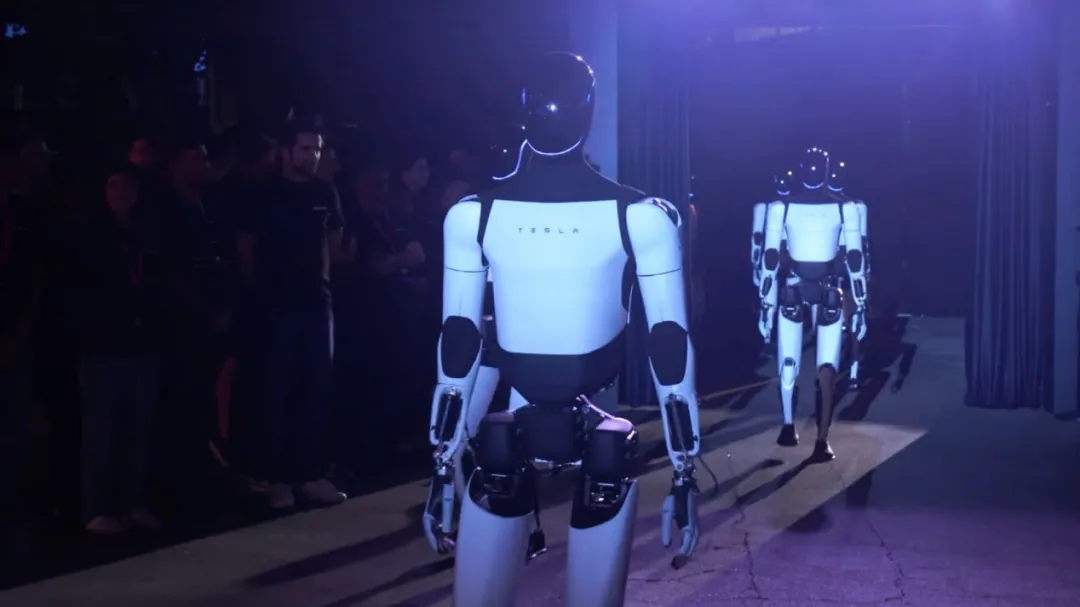
Elon Musk envisions Tesla not just as an automaker, but as a leader in artificial intelligence (AI) and robotics. This strategic direction was underscored at Tesla’s 2025 shareholder meeting, where investors approved Musk’s record-setting pay package — a vote that essentially greenlights his roadmap for the company’s future. Musk’s pitch to shareholders was bold: Tesla aims to produce self-driving robotaxis (Cybercabs), humanoid robots (Optimus), and AI chips to power them. In this context, Tesla’s recent developments in autonomous vehicle prototypes and robotics are generating considerable interest. This article explores Tesla’s progress in these areas and what they mean for the company and its customers.
The Cybercab Robotaxi
-
Evolution and Design: Last year, Tesla revealed the “Cybercab,” a purpose-built, two-seat autonomous vehicle with no steering wheel or pedals – essentially a rolling tech demonstrator for a future self-driving taxi. Early prototypes (shown at Tesla’s 2024 “We, Robot” event) featured large panoramic windows and minimal interior controls. Recent updates have refined the design: the Cybercab now has frameless windows akin to the Model 3/Y, ambient interior lighting, and a simplified dashboard layout. These tweaks suggest a move toward manufacturability.
-
Asia-Pacific Debut: In October 2025, Tesla announced that it will showcase the Cybercab at the China International Import Expo in Shanghai (Nov 5–10). This marks the first time the Cybercab will be seen outside the U.S. Tesla’s VP Tao Lin revealed the plan via Chinese social media. It’s a significant promotional step – although Tesla has not yet said if it will allow any actual rides at the expo. The timing is strategic: while Tesla’s competition in China (Baidu, Pony AI, AutoX) is already testing robotaxis, Tesla is signaling it’s entering the Asian market with its latest tech.
-
Production Plans: According to The Driven (an EV news outlet), Tesla plans to start pilot production of the Cybercab in April 2026. Pilot production lines are reportedly already set up at the Austin, Texas factory, with engineers working to scale for mass production (initial volume targets are rumored around 1 million robotaxis in 2 years). This matches Musk’s statement at the shareholder meeting: Cybercab production to begin Q2 2026 in Austin. Scaling from zero is ambitious, but Tesla aims to begin using these vehicles in its fledgling robotaxi network in the U.S.
-
Operational Rollout: Tesla already operates a limited ride-hailing service in parts of California and Texas using modified Model Y cars with Tesla’s Full Self-Driving (FSD) software (as a Level 2 system supervised by humans). Musk has said the plan is to expand this to five new cities by late 2025 (Dallas, Houston, Las Vegas, Phoenix, Miami). The Cybercab is intended to take over that role by around 2026. Under the hood, the Cybercab is said to use less than half the parts of a Model 3, which Tesla claims will reduce manufacturing cost significantly. A media report even suggests Tesla expects its first 8-stall Supercharger station to be dedicated to Cybercabs.
Key Point: The Cybercab’s debut and production timeline show Tesla is seriously pursuing robotaxis as a cornerstone of its strategy. Owners may not drive one themselves (it’s a pure fleet vehicle), but this effort reflects how Tesla plans to leverage its self-driving software in a network revenue model.
The Optimus Humanoid Robot
-
Background: Tesla’s Optimus robot, first shown in 2021, is a humanoid machine intended for factory or household work. Musk has often touted it as a transformative product for humanity. At the 2025 meeting, Musk reiterated that Optimus (and robots like it) are central to Tesla’s long-term vision, even claiming that eventually “80% of Tesla’s value will come from Optimus bots”.
-
Recent Progress: Throughout 2025, Tesla quietly continued development. There haven’t been large public unveilings, but hints suggest new prototypes. Speculation among analysts: The next major Optimus version (v3) could debut in early 2026 (Tesla has teased the third-generation prototype), with production ramp-up by 2027. The concept is that Optimus uses the same AI computing stack as Tesla’s cars (cameras, neural nets), simply adapted for a humanoid form.
-
Applications and Challenges: In theory, Optimus could automate repetitive tasks in factories (even Tesla’s own Gigafactories) or provide on-demand labor at home. Musk has made grand claims (robotic surgery assistants, etc. at some point), but skeptics note that humanoid robots are still at an early R&D stage. For now, the challenge is making Optimus walk and move reliably for long periods. Tesla’s investors are watching closely – the bots will likely need to prove usefulness before adding real value to revenue.
Key Point: Optimus is emblematic of Musk’s broader mission: use AI to automate “boring, dangerous tasks.” It remains a mostly aspirational project, but every new prototype is a data point toward potential mass production.
AI Integration: Chips and Software
-
AI Chips: Tesla isn’t just building products; it’s building the infrastructure to support them. At the meeting, Musk stressed the need for advanced AI chips and even mentioned building a “gigantic chip fab” (possibly with partners like Intel) to fuel Tesla’s AI ambitions. The idea: Tesla’s vehicle fleet (and robots) will collect massive data to train better neural nets, so having in-house silicon for machine learning could reduce costs and enhance capability.
-
xAI Partnership: Notably, shareholders also approved an investment in Musk’s separate AI company AI. While Tesla and xAI are distinct, there’s likely synergies in talent and research. Tesla will use xAI’s large language models to improve its own software, and possibly integrate those capabilities into car/robot interfaces.
-
Software-Defined Vehicles: Tesla emphasizes that future cars will gain major new features via over-the-air software updates. Investors are betting that AI-enabled features (like voice agents, better autonomy, robotcontrol) can dramatically differentiate Teslas. This was part of the rationale behind the pay package approval. Shareholders were essentially asked: do you trust Musk to lead this AI/robotics transformation, despite high cost?
Key Point: Tesla’s pivot to AI extends beyond hardware. The company aims to be a leader in machine learning platforms, using its real-world data and supercharger network as assets. For owners, this suggests Tesla will keep pushing software upgrades (full self-driving, in-car AI assistants) while monetizing data in new ways.
Impact on Tesla’s Future
-
Business Model Shift: If successful, Tesla’s role could evolve from selling cars to operating mobility services. The Cybercab robotaxis are intended to generate ongoing revenue (ride fees) rather than one-time sales. Tesla even predicts this will help it reach 3 million vehicles sold or served annually in the next few years (up from ~1.6M in 2024). For investors, a profitable robotaxi network would justify high valuation multiples.
-
Investor Sentiment: Markets reacted cautiously positive to the pay package news. Analysts noted that while the $1T figure sounds enormous, only ~$878B is realistically achievable, tied to milestones (like 1.2M annual cars). The stock stayed high, reflecting excitement that Tesla is playing offense with AI, even as car sales limp. A common view: Musk laid out “a whole new book” for Tesla, and shareholders are giving him leeway to write it.
-
Risks and Criticism: Many experts warn that this strategy could distract Tesla from its core. Building a self-driving robotaxi, chip fabs, and humanoid robots all at once is extraordinarily challenging. Each project is capital intensive. If the robotaxi is delayed (due to regulatory or technical hurdles) or Optimus fails to prove profitable, Tesla’s growth could stall. Furthermore, regulators in multiple countries are closely watching autonomous vehicles, and hurdles abound.
-
Comparisons: Tesla’s competitors have also hinted at similar visions (GM’s Cruise autonomous cars, BMW/Intel’s automated driving), but few have matched Musk’s scale of ambition (or promised timelines). This could either cement Tesla’s lead if successful, or make its goals appear unrealistic if not met.
Conclusion
Tesla’s foray into robotics and AI is an aggressive bet on the company’s next era. The Cybercab robotaxi represents a tangible step – it’s rolling out globally (from Austin to Shanghai) and aims for production in 2026. The Optimus robot remains a longer-term promise. For Tesla owners, these developments might feel distant (after all, current cars on the road are still Model Ys and 3s). However, they explain the sense that Tesla is “not just a car company” anymore. If Tesla pulls off even part of its vision – a self-driving fleet that rolls out without human drivers – it could reshape mobility. For now, Musk’s strategy is to keep shareholders and the public focused on this horizon, even as short-term sales face obstacles.
FAQ
Q: What exactly is Tesla’s Cybercab?
A: The Cybercab is Tesla’s autonomous robotaxi prototype. It’s a two-seater electric vehicle with no steering wheel, designed for self-driving only. It was unveiled in 2024 and Tesla plans to start producing it in 2026. Initially, it will operate in Tesla’s robotaxi network instead of personally-owned cars.
Q: When will Tesla’s self-driving robotaxis be available to the public?
A: Tesla has been testing a limited Robotaxi service (by invitation) in Texas with human monitors. They hope to expand more widely in 2026 with the new Cybercab. Timelines depend on regulatory approval and software readiness. Musk told shareholders to expect Cybercab production by early 2026.
Q: How far along is the Tesla Optimus robot?
A: Tesla has shown multiple Optimus prototypes (the latest in 2022) and says a new version will debut soon. As of late 2025, Optimus is still in R&D stage. Musk’s bold claims about its future value (80% of Tesla’s worth) indicate Tesla is serious, but mass-production timelines (likely mid- to late-2020s) remain speculative.
Q: Will these projects affect my existing Tesla car?
A: They reflect Tesla’s broader software strategy. Most directly, they could mean more funding for Tesla’s AI software stack, which might bring improved driver-assist and voice features to your car. They don’t change the current user experience immediately, but underscore why Tesla continues investing heavily in updates rather than just new models.