
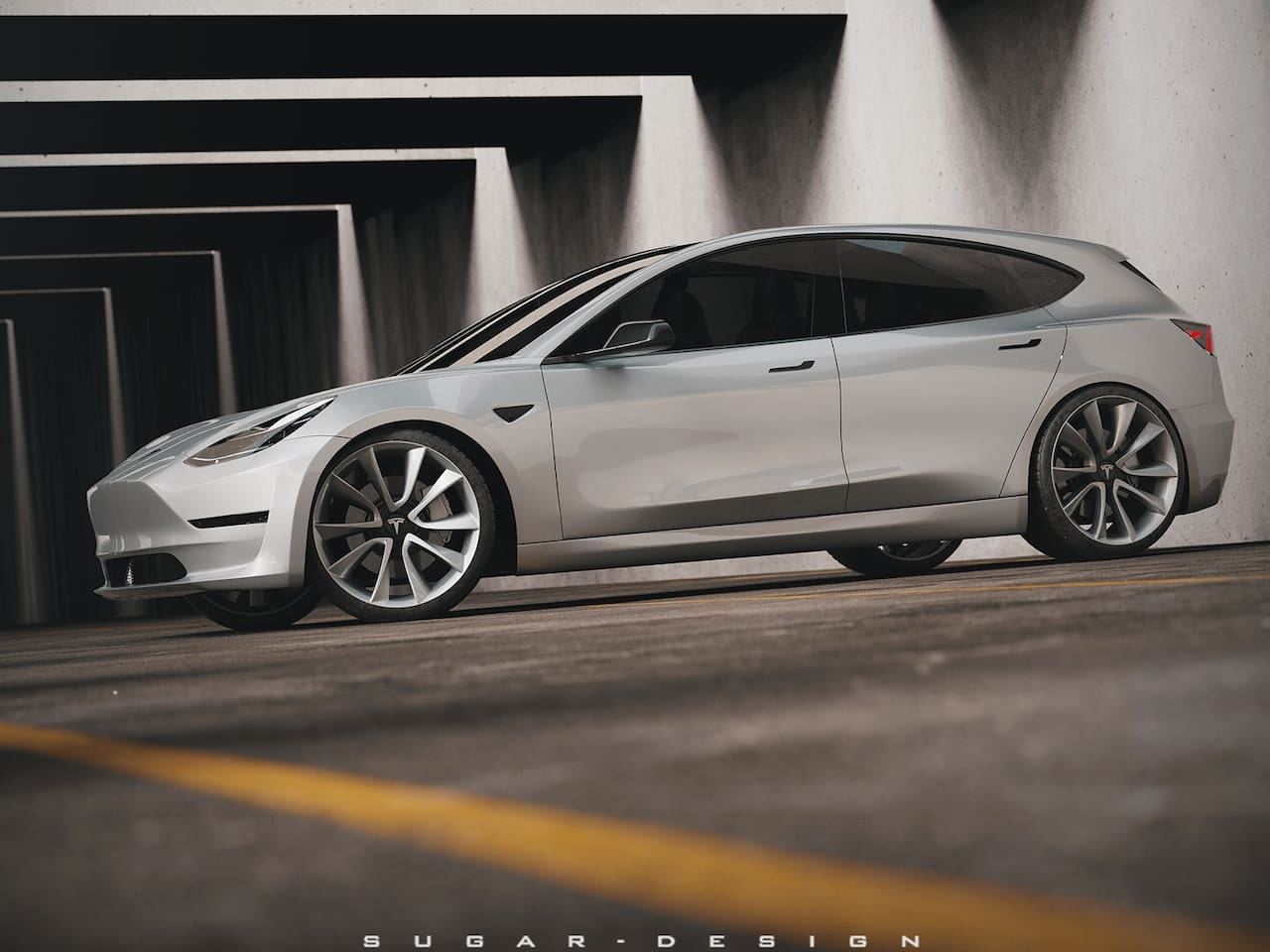
For what feels like an eternity in the fast-moving EV space, the automotive world has been buzzing with whispers, rumors, and feverish anticipation for Tesla's most ambitious project yet: a truly affordable, mass-market electric car. Referred to colloquially for years as the "Model 2," this vehicle has represented the holy grail for the company—the final key to unlocking the mainstream market and fulfilling its mission to accelerate the world's transition to sustainable energy. After countless investor day presentations, cryptic tweets, and speculative renders, the wait is over. The new entry-level Tesla is no longer a rumor; it is a reality.
With its official unveiling, a torrent of hype and excitement has, predictably, flooded the internet. But for a potential buyer in the US or a curious city-dweller in Europe, the important questions go beyond the initial spectacle. Is this new vehicle simply a smaller, cheaper Model 3, or is it something fundamentally different? How has Tesla managed to break the $30,000 price barrier without fatally compromising on the features, performance, and technology that define its brand?
This article aims to cut through the noise. We will provide a sober, critical analysis of Tesla's new volume-seller. We'll begin by exploring the revolutionary manufacturing process that makes its price point possible. We'll then dive deep into its design, features, and interior philosophy before situating it within the fiercely competitive global market. This is the definitive guide for anyone asking the crucial questions: What is this car, really? Who is it for? And how is it about to change everything?
Chapter 1: The "Unboxed" Revolution: A New Way to Build a Car
To understand the new entry-level Tesla, you must first understand that it is not just a new product, but the result of a radical new process. The secret to its affordability lies not in using cheaper materials, but in completely rethinking the century-old automotive assembly line. Tesla calls this new methodology the "unboxed" manufacturing process, and it's arguably more revolutionary than the car itself.
Deconstructing the Manufacturing Process
The traditional assembly line, pioneered by Henry Ford, is a linear process. A car's frame starts at one end, and as it moves down the line, thousands of parts are progressively added until a complete vehicle rolls off the other end. This process is incredibly complex, requiring a vast factory footprint and intricate choreography of humans and robots working in and around the vehicle's frame.
The "unboxed" method throws this linear concept away. Instead of building the car from the ground up in one long sequence, it is built in major, parallel sub-assemblies. Imagine different teams working simultaneously and in open space on separate, large-scale components:
-
The Floor Assembly: The battery pack and floor pan are constructed as one unit.
-
The Front Module: The front casting, suspension, steering rack, and motors are assembled.
-
The Rear Module: The rear casting, suspension, and motors are put together.
-
The Left and Right Sides: The doors are fitted to the side body panels completely independently.
-
The Interior: Seats, dashboard, and consoles are pre-assembled into a single cassette.
Only at the very final stage are these large, complete "boxes" brought together for final assembly. Workers are no longer climbing into a partially built car to install a wiring harness; they are assembling components on open, accessible platforms.
The Impact on Cost
This process is the lynchpin of the car's affordability. The benefits are staggering. Tesla estimates that the "unboxed" method reduces the total factory footprint by over 40% and cuts the hours of labor required per vehicle by a significant margin. It allows for a level of parallel processing and automation that is impossible on a traditional line. Fewer steps, less movement, and denser factory space mean a dramatic reduction in capital expenditure and operational costs. These savings are passed directly on to the consumer in the form of a lower sticker price. This isn't just about shaving off a few dollars; it's a fundamental cost-down enabled by first-principles engineering.
The Impact on Quality and Design
Beyond cost, this new process has profound implications for build quality. One of the persistent criticisms of early Teslas was inconsistent panel gaps. The "unboxed" method offers a potential solution. When doors are fitted to the side panels in a dedicated, optimized jig before ever meeting the car's main frame, the precision and consistency can be far higher.
However, this method also presents design constraints. The car's very architecture must be conceived around this modular assembly. The sharp, angular lines and simple surfaces of the vehicle are not just an aesthetic choice; they are a functional requirement of this manufacturing process. The design and the manufacturing method are inextricably linked, each enabling the other.
A Glimpse of the Gigafactory Future
It is crucial to understand that this process, first implemented at Gigafactory Texas and Berlin for this new model, is the blueprint for all future Tesla vehicles. Tesla is not just learning how to build a cheaper car; they are learning how to build all cars more efficiently. The innovations pioneered for this entry-level model will eventually inform the production of the next-generation Model Y, Model 3, and beyond. This isn't just a new car; it's the dawn of a new industrial paradigm for Tesla.
Chapter 2: Design, Features, and a New Interior Philosophy
With a revolutionary manufacturing process as its foundation, the new entry-level Tesla presents a design and feature set that is ruthlessly focused on efficiency, cost-effectiveness, and the core Tesla experience.
Exterior Design Analysis
-
Form Factor: The new vehicle lands squarely in the compact crossover/hatchback segment. It's visibly shorter and narrower than a Model 3, with a higher roofline and a more upright stance, maximizing interior volume on a small footprint. This makes it perfectly suited for tight European city streets and crowded US urban parking. Its form is a direct competitor to the likes of the Volkswagen ID.3 and the Hyundai Kona Electric.
-
Aero-Efficiency: The design language is an evolution of Tesla's minimalist aesthetic. The front end is low and clean, lacking a traditional grille. The body surfaces are smooth, and the door handles are flush. Every line has been optimized in a digital wind tunnel to reduce drag, a critical factor in maximizing range from a smaller, more affordable battery pack. The result is a drag coefficient that is exceptionally low for a vehicle of its class.
-
Cybertruck Influence: While not made of stainless steel, there are subtle nods to the Cybertruck's utilitarian ethos. The lower cladding and some trim pieces use a tough, unpainted polymer, designed to resist scratches and scuffs from city driving. This pragmatic choice adds a touch of ruggedness and further reduces production and repair costs.
Interior and User Experience: The Pursuit of Radical Minimalism
If the Model 3's interior was considered minimalist, the new entry-level model takes it to an entirely new level.
-
Radical Minimalism: The single central touchscreen remains the cabin's focal point, but it's a slightly smaller, 13-inch unit. The iconic single-vent air conditioning strip across the dash is present, but the overall architecture is simpler. There is no traditional instrument cluster, a signature Tesla move. The goal is clear: remove every single component that is not absolutely essential.
-
The Question of the Stalks: Following the precedent set by the new Model S/X and the updated "Highland" Model 3, the new car is completely stalkless. Turn signals are activated by buttons on the left side of the steering wheel, while wipers and high beams are on the right. Shifting between Drive, Reverse, and Park is done via a slider on the edge of the touchscreen. For new owners, this will be a significant learning curve. For existing Tesla owners, it’s a familiar, if still debated, interface. It is a cost-saving measure, removing two entire mechanical components from the steering column, but it is also a bold statement about the future of the human-machine interface.
-
Material Quality and Practicality: The materials are a smart mix of durable and sustainable. The seats are upholstered in a hard-wearing, vegan textile. Surfaces are clean and easy to wipe down. It doesn't feel "cheap," but it does feel utilitarian and purposeful. Clever packaging provides surprising interior space for its exterior dimensions, with a flat floor and ample headroom. The hatchback design provides a large cargo opening and flexible storage, a key selling point for this segment.
Core Technology: The Tesla DNA
Despite its price, the car is a Tesla through and through when it comes to its core technology.
-
Battery and Range: The standard model utilizes a Lithium Iron Phosphate (LFP) battery pack, a chemistry known for its long cycle life and thermal stability, at a lower cost than nickel-based cells. The estimated WLTP range is around 450 kilometers (approx. 280 miles), with the US EPA estimate likely landing closer to 260 miles. This is the sweet spot for a mass-market EV, providing more than enough range for daily commuting and easily accommodating long-distance travel via the Supercharger network.
-
Performance: While not a "Plaid" model, performance is still a key feature. The single-motor, rear-wheel-drive configuration is expected to deliver a 0-60 mph time of around 6.5 seconds (0-100 km/h in a similar timeframe). This is significantly quicker than almost any gasoline-powered competitor in its price bracket, delivering the instant, silent torque that is a hallmark of the EV driving experience.
Chapter 3: Market Positioning: Price, Competitors, and Target Audience
This car is not being launched into a vacuum. It is a calculated and aggressive move into the most competitive segment of the automotive market. Its success hinges on a delicate balance of price, performance, and positioning.
The All-Important Price
-
US Pricing and Incentives: The headline-grabbing starting price is targeted at $25,000 before any incentives. With the current US federal EV tax credit, eligible buyers could see that price drop well below $20,000, placing it in direct competition with the most basic gasoline-powered economy cars. This is the disruptive potential of the vehicle: making the total cost of ownership for a new Tesla lower than that of a Toyota Corolla or Honda Civic.
-
European Pricing and Taxes: In Europe, the price will be higher due to Value Added Tax (VAT) and potential import duties. The target starting price is expected to be around €28,000-€30,000, varying by country. While higher than the US price, this still places it in an incredibly competitive position against the likes of the VW ID.3, Renault Megane E-Tech, and the rapidly growing field of Chinese imports.
Competitive Landscape
-
US Market: In the United States, this new Tesla will be a wrecking ball aimed at the established affordable EV segment. It directly targets the Chevrolet Bolt EV and Nissan Leaf, offering a more modern software experience, superior performance, and, most importantly, seamless access to the Supercharger network. It effectively renders most other affordable EV options obsolete for buyers who value a cohesive ecosystem.
-
European Market: In Europe, the fight is even more intense. The Volkswagen ID.3, Peugeot e-208, and Renault Megane E-Tech are formidable competitors. Tesla's new model will challenge them on price while flexing its key advantages: superior software, over-the-air updates, and the unmatched reliability of its charging network.
-
The Chinese Threat: Perhaps the most important strategic role of this car is as Tesla's primary weapon against the onslaught of affordable, high-quality EVs from Chinese manufacturers like BYD, MG, and Nio. Brands like BYD have already found great success in Europe with cars like the Dolphin and Seal. Tesla's new model is a direct answer, a globally recognized brand name fighting on the same terms of price and value.
Who is this Car For?
The target audience for this vehicle is vast and diverse:
-
The First-Time EV Buyer: For millions of people, this will be the first electric car they can realistically afford.
-
The City Dweller: Its compact size and nimble handling make it ideal for navigating and parking in dense urban environments.
-
The Young Family: A safe, practical, and incredibly cheap-to-run vehicle for a family needing a second car.
-
The Tesla Loyalist: For existing owners of a Model S or Y, this is the perfect, efficient commuter car or a vehicle for their teenage children, keeping them within the familiar Tesla ecosystem.
Conclusion
Tesla's new entry-level model is far more than just a new car on the road. It is the culmination of a decade of innovation in battery technology, software engineering, and, most critically, manufacturing. The "unboxed" production method is a genuine industrial revolution, and this car is its first-born child. Its minimalist design, stalkless interior, and aggressive price point are all deliberate, calculated decisions aimed at one single goal: mass adoption.
This vehicle is the manifestation of Tesla's core mission. It is not a compromised, "cheap" Tesla; it is a revolutionary product designed to bring the benefits of electric mobility—the thrilling performance, the low running costs, the cutting-edge technology—to the masses. It democratizes the electric car, shifting it from a premium aspiration to an attainable, logical choice for millions.
For the potential buyer, the value proposition is almost unbeatable. For a price that rivals basic gasoline cars, you get a vehicle that is faster, cheaper to run, and part of the world's most advanced automotive ecosystem. The hype, for once, might just be justified. This isn't just Tesla's "Model 2"; this is the car that will define the next chapter of the automotive industry.
FAQ Section
-
When will deliveries of the new entry-level model begin in the US and Europe? Initial deliveries are slated to begin in the US in the second half of 2025, starting with customers near Gigafactory Texas. European deliveries are expected to follow in early 2026, with the first vehicles being produced at Gigafactory Berlin.
-
Will the new model have access to the full Supercharger network? Yes, absolutely. Access to the global Supercharger network is a core feature of every Tesla. The vehicle will charge at V3 and V4 Superchargers at high speeds, making long-distance travel seamless.
-
Will Autopilot be standard? What about FSD Capability? Standard Autopilot, which includes traffic-aware cruise control and autosteer, will be a standard feature. Enhanced Autopilot and Full Self-Driving (FSD) Capability will be available as optional software upgrades, either as a one-time purchase or a monthly subscription.
-
What are the expected color and wheel options at launch? To streamline production and keep costs down, the initial launch will likely be limited to a few core colors (e.g., white, black, grey) and a standard aerodynamic wheel cover design. More options may become available later.
-
How does the new "unboxed" manufacturing process affect repairability? This is a key question. The large, single-piece castings and modular assembly could make some collision repairs more complex, potentially requiring replacement of entire modules. However, for minor repairs, the simplified design may make access easier. Tesla is expected to streamline its service and repair processes in tandem with this new manufacturing method.
-
Is this new model a better buy than a used Model 3? This depends on your priorities. A used Model 3 may offer more space, a slightly more premium interior, and faster performance for a similar price. However, the new entry-level model will come with a full warranty, the latest battery technology (LFP), and the most up-to-date hardware and software. For buyers prioritizing maximum value and longevity, the new model is likely the smarter purchase.