
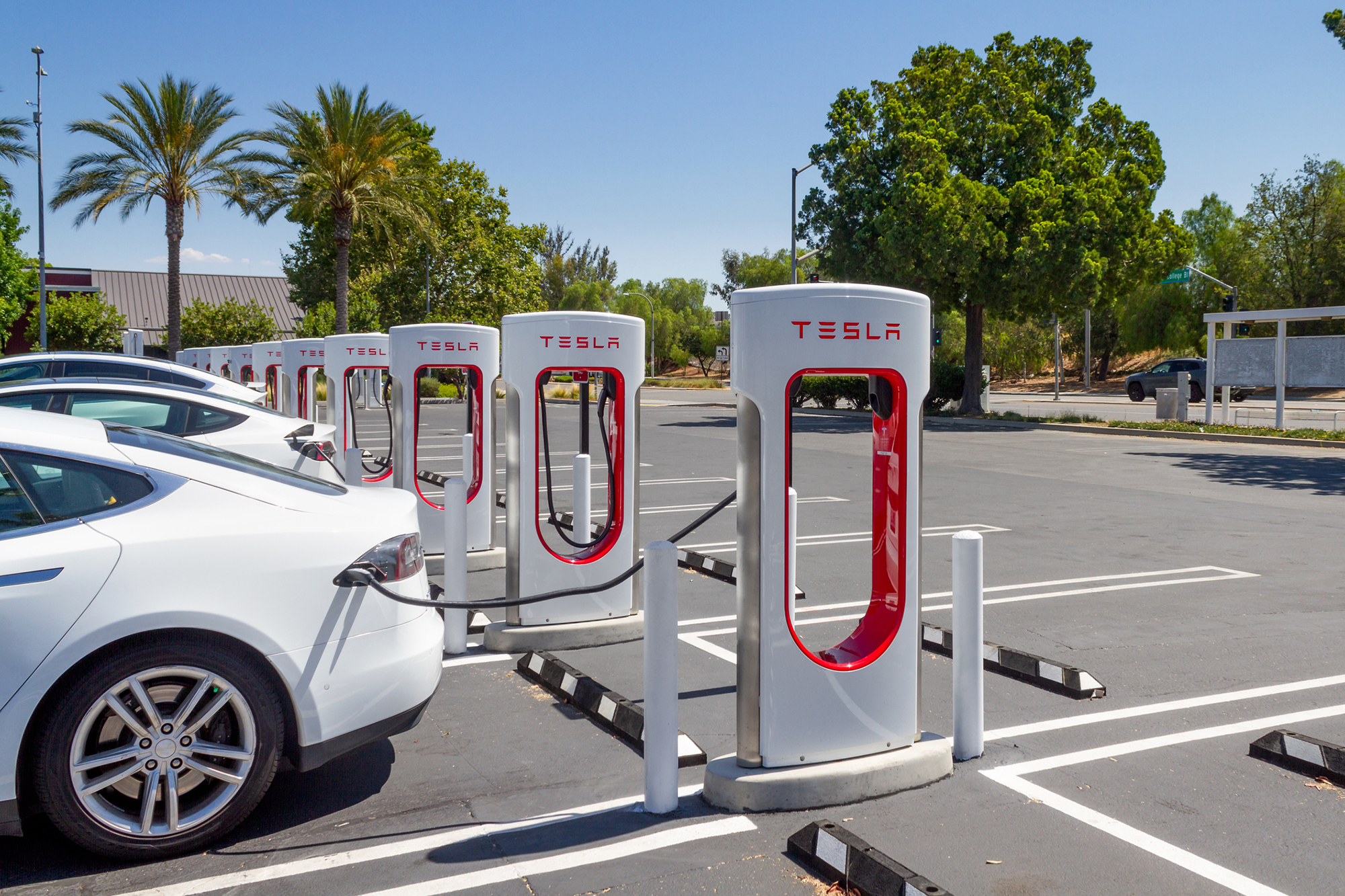
Just over a year ago, the electric vehicle charging landscape in North America was a fractured, frustrating place. It was a classic format war, a modern-day VHS vs. Betamax fought with volts and plugs instead of magnetic tape. On one side was the industry-backed, somewhat clunky Combined Charging System (CCS1). On the other was Tesla’s elegant, proprietary connector. Today, in a stunning turn of events that sent shockwaves through the automotive world, that war is effectively over. Tesla’s plug, now rebranded as the North American Charging Standard (NACS), has won.
The capitulation was swift and decisive. It began with Ford, then General Motors, followed by a cascade of automakers including Rivian, Volvo, Polestar, Mercedes-Benz, and more, all announcing they would abandon CCS1 and adopt the NACS port in their future North American vehicles. This article will analyze how and why this rapid consolidation happened, explore what this new reality means for every EV owner on the continent, and, most critically, examine how this American revolution is profoundly influencing the very different charging landscape across the Atlantic in Europe.
The triumph of NACS in North America was a victory not just for a superior plug design, but for a philosophy of superior user experience. And while Europe's legally mandated physical plug (CCS2) is secure, the NACS revolution has fundamentally raised the global bar for what consumers should expect, forcing European networks into a new era of competition where reliability and simplicity are paramount.
Part 1: The North American Story: How the Charging Tide Turned
To appreciate the speed of the NACS victory, one must understand the landscape it conquered. For years, the North American EV market outside of Tesla was built around the CCS1 standard. It was the chosen plug of legacy automakers and government-backed infrastructure projects.
A Tale of Two Plugs
The physical difference between the connectors was stark. Tesla's NACS plug is small, lightweight, and handles both AC and DC charging through the same sleek port. The CCS1 plug, by contrast, is a bulky, two-part affair, with the upper portion for AC charging and two large pins below for DC fast charging. It was a design by committee, and it showed. But the physical form factor, while a point of preference, was never the real battleground. The war was won on the battlefield of user experience.
The Supercharger Moat
Tesla's true "moat"—its defensible, competitive advantage—was never just the car or the plug; it was the Supercharger network. From the beginning, Tesla understood that owning an EV would be untenable without a reliable, fast, and ubiquitous charging network. While other automakers focused on selling cars and outsourced the charging problem to a messy patchwork of third-party providers, Tesla built its own vertically integrated solution.
This resulted in a network that was not only vast in size and strategically placed along major travel corridors but, most importantly, unparalleled in its reliability. For a Tesla owner, pulling up to a Supercharger was a predictable, stress-free event. The navigation system would show which stalls were available in real-time and even precondition the battery for faster charging upon arrival. The uptime of the stalls was, and remains, industry-leading. For owners of other EVs, using the CCS1 network was often a gamble. Chargers were frequently out of order, de-rated to slower speeds, or located in poorly lit corners of parking lots. The phrase "it just works" became the defining characteristic of the Supercharger experience, a stark contrast to the uncertainty of the alternative.
The Payment Problem
The final nail in the CCS1 coffin was the payment process. Tesla perfected seamless authentication decades ahead of the competition. A Tesla owner simply plugs in the connector. The charger communicates with the car, identifies the driver's account, initiates the session, and automatically bills the credit card on file. That's it.
The CCS1 experience was a catalogue of frustrations. A driver might need half a dozen different apps on their phone for various network providers (Electrify America, EVgo, ChargePoint, etc.). Many chargers required tapping an RFID card. Others had unreliable credit card readers that would fail in the rain or heat. This friction, this moment of uncertainty every time you needed to charge, was a massive barrier to EV adoption for the mainstream buyer.
The Domino Effect
Ford's announcement in May 2023 that it would adopt NACS was the shot heard 'round the industry. Ford, a giant of legacy auto, had essentially conceded that providing its customers with the best possible charging experience was more important than fealty to an inferior standard. They recognized that access to the Supercharger network was a powerful selling point they could no longer afford to be without.
This single act of pragmatism shattered the fragile alliance behind CCS1. General Motors, not wanting to be left at a competitive disadvantage, followed suit just weeks later. The dam had broken. In the months that followed, the floodgates opened. Rivian, a key EV startup, joined the NACS alliance. Then came the European luxury brands for their North American models: Volvo, Polestar, and Mercedes-Benz. The logic was inescapable. No automaker could justify telling its customers they were intentionally providing them with access to a smaller, less reliable charging network. The competitive necessity of joining the NACS standard became absolute.
Part 2: The New Reality for Owners in the US & Canada
This seismic shift is creating a new and unified reality for all EV drivers in North America, though the transition will have different implications for different groups.
For Tesla Owners
The immediate and most voiced concern for existing Tesla owners is network congestion. For years, they have enjoyed exclusive access to a pristine, reliable network. Now, they must share it. Will their favorite Supercharger station suddenly be filled with Ford F-150 Lightnings, Chevy Bolts, and Rivian R1Ts?
It's a valid worry, and one Tesla is actively working to mitigate. Firstly, the company is engaged in an unprecedented network expansion, aiming to add tens of thousands of new stalls to keep pace with demand from both its own fleet and its new partners. Secondly, Tesla can control the flow through pricing. It is expected that charging rates for non-Tesla vehicles may be higher, and congestion fees for idling at a charger will be strictly enforced. Finally, and most technically important, Tesla will require partner automakers to fully integrate their vehicles' communication protocols. This ensures the "plug and charge" simplicity is maintained and allows for the smart, data-rich management of the entire network, something that was impossible with the fragmented CCS1 system.
For Non-Tesla Owners (The Newcomers)
For owners of current Ford, GM, or Rivian EVs, the transition has already begun. The manufacturers are providing their customers with high-quality CCS1 to NACS adapters, granting them access to a large portion of Tesla's V3 and V4 Supercharger network via the Tesla app. This has instantly added over 15,000 reliable fast chargers to their list of options, a game-changer for road trips.
Starting with their 2025 model year vehicles, these brands will begin shipping cars with the NACS port integrated directly from the factory, eliminating the need for an adapter and making the charging experience even more streamlined. For a prospective EV buyer in North America, one of the biggest points of anxiety—charging—has been massively reduced, regardless of which brand they choose.
The Role of the "Magic Dock"
As a bridging technology, Tesla had already begun deploying its ingenious "Magic Dock" at some Supercharger locations even before the NACS deals were announced. A Magic Dock is a standard Supercharger stall that houses an integrated CCS1 adapter. A Tesla driver pulls up and plugs in as normal. A non-Tesla driver uses the Tesla app to select the stall, which then unlocks the integrated adapter for them to plug into their CCS1 port. This clever solution allows Tesla to open up its network to everyone, acting as a universal translator and a physical bridge between the old standard and the new.
Part 3: The European Equation: A Completely Different Continent
While the NACS revolution has redrawn the map in North America, it is crucial for European owners to understand that their situation is fundamentally different. The idea of NACS replacing the established European standard is a non-starter.
CCS2 is King
In Europe, there is no format war to be won because the winner was declared years ago by law. The European Union, through its Alternative Fuels Infrastructure Regulation (AFIR), has legally mandated that all new publicly accessible DC fast charging stations must be equipped with the Combined Charging System Type 2 (CCS2) connector. This regulation applies across all 27 member states and has been adopted by other non-EU countries like the UK. The standard is set in stone, enshrined in federal law.
The Strengths of CCS2
It's also important to note that the CCS2 standard is, in some technical respects, a very robust and well-thought-out plug. Its key advantage over both NACS and CCS1 is its native support for high-power, three-phase AC charging. In Europe, three-phase power is common in residential and commercial buildings, allowing for much faster home and destination AC charging (up to 22kW) than the single-phase systems typical in North America. The CCS2 plug elegantly integrates this capability.
Why a NACS Takeover is a Non-Starter
The commercial and political will to change is non-existent. European automotive giants like the Volkswagen Group, BMW, and Mercedes-Benz have not only designed their entire EV portfolios around CCS2 but have also collectively invested billions of euros in building out the CCS2-based Ionity fast-charging network. For them to pivot to NACS would mean writing off immense investment, rendering millions of existing EVs incompatible with new infrastructure, and going against a unified EU directive. It simply will not happen. The European car is, and will remain, a CCS2 car.
Part 4: NACS's True Influence on Europe: It's About the Experience, Not the Plug
While the physical NACS plug will not be crossing the Atlantic, its philosophical influence is already creating massive waves. The shock of the NACS revolution was not about the shape of the plastic; it was a global wake-up call that the quality of the charging experience is a primary driver of customer satisfaction.
The New Battleground: The User Experience
The real lesson from North America is that a charging network must be judged on its holistic performance: reliability, ease of use, transparent pricing, and seamless software integration. The expectation has been set. European drivers, seeing the simplicity their American counterparts will now enjoy, will no longer tolerate the frustrations of the current multi-provider patchwork. The "good enough" standard of a charger that works most of the time is no longer good enough.
Pressure on European Networks
This puts immense pressure on the major European charging networks. Companies like Ionity, Fastned, Allego, and Gridserve now face a new benchmark. They are in a race to match the Supercharger experience. This means aggressively investing in the reliability and uptime of their hardware. It means perfecting their software, ensuring their mobile apps are flawless, and, most importantly, accelerating the rollout and adoption of the Plug&Charge (ISO 15118) protocol for all brands. Plug&Charge is the official CCS standard for the automatic authentication that Tesla has had for a decade, but its implementation across different car and charger brands has been slow and inconsistent. The NACS revolution has lit a fire under the industry to get it right, and fast.
Tesla's European Strategy
Tesla is capitalizing on this situation with a brilliant strategic pivot in Europe. For some time now, they have been running a pilot program, steadily opening up their European Supercharger network to non-Tesla EVs. Since all European Teslas and Superchargers already use the CCS2 connector, this is a simpler proposition than in North America. A non-Tesla owner simply downloads the Tesla app, enters their payment information, and uses the app to initiate a charge at a participating Supercharger.
This move is a win-win for Tesla. It generates a new revenue stream from their existing infrastructure. It further solidifies the Supercharger network as the most reliable and extensive pan-European provider, a reputation that now benefits them even among drivers of competing cars. And strategically, it places even more pressure on other networks to improve, as Tesla becomes the gold-standard benchmark that all their customers will compare them to.
The Future is Interoperability
The ultimate goal for the European charging market is not to have a single plug type—they have already achieved that through regulation. The goal is to achieve true, seamless interoperability. A future where a Porsche Taycan, a Renault Megane E-Tech, and a Ford Mustang Mach-E can all pull up to an Ionity, Fastned, or Tesla station and have the exact same, flawless, "it just works" experience. The NACS revolution in America, by so clearly demonstrating the value of that experience, has made the quest for true interoperability in Europe more urgent than ever.
Conclusion
The story of the North American Charging Standard is a tale of two continents with one unifying lesson. In North America, a superior, vertically integrated user experience allowed a better plug design to achieve total market dominance in a stunningly short period. This victory has ended the format war, simplified the landscape for consumers, and accelerated EV adoption.
In Europe, where the plug standard is already settled by law, the revolution is more subtle but no less significant. The NACS victory was not about the piece of plastic; it was about the philosophy of reliability, simplicity, and trust that it represented. It has established a new global benchmark for the quality of the charging experience. The shockwaves from the American charging revolution are now forcing a race to the top in Europe, pushing all players to build a future where charging is not a point of anxiety, but an afterthought. That is the true legacy of the NACS revolution.
FAQ Section
-
Q1: I'm in the US with a CCS1 EV. What do I need to use a Supercharger?
-
A: To use a compatible Tesla Supercharger (V3 or V4), you will need a CCS1 to NACS adapter. Major automakers like Ford and GM are providing these adapters to their customers. You will also need to download the Tesla mobile app to locate NACS stations that are open to non-Teslas and to initiate and pay for your charging session.
-
-
Q2: Will Tesla's Superchargers in the US become overcrowded?
-
A: This is a significant concern that Tesla is addressing proactively. The company is in the midst of its most aggressive network expansion ever, adding thousands of new stalls. They are also deploying V4 Superchargers, which feature longer cables and a more central placement to better accommodate the charging port locations of all EV brands. Finally, pricing strategies and strict congestion fees for idle vehicles will help manage station turnover.
-
-
Q3: I live in Europe. Will I ever see a NACS plug here?
-
A: It is extremely unlikely that you will see NACS plugs for public charging in Europe. EU regulations, specifically the Alternative Fuels Infrastructure Regulation (AFIR), mandate the CCS2 connector on all new public DC fast chargers. The entire European automotive industry is built around the CCS2 standard.
-
-
Q4: What is "Plug&Charge" and how does it relate to the Tesla experience?
-
A: Plug&Charge is the public name for the ISO 15118 communication protocol. It is designed to allow any EV with a CCS port to have the same seamless experience as a Tesla: you plug in, and the car securely communicates your billing information to the charger automatically. The NACS revolution has put immense pressure on all automakers and charging networks in both North America and Europe to finally implement this technology reliably and universally.
-
-
Q5: Is charging a non-Tesla at a Supercharger more expensive?
-
A: Yes, in most cases. Tesla typically offers two pricing structures for non-Tesla drivers. There is a standard, pay-as-you-go rate per kilowatt-hour (kWh), which is generally higher than what Tesla owners pay. Alternatively, drivers can pay an optional monthly subscription fee (e.g., ~$13/€13) which then gives them access to the lower, members-only kWh rates, making it economical for those who plan to use the Supercharger network frequently.
-