
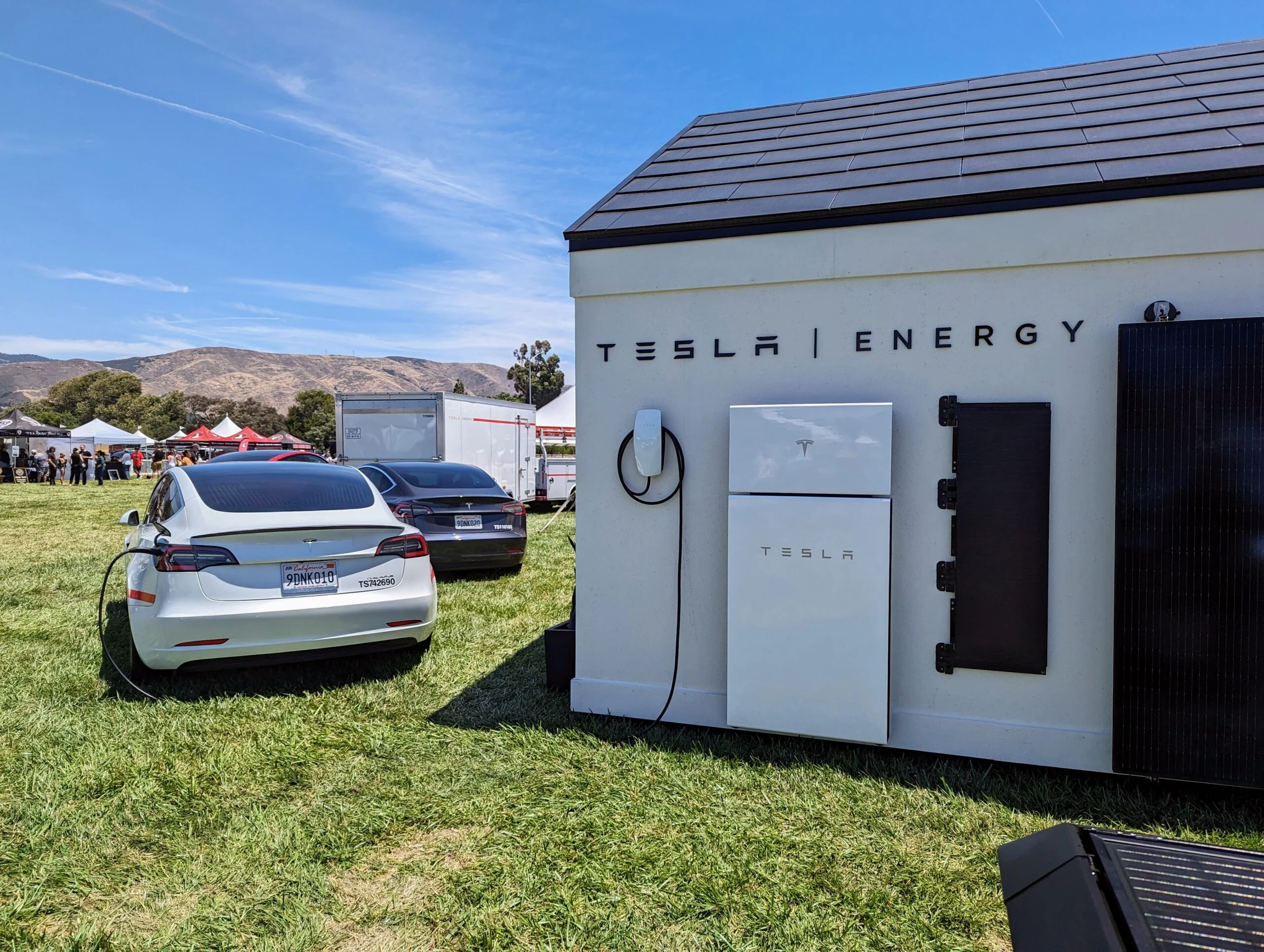
Imagine this scenario: a fierce summer thunderstorm rolls through your suburban neighborhood. The wind howls, lightning flashes, and then, the inevitable happens—the power goes out. Your neighbors' homes are plunged into darkness. But inside your house, the lights stay on. The air conditioning continues to hum, the refrigerator keeps your food cold, and your kids are still streaming a movie on the living room TV. You glance at the Tesla app on your phone. It shows your Solar Roof is no longer generating power due to the storm, but your Powerwall battery, which was fully charged with clean energy just a few hours ago, has seamlessly taken over, powering your entire home. The app also shows it's sending a slow, steady trickle of energy to your Model Y in the garage, ensuring you have a full "tank" for the morning. You are completely insulated from the grid failure, living in a quiet, powered island of self-sufficiency.
This is not a futuristic fantasy. For a rapidly growing number of homeowners in 2025, this is the reality of the Tesla ecosystem. While the company's revolutionary electric vehicles capture the majority of the headlines, it is Tesla's quietly expanding energy division that may be more critical to its long-term mission of accelerating the world's transition to sustainable energy. The ecosystem—a synergistic loop of solar generation, home battery storage, and electric vehicles—offers a powerful, integrated value proposition that competitors cannot match. It transforms customers from being simple car owners into empowered, energy-independent stakeholders, active participants in creating the decentralized, resilient energy grid of the future. This article will explore the advanced capabilities of the new Powerwall 3, examine the massive scale of Tesla's Megapack projects, and analyze the unique, synergistic benefits that create the ultimate "Tesla lifestyle."
Chapter 1: The Home Front: Powerwall 3 and the Self-Sufficient Household
The heart of the Tesla home ecosystem is the Powerwall. For years, the Powerwall 2 has been the benchmark for home battery storage. In 2025, the widespread availability of the new Powerwall 3 has once again moved the goalposts, making home energy independence more powerful, efficient, and accessible than ever before.
What's New with Powerwall 3?
On the surface, the Powerwall 3 looks similar to its predecessor—a sleek, white, wall-mounted box. But inside, it's a completely different beast. The most significant architectural change is the integration of a solar inverter directly into the Powerwall unit itself. In a traditional solar-plus-storage system, you would need solar panels, a separate solar inverter to convert the DC power from the panels to AC power for your home, and a battery. The Powerwall 3 combines the inverter and the battery into a single, elegant package.
This integration has several key benefits for the homeowner. First, it simplifies installation, reducing the amount of equipment needed on the wall and potentially lowering labor costs. Second, it improves efficiency. By converting energy fewer times, less power is lost in the process, meaning more of the sun's energy makes it from your roof to your car or appliances. Third, and most crucially, the Powerwall 3 boasts a significantly higher continuous power output than the Powerwall 2. This means it can start and run more of your large, power-hungry appliances simultaneously—think a central air conditioner, a well pump, and an electric stove all at once. This robust power delivery is what enables a true, no-compromise backup experience during a grid outage.
Vehicle-to-Home (V2H) and Vehicle-to-Grid (V2G) Reality
The holy grail of the EV ecosystem has long been bidirectional charging—the ability for the car's massive battery to power other things. With the latest generation of Tesla vehicles and the Powerwall 3, this is now a reality. Through software updates and the Tesla Wall Connector, the system can enable Vehicle-to-Home (V2H) functionality.
In a V2H setup, your Model Y or Cybertruck, with its 75kWh+ battery, becomes a secondary, mobile Powerwall. If you experience a prolonged, multi-day outage and your Powerwall's charge is depleted, you can configure the system to draw power from your car to keep your home's essential circuits running. This provides an unparalleled level of energy security.
Even more exciting is the rollout of Vehicle-to-Grid (V2G) capabilities through Tesla's Virtual Power Plant (VPP) programs. In areas with high solar penetration, like California, Texas, and parts of Australia, there are often times in the middle of the day when there is more solar energy being produced than the grid needs. In the evening, when the sun goes down and everyone comes home and turns on their appliances, demand skyrockets. Tesla's VPPs orchestrate thousands of Powerwalls and, now, vehicles, to help smooth out these peaks and valleys. Owners can enroll in these programs and allow Tesla to automatically discharge a small, pre-approved amount of energy from their Powerwall or vehicle back to the grid during peak demand events. In return, they receive a payment from the utility. This not only helps stabilize the grid and prevent the use of dirty "peaker" power plants, but it also creates a direct income stream for Tesla owners, turning their home and vehicle into active, revenue-generating assets.
The European Energy Crisis as a Catalyst
Nowhere has the value proposition of the Tesla home ecosystem been more apparent than in Europe. The geopolitical events of the past few years led to unprecedented volatility and soaring prices in the European natural gas and electricity markets. Homeowners in countries like Germany, Italy, and the United Kingdom saw their utility bills double or triple. This economic shock has acted as a massive catalyst for the adoption of solar and home battery storage.
For a European family, the financial calculation is simple and compelling. Installing a Tesla Solar Roof and Powerwall allows them to generate and store their own electricity at a fixed, predictable cost, insulating them from the wild swings of the wholesale energy market. The ability to "time-shift" their energy usage—storing cheap solar energy during the day and using it during expensive evening peak hours—can lead to payback periods for the system of as little as 5-7 years in some regions. This is not just an environmental choice; it is one of the soundest financial investments a European homeowner can make in 2025.
The Complete Package: Solar Roof and Tesla App Integration
What ties this entire experience together is the elegant simplicity of the Tesla app. The same app that serves as the key to your car is also your home's energy command center. With a few taps, you can see a real-time "Power Flow" diagram showing how much energy your solar panels are generating, where that energy is going (to the home, to the Powerwall, to the car, or to the grid), and how much power you are pulling from the grid. You can customize your Powerwall's behavior, choosing between "Self-Powered" mode to maximize your use of solar, or "Backup-Only" mode to save all its energy for an outage. This seamless, intuitive integration of all components is a powerful moat that standalone solar installers or competing car companies simply cannot replicate.
Chapter 2: The Utility Scale: Megapacks Stabilizing the Grid
While the Powerwall is transforming individual homes, its big brother, the Megapack, is transforming the entire energy grid. The Tesla Megapack is a utility-scale battery, a container-sized unit that can store over 3.9 MWh of energy, enough to power hundreds of homes for hours. Deployed in large arrays known as Battery Energy Storage Systems (BESS), Megapacks are the key to unlocking a renewable energy future.
Recent Landmark Projects (US & Europe)
In 2025, Megapack deployments are happening at a breathtaking pace. In Moss Landing, California, a massive expansion of the existing BESS facility is helping to stabilize the state's grid, absorbing excess solar power during the day and discharging it during the critical evening hours to prevent blackouts. In Texas, new Megapack projects are coming online near wind farms, capturing wind energy generated at night when demand is low and using it to meet peak demand the following afternoon.
This is not just a US phenomenon. In the United Kingdom, a large Megapack site near London is providing critical frequency response services to the National Grid, helping to keep the grid's voltage stable within milliseconds—a task previously performed by fossil fuel power plants. In Belgium, a new site is helping to integrate large offshore wind projects into the European grid. These are not small, experimental projects; they are massive infrastructure investments that are fundamentally changing the way our power grids operate.
Solving the Renewables Puzzle
The biggest challenge for renewable energy sources like wind and solar has always been their intermittency. The sun doesn't shine at night, and the wind doesn't always blow. Megapacks solve this puzzle. They act as a giant buffer, absorbing energy when it's abundant and cheap, and injecting it back into the grid when it's scarce and valuable. This ability to store and shift massive amounts of energy is what allows the grid to handle an ever-increasing percentage of renewable generation. With enough energy storage, you can effectively create a baseload, 24/7 power source from intermittent renewables, making the goal of a 100% renewable grid technologically achievable.
The Lathrop Megafactory and Production Ramp
Recognizing that battery supply was the main constraint to growth, Tesla built a dedicated Megafactory in Lathrop, California, with the sole purpose of mass-producing Megapacks. In 2025, this factory is running at full tilt, churning out gigawatt-hours of energy storage every quarter. This incredible production ramp has allowed Tesla to drive down the cost of utility-scale storage and meet the exploding global demand. The Lathrop Megafactory is doing for grid storage what the Fremont and Shanghai Gigafactories did for electric vehicles: it is enabling massive scale through manufacturing innovation.
How Megapacks Benefit Tesla Drivers Indirectly
There is a direct, if unseen, benefit of these utility-scale projects for every Tesla driver. A more stable, resilient grid powered by renewable energy means that the electricity you use to charge your car is cleaner. When you plug in your Model 3 at night in California, there is a growing chance that the power flowing into your battery was generated by the sun hours earlier and stored in a Megapack until you needed it. This macro-level ecosystem ensures that the "long tailpipe" argument against EVs—that they are only as clean as the grid that charges them—becomes weaker every single day. It helps fulfill the core mission of making every mile driven truly sustainable.
Chapter 3: The Synergistic Loop: Why the Ecosystem is the Ultimate Lock-In
The true genius of Tesla's strategy lies in how these individual components—the car, the Powerwall, the solar panels, the Megapacks—all work together in a synergistic, self-reinforcing loop. This ecosystem creates immense value and an incredibly "sticky" customer relationship.
Financial and Environmental Incentives
The financial incentives for adopting the full ecosystem are powerful. Government programs, like the US Inflation Reduction Act, provide significant tax credits for installing solar panels and home batteries. When you combine these credits with the daily savings from generating your own electricity, the money saved by not buying gasoline, and the potential income from VPP programs, the total cost of ownership for a Tesla-powered lifestyle becomes incredibly compelling. Environmentally conscious consumers are drawn to the ability to dramatically reduce their personal carbon footprint, while financially savvy consumers are drawn to the long-term savings and energy independence.
The Convenience Factor
Beyond the finances, there is the profound convenience of a single, integrated system. There is no need to deal with a separate solar installer, a different battery company, and a car dealership. There is one company, one point of contact, one app. The "it just works" philosophy that defines Tesla's products is a powerful selling point in a world of complex, incompatible technologies. This seamless integration removes friction and creates a user experience that is simply unmatched.
Data-Driven Energy Management
Tesla sits on a mountain of data from its global fleet of cars, Powerwalls, and solar installations. It uses this data to constantly optimize the entire ecosystem. It can predict home energy usage patterns to optimize Powerwall charging, it can analyze traffic and charging data to decide where to place the next Supercharger, and it can use weather forecasts to prepare its Virtual Power Plants for a coming heatwave. This AI-powered optimization, operating at a global scale, makes the entire ecosystem more efficient, more resilient, and more valuable for every participant.
From Customer to Prosumer
The most profound impact of the Tesla ecosystem is the way it changes the customer's relationship with energy. You are no longer just a passive consumer of electricity from a distant, faceless utility. You become a prosumer—an active producer, consumer, and manager of energy. You are a stakeholder in your own energy future. This sense of empowerment, control, and participation in a grander mission is the ultimate customer lock-in. Why would you ever buy a car from another brand when it means leaving this powerful, integrated, and empowering ecosystem behind?
Conclusion
Tesla is often misunderstood as simply a car company. But to see it that way is to miss the forest for the trees. The car is the Trojan horse. The true, long-term vision is the creation of a new kind of energy company, one that is decentralized, intelligent, and sustainable. The Tesla energy ecosystem, from the Solar Roof on your home to the Megapack stabilizing the grid, is the tangible manifestation of this vision.
The advancements in Powerwall 3 bring true energy independence within reach for millions. The massive deployment of Megapacks is actively solving the puzzle of renewable energy at a grid scale. And the seamless synergy between these components, all controlled by a simple app, creates a value proposition and a customer experience that is currently untouchable. Tesla is not just selling products; it is selling a future. A future where our homes and our transportation are powered by the sun, where the grid is resilient and clean, and where individuals are empowered to be part of the solution. This is the power of the ecosystem, and it is how Tesla is building the grid of the 21st century, one home and one car at a time.
FAQ Section
Can I get a Powerwall 3 if I already have a solar system from another company? Yes. While the Powerwall 3 is optimized for new installations with its integrated inverter, it can also be "AC-coupled" to work with existing solar systems from other manufacturers. This allows you to add Tesla's industry-leading battery storage and backup capabilities to your pre-existing solar array.
How many Powerwalls do I need to power my entire home? This depends on the size of your home, your energy consumption habits, and which appliances you want to run during an outage. A single Powerwall 3 can provide enough power for essential loads (lights, refrigerator, internet). Two or more Powerwalls can provide a "whole home backup," allowing you to run larger appliances like central air conditioning. A certified Tesla installer can perform a load calculation to determine the right size for your specific needs.
What is a Virtual Power Plant (VPP) and can I join one in my area? A Virtual Power Plant (VPP) is a network of distributed energy resources, like home Powerwalls, that are centrally controlled to provide services to the grid. By enrolling, you give Tesla permission to discharge a small amount of your battery's energy to help stabilize the grid during times of high demand, and you get paid for it. VPPs are currently available in select regions in the US (like California, Texas), Australia, and Europe. You can check for eligibility in your area through the Tesla app or website.
Does having a Powerwall speed up my Tesla vehicle charging? Not directly. The charging speed of your car is determined by your Wall Connector and your home's electrical panel capacity. However, a Powerwall can help you charge your car more cheaply and sustainably. For example, you can use a feature like "Charge on Solar" to ensure your car only charges when you have excess solar generation, or you can use the Powerwall's stored energy to charge the car at night, avoiding expensive peak utility rates.
Is the Tesla Energy ecosystem a good financial investment in 2025? For many homeowners, yes. The calculation depends on your local electricity rates, the amount of sun your home gets, and available government incentives. In regions with high electricity prices and good solar potential (like California, the US Northeast, Germany, Italy, and Australia), the combination of bill savings and incentives can lead to a payback period of well under 10 years, making it a strong financial investment that also provides energy security and a lower carbon footprint.