
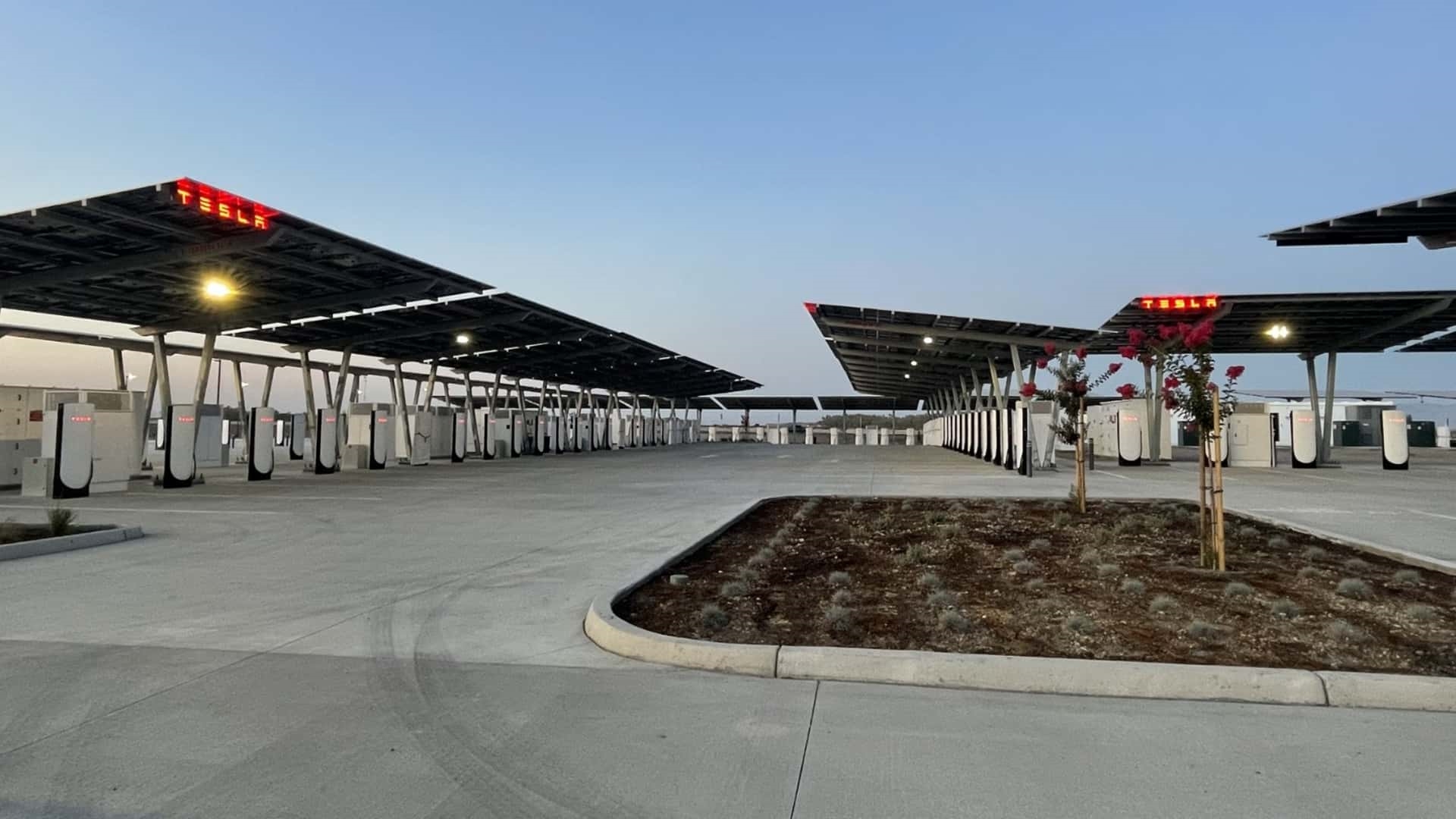
Tesla vision for sustainable charging takes a giant leap forward with the “Supercharger Oasis”—a self‑sufficient, amenity‑rich EV fueling destination powered chiefly by solar canopy arrays and onsite energy storage. Beyond raw charging speed, these Oases are designed as green energy landmarks, offering travelers lounge facilities, retail pop‑ups, rest areas, and community engagement zones. For Tesla owners and all EV drivers, Oases promise resilient off‑grid charging, reduced carbon footprints, and a hospitality experience more akin to an airport lounge than a rest stop. This article explores the Oasis concept in depth: its design and infrastructure, performance metrics, environmental and grid impacts, global expansion plans, and the transformational role it plays in the future of long‑distance EV travel.
Chapter I: Design & Infrastructure
1. Solar Canopy Architecture
-
Module Layout: Each Oasis site features a contiguous solar array canopy spanning up to 10,000 m², oriented for optimal sun exposure across seasons. Panels are bifacial to harvest reflected ground light.
-
Structural Elements: Canopies are built on T‑beam steel frames with integrated cable trays, LED lighting, and weather‑resistant finishes. Rainwater drains into onsite retention basins for landscaping irrigation.
-
Aesthetic Integration: Designed to blend with local environments—wood‑clad supports in forested locales, white‑washed steel in desert settings, and corrosion‑resistant finishes in coastal zones.
2. Energy‑Storage & Grid Interface
-
Battery Buffer Systems: Gigawatt‑hour‑scale lithium‑ion banks store excess midday solar for evening peak loads, smoothing demand on the local grid.
-
Bi‑Directional Inverter Technology: Permits vehicle‑to‑grid (V2G) services, supporting grid stabilization during utility peak events.
-
Grid Connection: Each Oasis ties into medium‑voltage distribution networks via dual transformers for redundancy. Microgrid controllers dynamically balance solar, battery, vehicle draw and grid import/export.
3. Customer Amenities & Services
-
Lounge Spaces: Climate‑controlled indoor lounges with workstations, charging tables, and panoramic views of charging stalls.
-
Retail & F&B Pop‑Ups: Rotating local food vendors, EV accessory shops, and community markets showcasing regional products.
-
Family & Wellness Areas: Children’s play zones, pet relief fields, yoga/meditation pods, and shaded picnic pavilions.
-
Connectivity & Info Kiosks: Free high‑speed Wi‑Fi, interactive digital displays with real‑time charging status, and local travel guides.
Chapter II: Performance & Capacity
1. Charging Stall Configuration
-
High‑Power Stalls: Up to 168 stalls per Oasis, each capable of 250 kW peak output (upgradable to 350 kW+ in future iterations).
-
Mixed‑Use Bays: Designated guest stalls for non‑Tesla vehicles, complete with CCS connectors and universal signage.
-
Dedicated VIP Pods: Enclosed “lounge‑plus‑stall” units for high‑end service subscriptions, offering weather‑protected charging and premium amenities.
2. Solar & Battery Output Metrics
-
Average Solar Yield: 8 MWh per day at summer solstice, tapering to 4 MWh in mid‑winter—meeting roughly 70–85 percent of daily charging demand on site.
-
Buffer Capacity: 5 MWh battery banks provide on‑site stored energy supporting 2–4 hours of peak charging when solar is insufficient.
-
Grid Draw Minimization: On average, Oases draw under 1 MW from the grid during peak EV sessions, thanks to solar‑battery smoothing.
3. Reliability & Resilience
-
Backup Generators: Tier‑1 diesel generators auto‑start if battery SOC drops below 20 percent during multi‑day low‑sun events.
-
Redundant Power Feeds: Dual feeder lines reduce downtime to under 0.1 percent annually.
-
Maintenance Protocols: Monthly thermal imaging of solar modules, quarterly battery health diagnostics, and automated firmware updates for inverter and stall controllers.
Chapter III: Environmental & Community Impact
1. Carbon‑Saving Analysis
-
CO₂ Reduction: Compared to conventional grid‑only charging, each Oasis prevents roughly 3,000 tonnes of CO₂ emissions per year.
-
Lifecycle Benefits: Solar panels carry a 25‑year warranty, offsetting their embodied carbon within the first 3–4 years of operation.
-
Local Air Quality: Onsite trees planted in retention basins increase local air filtration and shade, reducing heat‑island effects.
2. Community Engagement
-
Job Creation: Oases generate jobs in construction, facility management, concierge services, and retail.
-
Educational Outreach: On‑site kiosks offer solar‑energy workshops, EV technology demos, and STEM events for local schools.
-
Sustainability Partnerships: Collaborations with environmental NGOs for habitat restoration around sites and periodic community cleanup days.
3. Utility & Regulatory Collaboration
-
Demand‑Response Programs: Oases enroll in utility programs, reducing grid stress by modulating battery dispatch during peak rates.
-
Renewable Certificates: Solar generation earns local renewable energy certificates, contributing to regional clean‑energy targets.
-
Permitting & Zoning Innovation: Tesla pioneered “green permitting” agreements, streamlining approvals under sustainable development bylaws.
Chapter IV: Global Expansion Plans
1. U.S. Pilot Locations
-
California Central Valley: Interstate‑adjacent site offering corridor charging between Bay Area and Southern California.
-
Great Plains Outpost: Midway between Denver and Houston, leveraging high solar irradiance for maximum yield.
-
Northeast Hub: Solar+storage facility near Albany, integrating with state renewables targets and regional grid demands.
2. European Pilots & Site Selection
-
Southern Spain: Solar‑rich Andalusian location on Madrid–Seville corridor, with >300 sunny days per year.
-
French Riviera: Coastal site near Nice, blending EV tourism with regional solar incentives.
-
Alpine Pass: High‑altitude station near Mont Blanc tunnel, designed for winter resilience and avalanche‑proof canopy structures.
3. Roll‑Out Timeline
-
Late 2025: Commission 5 pilot Oases (3 in U.S., 2 in Europe).
-
2026–2027: Scale to 50 sites globally, focusing on major long‑distance corridors in North America, Europe, Australia, and China.
-
2028+: Expand to 200+ sites, targeting more remote regions and integrating wind and hydro‑powered microgrids where feasible.
4. Future Innovations
-
Second‑Life Battery Integration: Utilizing repurposed vehicle batteries for second‑use storage.
-
Smart Canopy Tech: Transparent solar glass, integrated rainwater harvesting, and modular expansion capabilities.
-
Hydrogen Fuel Cell Backup: Pilot partnerships to explore zero‑emission backup generation.
Conclusion
The Supercharger Oasis represents a bold synthesis of sustainable energy, hospitality design, and high‑performance charging infrastructure. By marrying large‑scale solar canopies, on‑site energy storage, and enriching traveler amenities, Tesla is redefining what it means to “fuel” an EV. Beyond CO₂ reductions and grid resilience, Oases serve as community hubs—educating, engaging, and creating economic opportunities. As Tesla scales from pilot sites to a global network, the Oasis blueprint will become a model for integrated renewable mobility, demonstrating how EV charging can be faster, greener, and more human‑centered than ever before.
FAQ
1. When will the first Supercharger Oasis open?
Late 2025, with pilot sites in California’s Central Valley and Spain’s Andalusian corridor.
2. Can users reserve charging stalls or lounge space?
Reservations will be available via the Tesla app for VIP pods; general lounge and stall use remains first‑come, first‑served.
3. What percentage of power comes from solar versus grid?
Approximately 70–85 percent from on‑site solar, with the remainder drawn from the grid during peak evening hours.
4. Are there usage fees for non‑Tesla EVs?
Yes—guest CCS EVs follow open‑access Supercharger rates, which are modestly higher than Tesla‑owner rates.
5. What amenities are included at an Oasis?
Climate‑controlled lounges, high‑speed Wi‑Fi, retail pop‑ups, family zones, pet areas, food and beverage vendors, and educational kiosks.