
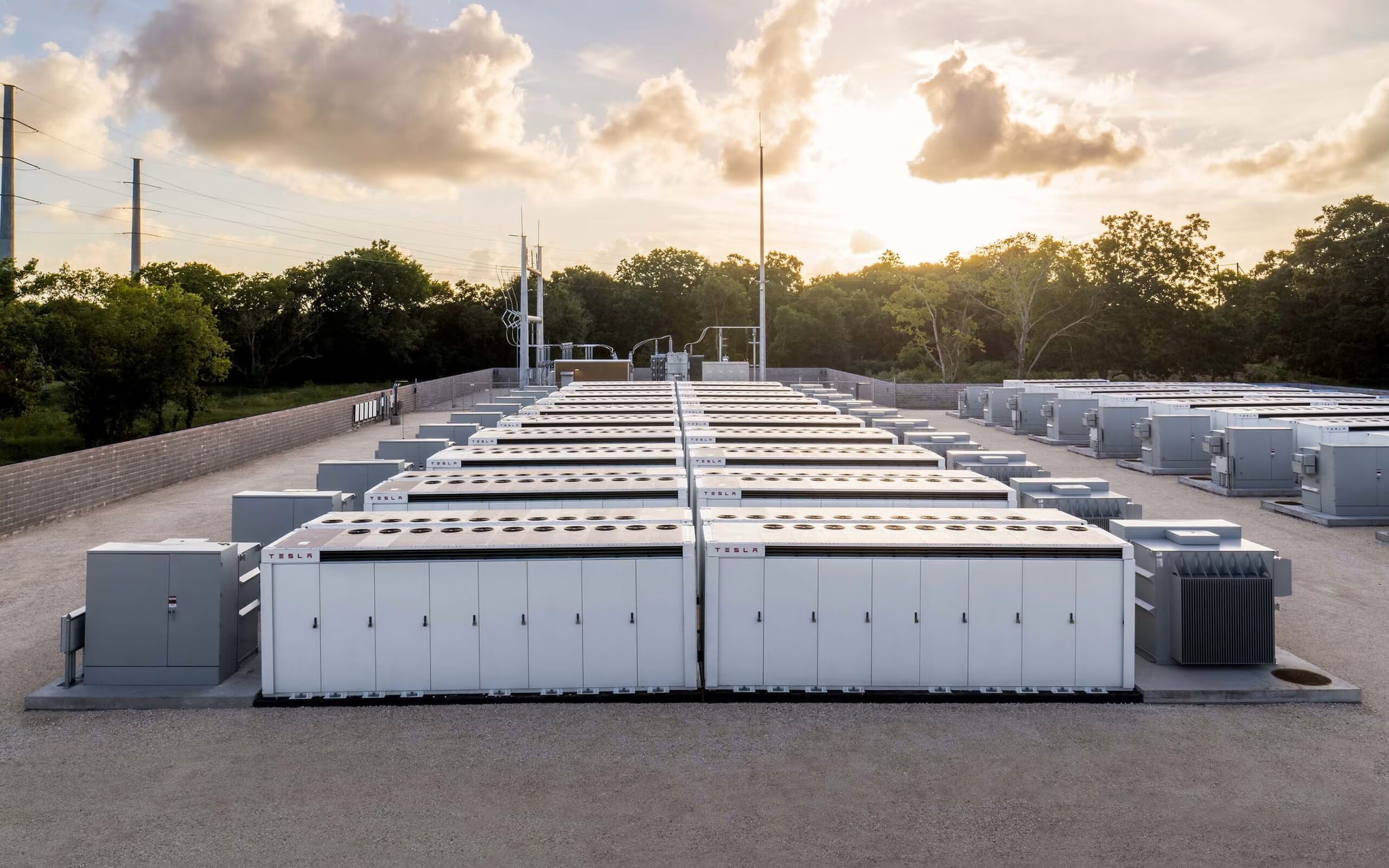
While Tesla is widely recognized for its electric vehicles, its energy generation and storage business is rapidly emerging as a significant and increasingly vital component of its overall strategy. This article explores the robust growth of Tesla's energy storage products, Megapack and Powerwall, in Q1 2025. It also delves into the "outsized impact" of trade tariffs on Tesla's lithium iron phosphate (LFP) battery sourcing from China and the company's strategic responses to build a more resilient supply chain, providing context within the broader US energy storage market.
Executive Summary: A Growing Pillar of Tesla's Business
Tesla's energy business is demonstrating remarkable growth, positioning itself as a crucial pillar of the company's strategy beyond just automotive manufacturing. Despite some challenges faced in other segments, its energy storage solutions, including utility-scale Megapacks and residential Powerwalls, are experiencing robust demand and deployment, underscoring their increasing importance to Tesla's financial health and its broader mission in sustainable energy.
Q1 2025 Energy Storage Performance: Record Deployments
Tesla's energy generation and storage business showcased impressive performance in Q1 2025. Revenues from this segment were up a substantial 67% compared to Q1 2024, reaching US1.635 billion. In terms of deployment, Tesla deployed 10.4 GWh of energy storage in Q1 2025, marking a significant 154% increase year-on-year from Q1 2024's 4.1 GWh. This Q1 deployment figure alone was equivalent to approximately one-third of the total 31 GWh Tesla deployed worldwide in the entire previous year. Furthermore, for the first time in a single quarter, Tesla deployed over a gigawatt-hour of residential Powerwalls. The company's utility-scale Megapack XL units are also arriving for large-scale battery energy storage system (BESS) projects, such as Stanwell's 1,200MWh BESS in Queensland, Australia.
This substantial growth in energy storage revenue and deployments clearly indicates that this segment is not merely a side project but a rapidly accelerating core business for Tesla. Deploying over 10 GWh in a single quarter signifies massive scale and market penetration, positioning it as a critical profit engine that can potentially offset volatility or slowdowns in the automotive sector. This diversification significantly enhances Tesla's overall financial resilience and validates Elon Musk's vision of Tesla as an integrated sustainable energy company, rather than solely an automotive manufacturer. For investors and the market, this strengthens Tesla's long-term outlook beyond just car sales. For consumers, it highlights the growing importance of home and grid-scale battery solutions, positioning Tesla as a leader in the broader energy transition.
The "Outsized Impact" of Trade Tariffs
Despite the impressive growth, Tesla's energy storage business faces a significant challenge from global trade tariffs. Tesla's CFO, Vaibhav Taneja, explicitly stated that the impact of tariffs would be "outsized" on the energy storage business because the company primarily sources lithium iron phosphate (LFP) battery cells from China. This reliance on a single, politically sensitive source for a critical component makes the energy storage segment uniquely vulnerable to trade disputes.
Tesla acknowledges in its Form 10-Q that while it continuously aims for a "strong domestic supply chain" for its electric vehicles and lithium-ion batteries, "certain parts and components are difficult or impossible to source within the United States". This situation reveals a significant geopolitical vulnerability. Unlike its automotive business, where some domestic sourcing exists, the energy storage segment's heavy dependence on China for LFP batteries makes it highly susceptible to trade disputes. This highlights the real-world consequences of global supply chain dependencies and the urgent need for diversification. This dependence implies potential cost increases for Tesla's energy products, which could either be passed on to consumers or significantly impact profit margins. It also underscores the strategic imperative for Tesla to localize its supply chain for energy products.
Strategic Responses to Supply Chain Risks
In response to the tariff-induced vulnerabilities and the broader need for supply chain resilience, Tesla is actively implementing several strategic initiatives. The company is in the process of commissioning equipment for local manufacturing of LFP battery cells in the US, although this domestic capacity can currently only service a fraction of its total installed capacity. Furthermore, Tesla is actively working on securing additional supply chains from non-China-based suppliers to diversify its sourcing. The newly opened Shanghai 'Megafactory' is expected to handle business outside the US, further decentralizing production and supply.
This active pursuit of "local manufacturing of LFP battery cells in the US" and securing "non-China-based suppliers" is a direct strategic response to the tariff-induced vulnerabilities. This shift towards localization, even if initially only for a "fraction" of capacity, represents a long-term strategic imperative to de-risk its supply chain and enhance resilience against geopolitical tensions. The broader industry trend towards regional self-sufficiency in battery production is also evident, with companies like LG Energy Solution and First Phosphate pushing the LFP supply chain in North America. For the US market, this could lead to more domestically sourced energy products, potentially qualifying for incentives and reducing exposure to international trade disputes. For Tesla, it is a costly but necessary investment to secure future growth in its energy business.
Broader US Energy Storage Market Context
The US energy storage market is experiencing robust growth, providing a favorable backdrop for Tesla's energy business. In Q1 2025, the American energy storage market added over 2 GW across all segments, marking the highest Q1 on record. The utility-scale segment, in particular, led the way with more than 1.5 GW of new capacity, representing a significant 57% increase compared to Q1 2024. Energy storage was the second most deployed resource in Q1 2025, demonstrating its unique ability to be quickly built to address critical reliability needs. States like Indiana have shown remarkable growth, quadrupling their operational storage capacity in Q1 2025 and having over 10 GW of new storage active in the interconnection queue, making it the fifth largest storage queue in the country.
Despite this strong growth and demand driven by surging energy needs, the US energy storage market faces a "potential 29% contraction in 2026" for the utility-scale segment and a potential 46% drop for distributed storage due to "policy uncertainty". This uncertainty specifically relates to potential changes to current tax credits, such as the Investment Tax Credit (ITC). This highlights that while fundamental demand for energy storage is robust, the market's trajectory is highly sensitive to government policy and incentives. The growth in states like Indiana shows regional diversification, but national policy remains critical. For Tesla's energy business in the US, this policy uncertainty poses a significant risk to its growth forecast, potentially impacting the profitability and deployment pace of Megapack and Powerwall products. It underscores the need for stable, supportive policies to realize the full potential of the energy storage market.
Conclusion: Resilience and Future Potential
Tesla's energy storage business presents a dual nature: robust growth driven by surging demand for grid stability and electrification, yet vulnerable to geopolitical and policy headwinds, particularly concerning LFP battery sourcing from China. The company's impressive deployment figures for Megapack and Powerwall demonstrate its significant market presence and potential as a key profit driver. However, the "outsized impact" of tariffs necessitates strategic responses, including local manufacturing and supply chain diversification. Despite policy uncertainties in the US market, Tesla's proactive efforts to build resilience position it as a critical player in the global energy transition, with substantial long-term potential to power grids and homes worldwide.
FAQ for Tesla Owners & Energy Enthusiasts
-
Q: How does Tesla's energy storage business benefit me as a Tesla owner? A: While not directly tied to your vehicle's performance, Tesla's energy storage business contributes to the company's overall financial health and mission for sustainable energy. This strengthens the brand and supports continued investment in the broader Tesla ecosystem, including vehicle technology and charging infrastructure.
-
Q: What are Megapacks and Powerwalls, and how do they work? A: Powerwalls are residential battery systems that store energy from solar panels or the grid, providing backup power during outages and optimizing energy consumption. Megapacks are utility-scale battery energy storage systems (BESS) designed for large-scale grid applications, helping utilities manage energy demand, integrate renewables, and enhance grid stability.
-
Q: Will tariffs make Tesla's Powerwalls more expensive? A: Tesla's CFO indicated that tariffs on LFP battery cells sourced from China could have an "outsized impact" on the energy storage business. This could potentially lead to increased costs for Powerwalls, which might be passed on to consumers, though Tesla is working to mitigate this through supply chain diversification and localization.
-
Q: What is the outlook for residential energy storage in the US? A: The US energy storage market, including residential, saw record growth in Q1 2025. However, the outlook for distributed storage (like Powerwalls) faces potential risks from policy uncertainty, particularly regarding changes to tax credits. Continued innovation and supportive policies will be crucial for sustained growth.