
For more than a decade, Tesla has pursued one of the boldest ambitions in modern technology: making cars drive themselves. The company’s Full Self-Driving (FSD) program has been through years of iteration, controversy, and cautious optimism. Each new software release has inched Tesla closer to its vision of cars that navigate highways, cities, and neighborhoods with little to no driver intervention.
Now, Tesla is preparing to roll out FSD v14, a release that many insiders and analysts expect could mark a significant leap forward. Building on the breakthroughs of v12 and v13, the new update comes at a time when competition in autonomous driving is fierce, regulatory pressure is mounting, and public skepticism still lingers.
This article takes a deep dive into what Tesla owners, enthusiasts, and industry watchers should know about FSD v14. We’ll explore what’s new, why it matters, the challenges ahead, and how it could reshape Tesla’s role in the global autonomous driving race.
What’s New in FSD v14?
Tesla has not released a full changelog yet, but early access testers and leaks suggest that v14 introduces meaningful upgrades across several dimensions:
-
Improved Behavior Prediction
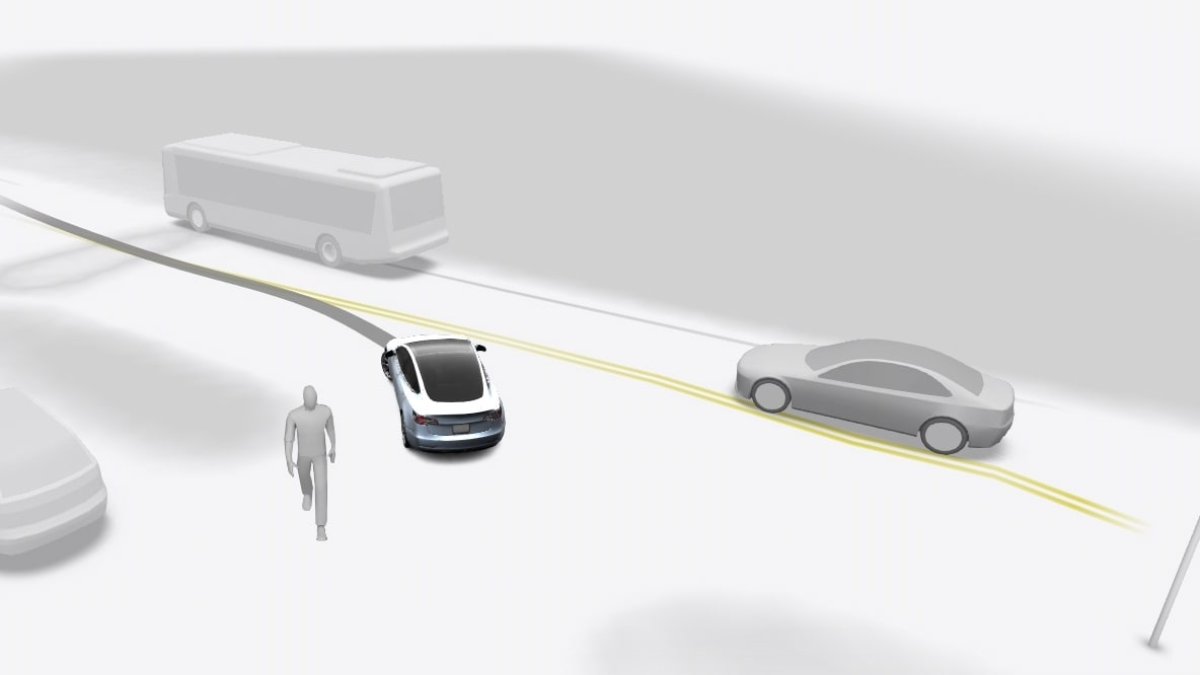
Tesla has refined its neural networks to better anticipate the actions of other drivers, cyclists, and pedestrians. Where previous versions sometimes hesitated or reacted late, v14 aims to interpret intent more smoothly—for example, recognizing when a car is about to merge without a signal, or when a pedestrian looks likely to cross. -
Enhanced Path Planning
The planning stack now accounts for more complex environments, such as multilane roundabouts, narrow European city streets, and irregular intersections. This should reduce awkward pauses and erratic lane changes that frustrated some users in v12 and v13. -
Sensor Fusion and Redundancy
Although Tesla relies heavily on vision-based systems, v14 reportedly strengthens the way multiple cameras share data to improve accuracy. This helps in scenarios with glare, rain, or partial occlusion. -
Dynamic Speed Adjustments
Instead of rigidly following speed limits or over-braking, the system adjusts speed more naturally based on road flow, weather, and traffic context. -
Expanded Geographical Support
Tesla has hinted at extending FSD capabilities in Europe, where regulatory approval has been more cautious. V14 may include specific compliance updates for EU traffic laws. -
User Experience Upgrades
A smoother interface, clearer driver alerts, and customizable driving profiles (defensive, standard, assertive) give users more control.
These upgrades are not just incremental—they suggest Tesla is working to bridge the gap between “driver assistance” and true Level 3+ autonomy.
Challenges and Risks in Real-World Deployment
Even with improvements, FSD v14 faces several roadblocks:
-
Sensor Limitations
Vision-only systems still struggle in heavy snow, dense fog, or when cameras are obstructed. Tesla’s decision to abandon radar and lidar remains controversial. -
Edge Cases and Rare Events
No matter how advanced, software has to handle bizarre scenarios: construction zones with missing signs, pedestrians on scooters, or unmarked rural roads. -
Legal Responsibility
Who is at fault if FSD causes an accident? Regulators in the U.S. and Europe are grappling with this. Until laws are clearer, Tesla continues to frame FSD as “driver assistance.” -
Driver Overreliance
Tesla warns that drivers must stay attentive, but some users may grow complacent. Past accidents involving Autopilot illustrate the danger of misuse. -
Public Trust
Critics argue that Tesla markets “Full Self-Driving” too aggressively, creating unrealistic expectations. Rebuilding trust requires consistent real-world performance.
Impacts on Tesla Owners & Early Adopters
For Tesla owners, especially those in the U.S. and Europe, FSD v14 could significantly change the driving experience:
-
Day-to-Day Convenience: Commutes may involve less manual steering, especially in stop-and-go traffic or complex city grids.
-
Hardware Compatibility: Not all Teslas can run v14 smoothly. Owners of older vehicles may need hardware upgrades such as the HW3 or HW4 computer.
-
Subscription Costs: Tesla’s $99/month subscription (U.S. pricing) could see changes if v14 is marketed as a major leap. European pricing may differ.
-
Insurance and Safety Ratings: Insurers may offer new policies—or higher premiums—depending on how FSD affects accident statistics.
-
Resale Value: Cars equipped with v14 may command a premium in the used market.
Owners need to weigh whether upgrading to v14 is worth the cost and risk, especially if they drive in regions with inconsistent regulatory approval.
How FSD v14 Moves the Industry Forward
Tesla’s rollout is not happening in isolation. Competitors like Waymo, Cruise, Mobileye, and Mercedes-Benz are all testing or deploying autonomous systems. What sets Tesla apart is its scale—millions of vehicles already on the road with the ability to update overnight.
-
Competitive Pressure
If v14 delivers smoother, safer driving, Tesla could regain ground against Waymo and Cruise, which currently lead in limited robotaxi services. -
Global Benchmarking
Tesla’s system is consumer-deployed, not confined to test fleets. Success could push regulators worldwide to adapt faster. -
Robotaxi Ambitions
Elon Musk has tied FSD directly to Tesla’s vision of a robotaxi network. Without reliable FSD, the robotaxi dream remains speculative. With v14, Tesla could argue it’s one step closer. -
Standard Setting
Industry groups and governments may look to Tesla’s experience in crafting safety standards, though critics warn against letting one company dominate the narrative.
Conclusion & Outlook
FSD v14 represents both hope and uncertainty. It promises smarter navigation, smoother decision-making, and a glimpse of a driverless future. Yet it also raises hard questions about liability, safety, and the limits of AI vision systems.
For Tesla owners, the decision to upgrade will depend on their appetite for risk and excitement. For the EV industry, v14 could either reinforce Tesla’s leadership or expose its vulnerabilities. One thing is clear: the race toward autonomy is accelerating, and Tesla is determined to stay in front.
FAQ
Q: Will my Tesla automatically receive FSD v14?
A: Eligible vehicles with FSD purchased or subscribed will receive it as an over-the-air update once rolled out in their region.
Q: Does FSD v14 make my car fully autonomous?
A: No. Drivers must remain attentive at all times. Tesla defines it as driver assistance, not hands-off autonomy.
Q: Is FSD v14 available in Europe?
A: Tesla is working with regulators. Some features may be restricted or rolled out later than in the U.S.
Q: Will older Teslas support v14?
A: Most vehicles with HW3 can run v14, but performance may vary. HW4-equipped models will get the best results.
Q: How much does FSD cost with v14?
A: In the U.S., subscriptions currently start at $99/month. Pricing in Europe may differ based on local taxes and regulations.