
Introduction: Why Tesla Hardware Matters More Than Ever
For most car buyers, “hardware” usually means motors, batteries, or suspension. For Tesla owners, hardware increasingly means something very different: compute power, neural network accelerators, camera pipelines, and AI inference capability.
As Tesla pushes further toward Full Self-Driving (FSD), robotaxi deployment, and AI-driven vehicle intelligence, hardware has become the core differentiator between Tesla and every other automaker. Software updates alone are no longer enough. The physical capability of the onboard computer now defines what a Tesla can and cannot do.
In early 2026, Tesla quietly crossed another hardware milestone. Owners began discovering vehicles equipped with Hardware 4.5, while Tesla simultaneously confirmed the upcoming AI5 chip, a major leap in onboard compute designed specifically for autonomy, robotics, and real-time vision processing.
This article explores:
-
What Hardware 4.5 actually is
-
How AI5 changes Tesla’s autonomy roadmap
-
Why hardware evolution matters more than range or acceleration
-
What this means for existing Tesla owners in the U.S. and Europe
-
Whether hardware limitations could become Tesla’s biggest risk—or its biggest advantage
1. Tesla Hardware Generations: A Quick Context Reset
To understand why Hardware 4.5 and AI5 matter, it’s essential to understand how quickly Tesla’s hardware stack has evolved.
Hardware 1 → Hardware 2: From Driver Assist to Autonomy Ambitions
Tesla’s early hardware relied heavily on third-party systems. These systems supported basic Autopilot features but were never designed for end-to-end autonomy.
Hardware 3 (FSD Computer): Tesla Goes In-House
Hardware 3 marked Tesla’s first fully custom FSD computer. It introduced:
-
Dual redundant neural network processors
-
Dedicated AI accelerators
-
Real-time vision processing at scale
This hardware powered the first true FSD beta deployments.
Hardware 4: The Vision-Only Era Begins
Hardware 4 removed radar entirely and significantly upgraded:
-
Camera resolution
-
Field of view
-
Compute throughput
Hardware 4 became the foundation for Tesla’s vision-only autonomy strategy.
2. Hardware 4.5: The Quiet Upgrade Most Owners Didn’t Expect
What Is Hardware 4.5?
Hardware 4.5 is not a marketing launch. Tesla did not announce it on stage. Instead, it appeared quietly in production vehicles, discovered by owners inspecting vehicle diagnostics and part numbers.
This alone tells us something important: Hardware 4.5 is an internal evolutionary step, not a consumer-facing product change.
Key Improvements Over Hardware 4
While Tesla has not released full specifications, industry analysis and teardown data strongly suggest Hardware 4.5 includes:
-
Higher neural network throughput
-
Improved thermal efficiency
-
Revised memory architecture
-
Better redundancy handling for safety-critical processes
Importantly, Hardware 4.5 appears optimized specifically for real-world FSD workloads, not theoretical peak performance.
Why Tesla Introduced Hardware 4.5 Instead of Jumping Straight to AI5
Tesla is running a massive live experiment: millions of vehicles, all collecting real-world driving data. Hardware 4.5 likely exists to:
-
Bridge performance gaps discovered in Hardware 4
-
Support more complex neural networks without power spikes
-
Improve reliability for long-duration autonomous operation
In short, Hardware 4.5 is Tesla learning from reality, not speculation.
3. AI5: Tesla’s Most Important Chip Yet
What Is AI5?
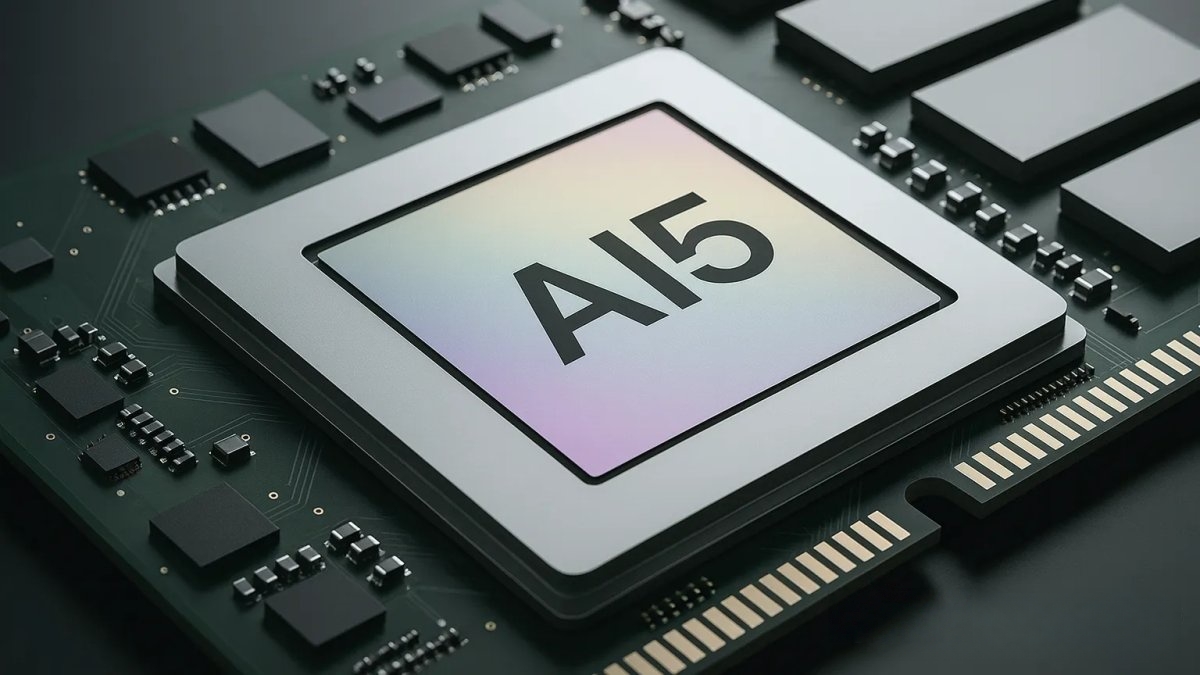
AI5 is Tesla’s next-generation custom silicon designed to replace and surpass Hardware 4.x systems. Unlike previous chips focused solely on driving, AI5 is designed for:
-
Autonomous driving
-
Robotaxi fleets
-
Humanoid robotics
-
Onboard AI inference at scale
This makes AI5 more than a car chip. It is Tesla’s general-purpose autonomy processor.
Performance Leap: Why AI5 Matters
Compared to Hardware 4, AI5 is expected to deliver:
-
Multiple times higher neural network inference performance
-
Lower latency for real-time decision making
-
Higher efficiency per watt
This matters because modern FSD neural networks are exploding in size and complexity. Training is done in data centers, but inference happens inside the car, every second, in real traffic.
Competing With NVIDIA—On Tesla’s Own Terms
Most automakers rely on NVIDIA for autonomy compute. Tesla does not. AI5 is designed to:
-
Match or exceed automotive-grade NVIDIA systems
-
Optimize directly for Tesla’s vision-first neural networks
-
Eliminate software abstraction layers that slow decision-making
This vertical integration gives Tesla an advantage that competitors struggle to match.
4. Vision-Only Autonomy: Why Hardware Is the Bottleneck
Cameras Are Not the Limitation—Compute Is
A common misconception is that Tesla’s camera-only system lacks sensors. In reality, the limiting factor is real-time interpretation, not perception.
Modern FSD requires:
-
Processing multiple camera streams simultaneously
-
Running dozens of neural networks in parallel
-
Predicting agent behavior milliseconds ahead
Hardware 4.5 and AI5 directly address these compute bottlenecks.
Redundancy Without Radar
Tesla’s approach replaces sensor redundancy with compute redundancy. That means:
-
Running parallel neural networks
-
Cross-checking predictions
-
Detecting uncertainty in real time
This approach demands enormous compute headroom, which older hardware struggles to provide.
5. Hardware and Robotaxi Viability
Why Robotaxis Change Everything
Driving assistance and fully autonomous commercial service are not the same thing. Robotaxis require:
-
Near-zero failure rates
-
Continuous operation for hours
-
Real-time fault detection and recovery
This is where AI5 becomes essential.
Hardware 4 vs AI5 in Robotaxi Context
Hardware 4 can support advanced driver assistance and limited autonomy. AI5 is designed for:
-
No-human supervision
-
Fleet-level optimization
-
Continuous learning feedback loops
Without AI5-level compute, large-scale robotaxi deployment would be risky.
6. What This Means for Current Tesla Owners
Will Hardware 4 Owners Be Left Behind?
This is the most common—and valid—concern.
Tesla’s historical pattern suggests:
-
Core safety features will remain supported
-
Advanced autonomy features may become hardware-limited
-
Not all future capabilities will be backward compatible
This does not mean Hardware 4 vehicles become obsolete. It means capability tiers will diverge.
Hardware Upgrades: Possible or Not?
At present:
-
Hardware 3 → Hardware 4 upgrades are not widely offered
-
Hardware 4 → AI5 upgrades remain uncertain
The complexity and cost of replacing autonomy hardware make upgrades unlikely at scale.
7. Europe vs U.S.: Regulatory Hardware Implications
U.S. Market: Faster Hardware Utilization
The U.S. regulatory environment allows Tesla to:
-
Deploy FSD features faster
-
Test autonomy at scale
-
Push hardware limits more aggressively
This makes AI5 particularly impactful in North America.
Europe: Hardware Ready, Software Waiting
In Europe:
-
Hardware capabilities often exceed legal permissions
-
FSD deployment is slower due to regulations
-
AI5 may future-proof vehicles for years before full activation
European owners may benefit from longer hardware relevance cycles.
8. Risks and Challenges of Tesla’s Hardware Strategy
Manufacturing Complexity
Custom silicon increases:
-
Supply chain risk
-
Production complexity
-
Capital expenditure
Any delays in AI5 manufacturing could slow Tesla’s autonomy roadmap.
Fragmentation Risk
As hardware generations multiply, Tesla must manage:
-
Feature differentiation
-
Owner expectations
-
Software compatibility
This is a non-trivial challenge.
9. The Bigger Picture: Tesla Is Becoming an AI Platform
Tesla is no longer just an automaker. Hardware evolution shows Tesla positioning itself as:
-
An AI deployment company
-
A robotics platform
-
A real-world neural network operator
Cars are simply the first large-scale deployment environment.
Conclusion: Hardware Will Decide Tesla’s Autonomy Future
Tesla’s move from Hardware 4 to 4.5 and now AI5 signals a clear truth: autonomy is a hardware problem as much as a software one.
-
Hardware 4.5 represents Tesla learning from real-world limitations
-
AI5 represents Tesla betting big on autonomy, robotaxis, and AI-first vehicles
-
Owners should expect increasing differentiation based on hardware capability
In the next decade, Tesla vehicles will not be defined by horsepower or range—but by teraflops, latency, and neural network depth.
FAQ
Q1: Is Hardware 4.5 a major upgrade over Hardware 4?
It is an incremental but meaningful improvement focused on efficiency, stability, and real-world FSD workloads.
Q2: Will AI5 be required for full autonomy?
AI5 is strongly aligned with Tesla’s vision for unsupervised autonomy and robotaxi services.
Q3: Can older Teslas run future FSD versions?
Yes, but with potential feature limitations depending on hardware capability.
Q4: Does Europe benefit from AI5 if FSD is restricted?
Yes. Hardware readiness ensures long-term relevance once regulations evolve.
Q5: Is Tesla ahead of competitors in autonomy hardware?
In vertical integration and real-world deployment, Tesla currently holds a significant advantage.