
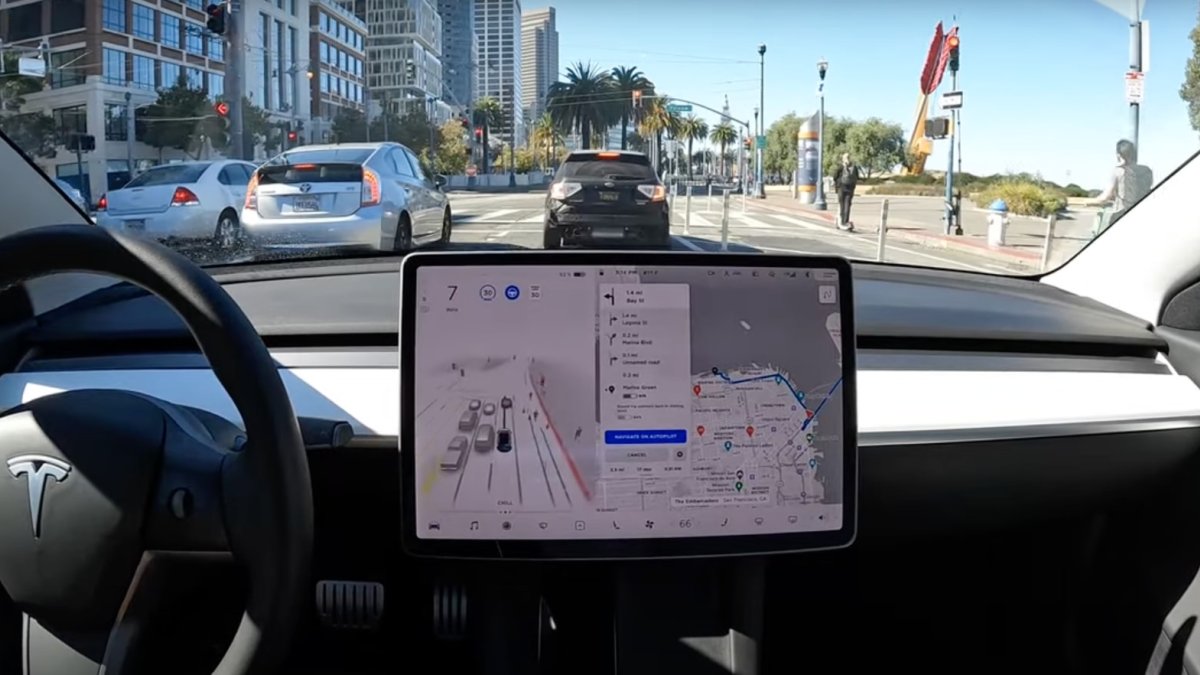
Tesla's Full Self-Driving (FSD) program sits at the center of an unprecedented regulatory and technological contest in Europe. Over the last year, Tesla has been moving from localized test deployments toward seeking broader approvals that would allow its FSD system to operate on highways and other public roads under defined conditions. Documents and reporting compiled by investigative outlets show Tesla has been in sustained weekly contact with European regulators; recent incremental approvals and on-campus unsupervised testing inside Germany indicate both progress and the heavy regulatory scrutiny that remains. For European Tesla owners, the next 6–18 months will likely determine whether advanced hands-off highway driving becomes a controlled, legal product or remains limited to tightly supervised test programs.
1. What is Tesla’s FSD system? A technical primer
Tesla’s FSD (Full Self-Driving) is a software and hardware system layered on top of the company’s Autopilot driver-assistance foundation. Technically it is a “vision-first” system: Tesla relies primarily on cameras and neural-network perception models rather than LiDAR or heavy radar in its current production approach. The stack combines perception neural nets, trajectory planning modules, control loops, and a safety layer that monitors driver engagement and handover readiness. The software is continuously updated over-the-air with neural net improvements and behavior policy changes; Tesla has historically released early versions as “Beta,” making them available to owners who meet internal safety metrics. The company positions FSD as a progressive autonomy suite that, with future improvements, may approach higher levels of automation — but regulators and industry definitions still generally classify the publicly available system as Level 2 (driver must monitor and be ready to take control).
Key technical notes for regulators and owners:
-
FSD takes raw camera input and feeds it through large neural networks trained on fleet data; decisions are made in real time with local compute on the car’s onboard computer.
-
Tesla emphasizes redundancy in software and the fleet-data learning loop rather than sensor redundancy (e.g., it does not currently rely on LiDAR).
-
Driver monitoring approaches (to ensure the human is ready to resume control) have evolved — from torque-sensor steering wheel checks to camera-based monitoring — and regulatory bodies are scrutinizing the sufficiency of current methods.
2. Europe’s regulatory architecture (who approves what)
European approvals for vehicle-level autonomy involve a mix of supranational and national mechanisms. Key elements:
-
UNECE / UN Regulations — many safety and type-approval rules for vehicles used across Europe come via UNECE norms that member countries adopt. These rules shape minimum safety capabilities and technical standards.
-
EU Type-Approval vs. National Pilot Programs — while the EU sets wide rules, national agencies (for instance, RDW in the Netherlands, Germany’s KBA and regional ministries) manage certain testing and pilot permissions — particularly for emerging tech that lacks full UNECE precedent.
-
Roadworthiness and operational rules — operational deployment (e.g., allowing unsupervised or conditional automated driving on public highways) can require explicit national approvals and compliance with local traffic laws.
This layered governance means Tesla must both address technical safety criteria and negotiate the political, legal, and enforcement practices of each country where it wants broad operation.
3. Recent timeline and why regulators are in focus now
Reporting over the past year indicates Tesla has been meeting frequently with European authorities, seeking incremental approvals and presenting substantial data packages about system performance — in some cases responding to regulator requests that span weeks of exchanges. Business Insider summarized internal documents showing weekly meetings began in October of the prior year and that approvals for testing have been sought and granted incrementally in countries such as the Netherlands and others. AutomotiveWorld and other outlets also describe a slow, document-intensive process in which regulators request specific evidence of behavior in edge cases, driver monitoring fidelity, and data logging/incident reporting procedures.
Most recently (as of September 2025), reporting indicates:
-
Certain test permissions have been granted for limited deployments and in-campus unsupervised trials (not full public highway, unsupervised usage in all conditions).
-
Regulators continue to press Tesla on rigorous documentation of failure modes, handover behavior, and how the vehicle will behave when it encounters conditions outside its validated operating design domain.
That combination of incremental approvals and heavy regulatory interrogation explains the current media and policy focus — regulators want real-world safety evidence and standardized reporting before permitting hands-off operations at scale.
4. How regulators assess safety: core metrics & evidence
Regulators typically look for three classes of evidence:
-
System performance data — logs showing how the system perceives and responds to environment events, disengagement statistics, and analysis of near-misses and incidents.
-
Driver monitoring and handover reliability — evidence that drivers are sufficiently engaged or otherwise able to resume control in a safe timeframe. Regulators often require robust driver-monitoring (camera-based attention detection, clear haptic/visual/audible handover cues).
-
Edge-case handling and validation methods — demonstrated performance in rare but critical scenarios (sudden obstacles, complex intersections, poor weather).
Regulators have asked for standardized reporting of these metrics and an audit trail that allows a third-party reviewer to validate Tesla’s claims. The EU and national agencies are consciously cautious because liability, enforcement, and insurance regimes must be clarified before full operational allowances are given.
5. Country-by-country status and what to watch
(Short summary for each market — expand to full sections as needed.)
-
Netherlands (RDW) — active engagement and testing permissions; RDW has historically been open to mobility testing but requires documented safety processes. Recent documents show weekly interactions between Tesla and RDW.
-
Germany — Giga Berlin-related testing and campus unsupervised efforts have been reported; Germany’s KBA and national transport ministries have been closely reviewing documentation and safety cases. Teslarati reported unsupervised FSD usage inside the Giga Berlin complex as an early step.
-
Norway/Denmark/Sweden — Nordic countries have been early pilots for many AV features; approvals vary but regulators are emphasizing strict safety reporting.
-
France & UK — different legal regimes (UK uses distinct vehicle approval pathways); both have been engaged in cross-border discussions on automation standards.
What to watch next: any announcement of highway operational approval in a major EU market (that would be a turning point), official regulator guidance documents that specify required metrics, or standardized reporting frameworks agreed across EU states.
6. Safety concerns & technical friction points
A few technical and safety issues are repeatedly flagged:
-
Driver monitoring — regulators want consistent, independent verification that a human can take over. Camera-based systems are evolving but the question of false negatives (system thinks driver is attentive when they are not) remains critical.
-
Edge case performance — scenarios such as complex roundabouts, unusual weather, or temporary signage continue to challenge perception systems; regulators request systematic evidence of how such cases are handled.
-
Data transparency & incident reporting — regulators prefer standard formats and independent reviewability for incident data. Fleet-scale claims help but must be auditable.
-
Legal liability — who is responsible if an FSD-enabled vehicle crashes while in an approved operating mode? European legal systems will need clearer frameworks on manufacturer liability vs. driver responsibility.
7. Practical guidance for European Tesla owners
If you own a Tesla in Europe and are watching FSD developments:
-
Eligibility & Safety Score: Tesla historically gated Beta access by Safety Score and other internal metrics. Continue optimizing safe driving behavior to remain eligible if new waves of invites or approvals appear.
-
Driver readiness: Until regulators explicitly permit hands-off operation under set conditions, assume you must be ready to take over. Keep firmware up to date and understand the vehicle’s handover cues.
-
Insurance: Check with your insurer about coverage and whether FSD usage affects premiums or claims handling. Document any unusual system behavior immediately and retain logs if possible.
-
Local legalities: Follow local guidance when testing or using new driver-assistance features — some countries may allow limited testing under specific conditions only.
8. Scenarios & likely timelines (6–18 months)
Realistically, there are three plausible scenarios:
-
Fast track (optimistic): Regulators accept Tesla’s submitted evidence, set standardized reporting rules, and allow conditional highway operation in selected countries within 6–9 months. This would enable limited, regulated hands-off highway use under defined conditions.
-
Measured approval (most likely): Authorities grant incremental, tightly scoped permissions (e.g., supervised highway testing, restricted corridors) and require further reporting — broad deployment could take up to 12–18 months.
-
Conservative/regulatory pushback (pessimistic): Regulators demand stricter proof or object to Tesla’s architecture, leading to prolonged negotiations and only slow, small-scale pilots beyond 12–18 months.
9. Industry & competitive reactions
Other OEMs are watching closely. Some will argue for stricter standards to protect liability and consumer confidence; others will accelerate their own development or seek to cooperate on standardized reporting. Insurance firms and fleet operators are likewise recalibrating risk models based on the pace of approvals.
10. Recommendations for regulators & the industry
A practical, balanced pathway would include:
-
Transparent, auditable reporting formats for safety data.
-
Common test cases shared across manufacturers.
-
Clear driver monitoring requirements with third-party verification options.
-
Interim pilot frameworks that allow benefits without full regulatory rollout.
These steps would reduce risk while permitting innovation to proceed with public oversight.
Conclusion
Tesla’s push for FSD approval in Europe is an epochal episode for automotive automation — marrying a fleet-learning-driven company approach with regulators that must ensure public safety. The coming months will likely bring incremental approvals, intense scrutiny on data and driver monitoring, and an evolving, country-by-country reality for owners. For Tesla owners and prospective buyers, the right posture now is informed cautious optimism: watch regulator pronouncements, keep vehicles updated, and treat FSD as an advanced driver assistance system until regulators explicitly say otherwise.
FAQ
Q: Will FSD make my Tesla fully autonomous in Europe this year?
A: Unlikely in a broad sense. Expect incremental approvals and limited operating domains rather than a blanket autonomy permit.
Q: Is it legal to use hands-off driving if my car has FSD?
A: Only if a national regulator explicitly permits it for certain roads and conditions. Until then, drivers must remain engaged and ready to intervene.
Q: Will Tesla be forced to add LiDAR?
A: Regulators generally assess performance, not sensor modality. If Tesla’s camera-first approach demonstrably meets safety standards, regulators may accept it — but they will require strong, auditable evidence.
Q: How will insurance handle FSD claims?
A: Insurers are updating policies; your coverage may depend on whether you used the feature in an approved domain and your local legal regime. Keep records and check with your insurer.
Q: When should owners expect full highway hands-off approval?
A: A broad answer: it could take 6–18+ months depending on outcomes of regulator reviews and the evidence Tesla provides