
Introduction: The Cell that Changes Everything
Picture a Tesla Semi, its polished chrome form gliding almost silently along Interstate 80, hauling a full load of cargo out of the Nevada desert. To the casual observer, it’s a striking image of the future of logistics. But the true revolution isn't the electric motor or the aerodynamic design; it's the unseen energy source deep within its chassis. This is the domain of the 4680 battery cell, the unassuming cylindrical heart that powers Tesla's heavyweight ambitions. The 4680 is far more than just a bigger battery. It is the critical linchpin for Tesla's entire next phase of growth. The success, struggles, and ultimate speed of its production ramp at Gigafactory Nevada are the determining factors that dictate not only the delivery schedule of the Semi but the very feasibility of Tesla's long-promised, genuinely affordable electric vehicle.
First unveiled at Tesla's Battery Day in 2020, the 4680 cell—named for its dimensions: 46mm in diameter and 80mm in height—was presented as a masterstroke of vertical integration and first-principles engineering. Its larger form factor promised simpler pack construction, while its innovative "tabless" design was key to unlocking higher power output, better thermal management, and, most importantly, a drastic reduction in manufacturing cost. It was, and still is, the key to unlocking the next tier of the electric vehicle market. But designing a revolutionary cell in a lab is one thing; mass-producing millions of them per week in a factory is an entirely different and Herculean challenge. The story of the 4680 ramp is a story of manufacturing hell, breakthrough innovation, and the high-stakes battle for the future of EVs.
The Manufacturing Hurdle: Mastering the Dry-Coating Process
The single greatest innovation—and the most formidable obstacle—within the 4680 cell is the dry-coating process for the anode and cathode. For decades, battery manufacturing has used a "wet" process. Electrode materials are mixed into a toxic, solvent-heavy slurry, which is then coated onto foil, dried in massive, energy-intensive ovens, and then the solvent must be recovered. It’s slow, expensive, and environmentally problematic.
Tesla's holy grail has been to perfect a dry-coating process, acquired through its 2019 purchase of Maxwell Technologies. In this method, the electrode powder is mixed with a binder and processed through rollers that press it directly onto the metallic foil, completely eliminating the need for solvents and drying ovens. The benefits are staggering: a 10x reduction in factory footprint, a 10x reduction in energy consumption, and a dramatic acceleration in production speed. This single process innovation is the cornerstone of the promised 56% reduction in cost per kilowatt-hour ($/kWh).
However, the reality of implementing it has been punishingly difficult. For years, engineers have grappled with ensuring the powder adheres perfectly to the foil, maintaining uniform thickness, and preventing cracking or flaking during the high-speed calendering (pressing) process. Early production runs were plagued by low yield rates, meaning a significant percentage of the manufactured cells had to be discarded due to microscopic imperfections. This "manufacturing hell" has been the primary bottleneck, slowing the production ramp and casting doubt on the ambitious timelines. As of mid-2025, the narrative has shifted. While Tesla remains tight-lipped about exact figures, industry consensus suggests that the company has finally overcome the most significant hurdles. Yields are reportedly much higher, and the process is becoming more stable, allowing for a more consistent and predictable increase in output. They have not yet declared victory, but the hardest battles in mastering this breakthrough technique appear to be in the rearview mirror.
Giga Nevada's Production Ramp: A Status Report
Gigafactory Nevada, Tesla's original battery behemoth, is the epicenter of the 4680 ramp. For the past year, the focus has been on methodically increasing the weekly output of these crucial cells. While early 2024 saw the factory celebrating milestones that were sufficient for Cybertruck production at Giga Texas, the volume required for the Tesla Semi is on another order of magnitude. Current industry estimates place Giga Nevada's 4680 output at a level capable of supporting several thousand Semis per year, a significant achievement but still short of the volume needed for mass-market deployment.
In response, Tesla has doubled down. The major factory expansion announced in early 2025 is now well underway. This isn't just about adding more of the same production lines; it's about deploying the next generation of manufacturing equipment, refined through the painful lessons of the initial ramp. These new lines are expected to be faster, more automated, and produce higher yields from the outset. The goal is clear: to reach a production capacity of over 100 GWh annually at Giga Nevada alone.
This ramp-up is not happening in a vacuum. Tesla's key battery partner, Panasonic, is also constructing a massive new facility in Kansas, USA, dedicated to 4680 production for Tesla. This parallel effort is a crucial de-risking strategy. It ensures that even if Tesla's in-house efforts face unforeseen delays, an external supply will be available to meet the voracious demand from Giga Texas (for Cybertruck) and Giga Nevada (for the Semi). The relationship is symbiotic: Tesla's manufacturing innovations push Panasonic, while Panasonic's decades of battery-making expertise provide a stable industrial backbone. The race is on, both internally and with partners, to scale production to a level that can fundamentally alter the EV landscape.
The Direct Beneficiary: Powering the Tesla Semi
The Tesla Semi is arguably the vehicle most dependent on the 4680's success. A Class 8 truck requires an enormous battery pack—estimated to be around 800-1000 kWh, roughly ten times that of a Model Y—to achieve its target of 500 miles of range with a full load. Using older 2170 cells would make the pack prohibitively heavy, expensive, and complex. The 4680's higher energy density and simpler pack architecture are not just beneficial; they are essential.
The performance of the Semi is a direct reflection of the 4680's capabilities. Its ability to charge to 70% in about 30 minutes is thanks to the tabless design, which allows for superior thermal management, enabling sustained high-power "Megawatt charging" without degrading the cells. Early feedback from fleet customers like PepsiCo, which have been operating a fleet of Semis for over a year, has been overwhelmingly positive, particularly regarding performance and reliability. Drivers report smooth, powerful acceleration and regenerative braking that significantly reduces wear on traditional friction brakes.
However, the primary constraint on the Semi program has never been demand or performance; it has been the supply of batteries. Every public statement about the Semi's production schedule has been caveated with a reference to the 4680 ramp. Now, as Giga Nevada's output steadily climbs, the number of Semis rolling off the production line is beginning to follow suit. Mid-2025 is seen as the inflection point where production moves from low-volume, specialized builds to a more standardized, continuous flow. The 4680 cell is, quite literally, the fuel for Tesla's disruption of the multi-trillion-dollar global trucking industry.
The Future at Stake: The Next-Generation Vehicle
As critical as the 4680 is for the Cybertruck and Semi, its ultimate purpose is even more profound: to make a truly affordable, mass-market Tesla a reality. The long-rumored "$25,000" compact model, essential for competing with Chinese automakers like BYD and for capturing the mainstream market globally, is economically impossible with current battery technology. Its entire business case rests on achieving a battery pack cost well below the industry benchmark of $100/kWh.
The 4680, with its dry-coating process and simplified pack design, is engineered to break the sub-$70/kWh barrier at the pack level. At that price point, the cost of the EV powertrain begins to approach parity with an internal combustion engine, even without subsidies. This is the tipping point for mass adoption. Every percentage point increase in yield rates at Giga Nevada, every small optimization in the dry-coating process, brings that affordable future closer to reality.
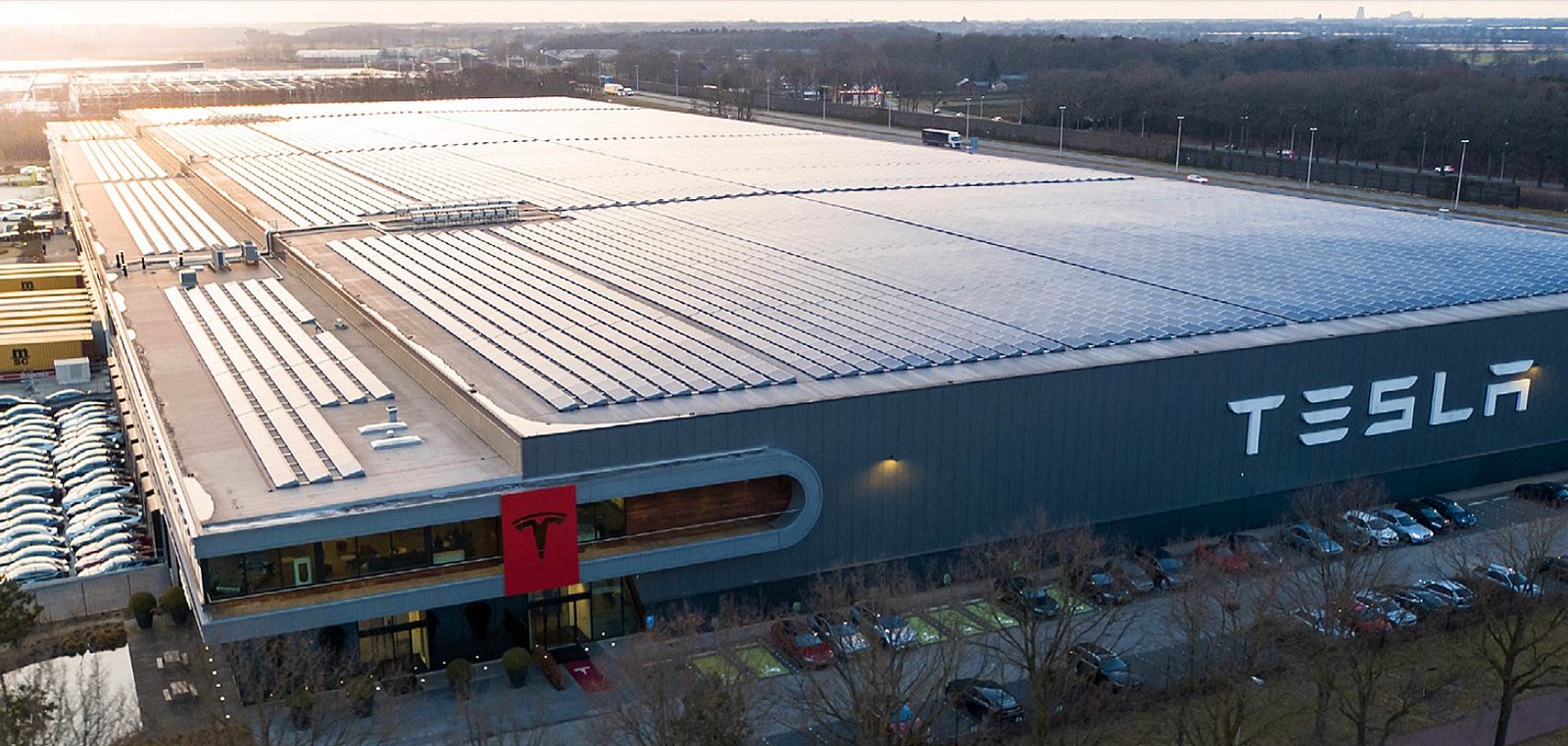
The unassuming factory in the Nevada desert, therefore, holds the keys to Tesla's future kingdom. It is a high-stakes battleground where triumphs and setbacks are measured in gigawatt-hours and cost-per-kilowatt-hour. The successful ramp-up of the 4680 cell is not just an internal manufacturing goal; it is the catalyst that will power heavy-duty transport, enable next-generation vehicle platforms, and ultimately determine the pace of the world's transition to sustainable energy. The cell is everything.