
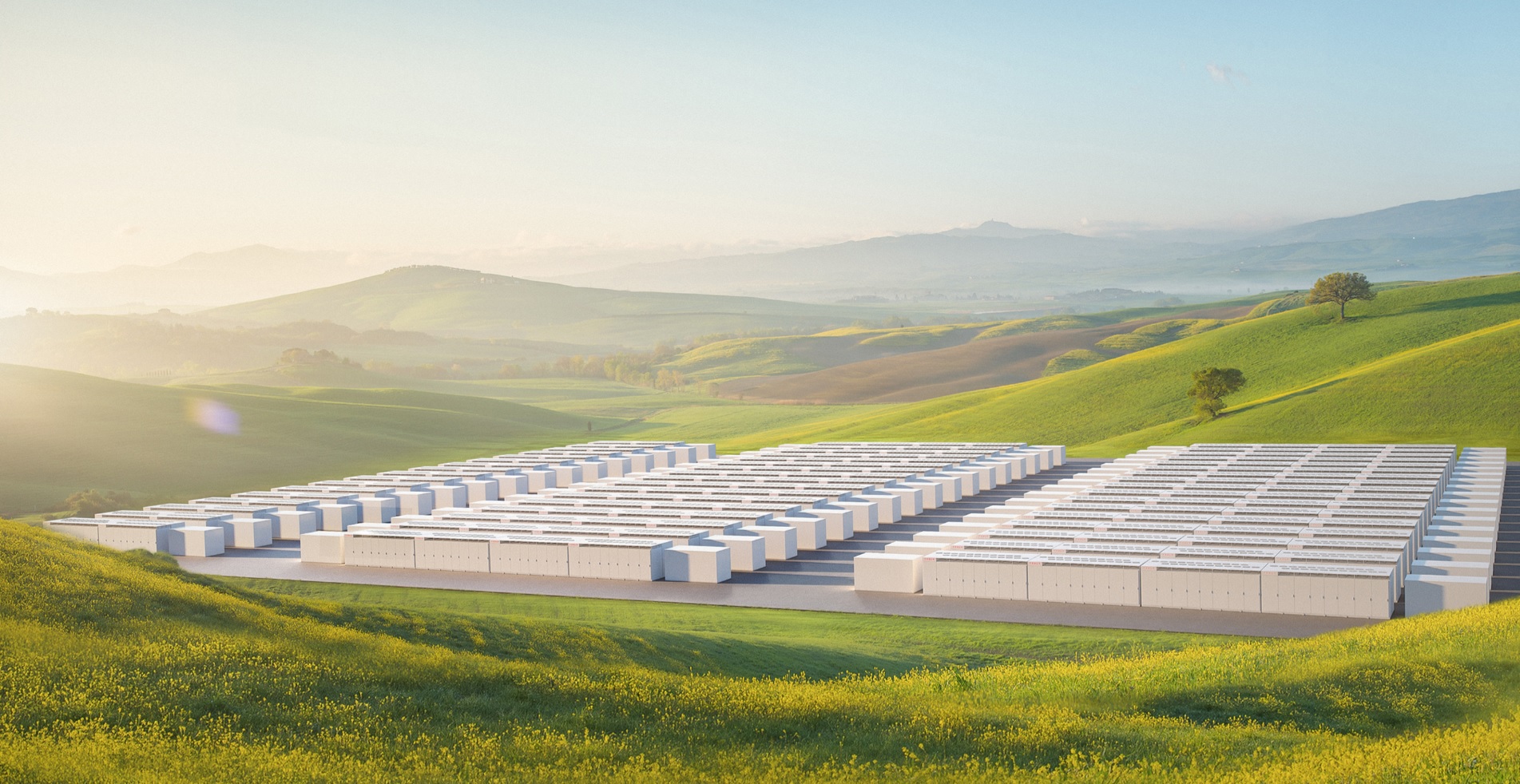
On September 9, 2025, Tesla unveiled the next generation of its utility-scale battery systems — the Megapack 3 and a new Megablock product — designed to accelerate deployment, increase per-unit energy density, and lower project timelines for grid-scale storage. These products aim to reshape how grid operators and commercial site owners think about buffering renewable generation, supporting Supercharger sites, and reducing peak energy costs. For Tesla vehicle owners in the U.S. and Europe, the practical outcomes are potentially better Supercharger uptime, lower charging prices in some regions, and faster local deployments of resilient charging infrastructure.
1. Why this announcement matters to Tesla drivers
Tesla’s vehicle ecosystem — cars, charging network, and software — is deeply tied to grid reliability. Large battery deployments like Megapack 3 and the Megablock are not just utility projects on paper; they are infrastructure that can directly affect:
-
Supercharger reliability: on-site storage reduces grid dependency at peak times and limits the number of simultaneous stalls that lose power.
-
Charging speed stability: buffers absorb short spikes and allow chargers to maintain peak outputs for longer durations without requiring massive grid upgrades.
-
Cost of charging: storage enables time-arbitrage (charging from low-cost periods or local renewables), which can lower operating costs for businesses that host chargers.
-
Resilience: battery arrays can keep chargers running during short grid outages and support critical loads.
Those outcomes matter to individual owners (less downtime, more predictable charging) and to fleets (lower operational costs, better uptime).
2. What Tesla announced — the basics
Tesla introduced two related products:
-
Megapack 3: the next iteration of their large modular storage system. Tesla positions it as higher energy density, faster to deploy, and with simplified site integration compared to earlier Megapack generations. Early reporting emphasizes improvements in module-level thermal design and system integration that reduce civil works and on-site assembly time.
-
Megablock: an even larger, super-modular assembly that groups multiple Megapack units into a “block” that can be transported and connected quickly — the idea is to let project developers deploy very large capacity (tens to hundreds of MWh) with the efficiency of prefabricated megastructures. Early coverage suggests the Megablock is aimed at very large utility projects and for locations where speed of deployment matters (e.g., blackout mitigation, grid stabilization contracts).
Tesla’s messaging focuses on deployment speed and system economics, both critical when utilities solve urgent grid issues or need capacity quickly.
3. Technical differences vs prior generations (and why they matter)
Energy density and cell-level improvements
Megapack 3 reportedly uses updated cell and pack designs to increase usable energy per module. Higher energy density reduces the number of racks and the physical footprint for a given MWh — lowering land, foundation, and permitting complexity.
Thermal & safety improvements
Improved cooling and module separation reduce thermal propagation risk and simplify fire mitigation designs. For municipalities and planners, this reduces the hurdles and perceived risk of permitting large storage projects.
Modularity & mechanical integration
By standardizing larger prefabricated “blocks,” Tesla reduces on-site assembly hours. That matters for reducing labor costs, site disruption, and connection windows — especially important in Europe where permitting windows and urban constraints can delay assembly.
Power electronics and control
New inverters and system controllers are designed for faster ramping, smoother frequency response, and better integration with utility control systems — turning battery arrays into not just energy stores but dispatchable grid services.
All these improvements lower total installed cost and shorten project timelines, making storage projects more economically attractive to utilities and site owners.
4. Grid use cases that change the charging game
Let’s walk through the concrete grid use cases that most directly benefit EV owners.
4.1 Peak shaving & demand charge mitigation
For site owners (shopping centers, hotels, fleet depots), demand charges in the U.S. can be a major portion of an electricity bill. On-site storage reduces the peak draw from the grid, lowering operating costs and enabling more charging stations without expensive grid upgrades. For Tesla owners, this means more chargers at a single site and improved access during local peaks.
4.2 Frequency regulation & ancillary services
Storage that can respond within seconds can bid into ancillary service markets. That increases revenue streams that offset project cost, which can lower the cost of providing charging services to EV owners.
4.3 Blackstart & outage resilience
Large systems can provide blackstart capacity or keep essential services running during outages. Supercharger sites connected to a Megablock-like installation can remain usable during short grid disruptions — a tangible convenience for travelers.
4.4 Renewable integration
Pairing on-site storage with renewable generation (solar fields, rooftop PV) smooths intermittency. For urban Supercharger installations or hotels that want “green charging” claims, storage lets more local renewables be used for direct charging rather than being curtailed.
5. Economic implications for owners and fleets
How will this change costs?
Lower operational costs at privately owned charger sites
If a site owner reduces demand charges and shifts charging to lower price windows or directly uses stored renewables, the marginal cost per kWh dispensed can fall. For fleet operators, this means lower total cost of ownership and a stronger case to electrify high-utilization vehicles.
Indirect owner benefits
Individual owners benefit indirectly through better availability and potentially more predictable Supercharger pricing. However, direct per-kWh savings for a retail customer depend on host pricing policies and local energy markets.
Payback calculations (example)
A typical analysis for a depot with a high demand charge might show storage payback in 3–7 years depending on local tariffs. For many commercial Supercharger operators, the combination of storage revenues (ancillary markets) + demand charge savings makes new installations financially viable in markets where previously the grid-connection costs were prohibitive.
6. Deployment timelines and where we’ll see projects first
Major grid zones with high renewables penetration and pressing reliability issues will be early adopters: parts of the U.S. (California, Texas) and European markets (Germany, Spain, Nordic countries). Tesla’s quick-deploy Megablock concept targets urgent procurements — utilities under pressure to meet short-term capacity needs or stabilize local grids are likely first customers.
7. How this ties into the Supercharger roadmap
Tesla’s Supercharger network expansion has often been constrained by grid connection costs and local permitting. Deploying Megapack 3 or Megablock alongside chargers changes the economics:
-
Lower upfront grid upgrade costs: storage reduces needed maximum service size.
-
Higher stall counts per site: buffered power enables more simultaneous chargers.
-
Improved uptime and reliability: battery backup can ride through short outages.
-
Potential for differentiated pricing: site operators could offer “green charging” at a premium or cheaper parking-hour combos when storage draws from off-peak charging.
In Europe, where grid connections and permitting are frequently slower, Megablock prefab assemblies could fast-track new Superchargers on critical corridors.
8. Risks, constraints, and open questions
Supply chain and cell availability
Large projects need lots of cells. The same constraints that affect vehicle production (cell supply) can slow large storage rollouts or raise costs.
Recycling & end-of-life
As deployments grow, responsible recycling becomes an imperative; policy in the EU will likely push for tighter circularity requirements.
Permitting, fire codes, and public perception
Despite design improvements, large battery installations still face local opposition and strict permitting — particularly after high-profile thermal events in earlier years.
Interoperability & market rules
Not every grid operator wants a single vendor solution. Integration into market dispatch systems requires standard protocols and transparent control logic.
9. Practical advice for owners & fleet managers
-
Fleet managers: evaluate depot electrification with onsite storage scenarios — ask vendors for combined models (solar + storage + chargers) rather than incremental quotes.
-
Owners: watch local public-charging rollouts; regions with new storage tend to see faster Supercharger openings and better reliability.
-
Local businesses: if you host chargers, ask prospective energy providers how storage will be used (demand shaving vs. ancillary revenue) and how savings are shared.
10. Conclusion — the bottom line for Tesla owners
Megapack 3 and the Megablock are not merely “bigger batteries”; they represent a next step in making high-capacity storage faster and cheaper to deploy. For Tesla owners in the U.S. and Europe, the near-term payoff is improved Supercharger reliability, the potential for more chargers in constrained sites, and a path to lower operational costs for commercial hosts. Over longer horizons, mainstream adoption of large-scale storage will help stabilize charging costs, smooth renewable integration, and make EV ownership even more practical and convenient.
FAQ
Q1: Will Megapack 3 instantly make Superchargers faster?
A: Not instantly — but it will let operators guarantee peak power for longer intervals and support more simultaneous stalls without a costly grid upgrade. Real speed improvements depend on site design and power allocation.
Q2: Will my city get a Megablock next year?
A: Deployment depends on local tenders, grid need, and site selection. Areas with urgent capacity shortfalls or big renewables portfolios are likelier early adopters.
Q3: Does Megapack 3 reduce the carbon intensity of charging?
A: Yes, when coupled with local renewables or charged during low-carbon grid periods; it can increase the share of renewables used for charging.
Q4: Are there safety concerns for Megablock scale systems?
A: Tesla’s new designs focus on thermal containment and better controls, but local permitting and fire safety planning remain crucial.
Q5: How soon will costs fall for end consumers?
A: Savings depend on how operators monetize storage (demand charge savings, ancillary markets). Some sites may pass cost savings to users, others may keep revenues. Expect regional differences.