
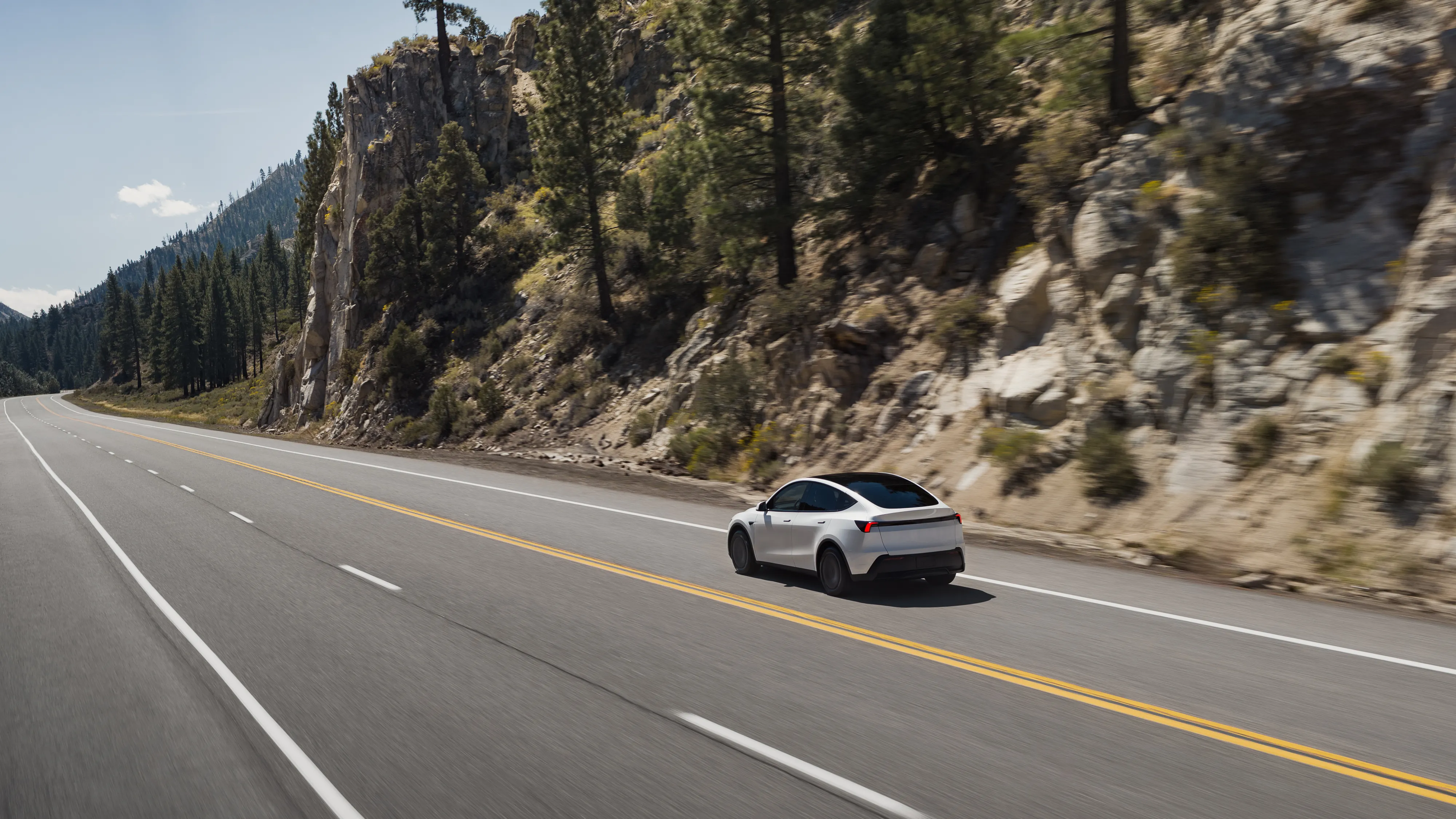
Tesla has finally rolled out what many of us have been waiting for: more “affordable” versions of the Model Y and Model 3. After years of teasing, the new Model Y Standard and Model 3 Standard trims are now official — with much buzz, mixed reactions, and big questions. These versions ask buyers to trade down features, but in return, Tesla offers a lower starting price to compete in a tougher EV market landscape.
As a Tesla fan, this is a fascinating pivot. Will these stripped-down models open the door to new buyers who previously found Tesla out of reach? Or will they dilute Tesla’s premium brand or cannibalize sales? And especially in Europe, where cost pressure is fierce, can Tesla regain momentum?
In this article, I’ll dig deep:
-
The strategy behind Tesla’s stripped-down versions
-
Market and analyst reactions
-
Challenges and opportunities in Europe
-
Technical / product implications and trade-offs
-
Competitive dynamics and pricing wars
-
What this means for existing owners and new buyers
-
Conclusion & outlook
-
FAQ
Let’s jump into it.
1. The Strategy Behind “Stripped-Down” Models
1.1 Tesla’s long-awaited move toward mass-market
Tesla has long talked about bringing an EV to the mass market. Elon Musk once rode high on the promise of a $25,000 car, the so-called “Tesla 2.0” or “Model 2,” that never quite materialized. Over time, Tesla focused on scaling existing models (Model 3, Model Y) and premium features, but affordability remained a challenge.
What Tesla has done now is more modest: instead of creating an entirely new platform, it has chosen to reduce cost by paring back features on existing models. So, instead of a new $25K EV, we get a “standard / base” trim of Model Y and Model 3 — with careful cuts to parts, features, finishes, and options — aimed at bringing the entry cost down.
1.2 What features are removed or downgraded
To reach the lower price targets, Tesla has selectively removed or simplified features. Examples include:
-
Interior trim downgraded (cloth seats instead of vegan leather / premium materials)
-
Simplified center console / storage (fewer moving parts, less complexity)
-
No rear-seat display or second-row screen (on Model Y)
-
Removal of AutoSteer / some driver-assist features as default (requiring purchase of FSD to enable)
-
Simpler exterior styling (removal of light bars, cheaper LED elements)
-
Smaller / more efficient wheels, aerodynamic changes
-
Fewer speakers / audio simplifications
-
No panoramic glass roof (or covered glass roof) / simpler roof liner
-
Reduced charging speed in some cases
-
Elimination of some premium features: heated rear seats, ventilated front seats, power folding mirrors, ambient lighting, etc.
These trade-offs are meant to reduce cost, complexity, and part sourcing burdens, while retaining Tesla’s core identity and performance where possible.
1.3 Pricing strategy and comparisons
In the U.S., the Model Y Standard is priced starting around USD $39,990, and the Model 3 Standard at about USD $36,990. These represent reductions of $5,000 to $5,500 compared to Tesla’s prior base trims. Yet, some analysts believe even that is not low enough to attract a flood of new buyers — especially now that the U.S. federal EV tax credit has expired.
Tesla is walking a fine line: dropping price enough to lure new buyers, but not so far that margins collapse or the brand identity is diluted.
Compared to other EVs in the market (e.g. Hyundai Ioniq 5, Chevy Equinox EV, Nissan Leaf), those are still competitive ranges — but those rivals often offer more features relative to price in certain markets.
Tesla’s hope is that the cost cuts plus volume will make up for reduced per-unit margin.
2. Market Reaction and Analyst Perspectives
2.1 Immediate investor / public responses
The reaction to the announcement was tepid. Tesla’s stock dropped about 4–4.5% after the news. Many investors expressed disappointment that the cuts were not deeper. Some had hoped Tesla would unveil something closer to the $25,000 dream, rather than minor trims on existing models. There’s concern that these changes feel incremental, not transformative.
Many early reviews and commentary described the new trims as offering “less for $5K less,” signaling that buyers may not feel they’re getting good value for the cut. Some say the marketing felt underwhelming — the product reveal was low-key, lacking fireworks.
2.2 Risks of internal cannibalization
A big fear internally (and among analysts) is cannibalization: existing buyers of mid-tier or premium trims might simply downgrade to the new base trims instead of buying more expensive versions or future high-margin variants. That could compress margins across the lineup without truly expanding the customer base.
Tesla must balance the margin / volume trade-off: is it better to sell more cars at lower margin, or fewer cars but higher profit per unit?
2.3 Analyst critiques and cautious optimism
Analysts delivered mixed takes:
-
Some say the lower cost trims might not be enough to draw new customers if performance or features fall too low.
-
Others believe this is Tesla’s best current option to stimulate demand, especially after the expiration of the U.S. tax credit.
-
There’s skepticism in whether these trims will restore growth in Europe, where competition and cost pressures are steeper.
-
Some analysts expect modest benefit in 2026 to 2027 as Tesla's global scale and software leverage begin to pay off.
Overall, many see this as a necessary but conservative move — a stepping-stone rather than a breakthrough.
3. Challenges in the European Market
Because you asked for a European perspective (and I care deeply about Tesla’s global standing), here are the steeper obstacles Tesla faces in Europe.
3.1 A crowded, low-cost EV landscape
Europe’s EV market is more cost-sensitive than the U.S. Many domestic and Chinese automakers already offer EVs in the €20,000–€35,000 band — e.g. BYD Dolphin, Dacia Spring, Citroen e-C3, and more models coming. Tesla’s cheaper versions will have to compete against a wave of sub-€30K options.
As of 2025, Tesla’s European market share has shrunk. In some markets, it’s down to around 1.5%. The higher base prices and limited lineup have hurt Tesla’s appeal. The new base trims might help, but it’s not certain they go far enough.
Analysts argue that to compete in Europe, Tesla needs a lower floor closer to those local EVs — or a subsidy-adjusted price that bridges the gap — otherwise, buyers will prefer locally optimized, cheaper alternatives.
3.2 Import, regulation, subsidy & local cost issues
-
Tesla must deal with import duties, localized manufacturing constraints, exchange rate risk, shipping / logistics, and customization to local regulations (e.g. safety, lighting, homologation).
-
Many European countries offer EV purchase incentives, but they often cap eligibility by price — if Tesla’s base models stay above subsidy cutoffs, they may not qualify.
-
Some countries have stricter vehicle safety / type approval regimes; Tesla may have to adjust features or submit separate versions for Europe, further raising costs.
3.3 Risks of brand dilution in a mature market
Tesla’s premium brand has had a certain cachet in Europe. If buyers perceive the new base trims as too minimalistic or cheap, that could erode brand perception. In markets where luxury and heritage matter, Tesla must maintain enough premium identity so as not to appear “just another cheap EV.”
Thus, Tesla’s European push with base trims will require clever marketing and optional upgrades to retain aspirational appeal.
3.4 Possible upside in Europe
-
If Tesla can localize production (e.g. via Gigafactory Berlin or other European manufacturing), it can reduce logistic costs, import fees, and better align pricing.
-
If the base trims allow Tesla to qualify for subsidies in key European markets, that may help bring effective prices lower for buyers.
-
Tesla’s software, charging network, Supercharger access, brand strength and OTA updates are differentiators that local budget EVs often lack — those may help pull customers toward Tesla despite higher base price.
4. Technical / Product Implications & Trade-offs
Let’s zoom into the engineering, product design, and trade-offs Tesla had to make (or may need to make) to execute these base trims.
4.1 Manufacturing & supply chain simplification
By cutting features and complexity, Tesla can reduce part counts, simplify assembly, and reduce supply chain strain. Fewer variants of parts, simpler wiring harnesses, fewer optional add-ons make production more robust and cost-predictable.
This modularity and reduction of “premium extras” helps Tesla scale more reliably.
It also reduces warranty burden, since simpler systems produce fewer failure modes.
4.2 Battery / range trade-offs
To hit the lower price point, Tesla likely uses a slightly smaller battery (or fewer modules) or limits power output to reduce costs. The new trims still deliver over 300 miles of range (e.g. 321 miles cited for the U.S. trims) despite cuts.
However, performance will be lower (slower acceleration, reduction of features that draw power) and peak charging speeds may be capped. Tesla must balance cost with maintaining a “usable” or “competitive” range to avoid buyer backlash.
4.3 Degraded features vs upgradability
While some features are removed, Tesla may give buyers the option to purchase or unlock them later (via software or hardware add-ons). This model could mitigate buyer worries — e.g. “I buy the base now, then I can add heated seats or better audio later.” But that only matters if Tesla truly supports modular upgrades.
If upgradability is limited or too expensive, early buyers may feel shortchanged.
4.4 Impact on ride quality, comfort, and perception
With fewer comfort features (no ventilated seats, simpler tuning, no glass roof, etc.), the driving experience might feel less premium. Tesla must ensure NVH (noise, vibration, harshness), ride comfort, ergonomics, visibility, and general usability remain high enough to justify brand loyalty.
If buyers feel cheapening, word-of-mouth may hurt.
Also, perception matters: buyers may see the base trims as a “budget Tesla” and be less proud, less likely to promote or defend it among enthusiast circles.
5. Competitive Dynamics & Tesla’s Price War Strategy
Tesla’s move isn’t happening in a vacuum. The global EV market is heating up, and aggressive pricing is already happening.
5.1 Tesla’s recent price cuts and reactions to competition
Tesla has already cut prices on existing trims (e.g. $5,000 discounts) to respond to competitive pressure. The base trims are part of that broader pricing war. Tesla is fighting not just for new customers but to prevent losing them to cheaper EVs from BYD, Chinese automakers, and other budget EV entrants.
Tesla must balance being responsive vs chasing a ruinous price spiral.
5.2 Is Tesla structurally advantaged?
Tesla has advantages: vertical integration, global scale, software / OTA systems, strong brand, Supercharger network, data from millions of miles, battery integration, and economies of scale.
These advantages may help Tesla survive tighter margins. Competitors offering cheap EVs may lack charging infrastructure, software experience, or brand pull — Tesla’s ecosystem can be a buffer.
5.3 Margin management vs volume play
Tesla’s challenge: lowering prices eats into margins. The question is whether volume gains can offset margin losses. Tesla must watch closely whether increased sales of base trims compensate for lower per-unit gross profit.
If margins shrink too much, Tesla could find itself in an undesirable “thin margin volume play” — dangerous if capital-intensive expansion is needed.
5.4 Future strategic pivots
Tesla may lean harder into software / services (FSD, Autopilot subscriptions, robotaxi, data monetization) to subsidize thinner automotive margins. The base trims may become loss leaders, with profit centers in software or energy products.
Also, Tesla might create a multi-tier brand approach: “premium Tesla” for higher trims and “entry Tesla” for base trims — maintaining differentiation while expanding reach.
6. What It Means for Owners & Buyers
Let’s get pragmatic: if you own a Tesla or are planning to buy one, here’s how this shift affects you.
6.1 For current owners: upgrade considerations, trade-ins, and resale
-
If you have a mid-tier or premium Model 3 / Y, you may be tempted to trade down for cost savings — but evaluate whether you would miss comfort or performance features.
-
Vehicles with full features may retain premium value relative to base trims, especially among enthusiasts. If base trims hurt resale, your configuration might hold a premium.
-
Document your vehicle’s feature set, software and hardware specs — for resale transparency.
6.2 Advice to new buyers: timing and trim choices
-
Wait if pricing shifts further: Tesla may drop more or offer incentives later.
-
Evaluate your priorities: if you rarely use premium features (e.g. heated rear seats, ambient lighting), the base trim might suffice.
-
But if you want “full Tesla experience,” budget a higher tier or plan upgrades.
-
Lease might be safer: new trims might shift residual values; leasing reduces risk of depreciation surprises.
6.3 Is now a good time to buy?
It depends. If you’re in urgent need of an EV, base trims offer a cheaper entry point. But if you can wait, observing how the market responds could give clarity on future pricing or stability.
In Europe, be wary: base trims may not qualify for subsidies, or the effective price after incentives might not look as favorable.
6.4 Watch resale / depreciation impact
The introduction of lower trims tends to put downward pressure on values of older models or more feature-laden models. However, luxury trims may retain premium value if perceived as “better equipped.” The community reaction and how Tesla markets the trims will influence that.
Conclusion
Tesla’s introduction of stripped-down base trims for Model Y and Model 3 is a bold — and cautious — move. It doesn’t reach the $25,000 dream, but it signals Tesla’s recognition that pricing pressure is real and that expansion into more cost-sensitive buyer segments may be essential.
These new trims carry risks: cannibalization, margin squeeze, brand dilution, and disappointed buyers if expectations are too high. But they also offer potential upside: new buyers, market share defense, and pushback against rising competition, especially in Europe and China.
In the end, success will depend on execution: how well Tesla maintains product quality, software value, upgrade paths, and communication. For buyers, the base trims may be a reasonable entry point — if one manages expectations and chooses wisely.
I’ll be watching how the European launch unfolds, how customers respond, pricing pressure down the line, and whether Tesla takes another swing — maybe finally unveiling a “true” mass-market model or deeper cost cuts.
FAQ
-
Q: Are the stripped-down versions available in Europe yet?
Not initially. The new Model Y Standard and Model 3 Standard are launching in the U.S. first. European availability remains unconfirmed and could come later. -
Q: What features are removed or downgraded in the base trims?
Examples: cloth (vs premium) seats, simpler console, fewer speaker/audio features, no glass roof or covered roof liner, removal of Autosteer / some driver-assist defaults, fewer comfort extras (heated rear seats, ventilated seats), simpler exterior styling, power mirror reduction, etc. -
Q: Can I upgrade later to premium features?
Possibly — Tesla may enable software unlocks or hardware add-ons, but that depends on Tesla’s policy and whether parts or infrastructure support that modularity. -
Q: Does this mean Tesla is abandoning its premium brand positioning?
Not necessarily. Tesla is trying to expand the addressable market while maintaining a premium tier. The challenge is balancing accessibility with brand prestige. -
Q: Will Tesla ever still build a $25,000 model?
It’s uncertain. The full, new-platform $25K “Tesla 2.0 / Model 2” has been delayed or shelved in favor of modular updates. But this move may be a stepping stone toward that goal.