
I. Introduction
Tesla’s ability to reshape the EV experience isn’t just about cars—it’s about infrastructure. And in 2025, nowhere is this clearer than in Europe, where Tesla is aggressively expanding its Supercharger network to cover even the most remote regions, complex cross-border routes, and densely populated city centers.
As EV adoption increases across the continent, Tesla’s charging advantage becomes more critical than ever—not just for Tesla drivers, but increasingly for non-Tesla EVs too, thanks to Tesla's open-network policies in Europe.
II. Tesla’s Supercharger Legacy in Europe: A Quick Recap
Before diving into 2025, it’s important to understand how Tesla built its charging dominance.
1. Pioneering Rollout
-
Tesla began installing Superchargers in Europe in 2013.
-
Initially focused on major highways (e.g., Germany’s Autobahn, France’s Autoroute).
2. Key Benefits to Tesla Owners
-
Proprietary charging tech enabled faster and more reliable charging.
-
Seamless integration with Tesla navigation systems made route planning effortless.
-
Charging speeds consistently outpaced third-party networks.
3. Opening to Non-Tesla Vehicles
-
In 2022–2024, Tesla began testing open Supercharging access in the Netherlands, Norway, and France.
-
As of mid-2025, over 70% of European Superchargers support non-Tesla EVs via CCS.
III. The 2025 Expansion Plan: New Locations and Strategy
Tesla’s 2025 push is its most ambitious yet. The company has committed to adding over 1,000 new stalls across Europe by the end of the year.
1. Countries Prioritized
-
Spain: Tesla plans to double its footprint by Q4, focusing on highway corridors from Madrid to Barcelona and tourist zones in Andalucía.
-
Italy: Coastal and rural charging gaps being closed, with 30+ new sites near Naples, Sicily, and the Dolomites.
-
Poland & Eastern Europe: New Supercharger hubs in Kraków, Warsaw, and routes toward Slovakia and the Baltic region.
-
Norway & Sweden: Upgrading existing locations to V4 technology and adding coverage near national parks and remote fjords.
-
United Kingdom: Additional stations in Scotland, Wales, and Northern Ireland to enhance long-distance travel accessibility.
2. Urban Supercharging Initiatives
-
Tesla is building more city-based charging stations in areas where home charging is difficult.
-
Paris, Amsterdam, and Berlin now have multiple indoor garage-based Superchargers in partnership with parking operators.
3. Tourist and Event-Based Expansion
-
Tesla opened temporary “pop-up Superchargers” for EuroCup 2024 and plans similar for the Paris Olympics in 2025.
-
Ski resort towns in Switzerland and Austria receive seasonal charging boosts.
IV. Charging Technology: The V4 Revolution
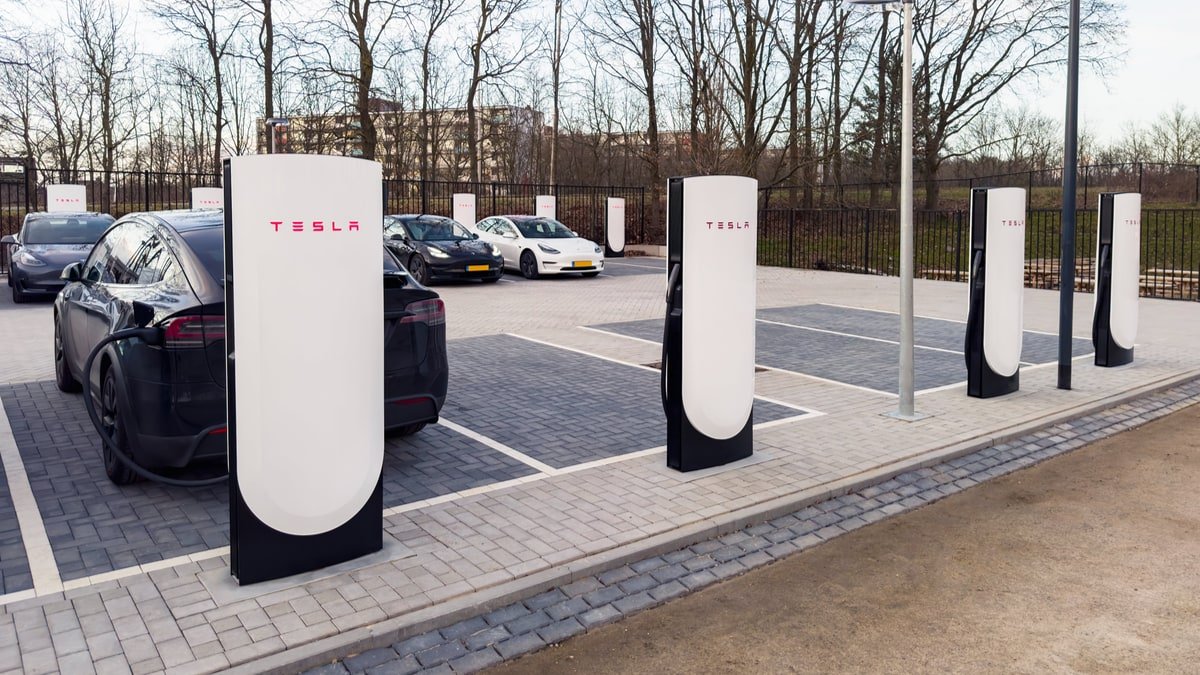
Tesla’s newest Supercharger V4 stations are significantly more advanced than their predecessors.
1. Upgraded Charging Speed
-
V4 stalls offer up to 350 kW peak power, reducing charging time for Model 3/Y by up to 30%.
-
Adaptive cooling systems allow consistent fast charging in hot or cold climates.
2. Longer Charging Cables
-
Designed to accommodate non-Tesla EVs with different port locations.
-
Cable length flexibility improves usability across all vehicle types.
3. Integrated Payment Terminals
-
Tesla now offers card-based payments on many V4 units in Europe—no app required.
-
Enables quick access for tourists, business travelers, and rental EVs.
4. Enhanced Safety and Visibility
-
Built-in lighting, weather shields, and high-contrast interfaces help improve nighttime usability.
V. Why Tesla Is Investing Heavily in European Charging Now
Several key reasons drive Tesla’s aggressive expansion:
1. Maintaining Competitive Edge
-
Europe’s charging networks from Ionity, EnBW, and BP Pulse are growing—but still fragmented.
-
Tesla’s vertically integrated system ensures superior reliability and user experience.
2. Regulatory Advantage
-
EU Green Deal supports private EV infrastructure projects.
-
Tesla receives funding incentives from local governments and municipalities.
3. Open Access Monetization
-
By opening Superchargers to non-Tesla EVs, Tesla generates additional revenue without vehicle sales.
-
Helps fund further network growth while introducing new customers to the Tesla ecosystem.
4. Strengthening Brand Loyalty
-
Fast, convenient charging reinforces Tesla’s value proposition, reducing churn to other brands.
VI. Owner Experience: How Supercharging Has Improved in 2025
1. Real-Time Status via Software Update
-
As of 2025.20.6, Tesla vehicles now show live Supercharger status, estimated wait times, and congestion patterns.
2. Dynamic Stall Allocation
-
Advanced routing AI assigns stalls to minimize downtime.
-
Tesla app alerts you when your preferred charger becomes available.
3. Faster Billing and Charging Start
-
Plug & Charge 2.0 enables immediate power transfer once cable connects.
-
VAT receipts now automatically generated for EU business users.
4. Tesla Charging Membership
-
New tiered memberships offer:
-
Priority access
-
Discounted kWh rates
-
Free charging on holidays and weekends
-
VII. Non-Tesla Drivers: How Supercharger Access Works in 2025
1. Supported EV Models
-
Any CCS-compatible EV can use open Superchargers.
-
Tesla app required to initiate and end session unless V4 terminal has card reader.
2. Pricing Tiers
-
Non-members: €0.55–€0.75/kWh depending on location.
-
Tesla owners: Typically 15–20% cheaper, with loyalty bonuses.
3. Limitations
-
Some legacy Superchargers (V2, early V3) still remain exclusive.
-
Cable reach can still be a challenge for certain car models (e.g., Audi e-tron, Mercedes EQE).
VIII. Future-Proofing the Network
1. Solar-Powered Sites
-
Tesla’s Energy division is rolling out solar panels and Powerwalls at over 150 Superchargers in Europe by 2026.
2. Battery Buffering
-
Superchargers in remote or energy-constrained areas use on-site battery packs to reduce strain on the grid.
3. Autonomous Compatibility
-
Superchargers are being redesigned to align with Tesla’s future Autonomous Valet Parking and FSD Charging systems.
4. Mobile Superchargers
-
Trailer-based rapid deployment units available for large events and emergencies.
IX. Competitive Landscape: Tesla vs. Others
| Feature | Tesla Supercharger | Ionity | BP Pulse | Shell Recharge |
|---|---|---|---|---|
| Peak Speed | Up to 350 kW | 350 kW | 150 kW | 175 kW |
| Real-time Status | Yes | Limited | No | Partial |
| Cross-border Access | Full EU/UK | Limited roaming | Mixed | Limited |
| Open to All EVs | Yes (70% locations) | Yes | Yes | Yes |
| Price per kWh | €0.39–€0.59 | €0.69–€0.79 | €0.45–€0.65 | €0.55–€0.75 |
X. Conclusion
Tesla’s 2025 European Supercharger expansion isn’t just about convenience—it’s about locking in long-term EV leadership. By combining technology, user experience, and open-network access, Tesla is transforming its charging stations from a proprietary perk into a pan-European charging backbone.
For Tesla owners, this means faster, smarter, and more reliable charging than ever before. For the broader EV market, Tesla’s infrastructure push is forcing competitors to improve—or be left behind.
As Europe races toward full electrification, Tesla’s Supercharger network may prove to be the most valuable asset of all—one that supports not just cars, but the company’s mission to accelerate the world’s transition to sustainable energy.
XI. FAQ
Q1: Can non-Tesla EVs use Superchargers in Europe now?
Yes. About 70% of European Superchargers are now open to CCS-equipped EVs.
Q2: What’s the fastest charging speed available?
V4 Superchargers support up to 350 kW for compatible vehicles, allowing 15–20 minute charges.
Q3: How do I find the nearest available Supercharger?
Use the Tesla app (even as a non-owner) or onboard navigation in a Tesla vehicle. New filters include real-time congestion.
Q4: Will Supercharging always be cheaper than fuel?
Yes, in most cases. While electricity prices vary, Tesla still undercuts gas costs per mile across most of Europe.
Q5: Are Superchargers powered by renewable energy?
Many are, and Tesla is rapidly adding solar panels and Powerwall storage across high-traffic stations.