
Introduction
As Tesla enters 2026, the company stands at a critical inflection point. For more than a decade, Tesla has defined itself not merely as an automaker, but as a technology company reshaping transportation, energy, and artificial intelligence. From mass‑market electric vehicles to autonomous driving software, humanoid robots, and purpose‑built robotaxis, Tesla’s ambitions extend far beyond selling cars. Yet with ambition comes complexity, and complexity often brings delays.
In early 2026, Tesla confirmed that several of its most anticipated next‑generation initiatives—most notably the Cybercab robotaxi platform and the Optimus humanoid robot—are progressing more slowly than many investors and customers expected. Elon Musk’s description of early production as “agonizingly slow” sparked renewed debate across the U.S. and Europe about Tesla’s execution, timelines, and long‑term strategy.
For Tesla owners and enthusiasts, these delays raise important questions. Do slower rollouts undermine Tesla’s technological lead? Or are they a necessary consequence of pursuing breakthroughs that competitors are unwilling—or unable—to attempt? This article explores Tesla’s innovation roadmap in 2026, the real reasons behind recent delays, and what they mean for the company’s future.
Tesla’s Core Innovation Pillars in 2026
Tesla’s long‑term strategy is built around several interconnected pillars. Understanding these pillars is essential to understanding why delays in one area often ripple across the entire company.
Electric Vehicle Platform Evolution
Tesla’s EV business remains the company’s financial backbone. Model 3 and Model Y continue to dominate sales in the U.S. and Europe, while Model S and Model X serve as technology showcases. However, by 2026, the EV market will have become intensely competitive. Nearly every major automaker offers electric models, many with comparable range and performance.
To maintain an edge, Tesla is shifting from incremental vehicle updates toward platform‑level transformation. This includes new manufacturing methods, structural battery packs, next‑generation power electronics, and simplified vehicle architectures. These changes are designed to reduce cost per vehicle while enabling new form factors, such as vehicles designed exclusively for autonomous operation.
Autonomous Driving and AI Software
Full Self‑Driving (FSD) remains Tesla’s most controversial and strategically important software product. Unlike competitors that rely heavily on lidar and high‑definition maps, Tesla has doubled down on vision‑based autonomy supported by massive neural networks trained on real‑world driving data.
By 2026, FSD is no longer just a driver‑assistance feature—it is the foundation for Tesla’s robotaxi ambitions. This makes autonomy not only a safety and regulatory challenge, but a revenue‑defining technology.
Cybercab: Purpose‑Built Autonomy
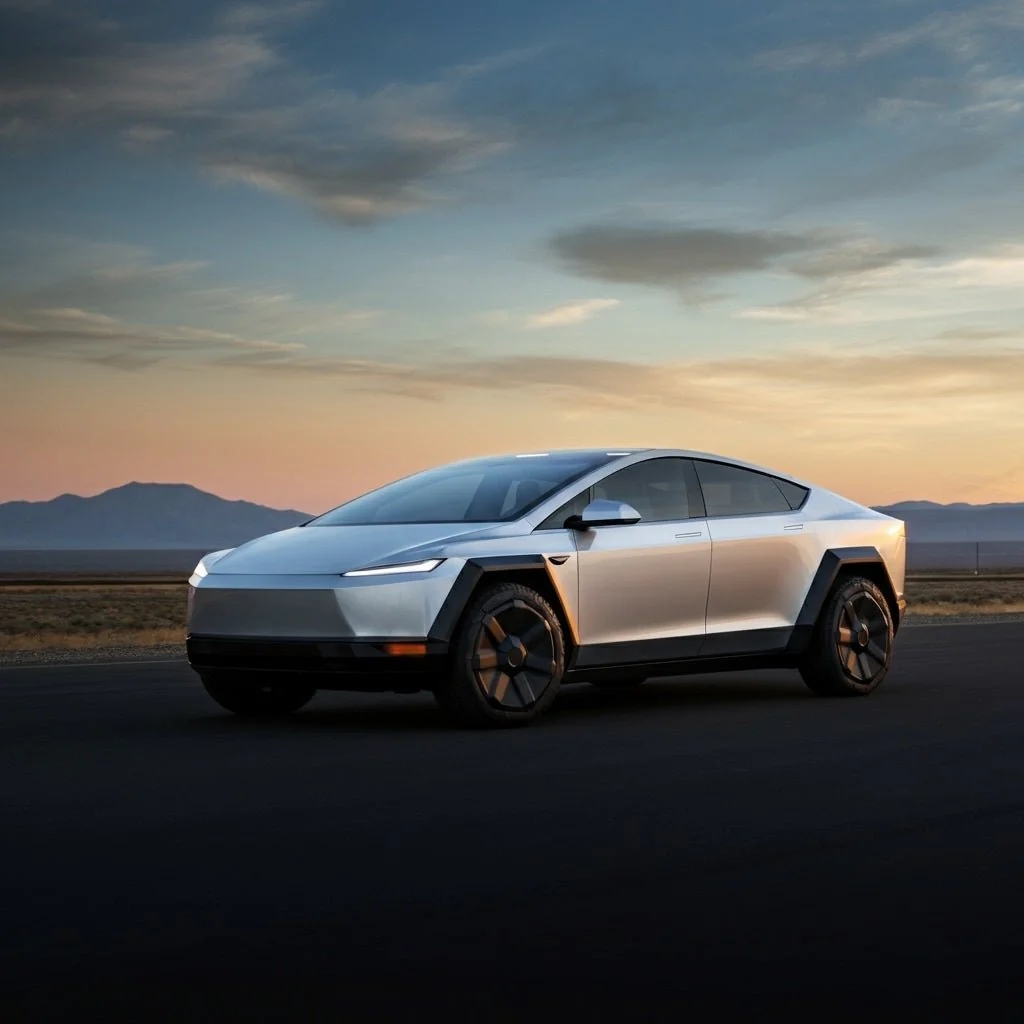
The Cybercab represents a fundamental shift in vehicle design philosophy. Unlike existing Teslas, which still include steering wheels and pedals, the Cybercab is designed from the ground up for autonomous operation. This allows Tesla to rethink interior layout, safety systems, and manufacturing processes.
However, building a vehicle without traditional controls introduces regulatory, engineering, and public‑trust challenges that are unprecedented in the automotive industry.
Optimus Humanoid Robot
Optimus may be Tesla’s most ambitious project to date. The humanoid robot is intended to perform repetitive or dangerous tasks in factories, warehouses, and eventually homes. While still early in development, Optimus leverages Tesla’s advances in AI perception, actuators, and battery technology.
The promise is enormous—but so are the technical hurdles.
What “Agonizingly Slow” Production Really Means
Elon Musk’s comment about slow production has often been misinterpreted as a sign of failure. In reality, it reflects the difference between prototype success and scalable manufacturing.
Prototype vs. Mass Production
Tesla has a long history of building impressive prototypes quickly, then encountering challenges when scaling them to mass production. The Model 3 production ramp in 2017–2018 is a well‑known example. While painful at the time, it ultimately strengthened Tesla’s manufacturing expertise.
Cybercab and Optimus face an even steeper curve. These products involve:
-
New supply chains
-
Custom chips and sensors
-
Advanced AI training pipelines
-
Safety‑critical hardware and software integration
Early production being slow is not unexpected—it is almost inevitable.
Manufacturing Complexity
Traditional vehicles benefit from over a century of industry standardization. Autonomous robotaxis and humanoid robots do not. Tesla is effectively inventing new manufacturing categories, where few proven best practices exist.
Each production bottleneck—from actuator reliability to battery thermal management—requires iterative testing and refinement. Rushing this process could compromise safety and reliability, which would be far more damaging in the long term.
Cybercab: Engineering and Regulatory Challenges
A Vehicle Without a Driver
The Cybercab’s most radical feature is the absence of manual controls. This design assumes that Tesla’s autonomous system can handle all driving scenarios within approved operating domains.
From an engineering standpoint, this demands extraordinary redundancy:
-
Multiple compute units
-
Fail‑operational braking and steering systems
-
Robust sensor fusion
Every system must function reliably without human intervention.
Regulatory Barriers in the U.S. and Europe
Regulators in both regions are cautious. While pilot programs for autonomous vehicles exist, approval for large‑scale deployment of vehicles without steering wheels remains limited.
Tesla must demonstrate not only technical capability, but also transparent safety validation. This includes accident reporting, software update controls, and cybersecurity safeguards.
Public Trust and Acceptance
Even if regulators approve the Cybercab, public perception will play a critical role. Early incidents—even minor ones—could significantly slow adoption. Tesla must balance innovation speed with trust‑building measures.
Optimus: Why Humanoid Robots Are Hard
The Challenge of General‑Purpose Robotics
Unlike industrial robots designed for fixed tasks, Optimus is intended to operate in human environments. This requires:
-
Advanced perception
-
Real‑time decision‑making
-
Fine motor control
-
Safe human‑robot interaction
Each of these areas represents a frontier of AI research.
Manufacturing at Scale
Producing humanoid robots introduces challenges beyond those of cars:
-
Precision actuators
-
Lightweight but strong materials
-
Efficient onboard power systems
Even small defects can drastically affect performance and safety.
Strategic Importance
Despite the difficulties, Optimus could become one of Tesla’s most valuable assets. If successful, it would open markets far larger than automotive alone, including logistics, manufacturing, healthcare, and domestic assistance.
AI, Dojo, and Vertical Integration
Tesla’s advantage lies in its vertical integration. By designing its own chips, training infrastructure, and software stack, Tesla reduces dependence on third parties.
Dojo Supercomputer
Dojo is central to Tesla’s autonomy strategy. It enables large‑scale training of neural networks using real‑world driving data. Improvements in Dojo directly impact FSD performance and, by extension, Cybercab viability.
Shared Intelligence Across Products
Data collected from vehicles informs robot perception. Robotics research feeds back into vehicle control algorithms. This cross‑pollination accelerates learning—but also means delays in one area affect others.
Investor Reactions and Market Expectations
Markets tend to focus on short‑term timelines, while Tesla operates on long‑term horizons. Delays often trigger volatility, but history shows that Tesla’s most ambitious projects deliver outsized impact once mature.
Investors increasingly view Tesla as a platform company rather than a traditional automaker. From this perspective, slower early production may be acceptable if it leads to defensible, scalable technology.
Competitive Landscape
Tesla is not alone in pursuing autonomy and robotics, but its approach is distinct.
Autonomous Driving Competitors
Many rivals rely on geofenced solutions and expensive sensor suites. Tesla’s camera‑based approach is riskier but potentially more scalable.
Robotics Competition
Few companies attempt humanoid robots at scale. Those that do often lack Tesla’s AI data advantage and manufacturing experience.
What These Delays Mean for Tesla Owners
For current Tesla owners, delays in Cybercab and Optimus do not diminish the value of existing vehicles. On the contrary, ongoing improvements to FSD and software features continue to enhance the ownership experience.
In the long run, the successful deployment of autonomous fleets could reduce transportation costs, influence insurance models, and reshape urban mobility.
Conclusion: Patience as a Strategic Asset
Tesla’s 2026 innovation delays are not signs of retreat—they are signs of ambition colliding with reality. Building autonomous vehicles and humanoid robots at scale is among the most complex engineering challenges humanity has attempted.
For Tesla, moving slowly at the beginning may be the fastest path to long‑term success. If Cybercab and Optimus eventually deliver on their promise, the temporary frustration of delays will likely be remembered as the cost of building the future.
FAQ
Why is Cybercab production slower than expected?
Because it introduces a completely new vehicle category with unprecedented regulatory and engineering requirements.
Does this affect Tesla’s existing vehicles?
No. Core EV production and software updates continue independently.
Is Optimus still experimental?
Yes, but progress is steady. Tesla views Optimus as a long‑term investment.
Should investors be concerned?
Only if they expect short‑term results from long‑term innovation.
When will these products scale?
Exact timelines remain uncertain, but gradual expansion is expected later in the decade.