
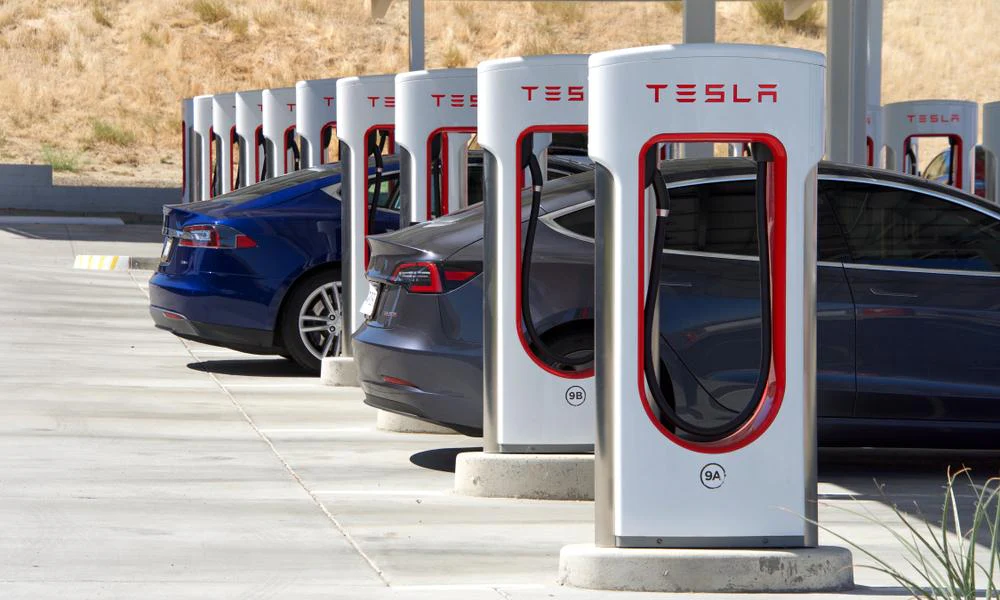
Tesla’s Supercharger network has long been one of the company’s strongest competitive advantages. Unlike other automakers that rely on third-party charging providers, Tesla has built a proprietary infrastructure that combines speed, reliability, and integration with its vehicles. In 2025, Tesla is accelerating its European charging network expansion, including retrofitting older sites, adding Megawatt Charging capabilities, and opening access to non-Tesla EVs under regulatory and market pressures. For European drivers, this expansion could reshape how they experience long-distance electric travel.
This article explores Tesla’s latest charging initiatives in Europe, the technology behind its Supercharger network, the implications for Tesla owners, and what it means for the broader EV market.
Background: The Evolution of Tesla’s Superchargers
Tesla launched its first Superchargers in 2012 in California, promising “30 minutes of charging for 3 hours of driving.” Over time, the company has dramatically improved speed, reliability, and coverage.
-
V1 and V2 Chargers (2012–2019): Speeds up to 150 kW.
-
V3 Chargers (2019 onward): Up to 250 kW, enabling ~200 miles of range in 15 minutes.
-
V4 Chargers (2023 onward): Modular design, higher capacity, integrated payment solutions, and support for CCS2 in Europe.
-
Megawatt Charging (2025): Still in pilot, aimed at heavy-duty EVs and Cybertruck-compatible stations.
Tesla’s network now exceeds 6,000 stations worldwide, with Europe representing one of its fastest-growing regions. Countries like Germany, France, the UK, and Norway lead adoption due to strong EV incentives and dense infrastructure needs.
Tesla’s 2025 European Expansion Plans
In 2025, Tesla is doubling down on Europe for three reasons: regulatory alignment, growing EV adoption, and competition.
1. Retrofitting Older Stations
Many of Tesla’s first European Superchargers were V2 models capped at 150 kW. Tesla has begun upgrading these to V3 and V4, ensuring faster charging speeds and compatibility with the latest vehicles. For Tesla drivers, this reduces bottlenecks and makes cross-continental trips more seamless.
2. Introducing V4 Superchargers at Scale
Tesla’s V4 Superchargers feature taller, more powerful stalls with longer cables to accommodate a wider range of EVs. This design addresses criticism that earlier Superchargers were optimized for Tesla’s port placement, making it inconvenient for non-Tesla vehicles.
3. Expanding Access to Non-Tesla EVs
Under European Union requirements and market demand, Tesla has opened a growing share of its Supercharger network to other EV brands using the CCS2 standard. This move brings in new revenue streams but raises concerns among Tesla owners about congestion. Tesla says new software solutions, including dynamic pricing and prioritization for Tesla drivers, will help manage demand.
4. Exploring Megawatt Charging
Although primarily aimed at semi-trucks and commercial fleets, Tesla’s investment in Megawatt Charging infrastructure signals future readiness for ultra-high-capacity EVs. In Europe, this technology could also benefit buses and logistics companies as the continent pushes toward zero-emission transport.
Benefits for Tesla Owners
Tesla owners remain at the core of this expansion strategy. The upgrades offer several direct advantages:
-
Faster Travel: V3 and V4 chargers shorten stop times, making long trips less stressful.
-
Broader Coverage: New installations in rural areas, highways, and border crossings enable easier cross-country journeys.
-
Smarter Integration: In-car navigation now factors in charger availability, pricing, and congestion, reducing wait times.
-
Improved Reliability: Tesla’s vertically integrated approach means maintenance and uptime remain higher than many competitors’ networks.
For Tesla owners in Europe, these changes reinforce the brand’s premium positioning while easing one of the biggest pain points of EV adoption: charging anxiety.
Impact on the Broader EV Market
Tesla’s decision to open its network to non-Tesla EVs has far-reaching consequences:
-
Standardization Pressure: With Tesla chargers using CCS2 in Europe, other automakers gain reassurance that their vehicles will have reliable access.
-
Competitive Benchmark: Rivals such as Ionity, Fastned, and Shell Recharge must keep pace in pricing, reliability, and charging speed.
-
Market Growth: Easier access to reliable charging boosts confidence among EV skeptics, accelerating the transition from internal combustion vehicles.
In this sense, Tesla is not only expanding its own customer benefits but also shaping Europe’s entire EV ecosystem.
Challenges and Criticisms
Tesla’s expansion is not without hurdles:
-
Congestion Risks: More non-Tesla EVs at stations may cause wait times, frustrating loyal Tesla owners.
-
Infrastructure Costs: Upgrading stations to V4 and deploying Megawatt Charging requires massive capital investment.
-
Grid Strain: Rapid growth in ultra-fast charging places stress on local grids, requiring coordination with utilities and governments.
-
Regulatory Complexity: Different European countries have varying policies on pricing transparency, accessibility, and renewable energy integration.
These challenges will test Tesla’s ability to maintain its reputation for seamless long-distance travel.
Looking Ahead
Tesla’s European charging strategy is both ambitious and necessary. With EV adoption rising sharply, charging infrastructure will determine consumer satisfaction and brand loyalty. If Tesla succeeds in balancing expansion, open access, and owner satisfaction, it will further entrench its leadership in Europe’s EV landscape.
Over the next five years, expect:
-
A complete transition from V2 to V4 Superchargers.
-
Broader non-Tesla integration, with dynamic pricing ensuring fair use.
-
Early deployment of Megawatt Charging along major freight corridors.
-
Stronger partnerships with European governments to ensure grid stability.
Conclusion
Tesla’s charging network has always been more than just plugs and cables — it is a strategic moat that reinforces the brand’s dominance. In 2025, the expansion across Europe underscores Tesla’s recognition that charging is the backbone of the EV revolution. By upgrading old stations, rolling out V4 chargers, opening access to non-Tesla vehicles, and preparing for Megawatt Charging, Tesla is positioning itself not just as an automaker, but as a critical infrastructure provider.
For Tesla owners, the benefits are clear: faster, more reliable, and more widespread charging. For the EV industry, the implications are even greater, signaling a new phase in Europe’s electrification journey where charging networks are as competitive and influential as the vehicles themselves.
FAQs
Q1: Will all Tesla Superchargers in Europe be opened to non-Tesla EVs?
Not all stations. Tesla is selectively opening locations while monitoring usage, grid capacity, and congestion.
Q2: What is the charging speed difference between V3 and V4 Superchargers?
Both support up to 250 kW, but V4 is designed for future higher-capacity upgrades and has better physical accessibility.
Q3: Will Tesla owners get priority access if stations are crowded?
Tesla has introduced dynamic pricing and queue management tools to encourage fair access while prioritizing Tesla vehicles where possible.
Q4: How does Tesla compare to networks like Ionity in Europe?
Tesla leads in reliability, integration, and coverage. Ionity often provides faster peak speeds (up to 350 kW), but Tesla’s real-world experience is more consistent.
Q5: How will Megawatt Charging affect regular EV owners?
It won’t immediately impact consumer vehicles, but it shows Tesla’s readiness for future heavy-duty EV adoption, which could strengthen overall grid and infrastructure investment