
Introduction: The New Decision Tree
In early 2026, deciding whether to pay for Tesla’s Full Self‑Driving (Supervised) is no longer a simple yes‑or‑no question. Tesla is ending the option to buy FSD as a one‑time “lifetime of the vehicle” purchase after February 14, 2026, and is moving to a subscription‑only model at 99 USD per month in the US.
At the same time, Tesla has removed the traditional Autopilot package from new vehicles in the US and Canada and now includes Traffic‑Aware Cruise Control (TACC) as the standard baseline, with FSD as the main paid upgrade. This means owners must choose not just between “FSD or not,” but between paying upfront before the deadline, going subscription‑only, or deliberately waiting—especially in Europe, where approvals are still pending.
Understanding Today’s Feature Set
What the Standard Package Gives You
On new Teslas sold in the US and Canada, the default driver‑assistance experience is Traffic‑Aware Cruise Control rather than the older “Autopilot” bundle. TACC maintains speed and distance to the vehicle in front and can smoothly adjust to changing traffic, reducing fatigue on longer drives.
TACC is not lane‑keeping automation; it does not steer for you, plan lane changes, or negotiate junctions. It simply manages speed and following distance. For many owners who mainly do short trips or drive in dense urban environments where speeds are low and constant, this baseline may already provide a noticeable comfort upgrade without extra payment.
What Supervised FSD Adds on Top
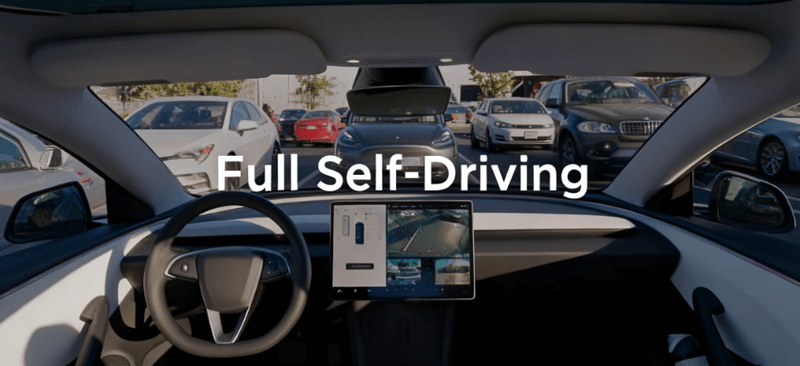
Full Self‑Driving (Supervised) adds a much broader suite of functions on top of TACC. According to Tesla’s support documentation, FSD combines advanced lane‑keeping, automated lane changes, navigation‑based routing on highways and city streets, and the ability to respond to traffic lights, stop signs, and other road controls under driver supervision.
In practice, this means that with FSD engaged, the car can:
-
Follow a navigation route across a mix of city and highway roads.
-
Handle many turns, merges, and exits without direct steering input.
-
Adjust speed intelligently to traffic and road conditions.
-
Stop and start at intersections where traffic lights or stop signs are present.
However, Tesla clearly states that the system is supervised. The driver must keep hands ready on the wheel, remain attentive, and be prepared to intervene at any time. Legally, FSD is treated as a Level‑2 driver‑assistance system, not as full autonomy, in both the US and potential European deployments.
Limitations and Expectations
Despite its name, Supervised FSD is not perfect and will not turn every commute into a fully hands‑off ride. It can still make awkward decisions in unusual situations, misinterpret poorly marked roads, or behave conservatively in complex intersections.
Owners should treat FSD as a powerful co‑pilot that reduces workload, not as an autopilot that frees them from responsibility. Understanding this distinction is key before making any financial decision.
Pricing in 2026: One‑Time Purchase vs Subscription
The 8,000 USD Purchase Option and Its Deadline
For a limited time, Tesla is still offering FSD as a one‑time purchase at 8,000 USD in the US, but this option disappears after February 14, 2026. Elon Musk announced that after that date, FSD will only be available as a monthly subscription.
This deadline effectively divides buyers into two cohorts:
-
Those who buy before February 14 and “lock in” FSD access on that specific vehicle for a one‑time payment.
-
Everyone else, who will only be able to subscribe at monthly rates that Tesla has said are likely to rise as capabilities improve.
The decision is especially relevant for owners who tend to keep their cars for many years and drive high annual mileage.
The 99 USD/Month Subscription Today
As of January 2026, Tesla’s North American support page lists FSD (Supervised) at 99 USD per month, with eligibility limited to vehicles that have the necessary FSD computer hardware.
Key characteristics of the subscription model include:
-
You can subscribe directly from the Tesla app or the vehicle’s touchscreen.
-
You can cancel at any time, but the subscription is not prorated: you keep FSD until the end of the billing period, and there are no partial refunds.
-
If you sell the car, the subscription does not transfer to the next owner; the new owner must start their own subscription if they want FSD.
This flexibility makes the subscription attractive for owners who want to experiment with FSD for a few months on specific trips without committing to an 8,000 USD upfront payment.
How Long Until Subscription Costs Catch Up?
At 99 USD per month, a simple breakeven calculation is:
-
8,000 USD one‑time purchase ÷ 99 USD/month ≈ 80.8 months, or about 6.7 years of continuous subscription.
If you are confident you will keep the car and actively use FSD for more than six to seven years, the one‑time purchase could be cheaper in the long run. If you anticipate selling the car earlier—or only turning FSD on during certain seasons or life phases—the subscription likely makes more sense.
Of course, this comparison assumes the price stays at 99 USD per month, but Elon Musk has explicitly said the subscription fee will rise as FSD’s capabilities improve. This makes the economics more favorable to Tesla over time and adds uncertainty for buyers planning on long‑term use.
Regulatory Timing in Europe
The Path to FSD in Europe
For European owners, the financial decision around FSD is bound up with regulatory timing. Tesla has outlined a path in which the Dutch vehicle authority RDW will issue a Netherlands national approval for FSD (Supervised), with February 2026 as the target.
The idea is that once RDW grants an exemption and national approval, other EU states can recognize that decision and allow local deployment, followed by a formal EU‑wide vote at the Technical Committee on Motor Vehicles (TCMV).
Tesla Europe has actively encouraged owners to express support to regulators, underlining how important this approval is for both the company and the owner community.
Uncertain Timing and Conditions
European regulators have signaled both interest and caution. RDW has noted that while efforts are underway and a February 2026 decision is a goal, the timeline is not guaranteed. The regulator emphasized that Tesla must demonstrate that FSD (Supervised) meets the applicable safety and functional requirements before an approval is granted.
Moreover, an initial approval may come with conditions:
-
Limits on maximum speed in certain scenarios.
-
Restrictions on use in specific environments (for example, highways vs city centers).
-
Enhanced driver‑monitoring and stricter disengagement thresholds.
This means that European owners considering an FSD purchase or subscription in early 2026 are partially betting on a regulatory outcome and timeline that is not fully in Tesla’s control.
Pricing Expectations in Europe
Although Tesla has not yet finalized FSD subscription prices for every European market, existing documentation and commentary around the 8,000 USD one‑time price and 99 USD/month subscription in North America provide benchmarks. Some European analysis suggests similar pricing levels, adjusted for local currencies and taxes, but any final structure will depend on local regulations and perceived value at launch.
For now, the safer assumption is that FSD in Europe will be priced as a premium add‑on and that both upfront and subscription prices can evolve once deployment begins.
Owner Personas and Recommendations
High‑Mileage US Commuters
If you drive significant highway and suburban mileage in the US—say 20,000–30,000 miles per year—FSD may deliver ongoing benefits in reduced fatigue and smoother long‑distance travel. For such owners, the daily experience of letting the car handle much of the steering and speed management on long routes can be worth the expense, even while supervision is mandatory.
Guidance for this persona:
-
If you plan to keep the car for more than 5–7 years, and FSD already works well on your typical routes, the one‑time 8,000 USD purchase before February 14 is worth serious consideration.
-
If you are unsure about long‑term ownership, subscribing for several months on your actual commute is the best way to quantify the benefit before committing.
Long‑Distance Road‑Trip Families
Families who regularly take long interstate road trips in the US can benefit from FSD’s highway performance and navigation features, which reduce driver stress and help maintain consistent speeds over hours of driving.
For these owners, FSD does not need to be active year‑round. A practical strategy is:
-
Subscribe during periods when you know you’ll travel heavily (vacations, cross‑country moves, seasonal family visits).
-
Cancel during quieter phases when you mainly drive short local trips.
This “seasonal subscription” can make FSD feel like an on‑demand upgrade tailored to your lifestyle.
European Business Travelers and Cross‑Border Drivers
Many European Tesla owners travel frequently across borders—Germany to the Netherlands, France to Belgium, or Scandinavia to mainland Europe. For them, FSD’s value depends heavily on uniform regulatory approvals and cross‑country feature parity.
Guidance for this persona:
-
Avoid paying upfront until there is clear evidence that FSD has been approved in both your home country and the main countries you visit.
-
Once approvals are in place, consider starting with a subscription to test real‑world performance across your typical routes.
-
Pay attention to any country‑specific limitations that might reduce FSD utility in city centers or on certain classes of roads.
City‑Only and Low‑Mileage Owners
Owners who mostly drive short distances in dense urban environments, rack up low annual mileage, or use their Tesla as a second car may see much less benefit from FSD—especially in the current supervised form, which still requires close attention.
For this group:
-
The standard TACC baseline already reduces fatigue in slow or stop‑and‑go traffic.
-
FSD’s additional capabilities may simply not be used often enough to justify the cost.
-
Waiting for unsupervised capabilities or more proven city‑street performance in your specific area may be the most rational choice.
Fleet Owners and Ride‑Share Drivers
Owners who use their Teslas for ride‑hailing or fleet operations view FSD differently. For them, the question is whether FSD can increase daily earnings by allowing more trips, reducing driver fatigue, or—in the future—enabling robotaxi operation when unsupervised features become legal.
For now, FSD remains supervised, so cost‑benefit analysis must be conservative. Subscriptions that are toggled on during peak business periods might make sense, while paying 8,000 USD upfront before regulations catch up may be risky.
Future‑Proofing and Hardware Concerns
Hardware Requirements for FSD (Supervised)
Tesla’s own documentation notes that FSD subscription eligibility depends on having the appropriate FSD computer (sometimes referred to as Hardware 3 or later). Vehicles that lack this hardware may require a retrofit, which could be free or paid, depending on original configuration and region.
Owners should confirm:
-
Which hardware revision does their car have?
-
Whether Tesla offers or requires a hardware upgrade before enabling FSD.
-
How long such an upgrade takes and whether it impacts the timeline for enjoying FSD after purchase or subscription.
What About Unsupervised FSD and Future Upgrades?
Elon Musk has repeatedly linked the high price and value jump of FSD to future unsupervised operation, where you can be “on your phone or sleeping for the entire ride.” There is an open question about whether current hardware will be sufficient to support such capabilities reliably, or whether a new generation of computers and sensors will be required.
Tesla has historically offered some hardware upgrades when shifting from older to newer Autopilot platforms, but policy details, regional differences, and pricing can change over time. Buying FSD today does not guarantee that future unsupervised versions will run on your current vehicle without additional cost or changes.
This uncertainty is a key reason why some owners prefer subscriptions: they can wait and see how hardware and software evolve, rather than betting on a specific combination in 2026.
Psychological and Ethical Dimensions
Responsibility and Attention
Supervised FSD can create a psychological mismatch between how the system behaves and how drivers feel. When the car handles most tasks smoothly for long periods, it is natural for the driver’s attention to drift. Yet legally and practically, the driver must remain ready to intervene at all times.
This mismatch can be dangerous if owners over‑trust the system, misunderstand its limitations, or treat the “Full Self‑Driving” name as a literal promise. Before paying for FSD, owners should honestly assess their own capacity to stay vigilant while the car does much of the visible work.
Ethical Issues in Mixed Traffic
Even at Level 2, widespread use of advanced driver‑assistance in city environments raises ethical questions. Pedestrians, cyclists, and other drivers may not know when a nearby Tesla is under FSD supervision or being actively driven, yet their safety is affected by how well the system and the supervising driver perform.
In Europe, regulators and civil‑society groups have been especially attentive to these concerns. The debate will continue as FSD deployments expand, and owners should recognize that their personal use of FSD contributes to broader societal acceptance—or resistance—of automated driving.
Practical Checklists for Owners
A Simple Decision Flow for US Owners
For US owners, a practical decision tree in early 2026 looks like this:
-
How long will you keep your current Tesla?
-
More than 6–7 years: consider the one‑time 8,000 USD purchase if you will use FSD heavily.
-
Less than 5 years: lean toward subscription or waiting.
-
-
How much do you drive, and where?
-
High highway mileage (commuting, road trips): FSD can deliver more daily value.
-
Mainly short city trips: the benefit is smaller; try a subscription before making a big purchase.
-
-
Are you comfortable supervising an imperfect system?
-
If yes, FSD can be a strong upgrade.
-
If not, wait until more mature versions or unsupervised capabilities are available.
-
-
How sensitive are you to subscription price increases?
-
If you dislike pricing uncertainty, a one‑time purchase before February 14 provides predictability on that vehicle.
-
If you value flexibility more, subscription is the better fit.
-
A Decision Flow for European Owners
For European owners, the flow adds regulatory uncertainty:
-
Is FSD fully approved and active in your country today?
-
If not, paying a large upfront amount is effectively pre‑ordering a product whose local feature set and timing are not guaranteed.
-
-
How likely is approval within your ownership horizon?
-
If you expect to keep the car longer than five years and are confident approvals will arrive soon, consider waiting for the official launch and then trialing FSD via subscription.
-
-
Do you drive extensively across borders?
-
If yes, you need FSD to work reliably in multiple countries to realize its full value. Pay close attention to Tesla’s and RDW’s updates on the Europe‑wide rollout.
-
-
What is your risk tolerance?
-
Conservative: wait for clear regulatory approval, owner feedback, and pricing details before paying anything.
-
Aggressive: be ready to adopt early, but accept potential limitations and changes imposed by regulators.
-
Testing FSD Before Committing
Regardless of region, one of the strongest arguments for the subscription model is that it lets owners run personal experiments:
-
Subscribe for a month and use FSD on all your typical routes.
-
Track how many interventions you make, how much fatigue it saves, and how comfortable your family feels.
-
At the end of the month, ask whether the experience is worth the ongoing cost—or an 8,000 USD upfront purchase.
This data‑driven approach beats relying on marketing claims or third‑party videos alone.
Conclusion
In 2026, the question “Should I buy FSD?” has evolved into a more nuanced inquiry: “Given where I live, how I drive, and how long I will keep this car, which access model—purchase, subscription, or waiting—actually makes sense?” For US owners, Tesla’s move to a subscription‑only world after February 14 and the current 99 USD/month pricing create a clear trade‑off between locking in FSD on a specific vehicle and retaining flexibility.
For European owners, regulatory timelines are the decisive factor. With RDW and EU authorities still evaluating FSD (Supervised) and the February 2026 approval target not yet guaranteed, paying large sums upfront before local deployment may be premature. A cautious strategy of waiting for approval and then experimenting with subscriptions is often more prudent.
Across both regions, the safest mindset is to treat FSD as a powerful but evolving service rather than a magic switch to full autonomy. Subscriptions, hardware requirements, regulatory limits and personal tolerance for supervising automation all matter. By using the checklists and personas in this guide, owners can move beyond hype and make practical, case‑by‑case decisions that fit their real driving lives.