
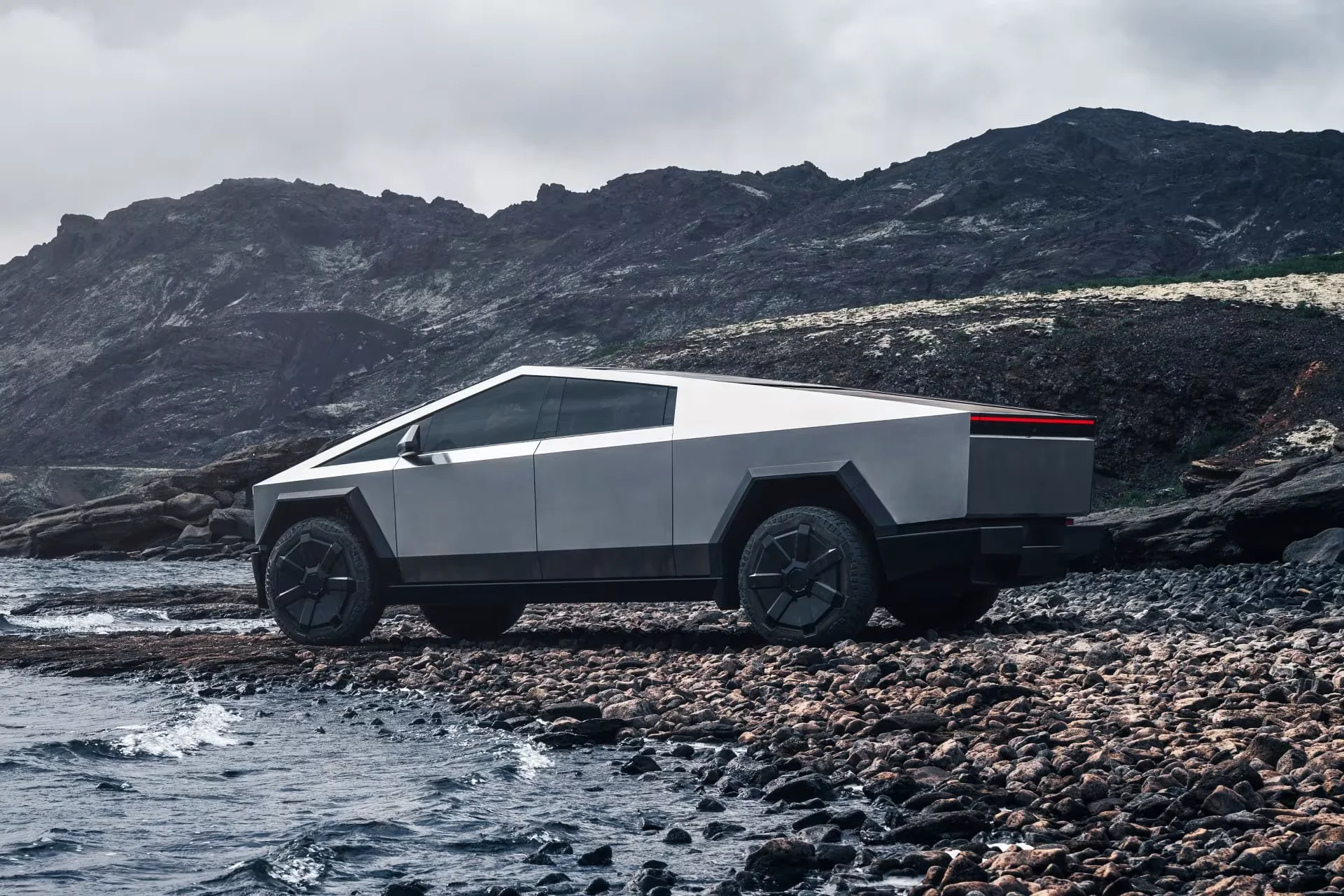
Tesla has never been a company that follows the conventional rules of the automotive industry. From bold product announcements to last-minute design pivots, Tesla thrives on disruption. The Cybertruck—Tesla’s most radical vehicle to date—has embodied this philosophy from the moment it was unveiled in 2019. With its stainless steel exoskeleton, angular design, and futuristic features, the Cybertruck has attracted both loyal fans and skeptical critics.
But in September 2025, Tesla made a surprising announcement that shook its customer base: the removal of the rear-wheel drive (RWD) base trim of the Cybertruck. For many buyers, this was the affordable entry point into Tesla’s all-electric pickup. Its exit has left questions about Tesla’s strategy, affordability, and long-term vision for the Cybertruck lineup.
This article dives deep into what the removal of the Cybertruck RWD trim means for buyers, investors, and the electric vehicle (EV) market at large. It covers why Tesla made the decision, what alternatives remain, and how this will reshape the EV truck landscape in the U.S. and Europe.
Chapter 1: Background of the Cybertruck
1.1 The 2019 Reveal and Initial Promises
When Tesla unveiled the Cybertruck, it promised multiple trims to fit various buyer budgets and needs. At the time, the lineup included:
-
A single-motor rear-wheel drive (RWD) base model priced at under $40,000.
-
A dual-motor all-wheel drive (AWD) option.
-
A tri-motor performance model with extreme towing and range.
The RWD model was intended to democratize access to Tesla’s futuristic truck, especially for first-time EV buyers.
1.2 Shifting Market and Rising Costs
Over time, Tesla adjusted prices and delivery timelines. Rising supply chain costs, increased demand for high-margin trims, and inflationary pressures reshaped Tesla’s vehicle strategy.
By the time Cybertruck production began in late 2023, the base RWD model had already seen delays. Buyers in the U.S. and Europe wondered whether it would truly reach mass production.
1.3 The September 2025 Announcement
Tesla confirmed the RWD trim would no longer be offered, citing low demand projections, higher production complexity, and its desire to prioritize AWD and higher-performance models. This marked the official end of the most affordable Cybertruck option.
Chapter 2: Why Tesla Canceled the RWD Cybertruck
2.1 Focus on Margins
Tesla’s financial health relies heavily on gross margins. Higher-trim Cybertrucks, with dual or tri-motor setups, offer better profit margins than the entry-level RWD model. Removing the lower-margin option reduces financial risk.
2.2 Market Trends in the U.S.
In the U.S., pickup buyers often value power, towing capacity, and all-weather capability. Tesla likely saw limited long-term demand for a single-motor RWD truck in a segment dominated by AWD competitors such as the Rivian R1T, Ford F-150 Lightning, and Chevy Silverado EV.
2.3 Production Simplification
The Cybertruck’s unique stainless steel exoskeleton and unorthodox design already make it complex to manufacture. Streamlining trims reduces supply chain complexity and accelerates production scaling.
2.4 Strategic Brand Positioning
By eliminating the entry-level trim, Tesla positions the Cybertruck as a premium lifestyle and performance product, aligning it with the high-end EV truck segment rather than budget-conscious buyers.
Chapter 3: Impact on U.S. Buyers
3.1 Loss of Affordable Entry Point
For many American consumers, the RWD model represented the only Cybertruck within their price range. Its cancellation raises the entry price significantly, making the Cybertruck less attainable.
3.2 Comparisons with Competitors
Without the RWD model, Tesla faces increased competition from Ford’s F-150 Lightning Pro, Rivian’s R1T, and Chevrolet’s Silverado EV, which still offer lower entry trims.
3.3 Resale and Pre-Order Implications
Buyers who pre-ordered the RWD Cybertruck face cancellations or forced upgrades to more expensive trims. This could fuel frustration and impact Tesla’s brand loyalty.
3.4 Rural vs. Urban Buyers
Urban buyers may have been more likely to prefer the RWD version for commuting and light hauling. Rural buyers, however, often need AWD for harsh conditions, meaning Tesla’s strategy could reflect a stronger rural targeting.
Chapter 4: Impact on European Buyers
4.1 Market Differences in Europe
Unlike the U.S., Europe has a smaller pickup truck market. Buyers often prioritize EV range, efficiency, and sustainability over towing capacity. The RWD model could have appealed to European early adopters, especially in cities like Berlin, Amsterdam, and London.
4.2 Import and Regulatory Costs
European buyers already face higher Tesla prices due to VAT, import fees, and regulatory costs. The loss of the RWD option makes the Cybertruck even more expensive, limiting its appeal outside wealthier EV enthusiasts.
4.3 Infrastructure Considerations
European infrastructure is less suited for oversized pickups. Without a cheaper trim, Tesla risks positioning the Cybertruck as a niche luxury product in Europe rather than a mass-market choice.
Chapter 5: Broader Industry Implications
5.1 Tesla’s Pricing Strategy Shift
Tesla’s decision signals a broader pivot toward profitability over accessibility. This could impact how other automakers price their EV trucks.
5.2 EV Truck Competition
Rivian, Ford, and GM may see an opportunity to capture budget-conscious buyers abandoned by Tesla’s decision.
5.3 Stock Market Signals
The cancellation suggests Tesla will focus on higher-margin segments. Investors may interpret this as a positive sign for profitability, but it risks alienating some customers.
5.4 Sustainability Concerns
Eliminating the RWD trim could slow Tesla’s progress toward mass EV adoption, as affordability is critical to reducing ICE (internal combustion engine) reliance.
Chapter 6: Alternatives for Buyers
6.1 Upgrading to AWD or Tri-Motor Cybertrucks
Buyers who can afford the upgrade may benefit from stronger performance and longer range.
6.2 Looking at Other Tesla Models
Some RWD buyers may pivot to the Tesla Model Y or Model 3, which remain relatively affordable.
6.3 Exploring Non-Tesla EV Trucks
The Ford F-150 Lightning, Rivian R1T, and Chevy Silverado EV offer lower entry trims with competitive range and features.
6.4 Waiting for a Future Tesla Model
It’s possible Tesla could reintroduce a more affordable pickup in the future, perhaps under a different model line.
Chapter 7: Lifestyle and Ownership Considerations
7.1 Who the Cybertruck Is Now For
The Cybertruck now caters more toward tech-forward, high-income buyers who want performance and exclusivity.
7.2 Insurance and Maintenance Costs
Higher trims come with higher insurance premiums and potentially more expensive parts, further raising total ownership costs.
7.3 Resale Value Projections
While more expensive, AWD and tri-motor Cybertrucks may hold better resale value due to stronger performance.
7.4 Cultural Impact
The RWD removal could reinforce the Cybertruck’s role as a cultural icon rather than a mainstream utility truck.
Conclusion
The cancellation of the RWD Cybertruck trim is more than just a product decision—it’s a strategic shift that underscores Tesla’s priorities in the EV truck market. For U.S. buyers, it raises the entry price of the Cybertruck significantly, pushing some toward competitors. For European buyers, it risks positioning the Cybertruck as an expensive niche product.
At the same time, Tesla’s move simplifies production, strengthens margins, and aligns the brand with performance-driven buyers. Whether this strategy pays off depends on how well Tesla balances profitability with accessibility in the years ahead.
For now, buyers will need to reassess whether the Cybertruck fits their needs and budgets—or whether other EV trucks will better serve them in this rapidly growing market.
FAQ
Q1: Why did Tesla cancel the RWD Cybertruck?
Tesla cited low demand projections, production simplification, and a focus on higher-margin trims.
Q2: What does this mean for pre-order holders?
Those who reserved the RWD Cybertruck may be offered options to upgrade to AWD or cancel their orders.
Q3: Will this affect Cybertruck availability in Europe?
Yes, the Cybertruck will now enter the European market at a higher price point, limiting accessibility.
Q4: Are there affordable alternatives?
Yes. The Ford F-150 Lightning Pro, Rivian R1T base trim, and Chevy Silverado EV entry models remain competitive.
Q5: Could Tesla reintroduce a budget pickup?
It’s possible, though unlikely in the near term, as Tesla is prioritizing higher-end trims.