
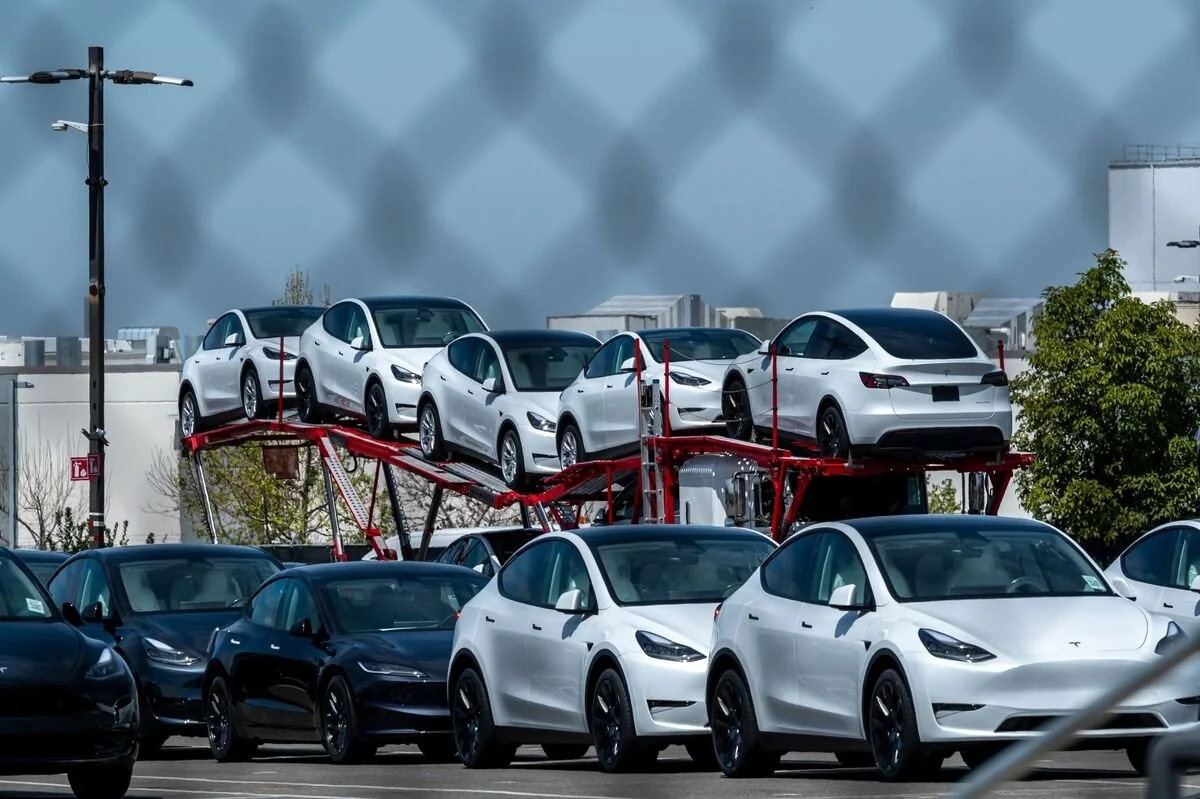
Europe’s electric vehicle (EV) market is undergoing rapid expansion and fragmentation. New entrants from China, revitalized European OEMs, evolving regulation, subsidies, and consumer demand are converging to make Europe one of the most fiercely contested battlegrounds for EV makers. Tesla, once considered a dominant force across Europe, now faces mounting pressure from more localized, cost-competitive models, shifting consumer preferences, and brand challenges.
This article offers a comprehensive analysis of the European EV competitive dynamics, examines Tesla’s unique strengths and vulnerabilities in that context, maps out Tesla’s recent and potential strategies, and offers guidance to European and U.S. readers on what to expect and how to assess Tesla’s staying power in this heated market.
Chapter 1: European EV Market Landscape & Trends
1.1 Growth Trajectory & Key Metrics
Europe’s EV market continues to grow robustly. In 2025, battery-electric vehicle (BEV) registrations across the EU and EFTA advanced by around 25–30 % year-over-year. (EV.com)
Yet, Tesla’s European sales have not matched that pace. From January through August 2025, Tesla’s registrations in Europe dropped ~32.6 % year-over-year—even as the broader EV market expanded. (EV.com)
In September 2025, Tesla saw small improvements in some markets: its sales rose in France (~+2.7 %) and Denmark (~+20.5 %), aided by refreshed Model Y updates. (Reuters)
Still, in many regions (Sweden, Netherlands, parts of Germany), Tesla continues to see declines month after month. (Reuters)
The mismatch suggests Tesla is losing share even in a rising market—a classic sign of competitive displacement.
1.2 Surge of Chinese Brands & Local Rivals
One of the most disruptive dynamics is the rapid inroads of Chinese EV brands into Europe:
-
BYD has overtaken Tesla in European BEV sales for the first time as of April 2025. (Reuters)
-
Chinese brands often compete on price-to-feature ratio, backed by efficient cost structures, modular architectures, and scale.
-
Some Chinese EVs list well below Tesla’s entry-level pricing, making Tesla’s perceived premium tougher to justify.
-
European OEMs are also stepping into EV aggressively—Volkswagen, Stellantis, Mercedes-Benz, and BMW are launching new EVs in varied segments, often leveraging local brand loyalty, service networks, and regulatory support.
To counter Tesla, many new EV models are focused on affordability, modular components, fast charging, software, and regional adaptation.
1.3 Regulation, Subsidies & Infrastructure
European governments and the EU play active roles in shaping EV competition:
-
Incentives, tax credits, and subsidies vary by country, influencing which price bands are most attractive.
-
Infrastructure rollout (public charging density, ultra-fast charging, grid readiness) remains a key differentiator.
-
The European Battery Alliance and related initiatives aim to secure domestic battery cell production capacity and reduce dependency on external suppliers. (Wikipedia)
-
EU regulation on emissions, safety standards, and homologation affect cost and time-to-market for new models.
Tesla must navigate regulatory complexity across multiple markets, each with unique incentives and regulatory environments.
1.4 Consumer Preferences & Market Segmentation
European EV buyers tend to:
-
Focus heavily on total cost of ownership (TCO): energy cost, service, insurance, residual value
-
Demand feature balance: buyers expect a combination of range, comfort, infotainment, connectivity
-
Have tight sensitivity to price-to-feature tradeoffs—cutting optional features may backfire
-
Be more inclined to lease or use subscription models, especially in metropolitan markets
-
Expect strong after-sales networks and locally-tailored service
As entrants cater better to those preferences (modular upgrades, local support, optimized builds), Tesla’s fixed-configuration and premium pricing model may struggle.
Chapter 2: Tesla’s Competitive Strengths and Weaknesses in Europe
2.1 Strengths: Network, Brand, Software Ecosystem
Tesla still holds several competitive advantages in Europe:
-
Supercharger / charging infrastructure: Tesla’s charging network is mature and reliable, giving owners peace of mind.
-
OTA software, Autopilot / FSD stack: Tesla’s expertise in software updates, telematics, and driver-assist is a differentiator.
-
Brand reputation and status: For many buyers, owning a Tesla is a prestige choice; the perception of innovation, clean tech leadership, and image matter.
-
Vertical integration & data feedback loops: Tesla controls hardware, software, energy products, which supports alignment and faster iteration.
These attributes give Tesla defensible moats versus electric-only newcomers who may lag in network, brand, or software maturity.
2.2 Weaknesses & Vulnerabilities
However, Tesla is vulnerable in Europe in several key ways:
-
High price premium: As Chinese and European EVs push into lower-cost tiers, Tesla’s pricing becomes harder to justify.
-
Aging product line: Tesla’s Models 3 and Y are based on older architectures; relatively few new EV models have been launched recently.
-
Limited model variety: Tesla’s lineup is less diverse (no compact city EV, few city hatchbacks), leaving gaps in high-volume segments.
-
Brand risk tied to Musk / politics: Elon Musk’s public controversies may harm brand perception in Europe, especially amid polarized political contexts.
-
Regulatory / homologation burden: Tesla must tweak vehicles per country (safety, emissions, features), which increases cost, especially for feature-variant models.
-
Feature gating risk: If Tesla strips features to lower cost, customers may resent gating or upgrade fees.
In short, Tesla’s traditional premium positioning faces pressure as the market shifts toward value-conscious and feature-smart competition.
2.3 Comparative Case Studies
-
In Spain, Tesla’s Standard Model Y offers a relatively larger price differential and retention of some core features (power-folding mirrors, Autosteer) versus the U.S. version—indicating regional optimization. (Electrek)
-
In markets like Germany and France, Tesla’s refreshed Model Y contributed to modest sales recovery in September 2025. (Reuters)
-
Yet in Sweden and the Netherlands, Tesla continues to lose registrations for months consecutively, challenged by rising local alternatives. (Reuters)
-
Industry analysts project more than 25 new EV models launching in Europe in the coming year, further intensifying competition. (China Daily)
These contrasting outcomes show that Tesla’s success is patchy and contingent on strategic adaptation per market.
Chapter 3: Tesla’s Strategic Moves & Response Options
3.1 Standard / “Affordable” Variant Rollouts
Tesla’s recent push — introducing a “Standard” variant of Model Y in Europe — is an explicit effort to inject competitiveness at the lower end of the market. (Electrek, Reuters)
Interestingly, the European Standard variant retains features removed in the U.S. version (Autosteer, power-folding mirrors), making it more compelling domestically. (Electrek)
This region-sensitive versioning suggests Tesla is adapting more aggressively in Europe. Its success or failure could determine whether Tesla treats affordability as strategic or supplementary.
3.2 Localized Production & Supply Chain Optimization
Tesla’s Berlin Gigafactory is its European production foothold. Increased localization helps reduce shipping, tariffs, and import costs.
Tesla could consider operating smaller-scale assembly or final-miling factories closer to demand centers or adjust component sourcing regionally to lower costs.
Synergies with battery cell producers in Europe, via partnerships or vertical investments, can help reduce exposure and improve margins.
3.3 Modular / Tiered Feature Strategy
Tesla could adopt a more modular architecture: core shared platforms with optional feature packs (infotainment, luxury, driver-assist upgrades) that buyers can add.
This approach helps balance base cost competitiveness with optional premium upsell.
Transparency is key: customers must clearly understand what is removed, what can be added, and at what cost, to avoid backlash.
3.4 Strategic Partnerships & After-Sales Expansion
Expanding service centers, mobile service, parts stocking, and partnerships with local garages can improve adoption confidence.
Tesla might partner with European OEMs, charging network operators, or energy providers to embed itself into ecosystems.
Joint ventures or alliances in Europe may help with regulatory access, localization expertise, and co-marketing.
Chapter 4: Risks, Threats, & Hidden Obstacles
4.1 Pricing Arms Race & Margin Erosion
As competitors lower prices to win share, Tesla may be forced to compress margins. If baseline pricing is pushed down aggressively, the gap to break-even narrows.
Cannibalization is real: buyers opting for lower-trim versions may undermine demand for higher-margin variants.
4.2 Brand Dilution & Consumer Backlash
If Tesla becomes perceived as “just another EV brand” rather than a premium leader, its brand equity may decline.
Customers who bought premium Tesla versions may feel resentful as newer, cheaper variants cut features or undercut upside.
If Tesla removes or limits upgrade paths for features, backlash may spread. Missteps in how features are gated or disabled risk reputational harm.
4.3 Regulatory / Compliance Complexity
European safety, emissions, homologation, and data/privacy rules vary by country. Tesla managing many feature-variant models raises overhead.
If Tesla cuts features tied to safety or regulatory compliance, it may be forced to re-enable or restrict them, losing credibility.
Regulators might push for standardized safety features, penalizing feature removal or gating schemes.
4.4 Overcapacity & Market Saturation
The sheer number of new EV models launching—25+ projected next year in Europe (China Daily)—means most players will fight in overlapping segments, increasing downward price pressure.
Tesla may risk inventory buildup or overcapacity mismatches if demand projections overshoot.
Consumer fatigue or feature saturation may shift preference toward used EV markets, further compressing new-vehicle pricing.
Chapter 5: Guidance for European & U.S. Buyers / Enthusiasts
5.1 For European Buyers: Should You Still Choose a Tesla?
-
If you value charging infrastructure, OTA updates, brand experience, and premium software, Tesla still holds strength.
-
Compare feature trade-offs: ensure that stripped-down or lower-tier models still maintain essentials you care about (range, safety, charging).
-
Factor in residual value risk: with rising competition, resale prices for base or premium Teslas might decline more steeply.
-
Check local incentives: pricing calculus in your country may change dramatically after subsidies, taxes, and incentives.
-
Confirm the availability of after-sales support: in some regions Tesla's service footprint is still expanding.
5.2 For U.S. Observers: Lessons & Market Signals
-
Tesla’s European performance may presage U.S. strategies: if Standard / low-feature variants succeed, U.S. may see more aggressive pricing.
-
Watch how Tesla handles regulatory backlash, feature gating, and brand segmentation—this may influence global messaging.
-
If Tesla cedes European ground, competitors there may scale upward and later re-enter U.S. markets with stronger offers.
-
European market reactions may serve as stress tests for Tesla’s resilience under high competition and price pressure.
5.3 Key Questions to Monitor
-
Will Tesla expand its “Standard / budget” variants further in Europe or globally?
-
Can Tesla maintain margin viability under price pressure?
-
How will Tesla manage feature gating, upgrades, and modular offers without alienating customers?
-
Can Tesla accelerate model refresh cadence or introduce new architectures tailored to Europe?
-
What will happen to Tesla’s residual values, brand perception, and secondary market strength?
Conclusion
Europe’s EV market is no longer Tesla’s playground—it is becoming a battleground. With Chinese automakers pushing in, European OEMs reasserting themselves, and consumer expectations evolving rapidly, Tesla faces both existential challenges and opportunities.
Tesla’s competitive advantages—its charging network, software ecosystem, brand identity—remain potent. But as pricing homogenizes and feature differentiation narrows, Tesla must recalibrate. The introduction of lower-cost “Standard” variants, region-sensitive feature decisions, modular offerings, and improved localization are critical moves.
Yet risks abound: margin compression, brand dilution, regulatory missteps, and consumer backlash. Whether Tesla can hold its ground in Europe—and use it as a springboard to reinvigorate its global narrative—is far from certain.
For European buyers, Tesla may still be attractive, but only if offerings align with local usage, pricing, and service expectations. For U.S. watchers, Europe’s dynamics will offer early signals of whether Tesla’s premium model can evolve into a sustainable, global, multi-tier brand.