
Introduction: A Routine Incident, An Unexpected Test
On a quiet Monday afternoon, a small fire broke out in the battery assembly facility at Tesla's Giga Berlin. While local news outlets reported on the incident, the headlines of a "small fire" belied a more significant test of the company's operational maturity. An initial read of the facts might suggest a minor setback, but a deeper analysis reveals a well-executed emergency response and a critical demonstration of Tesla's institutional and technical readiness to handle internal crises. This report moves beyond the surface-level news to provide a factual, technical, and strategic analysis of the event's significance, positioning it as a key moment in Tesla's maturation as a global industrial leader.
Chapter 1: The Anatomy of a Fire: A Factual Reconstruction
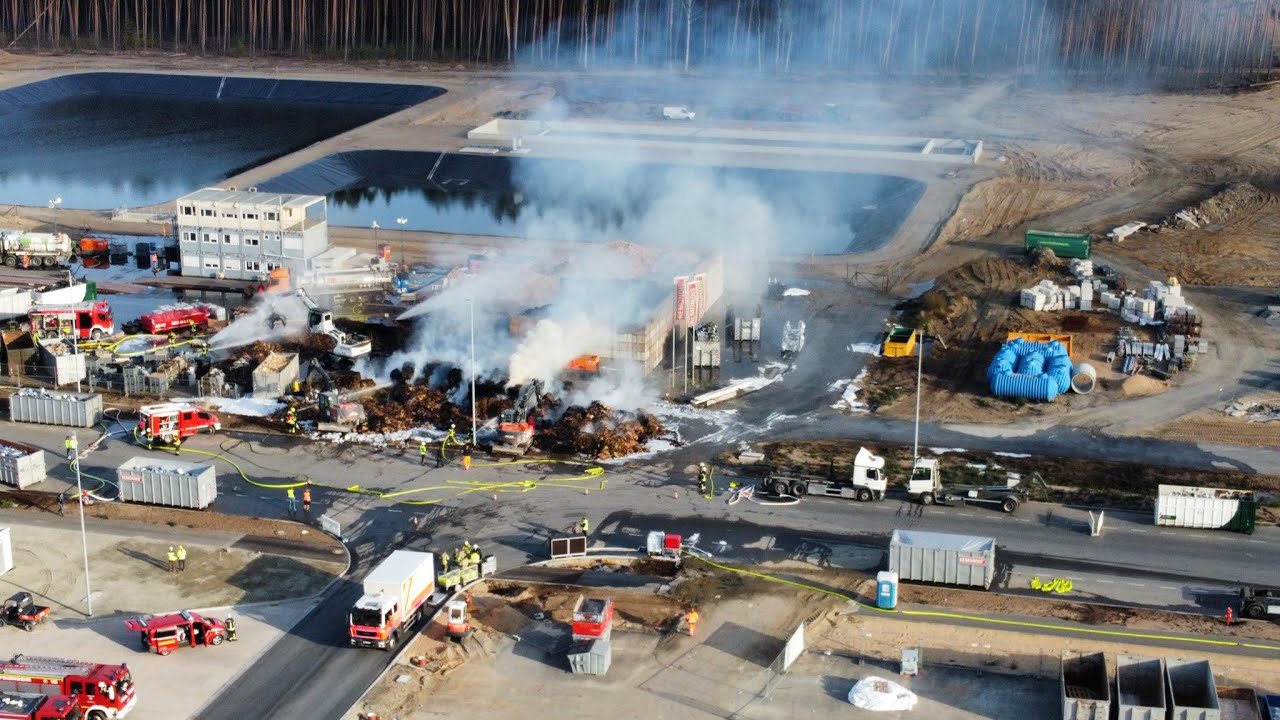
The incident began on Monday afternoon, prompting an immediate evacuation of all employees from the affected areas of the factory. Fire crews arrived promptly and spent several hours extinguishing the blaze before operations could gradually resume the following day.
The cause of the fire was a highly specific and contained technical failure. According to a report from the Brandenburg State Office for the Environment (LfU), the incident was triggered when several stacks of battery cells fell from a conveyor belt on the first floor, dropping into a ground-level shaft. These cells ignited, with the flames remaining limited to the transport system on the ground floor. The LfU confirmed that a total of 512 cells were affected, an amount equivalent to approximately two-thirds of a passenger car's complete battery pack.
Local authorities, including the Oder-Spree district, were quick to confirm the incident and praised Tesla for its immediate reporting and adherence to established safety procedures. While Tesla did not respond to general media inquiries, the company confirmed to authorities that there had been a “small fire in battery pack production”. This transparency with local government bodies underscores a cooperative and responsible approach to regulatory compliance.
The following table provides a concise, at-a-glance summary of the key facts surrounding the Giga Berlin fire incident, offering a clear and authoritative overview of the event.
| Fact Point | Detail | Source |
| Incident Date & Time | Monday afternoon, August 21, 2025 | |
| Location | Battery assembly facility at Giga Berlin | |
| Cause | Several stacks of battery cells fell from a conveyor belt into a shaft and ignited | |
| Number of Affected Cells | 512 cells (equivalent to ~2/3 of a full battery pack) | |
| Injuries | Zero injuries reported | |
| Environmental Damage | None; firefighting water was fully contained within the building | |
| Production Impact | Temporary halt; drive unit assembly resumed Tuesday afternoon; battery pack assembly remained offline | |
| Investigation Status | Internal investigation ongoing, with cooperation from regional authorities |
Chapter 2: A Proactive and Contained Response
The Giga Berlin incident stands out not for the event itself, but for the effectiveness of the response. The immediate evacuation of all employees demonstrates a robust emergency protocol was in place and executed flawlessly. Fire crews worked for several hours, but a crucial detail reported by authorities was that the firefighting water was "fully contained within the building". A specialist cleaning firm has since been tasked with handling the residue, ensuring there is no risk to the local groundwater or surrounding environment. This attention to environmental protection is a vital component for a company operating in the highly regulated European market, where public concern for ecological impact is significant.
The handling of this fire represents a clear and positive evolution in Tesla's operational maturity, particularly when contrasted with past, politically motivated events at the same site. The fire that occurred in March 2024, for example, was a deliberate act of arson by the far-left "Vulcan Group" that targeted a power pylon, causing a complete power outage and a production halt for several days. That incident was an external threat that caused widespread disruption to the surrounding community. This current fire, by contrast, was an internal technical issue. The fact that Tesla's emergency plan, which was "agreed with the local water authority," was successfully executed , shows that the company has moved beyond being a vulnerable construction site and has now established mature, pre-vetted safety and emergency protocols. This narrative of a company learning and institutionalizing safety is a compelling story for a sophisticated audience.
Chapter 3: The Operational Aftermath
The immediate consequence of the fire was a temporary halt to production across the factory on Monday afternoon. However, the measured and gradual resumption of operations in the following hours and days provides a key insight into Tesla's operational strategy. Drive unit assembly was able to resume on Tuesday afternoon, while battery pack assembly remained offline. This staged return to work indicates that the damage was specific and contained, and the company was taking a deliberate and cautious approach to restarting critical functions to ensure safety and quality.
A subtle but important detail is that employees who were unable to perform their usual duties participated in training programs and first-aid courses while operations were paused. This commitment to a productive use of downtime for workforce management is another sign of a well-run and mature organization that values its personnel and operational efficiency even during an unexpected interruption.
Chapter 4: The Science of Battery Manufacturing Safety
The fire incident serves as a reminder of the inherent chemical risks involved in lithium-ion battery manufacturing. As technical data confirms, lithium electrolyte is an extremely reactive chemical that can easily catch fire. Furthermore, battery cells are intentionally charged during a stage of the manufacturing process called "formation," which is crucial for their performance and lifespan. Even if not fully charged, the energy density of these cells means they pose a fire risk if compromised.
While the specific cell type involved in the fire was not disclosed, Giga Berlin currently uses two distinct chemistries: CATL LFP cells for the standard Model Y variants and LG Energy Solution NCM cells for the Long Range versions. This dual-supplier strategy adds a layer of complexity to the manufacturing process but also provides a level of redundancy. The ongoing internal investigation will likely focus on the cause of the conveyor belt failure and how it can be mitigated with future improvements to automation and safety protocols. Future-proofing measures could include more advanced fire suppression systems specifically tailored for lithium-ion cell fires and redesigned transport systems to prevent similar incidents.
Conclusion: Maturing in the European Industrial Landscape
The Giga Berlin fire, while negative news on the surface, ultimately serves to highlight Tesla's newfound operational maturity and readiness to handle internal crises effectively. The company’s swift reporting, the containment of environmental damage, and the organized, phased resumption of operations all point to an organization that has institutionalized robust safety protocols. This narrative of a company learning from past challenges and establishing itself as a responsible and resilient industrial player is a crucial component of its long-term success and public trust in Europe.
FAQ
Q: Is the Giga Berlin factory safe? A: Yes. Local authorities confirmed that all safety procedures were followed, and the emergency response was effective in containing the fire and preventing injuries or environmental damage.
Q: Will this affect Model Y delivery times in Europe? A: The production halt was temporary and gradual, with only the battery pack assembly line remaining offline for a period. The overall impact on Model Y delivery times in Europe is expected to be minimal, as the factory's other operations resumed quickly.
Q: What are LFP and NCM cells? A: LFP (lithium iron phosphate) and NCM (nickel cobalt manganese) are two common types of lithium-ion battery chemistries. Tesla uses CATL LFP cells for its standard Model Y and LG Energy Solution NCM cells for the Long Range Model Y variants manufactured at Giga Berlin.
Q: How does this incident compare to previous Giga Berlin events? A: Unlike the previous politically motivated arson attack in March 2024, which was an external act of sabotage , this incident was an internal technical failure that was effectively contained by the factory's existing emergency and safety protocols.
Q: What kind of investigation is underway? A: Tesla is continuing its internal investigation into the cause of the conveyor belt incident and is cooperating with regional authorities to ensure all findings are addressed and appropriate measures are taken to prevent future occurrences.