
Introduction
By early 2026, Tesla finds itself in a very different competitive environment than it did just a few years ago. While Tesla remains one of the most recognizable and influential electric vehicle brands in the world, the global EV market has entered a new phase—one defined less by early adoption and more by scale, pricing pressure, regional competition, and regulatory complexity.
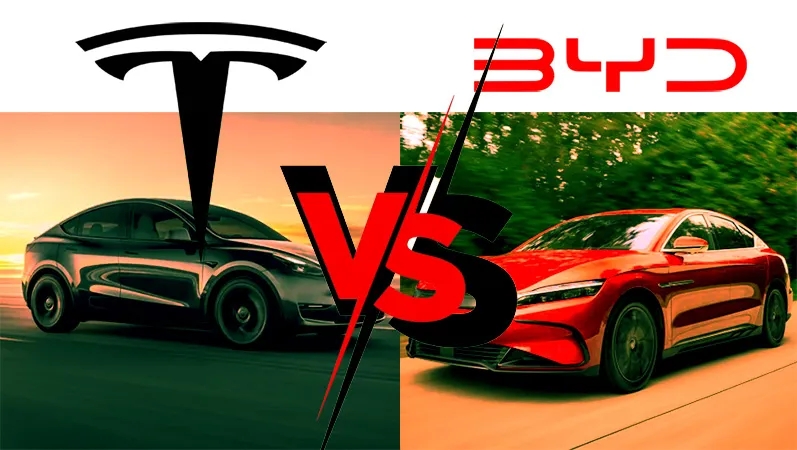
The most symbolic shift came when BYD surpassed Tesla in global electric vehicle sales volume, signaling that the industry is no longer dominated by a single narrative or company. For Tesla owners in the United States and Europe, this development is not just an investor headline—it has direct implications for pricing, product strategy, software development, charging infrastructure, resale values, and long‑term brand positioning.
This article provides a deep, owner‑focused analysis of Tesla’s competitive landscape in 2026, examining how global competition affects real‑world ownership in the U.S. and Europe. Rather than focusing on speculation or short‑term stock movements, we analyze structural trends, strategic responses, and what they mean for current and future Tesla drivers.
Chapter 1: The Global EV Market Enters Its Scale Phase
From Early Adoption to Mass Market
The global EV market has moved decisively beyond early adopters. In both the United States and Europe, electric vehicles are now mainstream options rather than niche alternatives. This transition has fundamentally changed competition dynamics:
-
Buyers are more price‑sensitive
-
Feature parity matters more than novelty
-
Brand loyalty is tested by value and reliability
Tesla helped create this market, but it no longer defines it alone.
Regional Growth Patterns
While the U.S. and Europe remain Tesla’s most important markets outside China, growth patterns differ:
-
The U.S. market emphasizes range, charging convenience, and software features
-
Europe prioritizes efficiency, safety ratings, and urban usability
Competitors have adapted their offerings to these regional preferences, narrowing Tesla’s once‑significant advantage.
Chapter 2: BYD’s Rise and What It Really Means for Tesla Owners
Understanding BYD’s Sales Leadership
BYD’s global sales leadership is primarily driven by:
-
Vertical integration
-
Aggressive pricing
-
Strong presence in China and emerging markets
However, sales volume alone does not tell the full story. Many BYD vehicles are sold in segments Tesla does not compete in, including lower‑priced city cars and plug‑in hybrids.
Why Tesla Owners Should Still Pay Attention
Even if BYD vehicles are not widely sold in the U.S. today, their global scale has indirect effects:
-
Increased price pressure across the EV industry
-
Faster cost reductions in battery production
-
Accelerated innovation cycles
These pressures influence Tesla’s pricing strategies in the U.S. and Europe.
Chapter 3: Competitive Pressure in the United States
Traditional Automakers Catching Up
In the U.S., Tesla faces growing competition from established automakers:
-
Ford with the Mustang Mach‑E and F‑150 Lightning
-
General Motors, with its Ultium‑based EV lineup
-
Hyundai and Kia with feature‑rich, competitively priced EVs
While none individually match Tesla’s ecosystem, collectively they reduce Tesla’s uniqueness.
Pricing Wars and Incentives
Price adjustments have become a regular feature of Tesla ownership. While lower prices benefit new buyers, they create concerns about:
-
Depreciation
-
Trade‑in values
-
Timing of purchases
This dynamic reflects a more mature, competitive market rather than a weakening brand.
Chapter 4: European Market Challenges and Opportunities
Europe’s Fragmented Landscape
Europe presents a more complex competitive environment. Tesla competes not only with global brands but also with strong regional players:
-
Volkswagen Group (VW, Audi, Skoda)
-
BMW and Mercedes‑Benz
-
Renault and Stellantis brands
These companies benefit from deep local knowledge, established dealer networks, and regulatory familiarity.
Safety, Efficiency, and Regulation
European buyers place significant emphasis on:
-
Euro NCAP safety ratings
-
Real‑world efficiency
-
Compliance with evolving regulations
Tesla’s strong safety performance remains a competitive advantage, but it must continuously adapt to regulatory changes.
Chapter 5: Software as Tesla’s Key Differentiator
Beyond Hardware Competition
As EV hardware becomes increasingly standardized, software has emerged as Tesla’s most important differentiator. Key areas include:
-
Over‑the‑air updates
-
Infotainment responsiveness
-
Driver assistance systems
Competitors are improving rapidly, but Tesla still leads in deployment speed and integration.
Subscription Models and Owner Perception
Tesla’s move toward subscription‑based features, including Full Self‑Driving, reflects a broader industry trend. For owners, this raises important questions about:
-
Long‑term cost of ownership
-
Feature permanence
-
Value retention
How Tesla balances monetization with customer goodwill will shape its competitive position.
Chapter 6: Charging Infrastructure as a Strategic Moat
The Supercharger Advantage
Despite increased competition in vehicles, Tesla’s charging network remains a major advantage, particularly in the U.S. and parts of Europe. Key strengths include:
-
Reliability
-
Ease of use
-
Strategic placement
Opening the network to non‑Tesla vehicles creates new revenue streams but also introduces congestion risks.
Europe’s Charging Reality
In Europe, Tesla competes with strong third‑party networks such as Ionity. While competition is tighter, Tesla’s integration advantage still matters for long‑distance travel.
Chapter 7: Implications for Current Tesla Owners
Resale Value and Depreciation
Increased competition tends to compress resale values across the industry. However, Tesla vehicles often retain value better than many rivals due to:
-
Brand recognition
-
Software updates
-
Charging ecosystem
Ownership Experience in a Competitive Market
More competition ultimately benefits owners by:
-
Accelerating innovation
-
Improving feature sets
-
Keeping prices in check
Tesla owners today enjoy a more refined product than early adopters did, even if exclusivity has diminished.
Chapter 8: Tesla’s Strategic Responses in 2026
Focus on Efficiency and Scale
Tesla continues to prioritize:
-
Manufacturing efficiency
-
Cost reduction
-
Global platform standardization
These strategies aim to protect margins while remaining competitive on price.
Long‑Term Bets: Autonomy and Energy
Beyond vehicles, Tesla’s investments in autonomy, energy storage, and grid solutions represent long‑term differentiation that competitors may struggle to replicate.
Conclusion
Tesla’s competitive landscape in 2026 is more crowded, more intense, and more complex than ever before. The rise of BYD and other global competitors does not signal Tesla’s decline, but rather the maturation of the EV market Tesla helped create.
For U.S. and European Tesla owners, this environment brings both challenges and benefits. While price volatility and competition may affect resale values, they also drive faster innovation, better products, and a more robust ecosystem. Tesla remains a leader—not because it faces no competition, but because it continues to adapt within it.
FAQ
Q1: Is Tesla losing its competitive edge in 2026?
Tesla faces stronger competition, but it still leads in software integration and charging infrastructure.
Q2: Does BYD’s success threaten Tesla in the U.S.?
Indirectly. BYD increases global price pressure, but direct competition in the U.S. remains limited.
Q3: Will increased competition hurt resale values?
Competition affects all brands, but Tesla vehicles generally retain value better than average.
Q4: Is Tesla still a safe long‑term ownership choice?
Yes. Tesla’s ecosystem, updates, and infrastructure support long‑term ownership.
Q5: How should owners think about future Tesla purchases?
Focus on total ownership value, software support, and charging convenience rather than short‑term pricing swings.