
1. Introduction
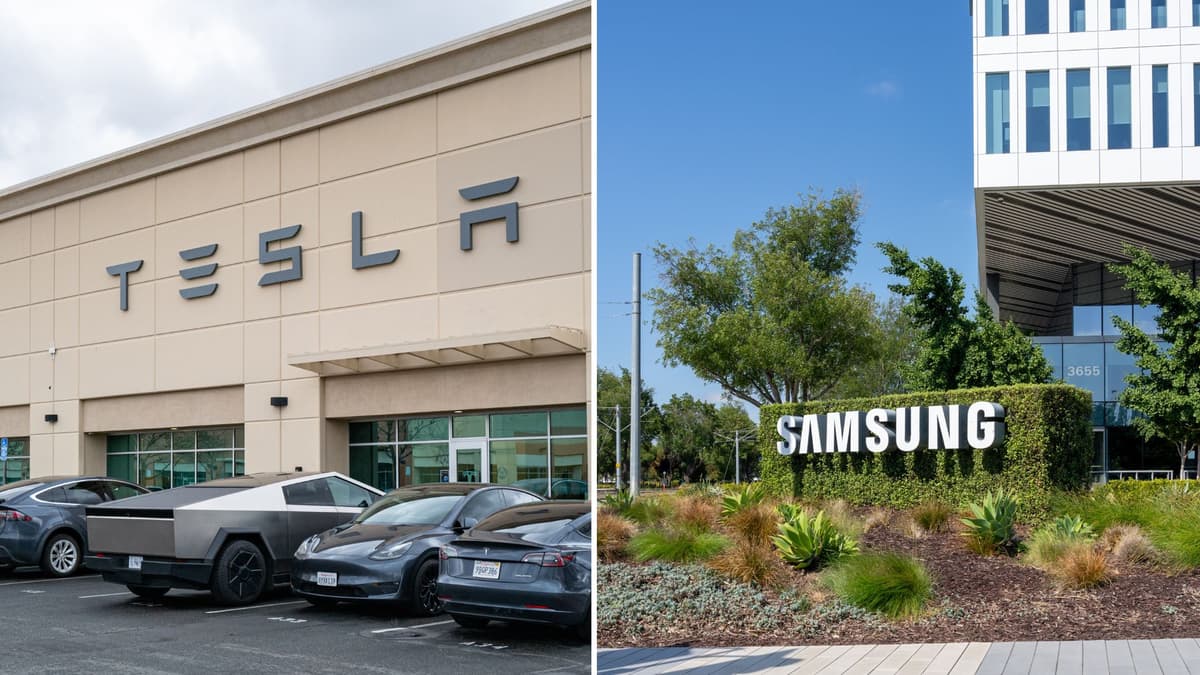
Tesla has long been recognized as more than just an electric‑vehicle manufacturer. Under Elon Musk’s leadership, it has evolved into a technology powerhouse—pushing boundaries in software, energy storage, robotics, and, critically, artificial intelligence. Earlier this year, Tesla announced a landmark agreement with Samsung Foundry worth $16.5 billion to produce its next‑generation “AI6” chips in a new Texas fabrication facility. This deal represents one of the largest chip‑manufacturing partnerships in automotive history and signals Tesla’s deepening vertical integration into the AI hardware supply chain.
In this article, we will explore:
-
Tesla’s AI ambitions to understand the backdrop of in‑house chip development.
-
Key terms of the Samsung partnership and how it aligns with Tesla’s strategy.
-
Technical deep dive into the AI6 architecture and performance gains.
-
Strategic implications for Tesla’s business model, costs, and competitive positioning.
-
Market and investor reaction to the announcement.
-
Broader impact on the global AI‑chip ecosystem, U.S. manufacturing, and geopolitics.
By the end, you will have a comprehensive picture of why this deal matters—not just for Tesla owners and shareholders, but for the global technology landscape.
2. Background on Tesla’s AI Ambitions
2.1 From Autopilot to Full Self‑Driving
Tesla first made headlines in 2014 when it introduced Autopilot, offering Level 2 driver assistance capabilities. Over the years, iterative software updates—delivered over‑the‑air (OTA)—have gradually expanded Autopilot’s feature set from lane keeping and adaptive cruise control to Navigate on Autopilot, automated lane changes, and, most recently, traffic light and stop sign recognition.
By 2016, Tesla began developing the hardware backbone for Full Self‑Driving (FSD), unveiling its own computer with NVIDIA GPUs. Yet, GPUs were never designed primarily for low‑power automotive use. Tesla’s margin‑sensitive business required a solution tailored to its data‑center‑style neural‑network workloads as well as the strict power, thermal, and safety constraints of a vehicle.
2.2 In‑House AI Hardware: The Road to Tesla Silicon
In late 2020, Tesla revealed the “FSD Computer” powered by its first custom chip, known internally as Hardware 3 (HW3). Based on a partnership with Samsung, the HW3 chip was manufactured on a 14 nm process and featured two independent AI neural‑net processors. This marked a pivotal shift from reliance on third‑party silicon to in‑house innovation—allowing Tesla to optimize compute, reduce latency, and lower unit costs.
Shortly thereafter, Tesla announced plans to take this concept further: design successive generations of chips in‑house, iterate rapidly, and eventually transition to cutting‑edge nodes (7 nm, 5 nm, and below). The real objective: power not only FSD but also Tesla’s long‑term AI roadmap, including Dojo supercomputer training clusters, Optimus humanoid robots, and future robotaxi fleets.
3. Details of the Samsung Agreement
3.1 Scope and Financials
On April 15, 2025, Tesla and Samsung Foundry signed a multiyear, $16.5 billion agreement to manufacture Tesla’s AI6 chips at a new Samsung fab in Taylor, Texas. Key points include:
-
Total commitment: $16.5 billion over five years (2025–2029).
-
Facility: New cutting‑edge fab in Taylor, Texas—Samsung’s first U.S. manufacturing site for advanced logic beyond memory products.
-
Processes: Leading‑edge 4 nm and 3 nm nodes, with options for subsequent nodes down to 2 nm.
-
Volumes: Projected 1.2 million chips per quarter by 2027, scaling with Tesla’s vehicle production and Dojo cluster expansions.
-
Investment breakdown: Samsung to fund process development and fab expansion; Tesla commits to minimum purchase volumes and co‑invests in tooling and IP.
3.2 Roles and Responsibilities
Under the deal:
-
Samsung Foundry handles wafer fabrication, process engineering, yield ramp, and integration testing.
-
Tesla’s chip‑design team (formerly led by Pete Bannon) provides architecture, design files, mask sets, and performance specifications. Tesla will also supply design verification and collaborate on thermal and packaging integration.
-
U.S. government incentives: Samsung benefits from federal and Texas state incentives for onshore semiconductor manufacturing, aligning with CHIPS Act objectives.
This arrangement shifts Tesla further from a fabless model to a partial vertically integrated semiconductor firm—owning design IP while outsourcing fabrication to a top‑tier foundry.
4. Technical Deep Dive on the AI6 Chip
4.1 Architecture Overview
The AI6 represents Tesla’s third‑generation custom AI accelerator. Major architectural highlights:
-
Matrix‑multiply engines: Eight independent tensor cores per chip, each capable of 1024‑bit simultaneous MAC (multiply‑accumulate) operations.
-
Mixed‑precision support: Native support for FP16, BFLOAT16, INT8, and dynamic precision scaling—optimizing energy efficiency for training versus inference workloads.
-
High‑bandwidth memory (HBM3e): On‑package HBM providing up to 2 TB/s bandwidth, crucial for handling large neural‑network weight matrices with minimal latency.
-
Unified cache hierarchy: A multi‑tiered L1/L2 cache design to feed tensor cores efficiently and minimize DRAM accesses.
-
Security features: Hardware root‑of‑trust, secure boot, and encrypted memory channels to protect proprietary neural models.
4.2 Performance and Power
Compared with the HW3 chip:
-
Raw throughput: AI6 delivers 5 exaflops of mixed‑precision performance—over 8× the theoretical compute of HW3.
-
Energy efficiency: By leveraging 3 nm process density, AI6 achieves 3× higher TOPS/W (tera operations per second per watt). In automotive scenarios, this translates to sustaining full FSD inference on a 150 W power envelope without thermal throttling.
-
Form factor: The AI6 package is only 35 × 35 mm, allowing more flexibility in integration across vehicle ECUs, edge‑compute nodes, and Dojo server racks.
Tesla’s internal benchmarks indicate that a single AI6 chip can handle the complete FSD inference pipeline for a vehicle at highway speeds. In data‑center mode, a cluster of 32 AI6 chips rivals many third‑party GPU‑based racks in deep‑learning training throughput, at a fraction of the power cost.
4.3 Integration into Tesla Products
-
Vehicles: Starting in Q4 2025, all new Tesla vehicles equipped with HW5 will ship with dual AI6 chips, providing redundancy and graceful fallbacks. Early production units will undergo rigorous automotive‑grade stress testing (–40 °C to +125 °C, vibration, EMC).
-
Dojo Supercomputer: Tesla’s D2 training tiles will adopt AI6 variants optimized for throughput, replacing custom GPU daughter cards. Each Dojo cabinet will house over 4,000 AI6 chips, enabling rapid next‑generation neural‑network training.
-
Optimus Robot: The Optimus humanoid uses a scaled‑down AI6 “Lite” for onboard vision and motion control, ensuring the bot can process sensor fusion and motor commands in real time.
5. Strategic Implications
5.1 Vertical Integration vs. Outsourcing
Tesla’s decision to double down on in‑house chip design and partner with Samsung reflects its philosophy of vertical integration:
-
Pros:
-
Optimization: Tight hardware‑software co‑design yields higher performance/W and lower latency.
-
Cost control: Avoids GPU vendor markups and leverages scale economies.
-
Roadmap agility: Faster iteration on chip features that directly serve Tesla’s software updates.
-
-
Cons:
-
Capital intensity: $16.5 billion commitment plus tooling investments.
-
Execution risk: Yield ramp challenges at bleeding‑edge nodes.
-
Single‑source dependency: A fabrication issue at Samsung could ripple across Tesla’s entire fleet and Dojo clusters.
-
Overall, Tesla’s gamble is that the long‑term returns in performance, cost reduction, and roadmap control justify the upfront commitment.
5.2 Impact on Tesla’s Cost Structure
Analysts estimate Tesla’s per‑chip cost for HW3 was approximately $120 at 14 nm. By moving to 3 nm with Samsung’s scale, per‑chip cost could fall below $80 in high volumes—despite higher mask and R&D expenses. With 2 AI6 chips per FSD computer, Tesla stands to save tens of dollars per vehicle compared to a commodity GPU solution, improving margins as FSD adoption grows.
5.3 Competitive Positioning
By owning both the training (Dojo) and inference (in‑vehicle AI6) stacks:
-
FSD Differentiation: Tesla can roll out more capable features—such as improved object classification, edge‑case recovery, and driver‑monitoring—faster than rivals.
-
Robotaxi Readiness: Having a proprietary, optimized AI accelerator paves the way for high‑utilization robotaxi fleets with more predictable operating costs.
-
Tech Brand Halo: Reinforces Tesla’s image as a cutting‑edge AI pioneer, attracting software and hardware talent.
Competitors like Ford, GM, Waymo, and Cruise remain reliant on third‑party silicon (NVIDIA, Intel, AMD) and are several months behind in tape‑outs of custom AI chips. Tesla’s deal with Samsung accelerates its lead.
6. Market and Investor Reaction
6.1 Stock Performance
Immediately following the April announcement:
-
Tesla shares gained 3.2% intraday, reversing a prior two‑week slide.
-
Trading volume spiked 45%, indicating heavy institutional positioning ahead of Tesla’s Q1 earnings call.
-
Analysts at Morgan Stanley and Barclays raised 12‑month price targets by $30–$50, citing improved margin outlooks and AI growth optionality.
6.2 Analyst Commentary
-
Morgan Stanley: “AI6 partnership solidifies Tesla’s vertical moat in autonomy, making FSD economics more attractive. We estimate $500 million in annualized cost savings by 2027.”
-
Barclays: “U.S. fab capabilities align Tesla with CHIPS Act incentives, reducing geopolitical risk. We view this as a win for shareholders.”
-
Deutsche Bank: “Yield ramp at 3 nm remains a wild card, but Samsung’s track record on advanced nodes is compelling. We maintain a Buy rating.”
6.3 Longer‑Term Outlook
Investors are now watching:
-
Yield and quality metrics from the Taylor fab.
-
FSD feature velocity, particularly improvements delivered via AI6’s enhanced inference power.
-
Dojo cluster deployments, which will validate Tesla’s training‑scale economics and potentially open up external AI‑compute sales.
The consensus: If Tesla executes without major setbacks, the AI6 partnership could add $10–$15 billion in enterprise value by 2030.
7. Broader AI Ecosystem Impact
7.1 U.S. Semiconductor Renaissance
The Samsung‑Tesla deal underscores a broader push to revitalize U.S. logic‑chip manufacturing. Under the CHIPS and Science Act (2022), federal funding and incentives have made it feasible for leading foundries to bring advanced nodes onshore. Tesla’s commitment:
-
Signals to other fabless innovators that Texas and other states can host world‑class semiconductor infrastructure.
-
Encourages additional partnerships (e.g., between AI startups and U.S. fabs) for diversified supply chains.
7.2 Samsung’s Foundry Business
For Samsung Foundry, this represents:
-
Revenue diversification: Moving beyond memory (DRAM, NAND) into high‑margin logic – a longtime goal.
-
Process validation: A marquee customer like Tesla proves Samsung’s 3 nm and 4 nm competitiveness versus TSMC.
-
Geopolitical hedging: With rising U.S.‑China tensions, having a U.S. fab for critical chips reduces export risks.
7.3 Geopolitical Dimensions
The partnership takes place against a backdrop of U.S. export restrictions on cutting‑edge chipmaking equipment to China. By securing U.S. domestic production for its most advanced AI silicon, Tesla:
-
Mitigates the risk of supply disruptions if geopolitical frictions escalate.
-
Aligns with U.S. strategic goals of domesticizing critical technology.
-
Sets a precedent for other multinational tech firms to localize fabrication of sensitive IP.
Meanwhile, China’s chip ambitions accelerate in response, leading to a more bifurcated global semiconductor landscape.
8. Conclusion
Tesla’s $16.5 billion AI6 chip manufacturing deal with Samsung is far more than an automotive supply‑chain announcement. It represents a decisive step in Tesla’s transformation into a full‑stack AI powerhouse—owning hardware design, software innovation, training supercomputers, and in‑vehicle inference accelerators. The deal will:
-
Enable Tesla to deliver more powerful, cost‑effective FSD features.
-
Strengthen Dojo’s role as a leading AI‑training platform.
-
Reinforce U.S. leadership in advanced semiconductor manufacturing.
-
Deepen Tesla’s moat versus competitors still reliant on off‑the‑shelf GPUs.
As yields rise and AI6–powered products begin shipping late 2025, the true impact on Tesla’s autonomy roadmap, margin expansion, and brand cachet will become clear. For investors, owners, and the broader EV and AI markets, this partnership offers a preview of a future where Tesla blurs the lines between carmaker, AI lab, and chip fab.
9. FAQ
Q1. Why did Tesla choose Samsung over TSMC?
A1. Samsung offers a U.S. fabrication footprint (Texas), aligning with CHIPS Act incentives, plus competitive 3 nm process performance. Tesla’s co‑investment in tooling also secured Samsung’s prioritized capacity.
Q2. Will this deal affect Tesla vehicle pricing?
A2. Not directly. Cost savings from AI6 roll‑out will primarily bolster Tesla’s margins. However, by reducing FSD hardware costs, Tesla may eventually offer FSD at a more accessible price point to widen adoption.
Q3. How soon will AI6 chips appear in customer cars?
A3. Tesla plans to ship the first AI6‑equipped vehicles in Q4 2025, beginning with Model Y and Model 3 refresh lines. Fleet‑wide retrofit options for HW3 cars have not been announced.
Q4. Could Tesla eventually build its own fabs?
A4. While Tesla owns design IP, building a greenfield fab requires enormous capital and semiconductor expertise. For now, partnering with Samsung minimizes execution risk while granting design control.
Q5. What does this mean for Tesla’s autonomous roadmap?
A5. With faster, more efficient inference hardware, Tesla can accelerate FSD feature development cycles—improving edge‑case handling, reducing latency, and moving closer to fully driverless operation by 2026.